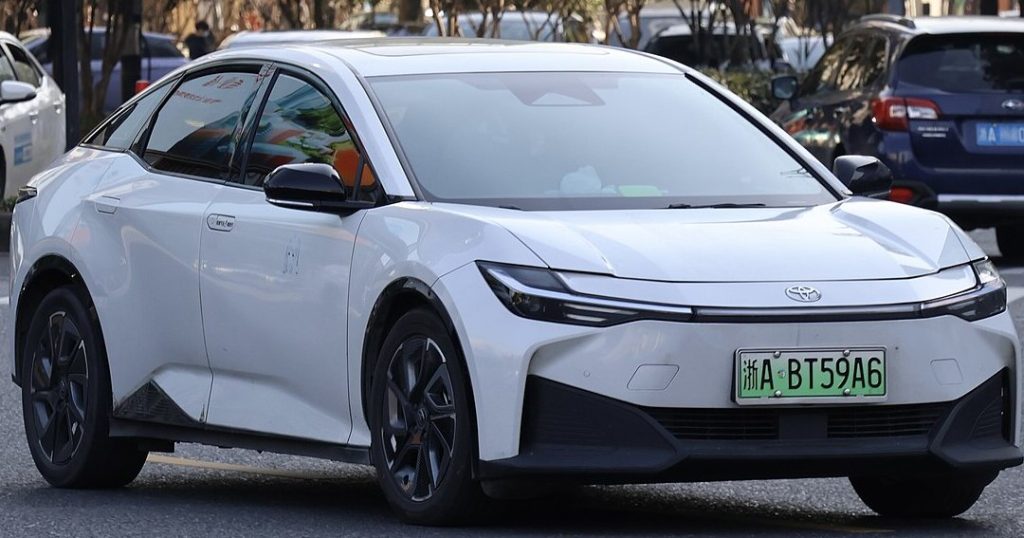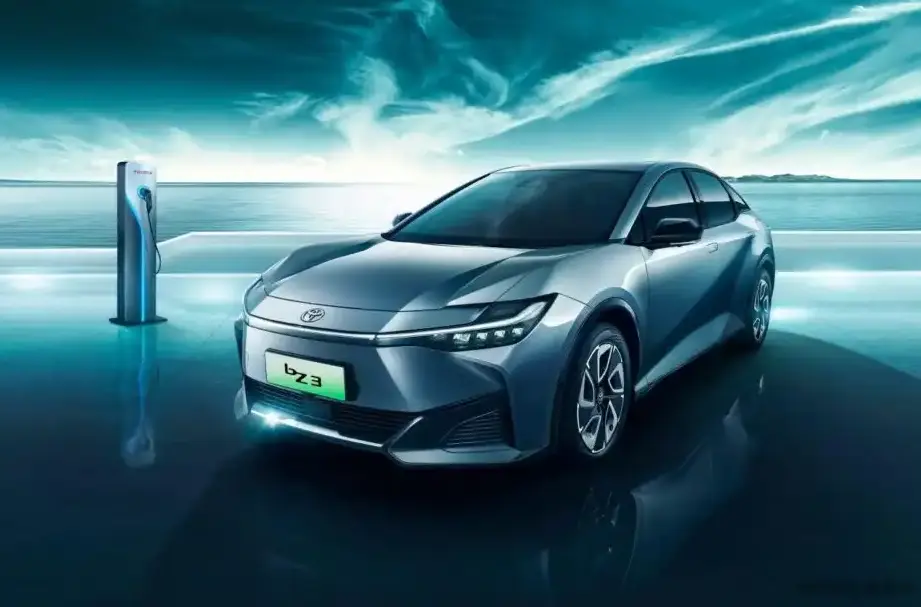
The Toyota bZ3 65.28 kWh (245 Hp) Electric is a battery electric vehicle (BEV) sedan introduced by Toyota in March 2023. Positioned as a key model in Toyota’s expanding electric vehicle lineup, the bZ3 represents the brand’s commitment to electrification and its strategy for the Chinese market, where it was initially launched. The “bZ” designation stands for “Beyond Zero,” signifying Toyota’s vision for a carbon-neutral future. This particular variant, equipped with a 65.28 kWh battery pack and a 245 horsepower electric motor, serves as a mainstream offering within the bZ3 range, balancing range, performance, and affordability. It’s built on a dedicated electric vehicle platform, co-developed with BYD, and is intended to compete with other compact electric sedans like the Tesla Model 3 and BYD Han EV.
Technical Specifications
| Brand | Toyota |
| Model | bZ3 |
| Generation | bZ3 |
| Type (Engine) | 65.28 kWh (245 Hp) Electric |
| Start of production | March, 2023 |
| Powertrain Architecture | BEV (Electric Vehicle) |
| Body type | Sedan |
| Seats | 5 |
| Doors | 4 |
| Fuel Type | Electricity |
| Maximum speed | 160 km/h (99.42 mph) |
| Weight-to-power ratio | 7.5 kg/Hp, 133.5 Hp/tonne |
| Weight-to-torque ratio | 6.1 kg/Nm, 165.1 Nm/tonne |
| Gross battery capacity | 65.28 kWh |
| Battery technology | Lithium iron phosphate (LiFePO4) |
| Battery location | Below the floor |
| All-electric range (NEDC) | 616 km (382.76 mi) |
| Average Energy consumption (NEDC) | 12 kWh/100 km (19.31 kWh/100 mi) |
| MPGe | 175 |
| km/kWh | 8.3 |
| mi/kWh | 5.2 |
| Electric motor power | 245 Hp |
| Electric motor Torque | 303 Nm (223.48 lb.-ft.) |
| Electric motor model/code | EA10L |
| Electric motor location | Front axle, Transverse |
| Electric motor type | Synchronous |
| System power | 245 Hp |
| System torque | 303 Nm (223.48 lb.-ft.) |
| Kerb Weight | 1835-1840 kg (4045.48 – 4056.51 lbs.) |
| Trunk (boot) space – minimum | 439 l (15.5 cu. ft.) |
| Length | 4725 mm (186.02 in.) |
| Width | 1835 mm (72.24 in.) |
| Height | 1475 mm (58.07 in.) |
| Wheelbase | 2880 mm (113.39 in.) |
| Approach angle | 13° |
| Departure angle | 23° |
| Drivetrain Architecture | One electric motor drives the front wheels. |
| Drive wheel | Front wheel drive |
| Number of gears and type of gearbox | 1 gears, automatic transmission |
| Front suspension | Independent type McPherson |
| Rear suspension | Double wishbone |
| Front brakes | Ventilated discs |
| Rear brakes | Disc |
| Assisting systems | ABS (Anti-lock braking system) |
| Steering type | Steering rack and pinion |
| Power steering | Electric Steering |
| Tires size | 225/50 R18 |
| Wheel rims size | 18 |
Powertrain & Engine Architecture
The Toyota bZ3 utilizes a front-wheel-drive, single-motor powertrain. The electric motor, designated EA10L, is a synchronous motor producing 245 horsepower and 303 Nm (223.48 lb.-ft.) of torque. The motor is transversely mounted at the front axle. The 65.28 kWh lithium iron phosphate (LiFePO4) battery pack is positioned under the floor, contributing to a low center of gravity and maximizing interior space. LiFePO4 chemistry is favored for its improved thermal stability and longer cycle life compared to nickel-manganese-cobalt (NMC) batteries, although it typically offers slightly lower energy density. The bZ3 employs a single-speed automatic transmission, typical for electric vehicles, delivering seamless acceleration. The vehicle’s electrical architecture is designed for fast charging capabilities, supporting both AC and DC charging standards.
Driving Characteristics
The bZ3 65.28 kWh delivers brisk acceleration, typical of electric vehicles. While not as performance-oriented as some other EVs, the 245 hp motor provides sufficient power for everyday driving and highway merging. The single-speed transmission ensures smooth and linear power delivery. The front-wheel-drive configuration offers predictable handling, but may exhibit some torque steer under hard acceleration. The low center of gravity, thanks to the underfloor battery pack, contributes to stable cornering. Compared to potential future higher-performance bZ3 variants, this version prioritizes efficiency and comfort over outright speed. The single gear ratio is optimized for a balance between acceleration and cruising efficiency.
Equipment & Trim Levels
The bZ3 65.28 kWh typically comes standard with a comprehensive suite of features, including a large touchscreen infotainment system, Toyota Safety Sense suite of driver-assistance technologies (including adaptive cruise control, lane departure alert, and automatic emergency braking), and comfortable seating. Interior upholstery is generally cloth in the base trims, with options for leatherette or genuine leather in higher grades. Available options include a panoramic sunroof, premium audio system, and advanced parking assist features. The dashboard design is modern and minimalist, emphasizing the vehicle’s electric nature. Trim levels vary by market, but generally offer increasing levels of luxury and technology.
Chassis & Braking
The bZ3 utilizes an independent McPherson strut suspension at the front and a double wishbone suspension at the rear, providing a comfortable and controlled ride. Ventilated disc brakes are used at the front, while solid discs are employed at the rear. The braking system is augmented by regenerative braking, which helps to recapture energy during deceleration and extend the vehicle’s range. Electric power steering provides light and precise steering feel. The vehicle rides on 18-inch alloy wheels with 225/50 R18 tires. ABS (Anti-lock Braking System) is standard, ensuring safe and effective braking performance.
Market Reception & Comparison
Initial reviews of the Toyota bZ3 have been mixed. Critics have praised the vehicle’s comfortable ride, spacious interior, and efficient powertrain. However, some have noted the somewhat conservative styling and the limited availability of fast-charging infrastructure in certain markets. Compared to other EVs in its class, the bZ3 offers a competitive range and price point. The LiFePO4 battery chemistry is seen as a positive attribute for longevity and safety, but it does result in a slightly lower energy density compared to NMC batteries. Fuel economy, expressed as MPGe, is competitive with other electric sedans, and the vehicle’s energy consumption of 12 kWh/100 km is relatively efficient.
Legacy
The Toyota bZ3 represents a significant step in Toyota’s transition to electric mobility. The use of a dedicated EV platform and LiFePO4 battery technology demonstrates Toyota’s commitment to innovation and sustainability. The long-term reliability of the bZ3’s powertrain remains to be seen, but Toyota’s reputation for building durable and dependable vehicles suggests a positive outlook. In the used car market, the bZ3 is expected to hold its value well, particularly as demand for electric vehicles continues to grow. The bZ3’s success will likely influence Toyota’s future EV offerings and accelerate the adoption of electric vehicles globally.