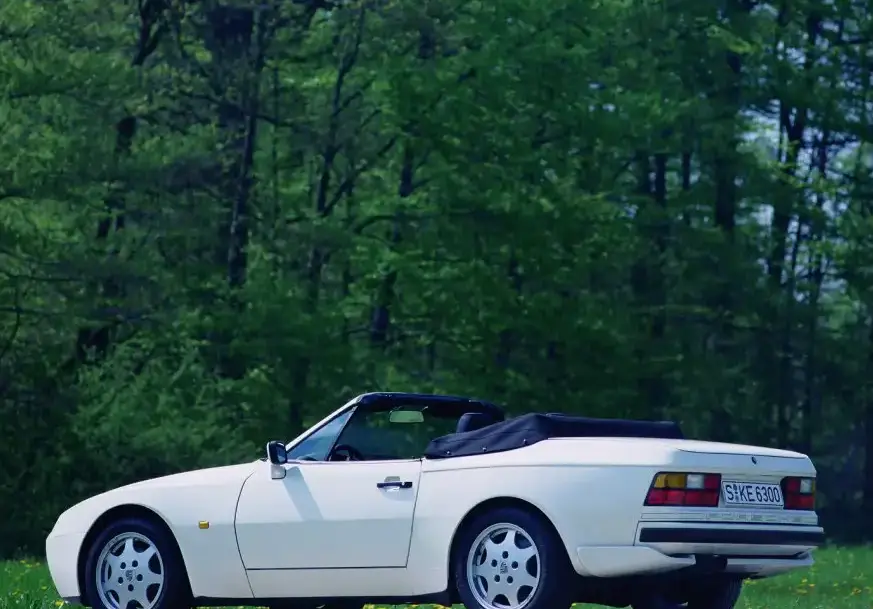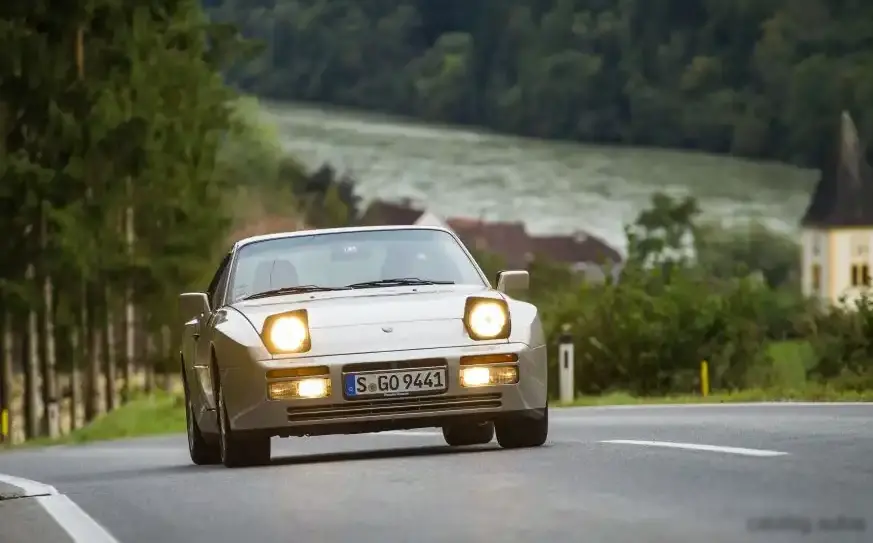
The Porsche 944 2.5, produced between 1983 and 1987, represented a significant evolution in Porsche’s model lineup. Positioned as the entry-level model within the 944 range, it offered a more accessible price point compared to the later 944 Turbo and 944 S variants, while still delivering the core Porsche driving experience. The 2.5-liter engine was a key upgrade over the original 2.4-liter 944, providing increased power and torque. It was built on the 944 platform (internal code 951), a front-engine, rear-wheel-drive transaxle layout that proved remarkably balanced and capable. This variant played a crucial role in broadening Porsche’s customer base and establishing the 944 as a popular sports car of the 1980s.
Technical Specifications
| Brand | Porsche |
| Model | 944 |
| Generation | 944 |
| Type (Engine) | 2.5 (150 Hp) |
| Start of production | 1983 |
| End of production | 1987 |
| Powertrain Architecture | Internal Combustion engine |
| Body type | Coupe |
| Seats | 4 |
| Doors | 2 |
| Fuel consumption (economy) – urban | 11.2 l/100 km (21 US mpg) |
| Fuel consumption (economy) – extra urban | 7.8 l/100 km (30.2 US mpg) |
| Fuel Type | Petrol (Gasoline) |
| Acceleration 0 – 60 mph | 8.3 sec |
| Maximum speed | 210 km/h (130.49 mph) |
| Weight-to-power ratio | 8.4 kg/Hp, 119 Hp/tonne |
| Weight-to-torque ratio | 6.6 kg/Nm, 150.8 Nm/tonne |
| Power | 150 Hp @ 5800 rpm |
| Power per litre | 60.5 Hp/l |
| Torque | 190 Nm @ 3000 rpm (140.14 lb.-ft. @ 3000 rpm) |
| Maximum engine speed | 6500 rpm |
| Engine layout | Front, Longitudinal |
| Engine Model/Code | M44.02, M44.07 |
| Engine displacement | 2479 cm3 (151.28 cu. in.) |
| Number of cylinders | 4 |
| Engine configuration | Boxer |
| Cylinder Bore | 100 mm (3.94 in.) |
| Piston Stroke | 78.9 mm (3.11 in.) |
| Compression ratio | 9.7:1 |
| Number of valves per cylinder | 2 |
| Fuel injection system | Multi-port manifold injection |
| Engine aspiration | Naturally aspirated engine |
| Engine oil capacity | 6 l (6.34 US qt | 5.28 UK qt) |
| Coolant | 8.5 l (8.98 US qt | 7.48 UK qt) |
| Kerb Weight | 1260 kg (2777.82 lbs.) |
| Fuel tank capacity | 80 l (21.13 US gal | 17.6 UK gal) |
| Length | 4290 mm (168.9 in.) |
| Width | 1735 mm (68.31 in.) |
| Height | 1275 mm (50.2 in.) |
| Wheelbase | 2400 mm (94.49 in.) |
| Front track | 1477 mm (58.15 in.) |
| Rear (Back) track | 1451 mm (57.13 in.) |
| Ride height (ground clearance) | 120 mm (4.72 in.) |
| Drag coefficient (Cd) | 0.35 |
| Minimum turning circle (turning diameter) | 10.30 m (33.79 ft.) |
| Drivetrain Architecture | The Internal combustion engine (ICE) drives the rear wheels of the vehicle. |
| Drive wheel | Rear wheel drive |
| Number of gears and type of gearbox | 5 gears, manual transmission |
| Front suspension | Independent coil spring |
| Rear suspension | independent torsion suspension |
| Front brakes | Ventilated discs |
| Rear brakes | Ventilated discs |
| Steering type | Steering rack and pinion |
| Tires size | 215/60 R15 |
| Wheel rims size | 7J x 15 |
Powertrain & Engine Architecture
The heart of the 944 2.5 is its 2.5-liter, naturally aspirated, water-cooled inline-four cylinder engine, designated M44.02 or M44.07 depending on the specific production year and minor revisions. This engine is a boxer configuration, meaning the cylinders are horizontally opposed. This layout contributes to a lower center of gravity, enhancing handling. The engine utilizes a Bosch K-Jetronic fuel injection system, a mechanical system known for its reliability and consistent fuel delivery. It features two valves per cylinder, operated by a single overhead camshaft. The engine’s 9.7:1 compression ratio and relatively mild camshaft profile prioritize drivability and fuel efficiency over outright peak power. The engine is mounted longitudinally ahead of the rear axle, driving the rear wheels through a five-speed manual transmission. This transaxle configuration – engine in front, transmission and differential at the rear – provides excellent weight distribution.
Driving Characteristics
The 944 2.5 offers a balanced and engaging driving experience. With 150 horsepower and 140 lb-ft of torque, acceleration from 0 to 60 mph takes approximately 8.3 seconds, and it reaches a top speed of around 130 mph. While not blistering by modern standards, the power delivery is linear and predictable. The five-speed manual transmission features well-chosen gear ratios that allow the engine to operate efficiently and effectively. Compared to the later 944 Turbo, the 2.5 lacks the dramatic surge of boost, but it provides a more accessible and forgiving driving experience. Compared to the 944 with the 2.4-liter engine, the 2.5 offers a noticeable improvement in both power and torque, making it more enjoyable for everyday driving and highway cruising. The rear-wheel drive layout and balanced chassis contribute to neutral handling characteristics, making it a rewarding car to drive on winding roads.
Equipment & Trim Levels
The 944 2.5 was generally well-equipped for its time, though options were plentiful. Standard features included power windows, central locking, and a basic stereo system. The interior typically featured cloth upholstery, although leather was available as an option. Dashboard layout was functional and driver-focused, with clearly marked gauges. Optional extras included a sunroof, upgraded stereo systems, air conditioning, and sport seats. The 944 2.5 didn’t have distinct “trim levels” in the same way as some American cars; instead, buyers could customize their vehicle with a range of options.
Chassis & Braking
The 944’s chassis is a monocoque construction, providing a rigid and lightweight platform. Suspension consists of independent coil springs at the front and a torsion beam rear suspension. This setup provides a good balance between ride comfort and handling precision. The 944 2.5 features ventilated disc brakes on all four wheels, providing ample stopping power. Steering is via a rack and pinion system, offering precise and responsive control. The car rides on 15-inch wheels with 215/60 R15 tires, providing good grip and stability.
Market Reception & Comparison
The Porsche 944 2.5 was generally well-received by automotive critics. It was praised for its balanced handling, comfortable ride, and relatively affordable price point. Compared to the 944 with the 2.4-liter engine, the 2.5 offered a significant performance upgrade. Fuel economy was respectable for a sports car of the era, averaging around 21 mpg in the city and 30 mpg on the highway. Reliability was generally good, although the K-Jetronic fuel injection system could require occasional maintenance. Compared to the more expensive 944 Turbo and 944 S, the 2.5 offered a more accessible entry point into Porsche ownership, appealing to a wider range of buyers.
Legacy
The Porsche 944 2.5 remains a popular choice among enthusiasts today. Its relatively simple mechanicals and readily available parts make it a relatively easy car to maintain. The engine, while not the most powerful in the 944 range, is known for its durability and reliability. Well-maintained examples command reasonable prices in the used car market. The 944 2.5 is often seen as a sweet spot in the 944 lineup, offering a good balance of performance, affordability, and driving enjoyment. It cemented Porsche’s reputation for building engaging and well-engineered sports cars, and continues to be appreciated by enthusiasts worldwide.