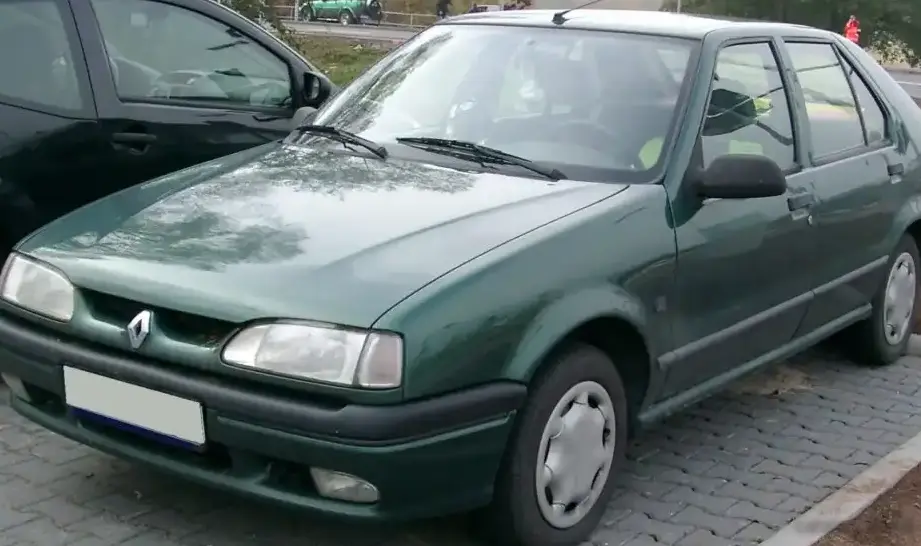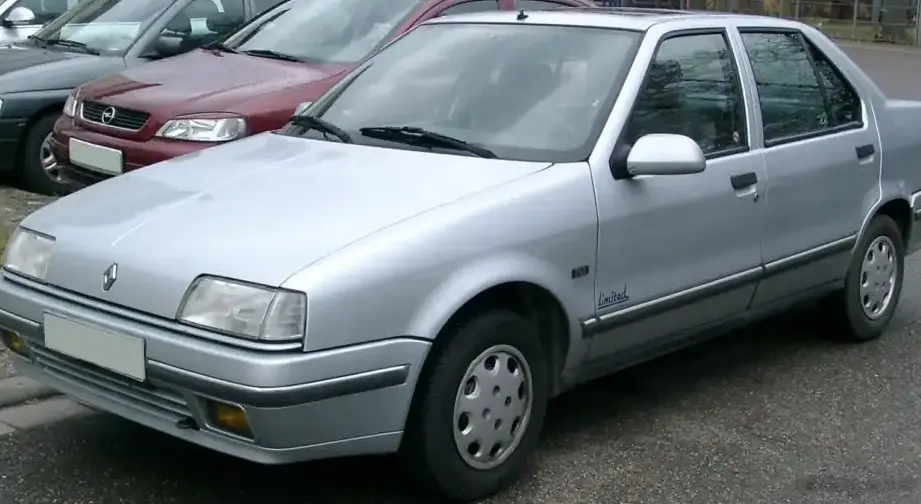
The Renault 19 Chamade 1.9 Diesel, produced between 1989 and 1992, represented a practical and economical offering within the broader Renault 19 range (L53). Positioned as an entry-level variant, particularly in European markets, it catered to buyers prioritizing fuel efficiency and affordability over outright performance. The Chamade, a three-door hatchback version of the 19, offered a more compact and youthful alternative to the traditional four-door sedan. This specific 1.9 Diesel configuration, designated L534 and L53J, played a significant role in establishing the Renault 19 as a popular choice for daily commuting and family transport.
Technical Specifications
| Brand | Renault |
| Model | 19 |
| Generation | 19 I Chamade (L53) |
| Type (Engine) | 1.9 Diesel (L534, L53J) (64 Hp) |
| Start of Production | 1989 |
| End of Production | 1992 |
| Powertrain Architecture | Internal Combustion Engine |
| Body Type | Sedan (Chamade – Hatchback) |
| Seats | 5 |
| Doors | 4 (Chamade – 3) |
| Fuel Type | Diesel |
| Power | 64 Hp |
| Engine Model/Code | F8Q |
| Engine Aspiration | Naturally Aspirated |
| Engine Oil Capacity | 5.5 l (5.81 US qt | 4.84 UK qt) |
| Coolant Capacity | 6.8 l (7.19 US qt | 5.98 UK qt) |
| Fuel Tank Capacity | 55 l (14.53 US gal | 12.1 UK gal) |
Powertrain & Engine Architecture
The heart of the Renault 19 Chamade 1.9 Diesel was the F8Q engine, a 1.870-liter inline-four cylinder diesel. This engine was a mainstay in Renault’s lineup during the late 1980s and early 1990s, known for its robustness and relatively simple design. It featured indirect injection, utilizing a Bosch rotary injection pump to deliver fuel into the pre-chamber. This system, while not as refined as direct injection, contributed to the engine’s durability and ease of maintenance. The F8Q engine employed an overhead valve (OHV) valvetrain, a configuration chosen for its cost-effectiveness and reliability. The engine produced 64 horsepower at approximately 4,200 rpm and 86 lb-ft of torque at 2,200 rpm. The transmission was a four-speed manual, designed to maximize fuel economy rather than provide sporty acceleration. While an automatic transmission was offered on some Renault 19 models, it was not typically paired with the 1.9 Diesel engine due to the limited power output and the desire to keep costs down.
Driving Characteristics
The driving experience in the Renault 19 Chamade 1.9 Diesel was characterized by its practicality and economy. Acceleration was modest, with a 0-60 mph time estimated around 14-16 seconds. The engine’s torque, however, provided adequate pulling power for everyday driving, making it suitable for navigating city streets and country roads. The four-speed gearbox offered relatively long gear ratios, further emphasizing fuel efficiency. Compared to the gasoline-powered Renault 19 variants, the 1.9 Diesel lacked the responsiveness and higher top speed. However, it excelled in fuel economy, achieving upwards of 50-55 mpg on the highway. The suspension, tuned for comfort, provided a reasonably smooth ride, although it wasn’t particularly sporty. The steering was light and easy to use, making it well-suited for urban environments.
Equipment & Trim Levels
The Renault 19 Chamade 1.9 Diesel was typically offered in a basic trim level, reflecting its position as an entry-level model. Standard equipment generally included cloth upholstery, a basic dashboard with analog gauges, and manual windows and door locks. Power steering was often an optional extra, as was a radio. The interior was functional and durable, prioritizing practicality over luxury. Optional extras could include upgraded upholstery, a sunroof, and central locking. The Chamade’s three-door configuration meant rear seat access was less convenient than in the four-door sedan, but it also contributed to a more youthful and sporty image.
Chassis & Braking
The Renault 19 Chamade utilized a relatively simple chassis design. The front suspension consisted of MacPherson struts, while the rear suspension employed a torsion beam axle. This setup provided a good balance between ride comfort and handling. Braking was typically accomplished with disc brakes on the front wheels and drum brakes on the rear. The braking system was adequate for the vehicle’s weight and performance, but it lacked the stopping power of more advanced systems found on higher-end models. Stabilizer bars were often omitted from the base trim level to further reduce costs.
Market Reception & Comparison
The Renault 19 Chamade 1.9 Diesel was well-received in European markets as an affordable and fuel-efficient option. Critics praised its practicality and durability, but noted its lack of performance compared to gasoline-powered rivals. Compared to other diesel-powered vehicles in its class, such as the Peugeot 205 Diesel, the Renault 19 offered a similar level of fuel economy and reliability. However, the Peugeot was often considered to be slightly more engaging to drive. Within the Renault 19 lineup, the 1.9 Diesel was positioned below the more powerful gasoline engines, such as the 1.4 and 2.0-liter variants. The 1.9 Diesel appealed to buyers who prioritized economy and low running costs over performance and refinement.
Legacy
The Renault 19 Chamade 1.9 Diesel has proven to be a remarkably durable vehicle. Many examples are still on the road today, testament to the robustness of the F8Q engine and the overall build quality of the Renault 19. The F8Q engine itself is known for its longevity and relatively simple maintenance requirements. In the used car market, these vehicles are often sought after by those looking for an affordable and reliable runabout. While not a particularly collectible model, the Renault 19 Chamade 1.9 Diesel represents a significant chapter in Renault’s history, embodying the company’s commitment to providing practical and economical transportation to a wide range of customers. Parts availability remains reasonable, contributing to its continued viability as a classic and affordable vehicle.