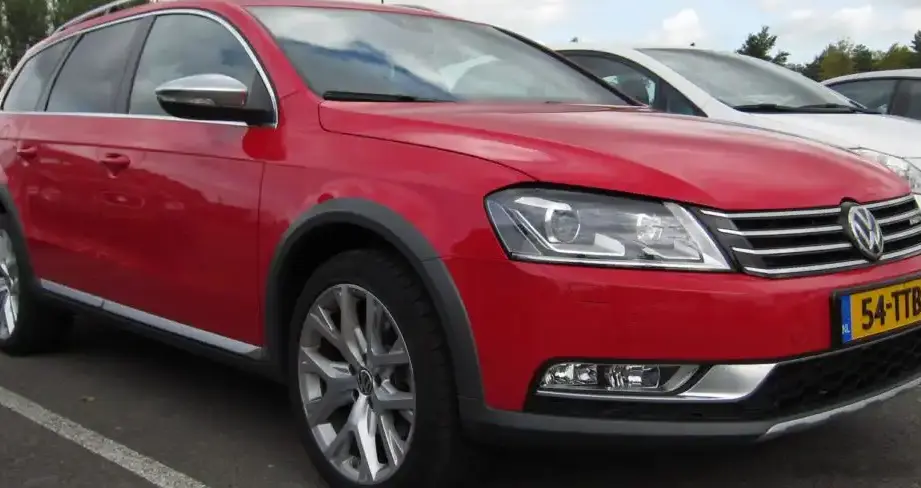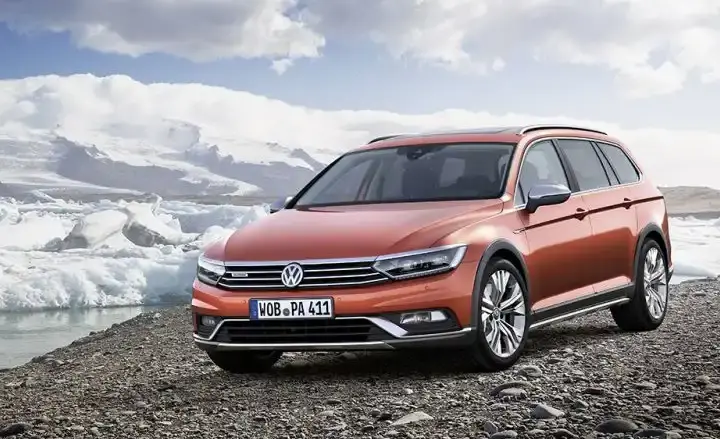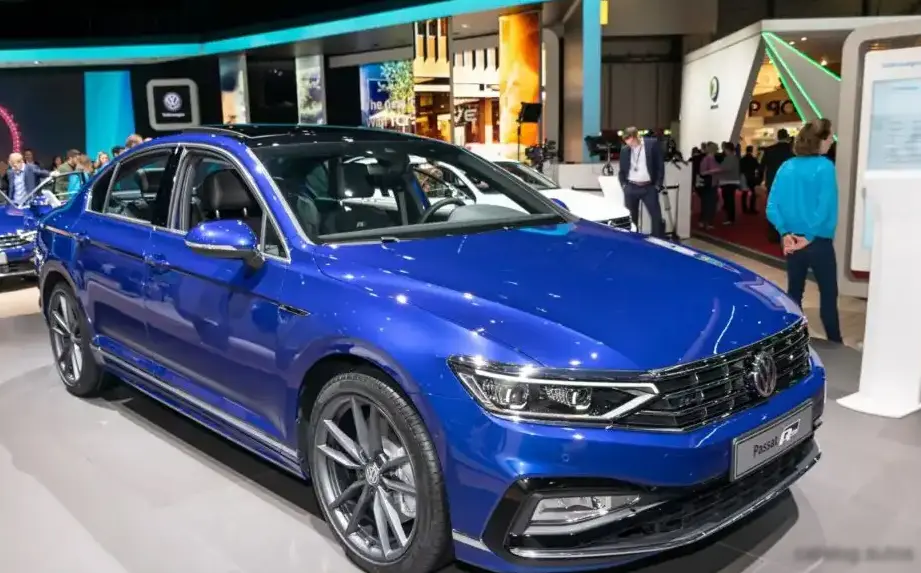
The Volkswagen Passat B8 facelift, produced from 2019 to 2020, represented a significant mid-cycle refresh of the eighth-generation Passat. Among the various engine and transmission options offered, the 2.0 TSI variant producing 190 horsepower paired with a 7-speed Dual Clutch Gearbox (DSG) occupied a prominent position in the lineup. This configuration aimed to balance performance with fuel efficiency, appealing to drivers seeking a refined and capable mid-size sedan. It was primarily marketed in Europe and other global markets, with the Passat being a core model in Volkswagen’s international strategy.
Technical Specifications
| Brand | Volkswagen |
| Model | Passat |
| Generation | Passat (B8, facelift 2019) |
| Type (Engine) | 2.0 TSI (190 Hp) DSG |
| Start of production | 2019 |
| End of production | 2020 |
| Powertrain Architecture | Internal Combustion engine |
| Body type | Sedan |
| Seats | 5 |
| Doors | 4 |
| Fuel consumption (economy) – urban (NEDC) | 8.3 l/100 km (28.3 US mpg, 34 UK mpg, 12 km/l) |
| Fuel consumption (economy) – extra urban (NEDC) | 5.2 l/100 km (45.2 US mpg, 54.3 UK mpg, 19.2 km/l) |
| Fuel consumption (economy) – combined (NEDC) | 6.3 l/100 km (37.3 US mpg, 44.8 UK mpg, 15.9 km/l) |
| CO2 emissions (NEDC) | 144 g/km |
| Fuel Type | Petrol (Gasoline) |
| Acceleration 0 – 100 km/h | 7.5 sec |
| Acceleration 0 – 62 mph | 7.5 sec |
| Acceleration 0 – 60 mph | 7.1 sec |
| Maximum speed | 238 km/h (147.89 mph) |
| Emission standard | Euro 6 |
| Weight-to-power ratio | 7.7 kg/Hp, 130.6 Hp/tonne |
| Weight-to-torque ratio | 4.5 kg/Nm, 219.9 Nm/tonne |
| Power | 190 Hp @ 4200-6000 rpm |
| Power per litre | 95.8 Hp/l |
| Torque | 320 Nm @ 1500-4100 rpm (236.02 lb.-ft. @ 1500-4100 rpm) |
| Engine layout | Front, Transverse |
| Engine Model/Code | EA888 / DKZA |
| Engine displacement | 1984 cm3 (121.07 cu. in.) |
| Number of cylinders | 4 |
| Engine configuration | Inline |
| Cylinder Bore | 82.5 mm (3.25 in.) |
| Piston Stroke | 92.8 mm (3.65 in.) |
| Compression ratio | 11.65:1 |
| Number of valves per cylinder | 4 |
| Fuel injection system | Direct injection and Multi-port manifold injection |
| Engine aspiration | Turbocharger, Intercooler |
| Valvetrain | DOHC |
| Engine oil capacity | 5.7 l (6.02 US qt | 5.02 UK qt) |
| Kerb Weight | 1455 kg (3207.73 lbs.) |
| Max. weight | 2060 kg (4541.52 lbs.) |
| Max load | 605 kg (1333.8 lbs.) |
| Trunk (boot) space – minimum | 586 l (20.69 cu. ft.) |
| Trunk (boot) space – maximum | 1152 l (40.68 cu. ft.) |
| Fuel tank capacity | 66 l (17.44 US gal | 14.52 UK gal) |
| Max. roof load | 100 kg (220.46 lbs.) |
| Permitted trailer load with brakes (8%) | 2000 kg (4409.25 lbs.) |
| Permitted trailer load with brakes (12%) | 1800 kg (3968.32 lbs.) |
| Permitted trailer load without brakes | 750 kg (1653.47 lbs.) |
| Permitted towbar download | 90 kg (198.42 lbs.) |
| Length | 4775 mm (187.99 in.) |
| Width | 1832 mm (72.13 in.) |
| Width including mirrors | 2083 mm (82.01 in.) |
| Height | 1483 mm (58.39 in.) |
| Wheelbase | 2786 mm (109.69 in.) |
| Front track | 1578-1586 mm (62.13 – 62.44 in.) |
| Rear (Back) track | 1564-1572 mm (61.57 – 61.89 in.) |
| Minimum turning circle (turning diameter) | 11.7 m (38.39 ft.) |
| Drivetrain Architecture | The Internal combustion engine (ICE) drives the front wheels of the vehicle. |
| Drive wheel | Front wheel drive |
| Number of gears and type of gearbox | 7 gears, automatic transmission DSG |
| Front suspension | Independent, type McPherson with coil spring and anti-roll bar |
| Rear suspension | Independent multi-link spring suspension with stabilizer |
| Front brakes | Ventilated discs |
| Rear brakes | Disc |
| Assisting systems | ABS (Anti-lock braking system) |
| Steering type | Steering rack and pinion |
| Power steering | Electric Steering |
| Tires size | 215/55 R17; 235/45 R18; 235/40 R19 |
| Wheel rims size | 7J x 17; 8J x 18; 8J x 19 |
Powertrain & Engine Architecture
The heart of this Passat variant is the EA888 2.0-liter turbocharged four-cylinder engine, specifically the DKZA code. This engine is a member of the widely used EA888 family, known for its robust design and tuning potential. The DKZA features direct fuel injection combined with multi-point injection, optimizing combustion efficiency and reducing emissions. The engine utilizes a single turbocharger with an intercooler to deliver increased air density and boost pressure. The valvetrain employs a Dual Overhead Camshaft (DOHC) configuration with four valves per cylinder, enhancing volumetric efficiency. The 7-speed DSG (Direct-Shift Gearbox) is a dual-clutch transmission offering quick and smooth gear changes. It features two separate clutches for odd and even gears, allowing for pre-selection of the next gear and minimizing interruption in power delivery.
Driving Characteristics
The 190 horsepower and 320 Nm (236 lb-ft) of torque provided by the 2.0 TSI engine and DSG transmission resulted in brisk acceleration. The 0-60 mph sprint was achieved in approximately 7.1 seconds, making it a competitive performer in its class. The DSG transmission contributed to a responsive driving experience, with quick shifts and minimal torque interruption. Compared to lower-powered Passat variants, such as the 1.6 TDI, this 2.0 TSI offered significantly more power and a more engaging driving experience. However, it didn’t possess the outright performance of the more potent 2.0 TSI variants producing 240 or 280 horsepower. The DSG’s gear ratios were tuned for a balance between acceleration and fuel economy, providing adequate performance in both city and highway driving conditions.
Equipment & Trim Levels
The 2.0 TSI 190 hp DSG typically came equipped as a mid-to-high trim level, often designated as ‘SE’ or ‘SEL’ depending on the market. Standard features generally included automatic climate control, a touchscreen infotainment system with smartphone integration (Apple CarPlay and Android Auto), alloy wheels, and a suite of safety features like ABS, electronic stability control, and multiple airbags. Optional extras could include leather upholstery, a panoramic sunroof, adaptive cruise control, and a premium sound system. Interior upholstery was typically cloth or a combination of cloth and leatherette, with higher trims offering full leather options. The dashboard layout was modern and functional, with a focus on ergonomics and ease of use.
Chassis & Braking
The Passat B8 utilized an independent suspension setup on both the front and rear axles. The front suspension employed a McPherson strut design with coil springs and an anti-roll bar, while the rear featured a multi-link setup, also with coil springs and a stabilizer bar. This configuration provided a comfortable ride quality while maintaining good handling characteristics. Braking duties were handled by ventilated discs on the front wheels and solid discs on the rear. ABS (Anti-lock Braking System) was standard, enhancing braking performance and stability. The steering system was an electric power-assisted rack and pinion system, offering precise and responsive steering feel.
Market Reception & Comparison
The 2.0 TSI 190 hp DSG Passat was generally well-received by automotive critics. It was praised for its refined engine, responsive transmission, and comfortable ride. Fuel economy was considered respectable for a vehicle of its size and performance, averaging around 37.3 US mpg in combined driving. Compared to the diesel-powered Passats, the 2.0 TSI offered a more spirited driving experience but typically at a slightly higher fuel cost. Reliability was generally good, although some owners reported minor issues with the DSG transmission, such as occasional jerky shifts. However, these issues were often addressed through software updates.
Legacy
The EA888 engine, in its various iterations, has proven to be a durable and reliable powerplant. The 2.0 TSI 190 hp variant, coupled with the DSG transmission, continues to be a popular choice in the used car market. Its balance of performance, fuel efficiency, and comfort makes it an attractive option for buyers seeking a well-rounded mid-size sedan. Regular maintenance, including timely oil changes and DSG fluid services, is crucial for ensuring the long-term reliability of this powertrain. As of today, well-maintained examples of this Passat variant can still provide years of reliable service.