Technical Specifications
| Brand | Lancia |
| Model | Lybra |
| Generation | Lybra SW (839) |
| Type (Engine) | 2.0 20V (154 Hp) |
| Start of production | July, 1999 |
| End of production | September, 2000 |
| Powertrain Architecture | Internal Combustion engine |
| Body type | Station wagon (estate) |
| Seats | 5 |
| Doors | 5 |
| Fuel consumption (urban) | 14.2 l/100 km (16.6 US mpg, 19.9 UK mpg, 7 km/l) |
| Fuel consumption (extra urban) | 8.4 l/100 km (28 US mpg, 33.6 UK mpg, 11.9 km/l) |
| Fuel consumption (combined) | 10.5 l/100 km (22.4 US mpg, 26.9 UK mpg, 9.5 km/l) |
| Fuel Type | Petrol (Gasoline) |
| Acceleration 0 – 100 km/h | 9.9 sec |
| Acceleration 0 – 62 mph | 9.9 sec |
| Acceleration 0 – 60 mph | 9.4 sec |
| Maximum speed | 210 km/h (130.49 mph) |
| Weight-to-power ratio | 9 kg/Hp, 110.8 Hp/tonne |
| Weight-to-torque ratio | 7.5 kg/Nm, 133.8 Nm/tonne |
| Power | 154 Hp @ 6500 rpm |
| Power per litre | 77.1 Hp/l |
| Torque | 186 Nm @ 3750 rpm (137.19 lb.-ft. @ 3750 rpm) |
| Engine layout | Front, Transverse |
| Engine Model/Code | 182B7000 |
| Engine displacement | 1998 cm3 (121.93 cu. in.) |
| Number of cylinders | 5 |
| Engine configuration | Inline |
| Cylinder Bore | 82 mm (3.23 in.) |
| Piston Stroke | 75.65 mm (2.98 in.) |
| Compression ratio | 10.7:1 |
| Number of valves per cylinder | 4 |
| Fuel injection system | Multi-port manifold injection |
| Engine aspiration | Naturally aspirated engine |
| Valvetrain | DOHC |
| Engine oil capacity | 5 l (5.28 US qt | 4.4 UK qt) |
| Coolant | 8.6 l (9.09 US qt | 7.57 UK qt) |
| Kerb Weight | 1390 kg (3064.43 lbs.) |
| Max. weight | 1915 kg (4221.85 lbs.) |
| Max load | 525 kg (1157.43 lbs.) |
| Trunk (boot) space – minimum | 420 l (14.83 cu. ft.) |
| Fuel tank capacity | 60 l (15.85 US gal | 13.2 UK gal) |
| Length | 4466 mm (175.83 in.) |
| Width | 1743 mm (68.62 in.) |
| Height | 1470 mm (57.87 in.) |
| Wheelbase | 2593 mm (102.09 in.) |
| Front track | 1497 mm (58.94 in.) |
| Rear (Back) track | 1459 mm (57.44 in.) |
| Drivetrain Architecture | The Internal combustion engine (ICE) drives the front wheels of the vehicle. |
| Drive wheel | Front wheel drive |
| Number of gears and type of gearbox | 5 gears, manual transmission |
| Front suspension | Spring Strut |
| Rear suspension | Coil spring |
| Front brakes | Disc |
| Rear brakes | Disc |
| Assisting systems | ABS (Anti-lock braking system) |
| Steering type | Steering rack and pinion |
| Power steering | Hydraulic Steering |
| Tires size | 205/60R15V |
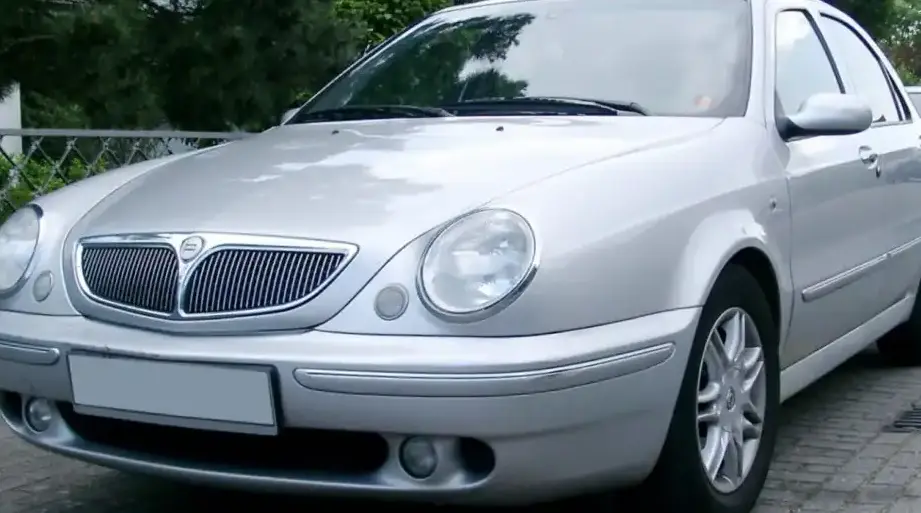
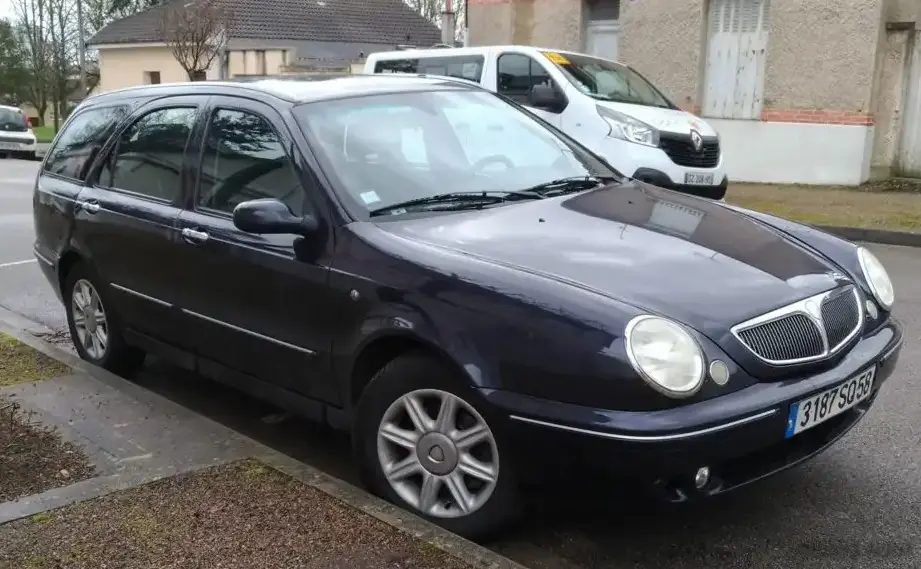
The Lancia Lybra SW 2.0 20V, produced between 1999 and 2000, represents a refined iteration of Lancia’s mid-size offering. As a station wagon (estate) variant of the 839 Lybra series, it aimed to combine Italian styling with practicality, targeting families and drivers seeking a more spacious and versatile vehicle. Positioned as a mid-range trim within the Lybra SW lineup, the 2.0 20V offered a balance between performance and fuel efficiency, slotting above the lower-powered 1.8L models and below the more expensive and performance-oriented V6 options. The Lybra SW competed with other European station wagons like the Ford Mondeo Estate, Peugeot 406 SW, and Volkswagen Passat Variant.
Powertrain & Engine Architecture
The Lybra SW 2.0 20V is powered by the 182B7000 engine, a 1.998-liter inline-five cylinder gasoline engine. This engine is notable for its 20 valves (four valves per cylinder) and dual overhead camshafts (DOHC), contributing to its relatively high specific output. The engine utilizes a multi-port fuel injection system, delivering fuel directly to each intake port for optimized combustion. The 20-valve configuration, combined with the engine’s displacement, allowed for a respectable 154 horsepower at 6500 rpm and 186 Nm (137 lb-ft) of torque at 3750 rpm. The engine’s design prioritized a balance between performance and refinement, typical of Lancia’s engineering philosophy. The five-speed manual transmission was the standard offering for this variant, providing drivers with direct control over the engine’s power delivery.
Driving Characteristics
The 2.0 20V Lybra SW offered a reasonably engaging driving experience for its class. While not a sports car, the engine provided sufficient power for comfortable highway cruising and overtaking maneuvers. The five-speed manual transmission allowed drivers to keep the engine in its optimal power band, resulting in brisk acceleration. Zero to 60 mph was achieved in approximately 9.4 seconds, and the car had a top speed of 130 mph. Compared to the lower-powered 1.8L versions, the 2.0 20V felt noticeably more responsive, particularly at higher speeds. However, it didn’t possess the outright performance of the V6 models. The gear ratios were well-chosen for everyday driving, providing a good balance between acceleration and fuel economy. The front-wheel-drive configuration offered predictable handling, although it could exhibit some understeer when pushed hard.
Equipment & Trim Levels
The Lybra SW 2.0 20V typically came equipped with a respectable level of standard features. Interior appointments included cloth upholstery, power windows, central locking, and a basic audio system. Air conditioning was often standard, though some base models might have offered it as an option. Safety features included ABS anti-lock brakes and driver and passenger airbags. Optional extras included alloy wheels, a sunroof, upgraded audio systems, and leather upholstery. The dashboard layout was functional and ergonomically designed, with easy-to-read gauges and intuitive controls. The SW (Station Wagon) body style provided a generous 420 liters of cargo space, expandable by folding down the rear seats.
Chassis & Braking
The Lybra SW utilized a conventional front-wheel-drive chassis layout. The front suspension employed MacPherson strut springs, while the rear suspension featured a coil spring setup. This configuration provided a comfortable ride quality, absorbing bumps and imperfections in the road surface effectively. The braking system consisted of disc brakes on all four wheels, providing adequate stopping power. ABS (Anti-lock Braking System) was standard, enhancing safety by preventing wheel lockup during hard braking. The steering was rack-and-pinion with hydraulic power assistance, offering a light and responsive feel. The tires were typically 205/60R15V, providing a good balance between grip and ride comfort.
Market Reception & Comparison
The Lancia Lybra SW 2.0 20V received generally positive reviews from automotive critics. It was praised for its stylish design, comfortable ride, and spacious interior. The 2.0-liter engine was considered a good compromise between performance and fuel economy. However, some critics noted that the interior quality, while decent, didn’t quite match that of some German competitors. Compared to the 1.8L Lybra SW, the 2.0 20V offered a noticeable performance improvement, making it a more appealing option for drivers who frequently traveled on highways or carried passengers and luggage. Fuel economy was comparable to other 2.0-liter station wagons of the era, averaging around 22.4 US mpg in combined driving. Reliability was generally considered average, with some reports of minor electrical issues.
Legacy
The Lancia Lybra SW 2.0 20V, while not a high-volume seller, has developed a following among enthusiasts who appreciate its unique blend of Italian style and practicality. The 182B7000 engine is generally considered a durable and reliable unit, provided it receives regular maintenance. In the used car market, Lybra SW 2.0 20V models are relatively affordable, making them an attractive option for buyers seeking a spacious and comfortable station wagon with a touch of Italian flair. Parts availability can be a challenge in some regions, but a dedicated community of Lancia owners helps to keep these cars on the road. The Lybra SW represents a final flourish of Lancia’s independent spirit before the brand’s integration into the Fiat Group.