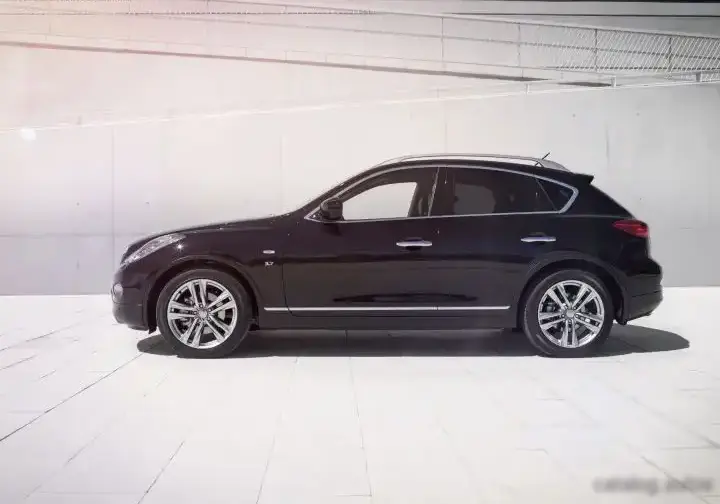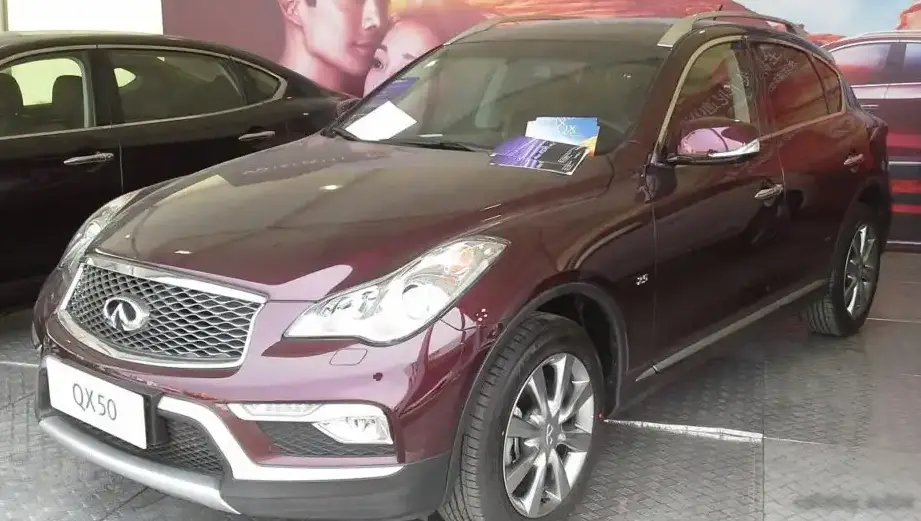
The Infiniti QX50 II, specifically the 2.0 VC-Turbo (272 Hp) variant equipped with the XTRONIC continuously variable transmission (CVT), represents a significant step in the luxury compact SUV segment. Introduced for the 2017 model year, this iteration of the QX50 aimed to blend performance, efficiency, and innovative technology. It sits within the second generation of the QX50 (J50 chassis), a model that marked a departure from its predecessor with a focus on a variable compression engine. This particular trim level occupied a mid-range position within the QX50 lineup, offering a balance between the base model’s affordability and the higher-end trims’ added luxury features.
Technical Specifications
| Brand | Infiniti |
| Model | QX50 |
| Generation | QX50 II |
| Type (Engine) | 2.0 VC-Turbo (272 Hp) XTRONIC |
| Start of production | 2017 |
| Powertrain Architecture | Internal Combustion engine |
| Body type | SUV |
| Seats | 5 |
| Doors | 5 |
| Fuel Type | Petrol (Gasoline) |
| Acceleration 0 – 100 km/h | 6.7 sec |
| Acceleration 0 – 62 mph | 6.7 sec |
| Acceleration 0 – 60 mph | 6.4 sec |
| Maximum speed | 230 km/h (142.92 mph) |
| Weight-to-power ratio | 6.4 kg/Hp, 156.7 Hp/tonne |
| Weight-to-torque ratio | 4.6 kg/Nm, 218.9 Nm/tonne |
| Power | 272 Hp @ 5600 rpm |
| Power per litre | 136.2 Hp/l |
| Torque | 380 Nm @ 4400 rpm (280.27 lb.-ft. @ 4400 rpm) |
| Engine layout | Front, Transverse |
| Engine Model/Code | KR20DDET |
| Engine displacement | 1997 cm3 (121.86 cu. in.) |
| Number of cylinders | 4 |
| Engine configuration | Inline |
| Compression ratio | 8:1 |
| Number of valves per cylinder | 4 |
| Fuel injection system | Direct injection and Multi-port manifold injection |
| Engine aspiration | Turbocharger, Intercooler |
| Engine oil capacity | 4.7 l (4.97 US qt | 4.14 UK qt) |
| Coolant | 7.7 l (8.14 US qt | 6.78 UK qt) |
| Kerb Weight | 1736 kg (3827.22 lbs) |
| Max. weight | 2230 kg (4916.31 lbs) |
| Max load | 494 kg (1089.08 lbs) |
| Trunk (boot) space – minimum | 895 l (31.61 cu. ft.) |
| Trunk (boot) space – maximum | 1699 l (60 cu. ft.) |
| Fuel tank capacity | 60 l (15.85 US gal | 13.2 UK gal) |
| Length | 4693 mm (184.76 in.) |
| Width | 1903 mm (74.92 in.) |
| Height | 1679 mm (66.1 in.) |
| Wheelbase | 2800 mm (110.24 in.) |
| Front overhang | 941 mm (37.05 in.) |
| Rear overhang | 952 mm (37.48 in.) |
| Ride height (ground clearance) | 218 mm (8.58 in.) |
| Minimum turning circle | 11.2 m (36.75 ft.) |
| Drivetrain Architecture | The Internal combustion engine (ICE) drives the front wheels of the vehicle. |
| Drive wheel | Front wheel drive |
| Number of gears and type of gearbox | automatic transmission XTRONIC |
| Front suspension | Independent, type McPherson with coil spring and anti-roll bar |
| Rear suspension | Independent multi-link spring suspension with stabilizer |
| Front brakes | Ventilated discs |
| Rear brakes | Ventilated discs |
| Assisting systems | ABS (Anti-lock braking system) |
| Steering type | Steering rack and pinion |
| Power steering | Electric Steering |
| Tires size | 235/55 R19; 255/45 R20 |
| Wheel rims size | 7.5J x 19; 8.5J x 20 |
Powertrain & Engine Architecture
The heart of the QX50 2.0 VC-Turbo is the KR20DDET engine, a 2.0-liter inline-four cylinder powerplant. What sets this engine apart is its Variable Compression (VC) technology. This system allows the engine to seamlessly adjust its compression ratio between 8:1 and 14:1, optimizing for both power and efficiency depending on driving conditions. At lower loads, a higher compression ratio improves fuel economy, while during acceleration, the compression ratio lowers to prevent knocking and maximize power output. The engine utilizes direct injection combined with multi-port fuel injection to ensure efficient combustion. A single turbocharger with an intercooler provides forced induction, boosting power and torque. The XTRONIC CVT, a continuously variable transmission, is paired with the engine. This transmission lacks fixed gears, offering a theoretically infinite number of gear ratios for smooth and efficient power delivery. While CVTs are known for their fuel efficiency, Infiniti tuned the XTRONIC to simulate stepped gear changes for a more conventional driving feel.
Driving Characteristics
The 272-horsepower and 280 lb-ft of torque delivered by the 2.0 VC-Turbo engine provide adequate performance for everyday driving. Acceleration from 0-60 mph takes approximately 6.4 seconds. The XTRONIC CVT, while smooth, doesn’t offer the immediate responsiveness of a traditional automatic or dual-clutch transmission. However, Infiniti programmed the CVT with simulated shift points to mimic a conventional automatic, reducing the “rubber band” feel often associated with CVTs. Compared to the base QX50’s engine, the VC-Turbo offers a substantial performance upgrade. It also provides a more refined driving experience than the earlier V6 engines found in previous QX50 generations. The front-wheel-drive configuration contributes to a slightly less engaging driving experience compared to available all-wheel-drive models.
Equipment & Trim Levels
The 2.0 VC-Turbo trim typically included standard features such as leather upholstery, heated front seats, a dual-screen infotainment system with navigation, a rearview camera, and a suite of advanced driver-assistance systems (ADAS) including automatic emergency braking, lane departure warning, and blind-spot monitoring. Optional extras included a panoramic sunroof, premium audio system, and upgraded interior trim materials. The QX50’s interior design prioritized a modern aesthetic with a focus on user-friendliness. The dual-screen setup, while visually appealing, received mixed reviews regarding its usability.
Chassis & Braking
The QX50 II utilizes an independent McPherson strut suspension in the front and an independent multi-link suspension in the rear. This setup provides a comfortable ride quality, absorbing bumps and irregularities in the road surface effectively. Stabilizer bars are included on both axles to reduce body roll during cornering. Braking duties are handled by ventilated discs on all four wheels, providing adequate stopping power. The ABS (Anti-lock Braking System) is standard, enhancing safety during emergency braking situations. The steering system employs an electric power steering (EPS) setup, offering light and precise steering feel.
Market Reception & Comparison
Critics generally praised the QX50 2.0 VC-Turbo for its innovative engine technology and comfortable ride. However, the CVT transmission received some criticism for its lack of responsiveness. Fuel economy figures were competitive for the segment, averaging around 21 mpg city and 27 mpg highway. Compared to rivals like the Acura RDX and BMW X3, the QX50 offered a unique selling proposition with its VC-Turbo engine, but often lagged behind in terms of overall driving dynamics and brand prestige. The QX50’s interior space was also a strong point, offering generous legroom for both front and rear passengers.
Legacy
The KR20DDET engine, while innovative, has demonstrated some long-term reliability concerns, particularly related to timing chain wear and oil consumption. The XTRONIC CVT, while generally reliable, requires diligent maintenance, including regular fluid changes, to prevent premature failure. In the used car market, the QX50 2.0 VC-Turbo represents a relatively affordable entry point into the luxury compact SUV segment. However, potential buyers should be aware of the potential maintenance costs associated with the VC-Turbo engine and CVT transmission. Despite these concerns, the QX50 II remains a compelling option for those seeking a technologically advanced and comfortable SUV.