
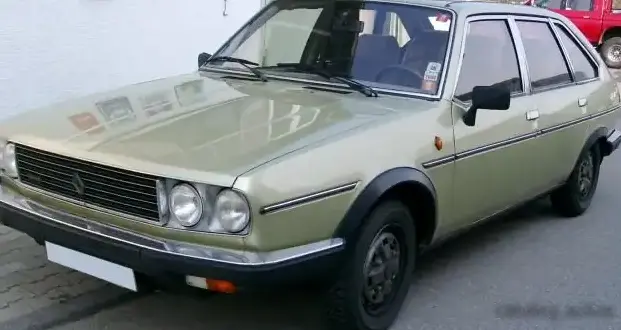
The Renault 30 (127), specifically the 2.6 (1273) variant producing 131 horsepower, represents a unique and relatively short-lived offering from Renault during the mid-1970s. Produced from 1975 to 1976, this model occupied a niche position within the broader Renault lineup, aiming to provide a more upscale and powerful option within the compact hatchback segment. While the Renault 5 and 4 were focused on affordability and practicality, the 30 (127) sought to blend European styling with a larger displacement engine, offering a different driving experience. It was primarily marketed in Europe, where compact hatchbacks were gaining significant popularity, and represented Renault’s attempt to capture a segment desiring more performance and refinement.
Technical Specifications
| Brand | Renault |
| Model | 30 (127) |
| Generation | 30 (127) |
| Type (Engine) | 2.6 (1273) (131 Hp) |
| Start of production | 1975 |
| End of production | 1976 |
| Powertrain Architecture | Internal Combustion engine |
| Body type | Hatchback |
| Seats | 5 |
| Doors | 5 |
| Fuel Type | Petrol (Gasoline) |
| Power | 131 Hp |
| Engine Model/Code | Z7V |
| Engine aspiration | Naturally aspirated engine |
| Engine oil capacity | 5.5 l (5.81 US qt | 4.84 UK qt) |
| Coolant capacity | 9.8 l (10.36 US qt | 8.62 UK qt) |
| Fuel tank capacity | 67 l (17.7 US gal | 14.74 UK gal) |
Powertrain & Engine Architecture
The heart of the Renault 30 (127) 2.6 was the Z7V engine, a 2.6-liter (1273 cc) inline-four cylinder gasoline engine. This engine was notable for its relatively large displacement for a car of this size and class. It featured a naturally aspirated configuration, meaning it did not employ forced induction like a turbocharger or supercharger. The Z7V utilized a single overhead camshaft (SOHC) valvetrain, controlling two valves per cylinder. Fuel delivery was managed by a carburetor, a common technology for the era, though less efficient than later fuel injection systems. The engine’s 131 horsepower output was respectable for the mid-1970s, providing a noticeable performance advantage over smaller-engined competitors. While specific transmission details varied, the 30 (127) was typically equipped with a four-speed manual gearbox, though an automatic transmission was also offered, albeit less common. The automatic option, while providing convenience, generally resulted in a slight reduction in performance and fuel economy. The automatic transmission was a three-speed unit, designed for smooth operation rather than outright speed. It featured a conventional torque converter and lacked the more advanced electronic controls found in later automatic transmissions.
Driving Characteristics
The Renault 30 (127) 2.6 offered a driving experience that was somewhat unique for its time. The larger engine provided brisk acceleration, especially compared to the smaller-displacement models available in the European market. The four-speed manual transmission allowed drivers to effectively utilize the engine’s power band, while the automatic option prioritized ease of use. Handling was typical for a front-wheel-drive hatchback of the era – competent and predictable, but not particularly sporty. The suspension, while providing a reasonably comfortable ride, wasn’t designed for aggressive cornering. The car’s relatively light weight helped to offset the engine’s power, making it feel nimble enough for everyday driving. Compared to other Renault models of the time, such as the Renault 5, the 30 (127) 2.6 offered a more refined and powerful experience, but at the cost of some fuel economy and affordability. The automatic transmission, while convenient, dulled the responsiveness somewhat, with noticeable torque converter slip during acceleration. Gear ratios were optimized for cruising, making it a comfortable highway car, but less engaging on winding roads.
Equipment & Trim Levels
The Renault 30 (127) 2.6 was positioned as a slightly more premium offering within the 127 range. Standard equipment typically included cloth upholstery, a basic instrument cluster, and manually operated windows and door locks. While not lavishly equipped by modern standards, it offered a step up in comfort and convenience compared to the base models. Optional extras included a sunroof, upgraded audio systems, and more comfortable seating. Interior trim levels varied, with some models featuring more elaborate cloth patterns and additional chrome accents. The dashboard layout was functional and straightforward, prioritizing usability over aesthetics. The overall interior ambiance was typical for a European hatchback of the 1970s – practical and durable, but not particularly luxurious. Higher trim levels might include features like a cigarette lighter, a more comprehensive gauge package, and upgraded door panels. The automatic transmission models often came with a center console featuring a gear selector and a small storage compartment.
Chassis & Braking
The Renault 30 (127) utilized a front-wheel-drive chassis with independent front suspension and a twist-beam rear axle. The front suspension employed MacPherson struts, while the rear suspension provided a simple and cost-effective solution for maintaining ride comfort. Braking systems varied depending on the specific model and year. Earlier models typically featured drum brakes on all four wheels, while later versions often included front disc brakes for improved stopping power. Power steering was not standard equipment, requiring drivers to exert more effort when maneuvering at low speeds. Stabilizer bars were generally absent, contributing to a slightly more pronounced body roll during cornering. The overall chassis and braking setup were adequate for the car’s performance capabilities, but not particularly advanced for the time. The drum brakes, while sufficient for normal driving, could fade under heavy use, especially on long descents.
Market Reception & Comparison
The Renault 30 (127) 2.6 received mixed reviews from automotive critics. While the engine’s power and performance were generally praised, some reviewers criticized the car’s relatively high price compared to its competitors. Fuel economy was also a concern, as the larger engine consumed more gasoline than smaller-displacement alternatives. Compared to other hatchbacks of the era, such as the Volkswagen Golf or the Ford Fiesta, the Renault 30 (127) offered a unique blend of performance and practicality. However, its limited production run and relatively high cost hindered its widespread adoption. The car’s reliability was generally considered to be average for the time, with some owners reporting issues with the carburetor and electrical system. The Golf, with its more modern engineering and wider availability, proved to be a more popular choice, while the Fiesta offered a more affordable entry point into the hatchback market.
Legacy
The Renault 30 (127) 2.6, despite its short production run, holds a certain appeal for classic car enthusiasts. The Z7V engine, while not particularly sophisticated, is known for its durability and relatively simple maintenance requirements. Finding parts can be challenging due to the car’s limited production numbers, but a dedicated community of Renault enthusiasts exists to provide support and resources. In the used car market, well-maintained examples of the 30 (127) 2.6 can command a premium price, particularly among collectors seeking a unique and relatively rare European hatchback from the 1970s. The car represents a fascinating chapter in Renault’s history, showcasing the company’s willingness to experiment with different engine and trim combinations to cater to a diverse range of customers. Today, the 30 (127) 2.6 is often seen as a quirky and charming example of 1970s automotive design, appreciated for its individuality and its relatively robust mechanicals.
