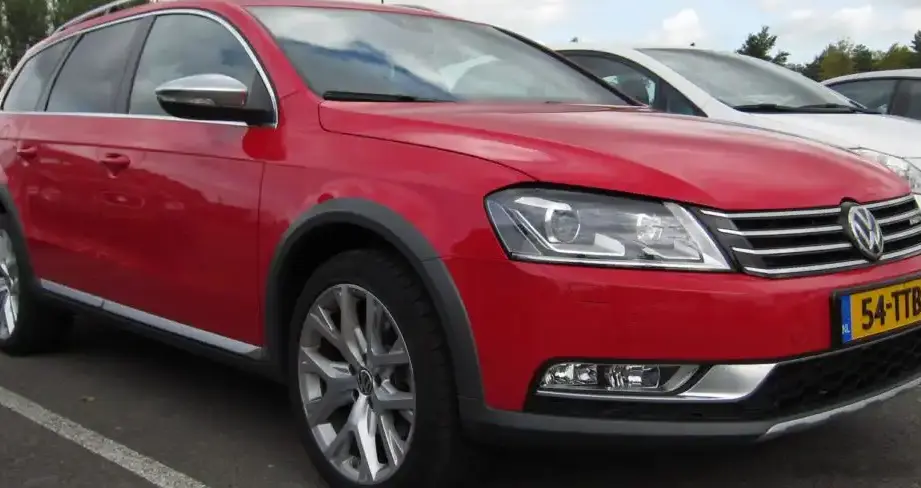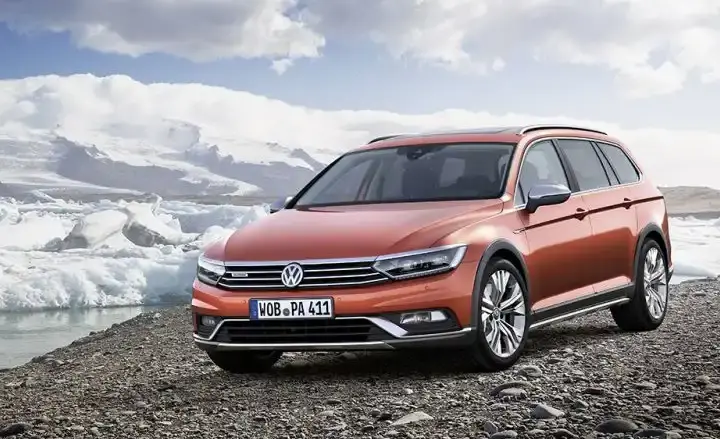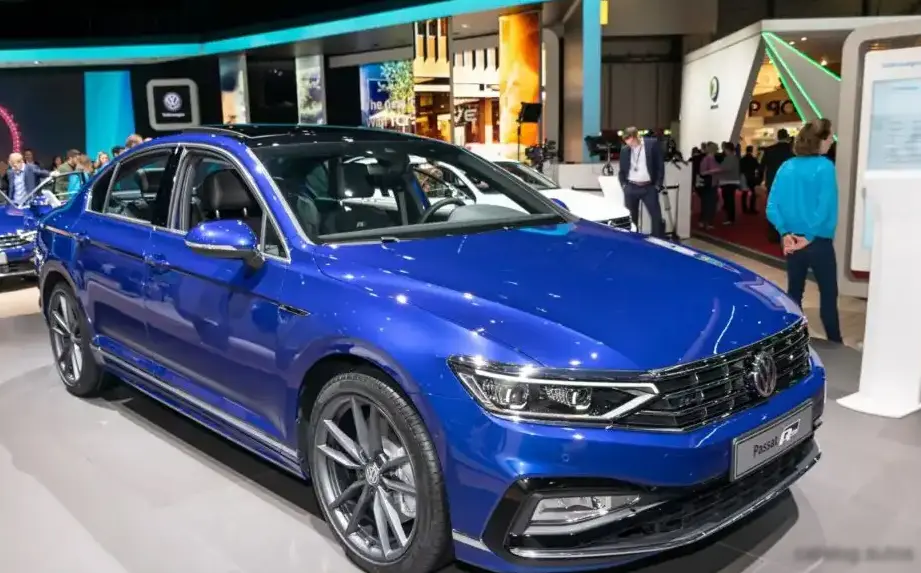
The Volkswagen Passat GTE 1.4 TSI (218 hp) Plug-in Hybrid, produced from September 2019 to 2021, represents a significant step in Volkswagen’s electrification strategy within the B8 Passat generation (facelift). Positioned as a mid-to-premium trim level, the GTE offered a blend of fuel efficiency, performance, and reduced emissions, appealing to environmentally conscious buyers seeking a practical and comfortable family sedan. This variant was primarily marketed in Europe and other regions with established plug-in hybrid infrastructure, offering a compelling alternative to traditional gasoline-powered Passats and diesel models. It builds upon the established Passat platform (1HX0/A3) known for its spaciousness and refined driving experience.
Technical Specifications
| Brand | Volkswagen |
| Model | Passat |
| Generation | Passat (B8, facelift 2019) |
| Type (Engine) | GTE 1.4 TSI (218 Hp) Plug-in Hybrid DSG |
| Start of production | September, 2019 |
| End of production | 2021 |
| Powertrain Architecture | PHEV (Plug-in Hybrid Electric Vehicle) |
| Body type | Sedan |
| Seats | 5 |
| Doors | 4 |
| Combined fuel consumption (WLTP) | 1.2 l/100 km (196 US mpg, 235.4 UK mpg, 83.3 km/l) |
| CO2 emissions (WLTP) | 27 g/km |
| Fuel consumption (NEDC) – combined | 1.4-1.5 l/100 km (168 – 156.8 US mpg, 201.8 – 188.3 UK mpg, 71.4 – 66.7 km/l) |
| CO2 emissions (NEDC) | 32-34 g/km |
| Fuel Type | Petrol / electricity |
| Acceleration 0 – 100 km/h | 7.4 sec |
| Acceleration 0 – 62 mph | 7.4 sec |
| Acceleration 0 – 60 mph | 7 sec |
| Maximum speed | 222 km/h (137.94 mph) |
| Emission standard | Euro 6d-ISC |
| Weight-to-power ratio | 7.6 kg/Hp, 131.7 Hp/tonne |
| Weight-to-torque ratio | 4.1 kg/Nm, 241.7 Nm/tonne |
| Gross battery capacity | 13 kWh |
| Net (usable) battery capacity | 10.4 kWh |
| Battery technology | Lithium-ion (Li-Ion) |
| Battery location | Below the floor, under the rear seats |
| All-electric range (NEDC) | 68-70 km (42.25 – 43.5 mi) |
| Average Energy consumption (WLTP) | 15.7 kWh/100 km (25.27 kWh/100 mi, 133 MPGe, 6.4 km/kWh, 4 mi/kWh) |
| Average Energy consumption (NEDC) | 13.8-14.2 kWh/100 km (22.21 – 22.85 kWh/100 mi, 152 – 147 MPGe, 7.2 – 7 km/kWh, 4.5 – 4.4 mi/kWh) |
| Max speed (electric) | 130 km/h (80.78 mph) |
| Electric motor power | 115 Hp |
| Electric motor Torque | 330 Nm (243.4 lb.-ft.) |
| Maximum revolutions of the electric motor | 6000 rpm |
| Electric motor location | Between the combustion engine and the transmission |
| System power | 218 Hp |
| System torque | 400 Nm (295.02 lb.-ft.) |
| Power | 156 Hp |
| Power per litre | 111.8 Hp/l |
| Torque | 250 Nm @ 1550-3500 rpm (184.39 lb.-ft. @ 1550-3500 rpm) |
| Engine layout | Front, Transverse |
| Engine Model/Code | EA211 / DGEB |
| Engine displacement | 1395 cm3 (85.13 cu. in.) |
| Number of cylinders | 4 |
| Engine configuration | Inline |
| Cylinder Bore | 74.5 mm (2.93 in.) |
| Piston Stroke | 80 mm (3.15 in.) |
| Compression ratio | 10:1 |
| Number of valves per cylinder | 4 |
| Fuel injection system | Direct injection |
| Engine aspiration | Turbocharger, Intercooler |
| Valvetrain | DOHC |
| Engine oil capacity | 4 l (4.23 US qt | 3.52 UK qt) |
| Kerb Weight | 1655 kg (3648.65 lbs.) |
| Max. weight | 2220 kg (4894.26 lbs.) |
| Max load | 565 kg (1245.61 lbs.) |
| Trunk (boot) space – minimum | 402 l (14.2 cu. ft.) |
| Trunk (boot) space – maximum | 968 l (34.18 cu. ft.) |
| Fuel tank capacity | 50 l (13.21 US gal | 11 UK gal) |
| Max. roof load | 100 kg (220.46 lbs.) |
| Permitted trailer load with brakes (8%) | 1900 kg (4188.78 lbs.) |
| Permitted trailer load with brakes (12%) | 1600 kg (3527.4 lbs.) |
| Permitted trailer load without brakes | 750 kg (1653.47 lbs.) |
| Permitted towbar download | 90 kg (198.42 lbs.) |
| Length | 4775 mm (187.99 in.) |
| Width | 1832 mm (72.13 in.) |
| Width including mirrors | 2083 mm (82.01 in.) |
| Height | 1483 mm (58.39 in.) |
| Wheelbase | 2786 mm (109.69 in.) |
| Front track | 1578-1586 mm (62.13 – 62.44 in.) |
| Rear (Back) track | 1564-1572 mm (61.57 – 61.89 in.) |
| Ride height (ground clearance) | 145 mm (5.71 in.) |
| Minimum turning circle (turning diameter) | 11.7 m (38.39 ft.) |
| Drivetrain Architecture | The Internal combustion engine (ICE) and electric motor drive the front wheels of the car with the ability to work in full electric or mixed mode. |
| Drive wheel | Front wheel drive |
| Number of gears and type of gearbox | 6 gears, automatic transmission DSG |
| Front suspension | Independent type McPherson, Transverse stabilizer |
| Rear suspension | Independent multi-link suspension, Transverse stabilizer |
| Front brakes | Ventilated discs |
| Rear brakes | Disc |
| Assisting systems | ABS (Anti-lock braking system) |
| Steering type | Steering rack and pinion |
| Power steering | Electric Steering |
| Tires size | 215/55 R17; 235/45 R18 |
| Wheel rims size | 7J x 17; 8J x 18 |
INTRODUCTION
The Volkswagen Passat GTE 1.4 TSI, launched in 2019 as part of the B8 facelift, combined a 1.4-liter turbocharged gasoline engine with an electric motor and a lithium-ion battery pack. This plug-in hybrid powertrain allowed for a significant degree of electric-only driving, reducing local emissions and fuel consumption. The GTE (Gran Turismo Electric) designation, first used on the Golf GTE, signified Volkswagen’s commitment to performance and efficiency. The Passat GTE aimed to bridge the gap between traditional internal combustion engine vehicles and fully electric cars, offering a practical and versatile option for drivers transitioning to electrified mobility. It was positioned above the standard Passat trims in terms of price and technology, but below the more luxurious and performance-oriented models.
Powertrain & Engine Architecture
At the heart of the Passat GTE lies the EA211 series 1.4-liter turbocharged four-cylinder gasoline engine, coded DGEB. This engine produces 156 hp and 250 Nm (184 lb-ft) of torque. It features direct fuel injection and a turbocharger with intercooling, optimizing both power and efficiency. The engine is paired with an 85kW (115 hp) electric motor integrated between the engine and the 6-speed DSG (Dual-Clutch Gearbox) transmission. The electric motor delivers 330 Nm (243 lb-ft) of torque, providing instant acceleration and supplementing the gasoline engine. The 13 kWh lithium-ion battery pack, located under the rear seats, provides an all-electric range of up to 68-70 km (42-43.5 miles) under the NEDC cycle. The DSG transmission is specifically calibrated to work seamlessly with both the gasoline engine and the electric motor, providing smooth and efficient gear changes. The system intelligently manages the power delivery between the two sources, optimizing for fuel economy or performance as needed.
Driving Characteristics
The Passat GTE 1.4 TSI offers a unique driving experience. In electric-only mode, the car provides near-silent acceleration and a surprisingly brisk pace for city driving. The instant torque from the electric motor makes it feel responsive and agile. When the battery is depleted or when more power is demanded, the gasoline engine seamlessly kicks in, providing a combined output of 218 hp and 400 Nm (295 lb-ft) of torque. The DSG transmission ensures quick and precise gear changes, contributing to a 0-62 mph (0-100 km/h) time of 7.4 seconds. Compared to the standard 1.5 TSI Passat, the GTE offers significantly more power and torque, resulting in noticeably quicker acceleration. However, the added weight of the battery pack does slightly impact handling, making it feel less nimble than its lighter counterparts. The GTE’s hybrid system allows for various driving modes, including E-Mode (electric only), Hybrid Auto, and GTE mode (maximum performance), allowing drivers to tailor the driving experience to their preferences.
Equipment & Trim Levels
The Passat GTE typically came well-equipped as standard. Key features included Volkswagen’s Discover Pro infotainment system with an 8-inch touchscreen, navigation, and smartphone integration (Apple CarPlay and Android Auto). Interior upholstery was typically a combination of leather and Alcantara, with distinctive GTE badging and blue stitching. Standard safety features included automatic emergency braking, lane assist, and adaptive cruise control. Optional extras included a panoramic sunroof, premium sound system, and upgraded leather upholstery. The GTE also featured unique exterior styling cues, such as a blue radiator grille, C-shaped LED daytime running lights, and a distinctive rear diffuser.
Chassis & Braking
The Passat GTE utilizes a McPherson strut front suspension and a multi-link rear suspension, providing a comfortable and controlled ride. The suspension is tuned to accommodate the added weight of the battery pack, ensuring stable handling and minimal body roll. Brakes are ventilated discs on the front wheels and solid discs on the rear. The GTE also incorporates regenerative braking, which captures energy during deceleration and uses it to recharge the battery. ABS (Anti-lock Braking System) and electronic stability control are standard features, enhancing safety and control in various driving conditions.
Market Reception & Comparison
The Passat GTE was generally well-received by automotive critics, who praised its fuel efficiency, performance, and comfortable ride. However, some reviewers noted that the all-electric range was somewhat limited compared to other plug-in hybrids on the market. Compared to the standard Passat 1.5 TSI, the GTE offered a significant performance upgrade and lower emissions, but at a higher price point. Compared to the Passat 2.0 TDI diesel, the GTE provided a cleaner alternative, particularly in urban environments, but with a slightly higher running cost depending on electricity prices. The GTE’s fuel economy and reliability were generally considered to be good, although the complexity of the hybrid system did raise some concerns about long-term maintenance costs.
Legacy
The Volkswagen Passat GTE 1.4 TSI represents an important step in Volkswagen’s transition towards electrification. While production ended in 2021, the GTE remains a popular choice in the used car market, particularly among buyers seeking a fuel-efficient and environmentally friendly family sedan. The powertrain, while complex, has proven to be relatively reliable, with many owners reporting few major issues. The GTE’s legacy lies in its demonstration of the potential for plug-in hybrid technology to deliver both performance and efficiency, paving the way for Volkswagen’s future electric vehicle offerings.