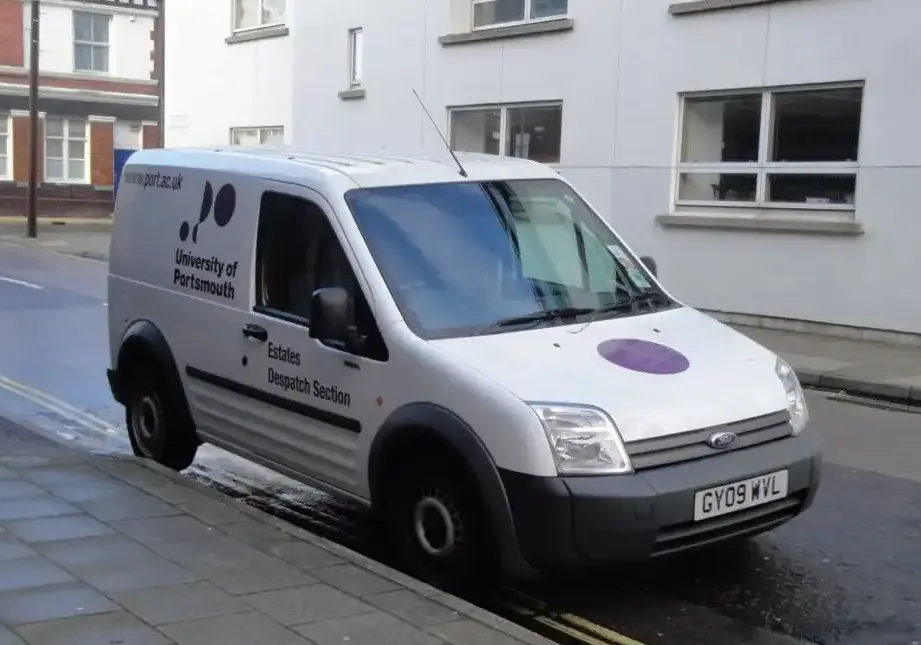
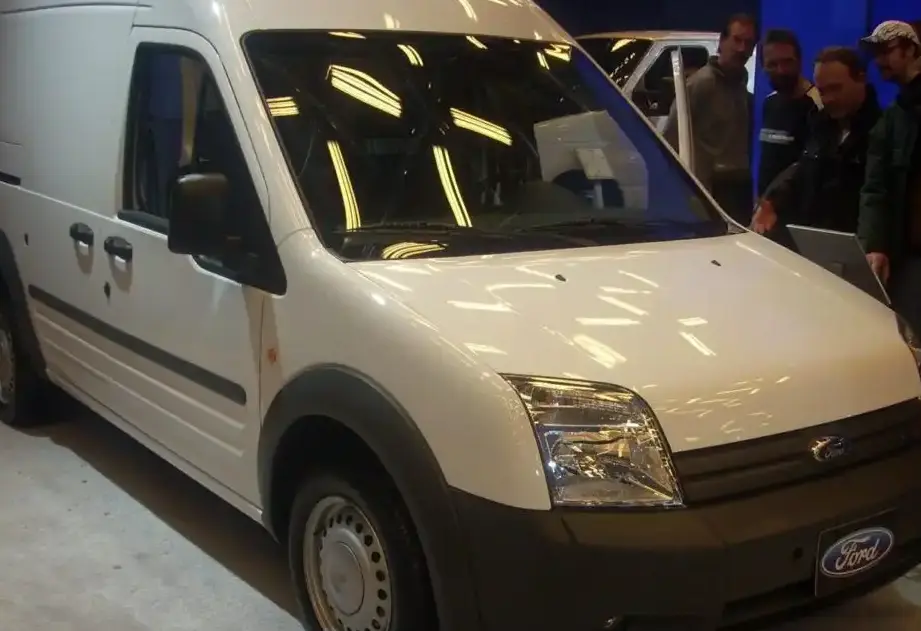
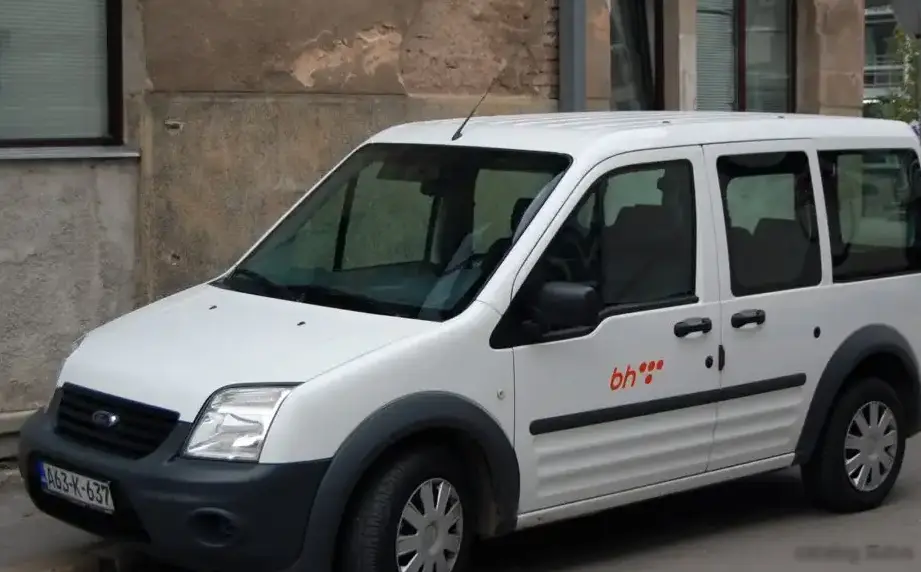
The Ford Transit Connect II, specifically the facelifted version introduced in 2018, represented a significant update to Ford’s compact commercial and passenger vehicle lineup. The Double Cab-in-Van L1 configuration with the 1.0 EcoBoost 100 horsepower engine, produced from 2018 through 2024, was positioned as an entry-level to mid-range offering, appealing to businesses and families needing a versatile and relatively fuel-efficient vehicle. This variant aimed to balance practicality with affordability, offering a compromise between the more powerful EcoBoost options and the diesel variants available in European markets. It primarily served the European market, where compact vans and crew vans are highly popular, though limited numbers were also sold in North America.
Technical Specifications
| Brand | Ford |
| Model | Transit Connect |
| Generation | Transit Connect II (facelift 2018) Double Cab-in-Van L1 |
| Type (Engine) | 1.0 EcoBoost (100 Hp) |
| Start of production | 2018 |
| End of production | 2024 |
| Powertrain Architecture | Internal Combustion engine |
| Body type | Minivan |
| Seats | 5 |
| Doors | 5 |
| Fuel consumption at Low speed (WLTP) | 7.6 l/100 km (30.9 US mpg, 37.2 UK mpg, 13.2 km/l) |
| Fuel consumption at high speed (WLTP) | 6.4 l/100 km (36.8 US mpg, 44.1 UK mpg, 15.6 km/l) |
| CO2 emissions (WLTP) | 166 g/km |
| Fuel consumption (economy) – urban (NEDC) | 6.4-7.1 l/100 km (36.8 – 33.1 US mpg, 44.1 – 39.8 UK mpg, 15.6 – 14.1 km/l) |
| Fuel consumption (economy) – extra urban (NEDC) | 5.2-5.9 l/100 km (45.2 – 39.9 US mpg, 54.3 – 47.9 UK mpg, 19.2 – 16.9 km/l) |
| Fuel consumption (economy) – combined (NEDC) | 5.9-6.4 l/100 km (39.9 – 36.8 US mpg, 47.9 – 44.1 UK mpg, 16.9 – 15.6 km/l) |
| CO2 emissions (NEDC) | 134-146 g/km |
| Fuel Type | Petrol (Gasoline) |
| Emission standard | Euro 6d-TEMP-EVAP-ISC |
| Weight-to-power ratio | 15.2 kg/Hp, 65.8 Hp/tonne |
| Weight-to-torque ratio | 8.9 kg/Nm, 111.9 Nm/tonne |
| Power | 100 Hp @ 4500 rpm |
| Power per litre | 100.1 Hp/l |
| Torque | 170 Nm @ 1400-4000 rpm (125.39 lb.-ft. @ 1400-4000 rpm) |
| Engine layout | Front, Transverse |
| Engine Model/Code | EcoBoost / B3GA |
| Engine displacement | 999 cm3 (60.96 cu. in.) |
| Number of cylinders | 3 |
| Engine configuration | Inline |
| Cylinder Bore | 71.9 mm (2.83 in.) |
| Piston Stroke | 82 mm (3.23 in.) |
| Number of valves per cylinder | 4 |
| Fuel injection system | Direct injection |
| Engine aspiration | Turbocharger, Intercooler |
| Valvetrain | DOHC |
| Engine oil capacity | 4.97 l (5.25 US qt, 4.37 UK qt) |
| Coolant | 5.5 l (5.81 US qt, 4.84 UK qt) |
| Kerb Weight | 1519-1523 kg (3348.82 – 3357.64 lbs.) |
| Max. weight | 2255-2305 kg (4971.42 – 5081.66 lbs.) |
| Max load | 736-782 kg (1622.6 – 1724.01 lbs.) |
| Trunk (boot) space – minimum | 1200 l (42.38 cu. ft.) |
| Fuel tank capacity | 60 l (15.85 US gal, 13.2 UK gal) |
| Permitted trailer load with brakes (12%) | 1205 kg (2656.57 lbs.) |
| Permitted trailer load without brakes | 750 kg (1653.47 lbs.) |
| Length | 4425 mm (174.21 in.) |
| Width | 1835 mm (72.24 in.) |
| Width with mirrors folded | 1967 mm (77.44 in.) |
| Width including mirrors | 2137 mm (84.13 in.) |
| Height | 1819-1850 mm (71.61 – 72.83 in.) |
| Wheelbase | 2662 mm (104.8 in.) |
| Front track | 1568 mm (61.73 in.) |
| Rear (Back) track | 1582 mm (62.28 in.) |
| Front overhang | 885 mm (34.84 in.) |
| Rear overhang | 878 mm (34.57 in.) |
| Ride height (ground clearance) | 144-157 mm (5.67 – 6.18 in.) |
| Minimum turning circle (turning diameter) | 11.7 m (38.39 ft.) |
| Drivetrain Architecture | The Internal combustion engine (ICE) drives the front wheels of the vehicle. |
| Drive wheel | Front wheel drive |
| Number of gears and type of gearbox | 6 gears, manual transmission |
| Front suspension | Independent, type McPherson with coil spring and anti-roll bar |
| Rear suspension | Semi-dependent beam with stabilizer lateral stability |
| Front brakes | Ventilated discs |
| Rear brakes | Disc |
| Assisting systems | ABS (Anti-lock braking system) |
| Steering type | Steering rack and pinion |
| Power steering | Electric Steering |
| Tires size | 205/60 R16; 215/55 R16 |
| Wheel rims size | 6.5J x 16 |
Powertrain & Engine Architecture
The heart of this Transit Connect variant is the Ford 1.0 EcoBoost engine, specifically the B3GA code. This is a three-cylinder, 1.0-liter turbocharged gasoline engine. It utilizes direct fuel injection, a timing belt, and a double overhead camshaft (DOHC) valvetrain with four valves per cylinder. The turbocharger, coupled with an intercooler, helps to mitigate turbo lag and improve power delivery. The engine benefits from Ford’s EcoBoost technologies, including variable valve timing and a low-friction design. The engine is transversely mounted at the front of the vehicle. The transmission is a 6-speed manual gearbox, chosen for its efficiency and lower cost compared to an automatic option. The engine also incorporates a Start & Stop system and a particulate filter to reduce emissions, meeting Euro 6d-TEMP-EVAP-ISC standards.
Driving Characteristics
The 100 horsepower 1.0 EcoBoost engine, paired with the 6-speed manual transmission, provides adequate, though not exhilarating, performance for the Transit Connect. Acceleration is best described as moderate, with a 0-60 mph time estimated around 12-13 seconds. The engine’s torque peak of 170 Nm (125 lb-ft) is available from 1400-4000 rpm, providing reasonable pulling power for everyday driving and light loads. The gear ratios are tuned for fuel efficiency, meaning the engine needs to be revved somewhat to achieve brisk acceleration. Compared to the higher-output 1.5 EcoBoost versions, this engine feels noticeably less powerful, especially when fully loaded. However, it offers a more economical driving experience. The manual transmission provides good control, and the relatively light weight of the vehicle helps to maintain a nimble feel.
Equipment & Trim Levels
The 1.0 EcoBoost L1 Double Cab-in-Van typically came with a base level of equipment, focusing on practicality. Standard features included air conditioning, power windows, a basic audio system with USB connectivity, and ABS brakes. The Double Cab configuration offered seating for five passengers, with a split-folding rear bench seat providing flexibility for carrying both passengers and cargo. Optional extras included alloy wheels, parking sensors, a touchscreen infotainment system with navigation, and upgraded interior trim. The interior generally featured durable, hard-wearing plastics, reflecting the vehicle’s commercial origins. Safety features included driver and passenger airbags, and electronic stability control.
Chassis & Braking
The Transit Connect II utilizes a front-wheel-drive layout with an independent McPherson strut suspension at the front and a semi-dependent beam axle with a stabilizer bar at the rear. This suspension setup provides a reasonable balance between ride comfort and handling. The front brakes are ventilated discs, while the rear brakes are discs. ABS (Anti-lock Braking System) is standard. The steering is electric power-assisted, providing light and precise steering feel. The relatively compact size and light weight of the vehicle contribute to its maneuverability.
Market Reception & Comparison
The 1.0 EcoBoost Transit Connect was generally well-received as a practical and economical option. Critics praised its fuel efficiency and versatility, but noted its limited power compared to the larger-engined models. Compared to the 1.5 EcoBoost variants, this engine offered lower running costs but sacrificed performance. Against diesel alternatives (common in Europe), it provided a cleaner emissions profile but potentially lower fuel economy in certain driving conditions. The manual transmission was seen as a positive by many, offering greater driver engagement and control. The Double Cab configuration was particularly popular with businesses needing to transport both personnel and equipment.
Legacy
The 1.0 EcoBoost engine in the Transit Connect II has proven to be a relatively reliable powertrain, although some owners have reported issues with the timing belt and turbocharger. Regular maintenance, including oil changes and timing belt replacement, is crucial for long-term reliability. On the used car market, these models represent a good value proposition for buyers seeking a practical and affordable van. The combination of fuel efficiency, versatility, and relatively low maintenance costs makes it a popular choice for small businesses and families. While not the most powerful or luxurious option, the 1.0 EcoBoost Transit Connect remains a capable and dependable workhorse.