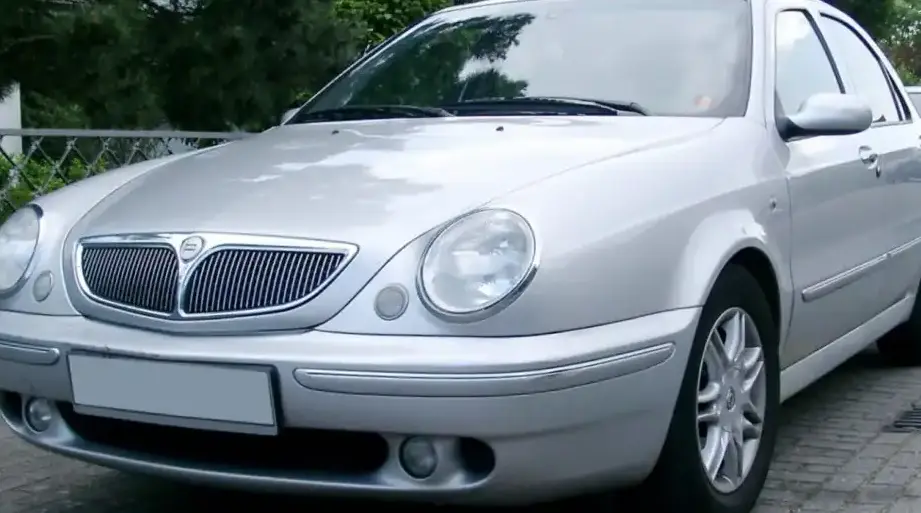
The Lancia Lybra SW 2.4 JTD, produced from August 2002 to December 2004, represents a compelling blend of Italian styling and diesel practicality within the mid-size station wagon segment. Part of the 839 series, the Lybra SW (Station Wagon) aimed to offer a more versatile alternative to the sedan, capitalizing on the growing European demand for estate cars. This particular variant, equipped with the 2.4-liter JTD diesel engine producing 150 horsepower, occupied a mid-range position in the Lybra SW lineup, offering a balance between performance, fuel economy, and equipment levels. It was positioned above the lower-powered 1.9 JTD models and below the more expensive petrol-powered versions.
Technical Specifications
| Brand | Lancia |
| Model | Lybra |
| Generation | Lybra SW (839) |
| Type (Engine) | 2.4 JTD (150 Hp) |
| Start of production | August, 2002 |
| End of production | December, 2004 |
| Powertrain Architecture | Internal Combustion engine |
| Body type | Station wagon (estate) |
| Seats | 5 |
| Doors | 5 |
| Fuel consumption (urban) | 9.2 l/100 km (25.6 US mpg) |
| Fuel consumption (extra urban) | 5.5 l/100 km (42.8 US mpg) |
| Fuel consumption (combined) | 6.9 l/100 km (34.1 US mpg) |
| Fuel Type | Diesel |
| Acceleration 0 – 100 km/h | 9.7 sec |
| Acceleration 0 – 62 mph | 9.7 sec |
| Acceleration 0 – 60 mph | 9.2 sec |
| Maximum speed | 205 km/h (127.38 mph) |
| Weight-to-power ratio | 9.7 kg/Hp |
| Weight-to-torque ratio | 4.8 kg/Nm |
| Power | 150 Hp @ 4000 rpm |
| Torque | 304 Nm @ 1800 rpm (224.22 lb.-ft. @ 1800 rpm) |
| Engine layout | Front, Transverse |
| Engine Model/Code | 841 C.000 |
| Engine displacement | 2387 cm3 (145.66 cu. in.) |
| Number of cylinders | 5 |
| Engine configuration | Inline |
| Cylinder Bore | 82 mm (3.23 in.) |
| Piston Stroke | 90.4 mm (3.56 in.) |
| Compression ratio | 18.45:1 |
| Number of valves per cylinder | 2 |
| Fuel injection system | Diesel Commonrail |
| Engine aspiration | Turbocharger, Intercooler |
| Valvetrain | OHC |
| Engine oil capacity | 5.5 l (5.81 US qt | 4.84 UK qt) |
| Coolant capacity | 8.5 l (8.98 US qt | 7.48 UK qt) |
| Kerb Weight | 1460 kg (3218.75 lbs.) |
| Max. weight | 1935 kg (4265.94 lbs.) |
| Max load | 475 kg (1047.2 lbs.) |
| Trunk (boot) space – minimum | 1300 l (45.91 cu. ft.) |
| Fuel tank capacity | 60 l (15.85 US gal | 13.2 UK gal) |
| Length | 4466 mm (175.83 in.) |
| Width | 1743 mm (68.62 in.) |
| Height | 1470 mm (57.87 in.) |
| Wheelbase | 2593 mm (102.09 in.) |
| Front track | 1497 mm (58.94 in.) |
| Rear track | 1459 mm (57.44 in.) |
| Drivetrain Architecture | Front wheel drive |
| Number of gears | 5 |
| Gearbox type | Manual transmission |
| Front suspension | Spring Strut |
| Rear suspension | Coil spring |
| Front brakes | Ventilated discs |
| Rear brakes | Disc |
| Assisting systems | ABS (Anti-lock braking system) |
| Steering type | Steering rack and pinion |
| Power steering | Hydraulic Steering |
| Tires size | 195/65 R15 |
INTRODUCTION
The Lancia Lybra SW 2.4 JTD was introduced as part of the Lybra’s second generation, building upon the success of the original Lybra launched in 1998. The SW (Station Wagon) variant, introduced in 2000, broadened the Lybra’s appeal, offering increased cargo capacity and practicality. The 2.4 JTD engine, a five-cylinder diesel, was a key component of the Lybra SW’s appeal, providing a good balance of performance and fuel efficiency. The Lybra, throughout its lifespan, aimed to blend Italian design flair with a focus on comfort and practicality, targeting a buyer who desired something more distinctive than mainstream offerings.
Powertrain & Engine Architecture
The heart of the Lybra SW 2.4 JTD is the 841 C.000 engine, a 2.4-liter inline five-cylinder diesel. This engine utilizes a common rail direct injection system, a technology that significantly improved fuel efficiency and reduced noise compared to earlier diesel designs. The common rail system, supplied by Bosch, allows for precise control of fuel delivery, optimizing combustion and minimizing emissions. The engine features an overhead camshaft (OHC) valvetrain operating two valves per cylinder. A turbocharger with an intercooler is employed to boost power output, increasing air density entering the cylinders. The 2.4 JTD engine produces 150 horsepower at 4000 rpm and a substantial 304 Nm (224.22 lb.-ft.) of torque at just 1800 rpm. This torque delivery provides strong low-end and mid-range acceleration, making it well-suited for hauling loads or overtaking. The engine is transversely mounted in the front of the vehicle. The five-speed manual transmission was the standard offering for this variant, providing a direct connection between the engine and the front wheels.
Driving Characteristics
The Lybra SW 2.4 JTD offers a comfortable and refined driving experience. The engine’s strong torque output means that spirited acceleration is readily available without the need to rev the engine excessively. The five-speed manual transmission is well-matched to the engine’s characteristics, providing smooth and precise gear changes. While not a sports car, the Lybra SW 2.4 JTD offers confident handling and stable cornering. Compared to the lower-powered 1.9 JTD versions, the 2.4 JTD provides noticeably more punch, particularly when fully loaded or tackling uphill climbs. The gear ratios are tuned for fuel efficiency and relaxed cruising, rather than outright performance. The 2.4 JTD is quieter and more refined than the 1.9 JTD, offering a more pleasant driving experience on long journeys.
Equipment & Trim Levels
The Lybra SW 2.4 JTD typically came equipped with a respectable level of standard features. These included central locking, electric windows, power steering, ABS brakes, and an air conditioning system. Interior upholstery was typically cloth, although leather options were available. Dashboard design featured a combination of analog gauges and a central information display. Optional extras included alloy wheels, a sunroof, a premium audio system, and parking sensors. The trim level often dictated the availability of these options, with higher-spec models offering more features as standard.
Chassis & Braking
The Lybra SW 2.4 JTD utilizes a MacPherson strut suspension setup at the front and a coil spring suspension at the rear. This configuration provides a good balance of ride comfort and handling. The front brakes are ventilated discs, offering strong stopping power, while the rear brakes are solid discs. ABS (Anti-lock Braking System) is standard, enhancing safety and stability during emergency braking. The steering is rack and pinion with hydraulic power assistance, providing precise and responsive steering feel. The vehicle rides on 195/65 R15 tires, offering a good compromise between comfort and grip.
Market Reception & Comparison
The Lancia Lybra SW 2.4 JTD was generally well-received by automotive critics. It was praised for its stylish design, comfortable interior, and strong diesel engine. The 2.4 JTD engine was particularly lauded for its torque output and fuel efficiency. Compared to the 1.9 JTD variant, the 2.4 JTD offered a noticeable performance improvement, justifying the higher price tag for buyers who prioritized power. Fuel economy was competitive for its class, averaging around 34.1 US mpg in combined driving. Reliability was generally good, although some owners reported issues with the common rail injection system.
Legacy
The Lancia Lybra SW 2.4 JTD, while not a high-volume seller, has developed a loyal following among enthusiasts. The 2.4 JTD engine is known for its durability and relatively straightforward maintenance. In the used car market, well-maintained examples of the Lybra SW 2.4 JTD are sought after by those looking for a stylish and practical estate car with a strong diesel engine. The Lybra SW represents a unique chapter in Lancia’s history, showcasing the brand’s commitment to design and innovation. While parts availability can be a challenge due to the car’s age and limited production numbers, the Lybra SW 2.4 JTD remains a distinctive and rewarding vehicle for those willing to invest in its upkeep.