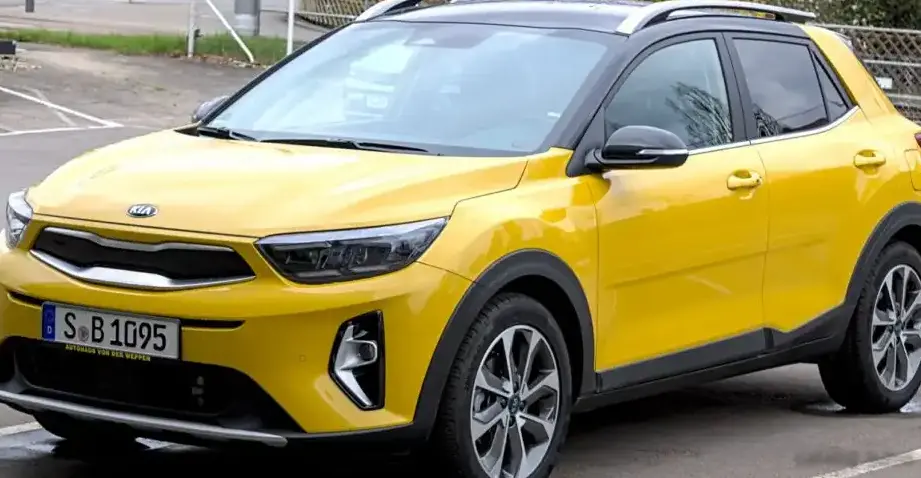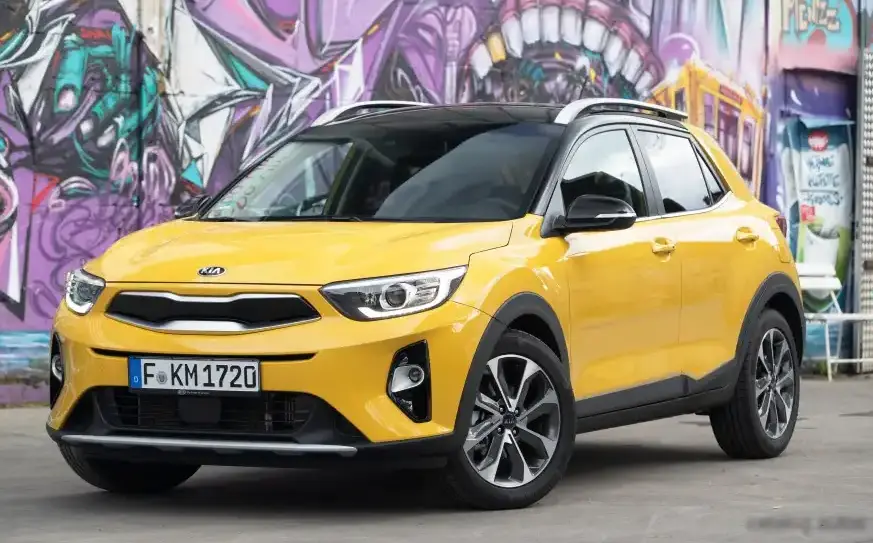
The Kia Stonic 1.0 T-GDI, producing 100 horsepower, was a key variant in Kia’s entry into the European subcompact crossover market. Introduced in 2019 and remaining in production through 2020, this model represented a significant step for Kia in offering a stylish and fuel-efficient vehicle tailored to urban driving. It was positioned as an accessible and modern option within the broader Stonic lineup, appealing to buyers seeking a practical and economical vehicle. The Stonic itself is built on Kia’s platform, sharing components with the Hyundai Kona and Rio.
Technical Specifications
| Brand | Kia |
| Model | Stonic |
| Generation | Stonic |
| Type (Engine) | 1.0 T-GDI (100 Hp) |
| Start of production | 2019 |
| End of production | 2020 |
| Powertrain Architecture | Internal Combustion engine |
| Body type | Crossover |
| Seats | 5 |
| Doors | 5 |
| Fuel consumption (urban) | 5.9-6.1 l/100 km (39.9 – 38.6 US mpg) |
| Fuel consumption (extra urban) | 4.5-4.8 l/100 km (52.3 – 49 US mpg) |
| Fuel consumption (combined) | 5-5.2 l/100 km (47 – 45.2 US mpg) |
| CO2 emissions | 115-120 g/km |
| Fuel Type | Petrol (Gasoline) |
| Acceleration 0 – 100 km/h | 10.8 sec |
| Acceleration 0 – 62 mph | 10.8 sec |
| Acceleration 0 – 60 mph | 10.3 sec |
| Maximum speed | 182 km/h (113.09 mph) |
| Emission standard | Euro 6d-TEMP |
| Weight-to-power ratio | 11.1 kg/Hp |
| Weight-to-torque ratio | 6.4 kg/Nm |
| Power | 100 Hp @ 4500 rpm |
| Torque | 172 Nm @ 1500-4000 rpm (126.86 lb.-ft. @ 1500-4000 rpm) |
| Engine layout | Front, Transverse |
| Engine Model/Code | Kappa II / G3LC |
| Engine displacement | 998 cm3 (60.9 cu. in.) |
| Number of cylinders | 3 |
| Engine configuration | Inline |
| Cylinder Bore | 71 mm (2.8 in.) |
| Piston Stroke | 84 mm (3.31 in.) |
| Compression ratio | 10:1 |
| Number of valves per cylinder | 4 |
| Fuel injection system | Direct injection |
| Engine aspiration | Turbocharger, Intercooler |
| Valvetrain | DOHC |
| Engine oil capacity | 3.6 l (3.8 US qt | 3.17 UK qt) |
| Coolant capacity | 5.5 l (5.81 US qt | 4.84 UK qt) |
| Kerb Weight | 1105-1198 kg (2436.11 – 2641.14 lbs.) |
| Max. weight | 1640 kg (3615.58 lbs.) |
| Max load | 442-535 kg (974.44 – 1179.47 lbs.) |
| Trunk (boot) space – minimum | 352 l (12.43 cu. ft.) |
| Trunk (boot) space – maximum | 1155 l (40.79 cu. ft.) |
| Fuel tank capacity | 45 l (11.89 US gal | 9.9 UK gal) |
| Max. roof load | 70 kg (154.32 lbs.) |
| Permitted trailer load with brakes (12%) | 900 kg (1984.16 lbs.) |
| Permitted trailer load without brakes | 450 kg (992.08 lbs.) |
| Permitted towbar download | 75 kg (165.35 lbs.) |
| Length | 4140 mm (162.99 in.) |
| Width | 1760 mm (69.29 in.) |
| Width including mirrors | 2025 mm (79.72 in.) |
| Height | 1520 mm (59.84 in.) |
| Wheelbase | 2580 mm (101.57 in.) |
| Front track | 1531-1537 mm (60.28 – 60.51 in.) |
| Rear track | 1539-1544 mm (60.59 – 60.79 in.) |
| Front overhang | 830 mm (32.68 in.) |
| Rear overhang | 730 mm (28.74 in.) |
| Ride height (ground clearance) | 165-183 mm (6.5 – 7.2 in.) |
| Approach angle | 14.9-16.4° |
| Departure angle | 28.7-30.4° |
| Drivetrain Architecture | Front wheel drive |
| Number of gears and type of gearbox | 5 gears, manual transmission |
| Front suspension | Independent type McPherson, Transverse stabilizer |
| Rear suspension | Coil spring, Elastic beam |
| Front brakes | Ventilated discs, 280 mm |
| Rear brakes | Disc, 262 mm |
| Assisting systems | ABS (Anti-lock braking system) |
| Steering type | Steering rack and pinion |
| Power steering | Electric Steering |
| Tires size | 185/65 R15; 195/55 R16; 205/55 R17 |
| Wheel rims size | 6J x 15; 6J x 16; 6.5J x 17 |
INTRODUCTION
The Kia Stonic 1.0 T-GDI (100 Hp) was introduced in 2019 as a key component of Kia’s expanding crossover lineup, specifically aimed at the European market. The Stonic, Kia’s smallest SUV, was designed to appeal to younger buyers and those seeking a stylish, affordable, and fuel-efficient vehicle for city driving. This particular variant, powered by the 1.0-liter turbocharged three-cylinder engine, represented an entry-level option within the Stonic range, offering a balance between economy and acceptable performance. It was built on the platform shared with the Hyundai Kona and Rio, allowing Kia to leverage economies of scale and offer a competitive price point.
Powertrain & Engine Architecture
At the heart of the Stonic 1.0 T-GDI is Kia’s Kappa II engine, specifically the G3LC code. This 998cc, three-cylinder engine utilizes direct fuel injection and a single scroll turbocharger with an intercooler to deliver 100 horsepower at 4500 rpm and 172 Nm (126.86 lb.-ft.) of torque between 1500 and 4000 rpm. The engine features a double overhead camshaft (DOHC) valvetrain with four valves per cylinder, contributing to its relatively efficient operation. The engine’s compact size and lightweight construction help to minimize overall vehicle weight. The 5-speed manual transmission was standard on this model, chosen for its simplicity and contribution to fuel economy. The engine also incorporates a Start & Stop system to further reduce fuel consumption in urban environments.
Driving Characteristics
The Stonic 1.0 T-GDI, with its 100 horsepower and 172 Nm of torque, offered adequate, though not exhilarating, performance. Acceleration from 0-100 km/h (0-62 mph) took approximately 10.8 seconds. The engine’s peak torque, available from a relatively low 1500 rpm, provided decent responsiveness for everyday driving situations, such as merging onto highways or overtaking slower vehicles. However, compared to higher-powered Stonic variants (like those with larger engines), the 1.0 T-GDI felt less capable, particularly when fully loaded or tackling steep inclines. The 5-speed manual transmission was well-matched to the engine’s characteristics, offering a reasonable spread of gears for both fuel efficiency and performance. The gear ratios were tuned to prioritize fuel economy, resulting in a slightly less engaging driving experience compared to more performance-oriented vehicles.
Equipment & Trim Levels
The Stonic 1.0 T-GDI typically came with a reasonable level of standard equipment, positioning it as a well-equipped entry-level crossover. Standard features generally included air conditioning, a touchscreen infotainment system with Bluetooth connectivity, steering wheel-mounted audio controls, and electric front windows. Safety features such as ABS, Electronic Stability Control (ESC), and multiple airbags were also standard. Higher trim levels offered additional features like alloy wheels, a rear-view camera, parking sensors, and a larger touchscreen display. Interior upholstery was typically cloth, with a focus on durability and practicality. Optional extras included metallic paint finishes and a panoramic sunroof.
Chassis & Braking
The Stonic 1.0 T-GDI utilized a front-wheel-drive configuration with an independent McPherson strut suspension at the front and a semi-independent elastic beam suspension at the rear. This suspension setup provided a comfortable ride quality, well-suited for urban roads. The front brakes were ventilated discs measuring 280mm, while the rear brakes were solid discs measuring 262mm. ABS (Anti-lock Braking System) was standard, enhancing braking performance and safety. The Stonic’s chassis was designed to be lightweight, contributing to its overall fuel efficiency and agility. Stabilizer bars were included on both axles to reduce body roll during cornering.
Market Reception & Comparison
The Kia Stonic 1.0 T-GDI was generally well-received by automotive critics as a stylish and affordable crossover. Its fuel economy, ranging from 5.0 to 5.2 l/100 km (47-45.2 US mpg), was a significant selling point. Compared to other Stonic trims, the 1.0 T-GDI offered the most economical option, but at the expense of outright performance. The 1.2-liter naturally aspirated engine offered a slightly smoother driving experience, while the 1.6-liter engine provided significantly more power. However, the 1.0 T-GDI’s turbocharging provided a noticeable boost in torque compared to the 1.2-liter, making it more suitable for highway driving. Reliability reports generally indicated good dependability, with the Kappa engine proving to be relatively robust.
Legacy
The Kia Stonic 1.0 T-GDI has established itself as a reliable and economical used car option. The Kappa engine, while not known for exceptional performance, has proven to be durable and relatively inexpensive to maintain. The Stonic’s stylish design and practical interior continue to appeal to buyers seeking a small crossover. As a used vehicle, the 1.0 T-GDI offers a compelling value proposition, providing a good balance of fuel efficiency, features, and affordability. Its compact size and nimble handling make it well-suited for urban environments, and its relatively low running costs make it an attractive option for budget-conscious buyers.