Technical Specifications
| Brand | Renault |
| Model | 4 |
| Generation | 4 |
| Type (Engine) | 0.8 (1123) (26 Hp) |
| Start of Production | 1961 |
| End of Production | 1983 |
| Powertrain Architecture | Internal Combustion Engine |
| Body Type | Hatchback |
| Seats | 5 |
| Doors | 5 |
| Fuel Type | Petrol (Gasoline) |
| Power | 26 Hp |
| Engine Model/Code | 680-01 |
| Engine Aspiration | Naturally Aspirated |
| Engine Oil Capacity | 2.5 l (2.64 US qt | 2.2 UK qt) |
| Coolant Capacity | 5 l (5.28 US qt | 4.4 UK qt) |
| Fuel Tank Capacity | 26 l (6.87 US gal | 5.72 UK gal) |
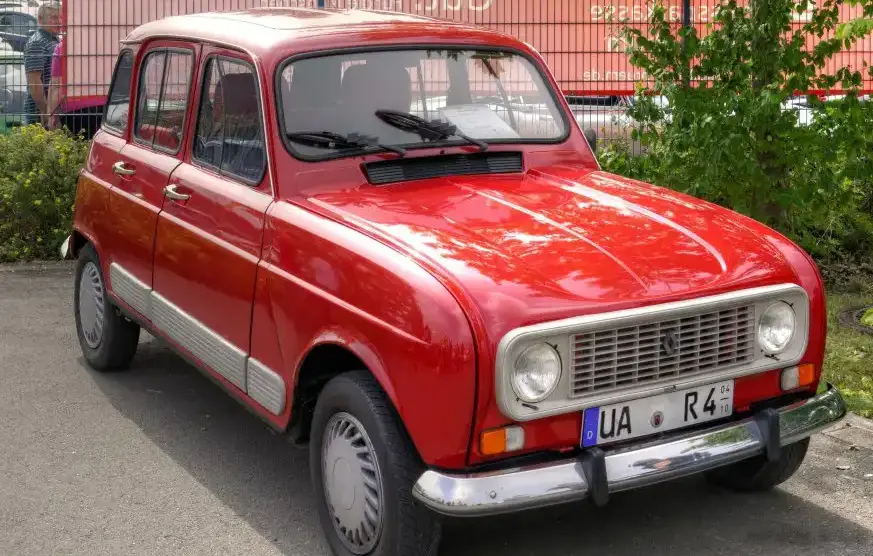
The Renault 4 0.8, powered by the 1123cc engine producing 26 horsepower, represents the foundational variant of one of France’s most iconic and enduring automobiles. Produced from 1961 through 1983, this version of the Renault 4 served as the entry point to the model range, offering affordable and practical transportation to a broad segment of the European market. It was a cornerstone of Renault’s strategy to provide a “people’s car” – simple, robust, and accessible. The 4, internally designated as the R4, quickly became a symbol of post-war French motoring, and the 0.8L model was instrumental in establishing its reputation.
Powertrain & Engine Architecture
The heart of the Renault 4 0.8 is the 1123cc, inline-four cylinder engine, designated the 680-01. This engine is a simple, overhead valve design, reflecting the car’s overall philosophy of affordability and ease of maintenance. It features a single carburetor – typically a Solex – and a low compression ratio, optimized for regular gasoline. The engine’s modest 26 horsepower is delivered at approximately 4,250 rpm, with peak torque of around 56 lb-ft at 2,500 rpm. The engine is known for its durability, though its power output is limited. The Renault 4 0.8 was exclusively paired with a three-speed manual transmission, a non-synchronized gearbox, which contributed to its low cost but required a degree of driver skill for smooth operation. The transmission was all-synchromesh, but the first gear was not synchronized, demanding a double-clutching technique for downshifts.
Driving Characteristics
The driving experience in a Renault 4 0.8 is defined by its simplicity and unhurried pace. Acceleration is modest, with a 0-60 mph time exceeding 25 seconds. The three-speed gearbox requires deliberate shifting, and the lack of synchronization on first gear necessitates practice. However, the car’s light weight (around 1,587 lbs) and relatively soft suspension provide a comfortable ride, particularly on less-than-perfect road surfaces. The gear ratios are spaced to prioritize fuel economy and low-speed tractability rather than outright performance. Compared to later, more powerful versions of the Renault 4 – such as the 1.1L models – the 0.8L variant feels significantly slower, especially when fully loaded. Hill climbing requires careful gear selection and maintaining momentum. The steering is relatively direct, though it lacks power assistance, requiring some effort at low speeds.
Equipment & Trim Levels
The Renault 4 0.8 was deliberately spartan in its equipment levels, reflecting its position as the entry-level model. Standard features were minimal, typically including basic cloth upholstery, a simple dashboard with minimal instrumentation (speedometer and fuel gauge), and manually operated windows. The interior was functional rather than luxurious, with a focus on durability. Optional extras were limited, but could include a heater, a radio, and upgraded seat coverings. The exterior trim was equally basic, with unpainted steel wheels, chrome bumpers, and minimal brightwork. The color palette was typically limited to a few solid colors, reflecting the car’s utilitarian nature. Later models saw some minor cosmetic updates, such as revised grille designs and interior trim materials, but the fundamental simplicity remained.
Chassis & Braking
The Renault 4 features a robust, yet simple, chassis design. It utilizes a monocoque construction, providing a good balance of strength and weight. The front suspension consists of independent, trailing arms with coil springs, while the rear suspension employs a torsion beam axle. This setup provides a comfortable ride, although handling is not particularly sporty. The braking system is equally straightforward, utilizing drum brakes on all four wheels. The brakes are mechanically operated, and while adequate for the car’s performance, they lack the stopping power of more modern systems. Steering is a worm-and-roller type, providing a direct feel but requiring some effort, especially at low speeds. The car’s relatively small turning circle makes it maneuverable in urban environments.
Market Reception & Comparison
The Renault 4 0.8 was widely praised for its affordability, reliability, and practicality. It quickly became a popular choice for families and individuals seeking basic transportation. Critics noted its modest performance, but acknowledged that it was sufficient for its intended purpose. Compared to other small cars of the era, such as the Citroën 2CV and the Fiat 500, the Renault 4 offered a more spacious interior and a more modern design. The 1.1L versions of the Renault 4 offered a noticeable performance improvement, but at a higher price point. The 0.8L model remained popular for those prioritizing economy and simplicity. Fuel economy was a key selling point, averaging around 45-50 mpg.
Legacy
The Renault 4 0.8, and the Renault 4 in general, holds a significant place in automotive history. Its long production run and widespread popularity cemented its status as a cultural icon. While the 0.8L variant is the least powerful and least sought-after version, it represents the purest expression of the Renault 4’s original design philosophy. Today, well-maintained examples of the Renault 4 0.8 are becoming increasingly collectible, appealing to enthusiasts who appreciate its simplicity, charm, and historical significance. The powertrain, while simple, proved remarkably durable, and many examples remain on the road today. Parts availability can be a challenge, but a dedicated community of owners and suppliers helps to keep these classic cars running. The Renault 4 0.8 stands as a testament to the enduring appeal of affordable, practical, and reliable transportation.