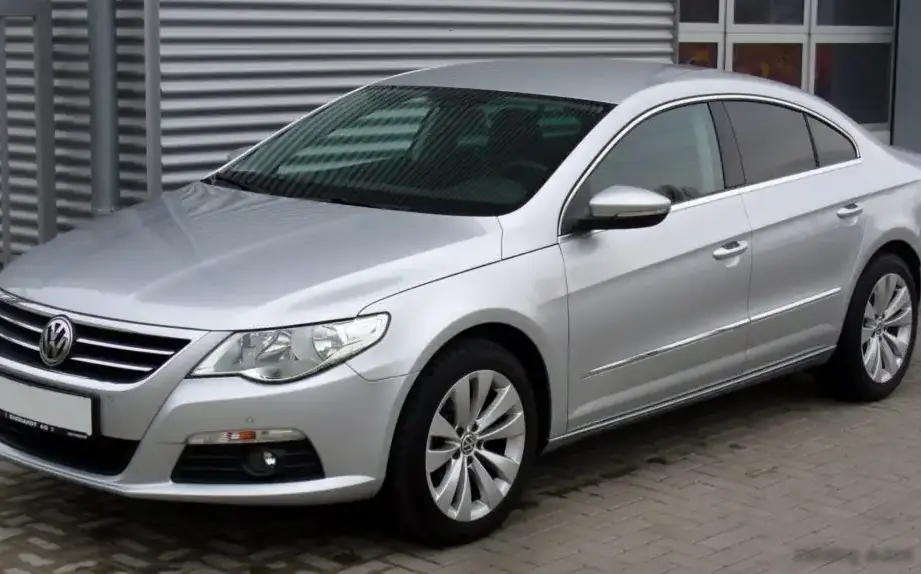
The Volkswagen Passat CC I 1.8 TSI (152 hp) represents a compelling blend of style and efficiency within the first generation of the Passat CC, produced between 2009 and October 2012. Positioned as a mid-range offering in the CC lineup, this variant aimed to deliver a more accessible entry point into the coupe-like four-door market while still providing a refined driving experience. It was a key model for Volkswagen in Europe, offering a more stylish alternative to the traditional Passat sedan, and was later introduced to markets like North America as a premium offering. This model is based on the Volkswagen Group’s B7 platform, also known as the 1HX0/A3 platform.
Technical Specifications
| Brand | Volkswagen |
| Model | Passat CC |
| Generation | Passat CC I |
| Type (Engine) | 1.8 TSI (152 Hp) |
| Start of production | 2009 |
| End of production | October, 2012 |
| Powertrain Architecture | Internal Combustion engine |
| Body type | Coupe |
| Seats | 4 |
| Doors | 4 |
| Fuel consumption (urban) | 9.6 l/100 km (24.5 US mpg) |
| Fuel consumption (extra urban) | 5.9 l/100 km (39.9 US mpg) |
| Fuel consumption (combined) | 7.3 l/100 km (32.2 US mpg) |
| Fuel Type | Petrol (Gasoline) |
| Acceleration 0 – 100 km/h | 8.5 sec |
| Acceleration 0 – 62 mph | 8.5 sec |
| Acceleration 0 – 60 mph | 8.1 sec |
| Maximum speed | 220 km/h (136.7 mph) |
| Emission standard | Euro 4 |
| Weight-to-power ratio | 9.9 kg/Hp |
| Weight-to-torque ratio | 6 kg/Nm |
| Power | 152 Hp @ 5000 rpm |
| Torque | 250 Nm @ 1500 rpm (184.39 lb.-ft. @ 1500 rpm) |
| Engine layout | Front, Longitudinal |
| Engine Model/Code | CDAB |
| Engine displacement | 1781 cm3 (108.68 cu. in.) |
| Number of cylinders | 4 |
| Engine configuration | Inline |
| Cylinder Bore | 81 mm (3.19 in.) |
| Piston Stroke | 86.4 mm (3.4 in.) |
| Compression ratio | 9.5:1 |
| Number of valves per cylinder | 5 |
| Fuel injection system | Direct injection |
| Engine aspiration | Turbocharger, Intercooler |
| Valvetrain | DOHC |
| Engine oil capacity | 4.7 l (4.97 US qt | 4.14 UK qt) |
| Kerb Weight | 1505 kg (3317.96 lbs.) |
| Max. weight | 1920 kg (4232.88 lbs.) |
| Max load | 415 kg (914.92 lbs.) |
| Trunk (boot) space – minimum | 532 l (18.79 cu. ft.) |
| Fuel tank capacity | 70 l (18.49 US gal | 15.4 UK gal) |
| Length | 4799 mm (188.94 in.) |
| Width | 1855 mm (73.03 in.) |
| Height | 1417 mm (55.79 in.) |
| Wheelbase | 2711 mm (106.73 in.) |
| Front track | 1552 mm (61.1 in.) |
| Rear (Back) track | 1559 mm (61.38 in.) |
| Minimum turning circle | 11.4 m (37.4 ft.) |
| Drivetrain Architecture | The Internal combustion engine (ICE) drives the front wheels of the vehicle. |
| Drive wheel | Front wheel drive |
| Number of gears | 6 gears, manual transmission |
| Front suspension | Independent, type McPherson with coil spring and anti-roll bar |
| Rear suspension | Coil spring |
| Front brakes | Ventilated discs |
| Rear brakes | Disc |
| Assisting systems | ABS (Anti-lock braking system) |
| Steering type | Steering rack and pinion |
| Tires size | 235/45 R17 |
| Wheel rims size | 17 |
Powertrain & Engine Architecture
At the heart of the Passat CC I 1.8 TSI lies the CDAB engine code, a 1.8-liter inline-four cylinder gasoline engine. This engine is a member of Volkswagen’s EA888 family, known for its robust design and tunability. The “TSI” designation stands for “Turbocharged Stratified Injection,” indicating the engine’s key features. It utilizes direct fuel injection, delivering fuel directly into the combustion chamber for improved efficiency and power. A single turbocharger with an intercooler provides forced induction, boosting power output. The engine employs a dual overhead camshaft (DOHC) valvetrain with five valves per cylinder (four intake, one exhaust), optimizing airflow for enhanced performance. The 6-speed manual transmission was standard, offering precise gear changes and a more engaging driving experience. The engine’s longitudinal mounting allowed for front-wheel drive configuration, common in European vehicles.
Driving Characteristics
The 152 hp and 184 lb-ft of torque produced by the 1.8 TSI engine provided adequate performance for everyday driving. Acceleration from 0-60 mph took approximately 8.1 seconds, and top speed was rated at 136.7 mph. While not a sports car, the engine delivered a respectable amount of power, particularly in the mid-range, making overtaking maneuvers relatively effortless. Compared to the more powerful 2.0 TSI or the diesel variants, the 1.8 TSI offered a smoother, more linear power delivery. The manual transmission’s gear ratios were well-matched to the engine’s characteristics, providing good responsiveness. However, drivers seeking more spirited performance often opted for the higher-output engines.
Equipment & Trim Levels
The 1.8 TSI trim of the Passat CC I typically included standard features such as air conditioning, power windows and locks, a CD stereo system, and alloy wheels. Interior upholstery was generally cloth, with options for leather upgrades. The dashboard featured a clean, modern design with intuitive controls. Optional extras included a sunroof, navigation system, premium sound system, and parking sensors. The Passat CC aimed for a more upscale feel than the standard Passat, and the 1.8 TSI trim offered a good balance of features and affordability.
Chassis & Braking
The Passat CC I utilized an independent McPherson strut suspension in the front, providing comfortable ride quality and responsive handling. The rear suspension employed a coil spring setup. The braking system consisted of ventilated discs on the front wheels and solid discs on the rear, providing adequate stopping power for the vehicle’s weight. Anti-lock braking system (ABS) was standard. Stabilizer bars were fitted to both the front and rear axles to reduce body roll during cornering. The chassis was tuned to prioritize comfort and stability, rather than outright sportiness.
Market Reception & Comparison
The Passat CC I 1.8 TSI was generally well-received by automotive critics. It was praised for its stylish design, comfortable ride, and fuel efficiency. Fuel economy figures averaged around 32.2 US mpg combined, making it an attractive option for drivers seeking a balance between performance and economy. Compared to the 2.0 TSI variant, the 1.8 TSI offered lower running costs but sacrificed some performance. The diesel models provided even better fuel economy but were often more expensive to purchase. Reliability was generally good, although some owners reported minor issues with the turbocharger and fuel injection system.
Legacy
The Volkswagen Passat CC I 1.8 TSI remains a popular choice in the used car market today. Its combination of style, comfort, and affordability has made it a desirable option for buyers seeking a well-rounded mid-size coupe. The EA888 engine family has proven to be durable and reliable, and parts availability is generally good. While not as sought-after as the higher-performance variants, the 1.8 TSI offers a compelling value proposition for those seeking a refined and efficient driving experience. The Passat CC I, and particularly this 1.8 TSI variant, helped establish Volkswagen as a maker of stylish and sophisticated vehicles, bridging the gap between mainstream sedans and more premium offerings.