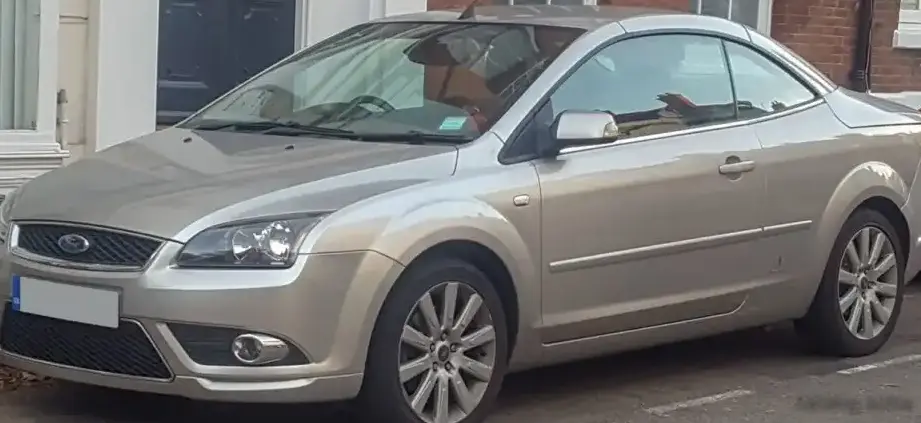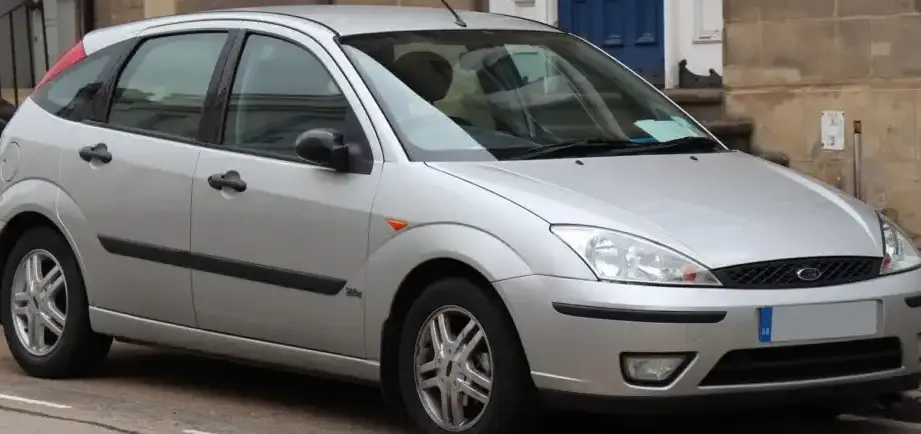
The Ford Focus Hatchback, launched in 1998 as a replacement for the Escort, represented a significant step forward for Ford of Europe in the compact family car segment. Production of the first generation (Mk1) continued through 2004, with a facelift occurring in 2002. The 1.6-liter 16V engine paired with a four-speed automatic transmission, produced between 1999 and 2005, was a popular, though not the highest-performance, option within the Focus range. This variant aimed to provide comfortable and convenient transportation for buyers prioritizing ease of use over outright speed, typically appealing to families or drivers seeking a relaxed driving experience. It occupied a mid-range position in the lineup, slotting below the more powerful Zetec models and above the base-level models with smaller engines.
Technical Specifications
| Brand | Ford |
| Model | Focus |
| Generation | Focus Hatchback I |
| Type (Engine) | 1.6 16V (100 Hp) Automatic |
| Start of production | 1999 |
| End of production | 2005 |
| Powertrain Architecture | Internal Combustion engine |
| Body type | Hatchback |
| Seats | 5 |
| Doors | 3/5 |
| Fuel consumption (urban) | 11.6 l/100 km (20.3 US mpg, 24.4 UK mpg, 8.6 km/l) |
| Fuel consumption (extra urban) | 7.5 l/100 km (31.4 US mpg, 37.7 UK mpg, 13.3 km/l) |
| Fuel consumption (combined) | 8.2 l/100 km (28.7 US mpg, 34.4 UK mpg, 12.2 km/l) |
| Fuel Type | Petrol (Gasoline) |
| Acceleration 0 – 100 km/h | 12.4 sec |
| Acceleration 0 – 62 mph | 12.4 sec |
| Acceleration 0 – 60 mph | 11.8 sec |
| Maximum speed | 176 km/h (109.36 mph) |
| Weight-to-power ratio | 10.7 kg/Hp, 93.5 Hp/tonne |
| Weight-to-torque ratio | 7.5 kg/Nm, 133.6 Nm/tonne |
| Power | 100 Hp @ 6000 rpm |
| Power per litre | 62.7 Hp/l |
| Torque | 143 Nm @ 4000 rpm (105.47 lb.-ft. @ 4000 rpm) |
| Engine layout | Front, Transverse |
| Engine Model/Code | FYDA, FYDC, FYDB, FYDD, FYDH |
| Engine displacement | 1596 cm3 (97.39 cu. in.) |
| Number of cylinders | 4 |
| Engine configuration | Inline |
| Cylinder Bore | 79 mm (3.11 in.) |
| Piston Stroke | 81.4 mm (3.2 in.) |
| Compression ratio | 11:1 |
| Number of valves per cylinder | 4 |
| Fuel injection system | Multi-port manifold injection |
| Engine aspiration | Naturally aspirated engine |
| Valvetrain | DOHC |
| Engine oil capacity | 4.25 l (4.49 US qt | 3.74 UK qt) |
| Coolant | 5 l (5.28 US qt | 4.4 UK qt) |
| Kerb Weight | 1070 kg (2358.95 lbs.) |
| Max. weight | 1590 kg (3505.35 lbs.) |
| Max load | 520 kg (1146.4 lbs.) |
| Trunk (boot) space – minimum | 350 l (12.36 cu. ft.) |
| Trunk (boot) space – maximum | 1210 l (42.73 cu. ft.) |
| Fuel tank capacity | 55 l (14.53 US gal | 12.1 UK gal) |
| Length | 4152 mm (163.46 in.) |
| Width | 1698 mm (66.85 in.) |
| Height | 1430 mm (56.3 in.) |
| Wheelbase | 2615 mm (102.95 in.) |
| Front track | 1484 mm (58.43 in.) |
| Rear (Back) track | 1477 mm (58.15 in.) |
| Minimum turning circle | 10.4 m (34.12 ft.) |
| Drivetrain Architecture | Front wheel drive |
| Number of gears | 4 |
| Gearbox type | Automatic transmission |
| Front suspension | Wishbone |
| Rear suspension | Coil spring |
| Front brakes | Ventilated discs |
| Rear brakes | Drum |
| Assisting systems | ABS (Anti-lock braking system) |
| Steering type | Steering rack and pinion |
| Power steering | Hydraulic Steering |
| Tires size | 185/60 R15 |
| Wheel rims size | 15 |
Powertrain & Engine Architecture
The heart of this Focus variant is the Zetec-E engine, specifically the 1.6-liter 16-valve version. Engine codes such as FYDA, FYDC, FYDB, FYDD, and FYDH were used depending on the specific market and emissions regulations. This engine features a cast iron block with an aluminum cylinder head, employing a dual overhead camshaft (DOHC) design with four valves per cylinder. Fuel delivery is managed by a multi-port fuel injection system, providing adequate, though not exceptional, performance. The automatic transmission is a four-speed unit, designed for smooth operation rather than sporty shifts. It’s a conventional hydraulic automatic, lacking the more advanced electronic controls found in later transmissions. The engine’s relatively simple design contributes to its generally good reliability.
Driving Characteristics
The 1.6-liter automatic Focus delivers a comfortable, if somewhat uninspiring, driving experience. Acceleration from 0-60 mph takes around 11.8 seconds, and top speed is approximately 109 mph. The four-speed automatic transmission, while smooth, lacks the responsiveness of a manual gearbox or a more modern automatic with additional gears. Gear ratios are optimized for fuel economy and relaxed cruising, rather than spirited driving. Compared to the manual transmission version of the same engine, the automatic suffers a slight performance penalty. The higher-output Zetec models, with their larger engines, offer significantly more power and a more engaging driving experience, but at the cost of fuel economy.
Equipment & Trim Levels
The 1.6-liter automatic Focus typically came equipped with features considered standard for the time, including power steering, central locking, and an AM/FM radio. Higher trim levels, such as the LX or Ghia, added features like alloy wheels, air conditioning, electric windows, and upgraded interior trim. Interior upholstery was typically cloth, with a relatively simple dashboard layout. Optional extras included a sunroof, upgraded sound system, and metallic paint. Safety features included a driver’s airbag and ABS (Anti-lock Braking System) as standard equipment.
Chassis & Braking
The Focus Mk1 utilizes a MacPherson strut front suspension and a coil spring rear suspension. The chassis is relatively lightweight, contributing to its nimble handling. The front brakes are ventilated discs, providing adequate stopping power, while the rear brakes are drums. This configuration was common for vehicles in this weight class during the late 1990s and early 2000s. Stabilizer bars were fitted to both the front and rear axles to reduce body roll during cornering.
Market Reception & Comparison
The 1.6-liter automatic Focus was generally well-received as a practical and affordable family car. Critics praised its comfortable ride and spacious interior, but noted its lack of outright performance. Fuel economy was considered reasonable for its class, averaging around 28.7 US mpg in combined driving. Compared to other trims, the 1.6 automatic offered a balance between affordability and convenience. The more powerful Zetec models were favored by drivers seeking a more engaging driving experience, while the base-level models appealed to budget-conscious buyers.
Legacy
The 1.6-liter Zetec-E engine, in its various forms, proved to be a reliable and durable powerplant. The four-speed automatic transmission, while not particularly sophisticated, is also generally considered reliable if properly maintained. Today, these Focus models are relatively affordable on the used car market. While not a performance icon, the 1.6 automatic Focus remains a practical and economical choice for those seeking a dependable and easy-to-drive hatchback. Common issues include minor oil leaks and wear on suspension components, but overall, these cars are known for their longevity and relatively low maintenance costs.