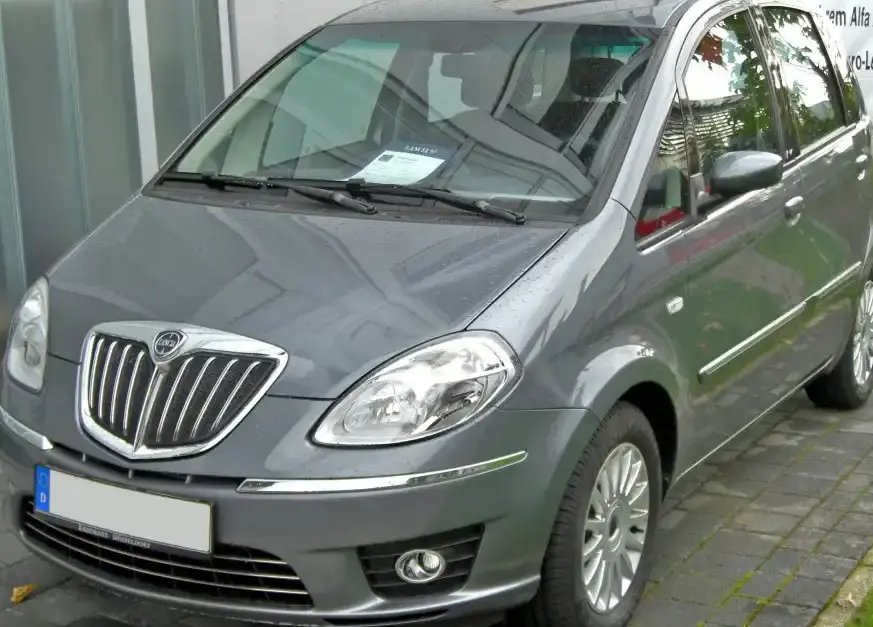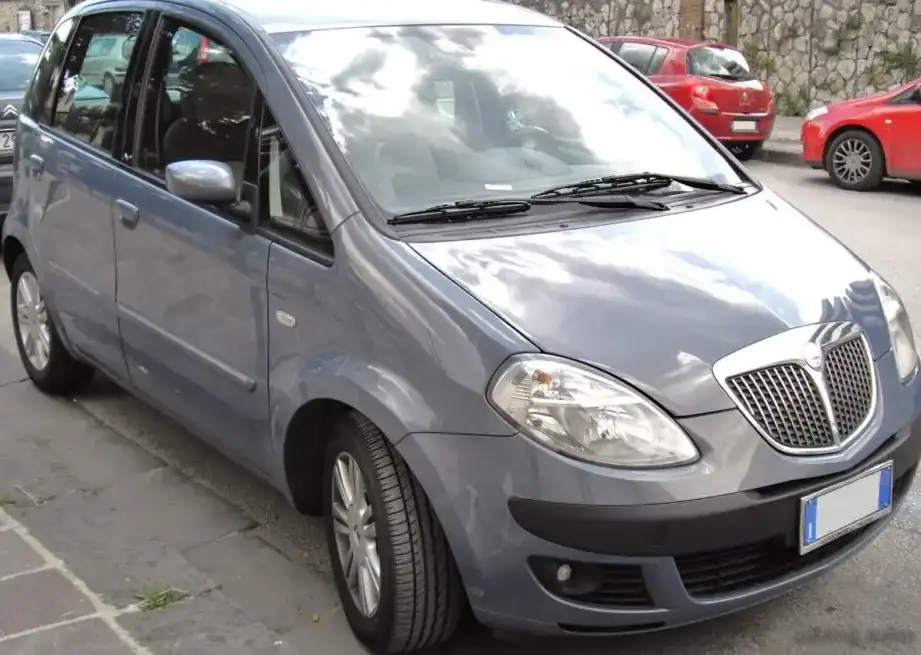
The Lancia Musa 1.2 Multijet 70 HP Automatic, produced between 2004 and 2007, represents an entry-level offering within the second generation of the Musa (also known as the Chrysler PT Cruiser in some markets due to the shared platform). Positioned as a compact Multi-Purpose Vehicle (MPV), the Musa aimed to provide a blend of practicality, unique styling, and Italian flair. This particular variant, equipped with the small-displacement diesel engine and automated manual transmission, was targeted towards urban drivers prioritizing fuel efficiency and ease of use over outright performance. It was a key model in Lancia’s attempt to revitalize its image and appeal to a broader customer base, particularly in Europe where the MPV segment was highly competitive.
Technical Specifications
| Brand | Lancia |
| Model | Musa |
| Generation | Musa |
| Type (Engine) | 1.2 Multijet (70 Hp) Automatic |
| Start of production | 2004 |
| End of production | 2007 |
| Powertrain Architecture | Internal Combustion engine |
| Body type | MPV |
| Seats | 5 |
| Doors | 5 |
| Fuel consumption (urban) | 6 l/100 km (39.2 US mpg, 47.1 UK mpg, 16.7 km/l) |
| Fuel consumption (extra urban) | 4.4 l/100 km (53.5 US mpg, 64.2 UK mpg, 22.7 km/l) |
| Fuel consumption (combined) | 5 l/100 km (47 US mpg, 56.5 UK mpg, 20 km/l) |
| Fuel Type | Diesel |
| Acceleration 0 – 100 km/h | 15.4 sec |
| Acceleration 0 – 62 mph | 15.4 sec |
| Acceleration 0 – 60 mph | 14.6 sec |
| Maximum speed | 159 km/h (98.8 mph) |
| Emission standard | Euro 4 |
| Weight-to-power ratio | 17.1 kg/Hp, 58.3 Hp/tonne |
| Weight-to-torque ratio | 6.7 kg/Nm, 150 Nm/tonne |
| Power | 70 Hp @ 4000 rpm |
| Power per litre | 56.1 Hp/l |
| Torque | 180 Nm @ 1750 rpm (132.76 lb.-ft. @ 1750 rpm) |
| Engine layout | Front, Transverse |
| Engine displacement | 1248 cm3 (76.16 cu. in.) |
| Number of cylinders | 4 |
| Engine configuration | Inline |
| Cylinder Bore | 69.6 mm (2.74 in.) |
| Piston Stroke | 82 mm (3.23 in.) |
| Compression ratio | 18:1 |
| Number of valves per cylinder | 4 |
| Fuel injection system | Diesel Commonrail |
| Engine aspiration | Turbocharger, Intercooler |
| Valvetrain | DOHC |
| Kerb Weight | 1200 kg (2645.55 lbs.) |
| Max. weight | 1700 kg (3747.86 lbs.) |
| Max load | 500 kg (1102.31 lbs.) |
| Trunk (boot) space – minimum | 320 l (11.3 cu. ft.) |
| Trunk (boot) space – maximum | 1420 l (50.15 cu. ft.) |
| Fuel tank capacity | 47 l (12.42 US gal, 10.34 UK gal) |
| Length | 3985 mm (156.89 in.) |
| Width | 1698 mm (66.85 in.) |
| Height | 1688 mm (66.46 in.) |
| Wheelbase | 2508 mm (98.74 in.) |
| Front track | 1444 mm (56.85 in.) |
| Rear (Back) track | 1431 mm (56.34 in.) |
| Drag coefficient (Cd) | 0.31 |
| Minimum turning circle | 10.4 m (34.12 ft.) |
| Drivetrain Architecture | The Internal combustion engine (ICE) drives the front wheels of the vehicle. |
| Drive wheel | Front wheel drive |
| Number of gears and type of gearbox | 5 gears, automatic transmission Dualogic |
| Front suspension | Independent coil spring |
| Rear suspension | Semi-independent, coil spring |
| Front brakes | Disc |
| Rear brakes | Drum |
| Tires size | 195/60 R15 |
| Wheel rims size | 15 |
INTRODUCTION
The Lancia Musa 1.2 Multijet Automatic, launched in 2004, was a significant addition to the Musa lineup. Built on the Fiat/Chrysler 1HX0/A3 platform (shared with the Fiat Idea and Chrysler PT Cruiser), it aimed to offer a more refined and stylish alternative to conventional MPVs. The 1.2 Multijet engine, a product of Fiat’s advanced diesel technology, was paired with a Dualogic automated manual transmission, offering a degree of convenience without the fuel economy penalty of a traditional automatic. This combination positioned the Musa 1.2 Multijet Automatic as an entry-level option, appealing to buyers seeking a practical, economical, and relatively compact vehicle for city driving and family use.
Powertrain & Engine Architecture
At the heart of the Musa 1.2 Multijet Automatic lies the 1248cc, inline-four cylinder diesel engine, designated with engine codes such as 188A5.000. This engine utilizes a second-generation common rail direct injection system, delivering fuel at extremely high pressure for improved combustion efficiency and reduced emissions. The engine is turbocharged and intercooled, boosting power output despite its small displacement. The DOHC (Double Overhead Camshaft) valvetrain, with four valves per cylinder, further enhances breathing and performance. The Dualogic transmission, a five-speed automated manual, is essentially a conventional manual gearbox with electronically controlled actuators that handle clutch operation and gear changes. While offering some of the convenience of a traditional automatic, it can exhibit slightly slower and less smooth shifts compared to a torque converter automatic.
Driving Characteristics
The 1.2 Multijet engine, producing 70 horsepower and 180 Nm (133 lb-ft) of torque, provides adequate, though not exhilarating, performance in the Musa. Acceleration from 0-60 mph takes around 14.6 seconds, and top speed is approximately 99 mph. The Dualogic transmission’s gear ratios are optimized for fuel efficiency, resulting in a relaxed driving experience at cruising speeds. However, the transmission can sometimes feel hesitant during quick acceleration or when attempting to overtake. Compared to the more powerful 1.9 JTD versions of the Musa, the 1.2 Multijet Automatic feels noticeably slower, particularly when fully loaded. The focus is on maximizing fuel economy – achieving around 47 mpg on the combined cycle – rather than providing sporty performance.
Equipment & Trim Levels
The Musa 1.2 Multijet Automatic typically came equipped with a reasonable level of standard features, including air conditioning, power steering, electric front windows, and a basic audio system. Interior upholstery was generally cloth, with a functional, if not luxurious, design. Optional extras included alloy wheels, rear parking sensors, a sunroof, and upgraded audio systems. Trim levels varied depending on the market, but generally offered incremental upgrades in terms of interior trim, exterior styling, and equipment levels. Safety features included ABS brakes and driver/passenger airbags.
Chassis & Braking
The Musa 1.2 Multijet Automatic utilizes an independent coil spring suspension at the front and a semi-independent coil spring suspension at the rear. This setup provides a comfortable ride quality, particularly on smoother roads. Front brakes are discs, while rear brakes are drums, a cost-saving measure common in this segment. The relatively light weight of the 1.2 Multijet engine contributes to balanced handling, although the Musa is not designed for spirited driving. Stabilizer bars are present to reduce body roll during cornering.
Market Reception & Comparison
The Lancia Musa 1.2 Multijet Automatic received mixed reviews from automotive critics. While praised for its fuel efficiency, practicality, and unique styling, it was often criticized for its sluggish performance and the sometimes-jerky shifts of the Dualogic transmission. Compared to other MPVs in its class, such as the Renault Scenic or Citroën Xsara Picasso, the Musa offered a more distinctive design but lacked the overall refinement and performance of some competitors. The 1.9 JTD versions of the Musa were generally preferred by drivers seeking more power and a smoother driving experience, but at a higher price point.
Legacy
The Lancia Musa 1.2 Multijet Automatic, while not a sales blockbuster, remains a relatively common sight on European roads today. The 1.2 Multijet engine is known for its durability and fuel efficiency, and with proper maintenance, can provide reliable service for many years. However, the Dualogic transmission can be prone to issues if not serviced regularly. In the used car market, the Musa 1.2 Multijet Automatic represents an affordable and practical option for buyers seeking a compact MPV with low running costs. Its unique styling and Italian heritage continue to appeal to a niche audience.