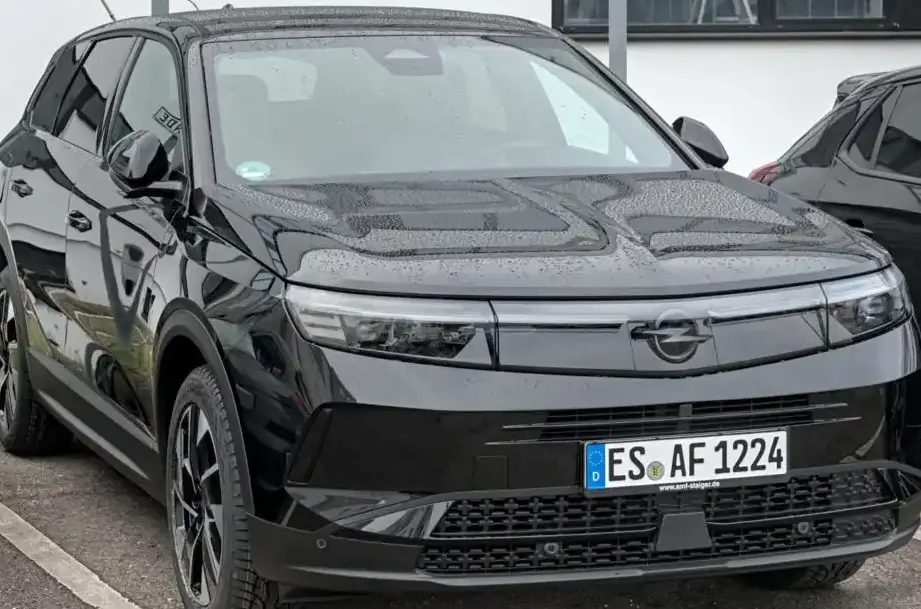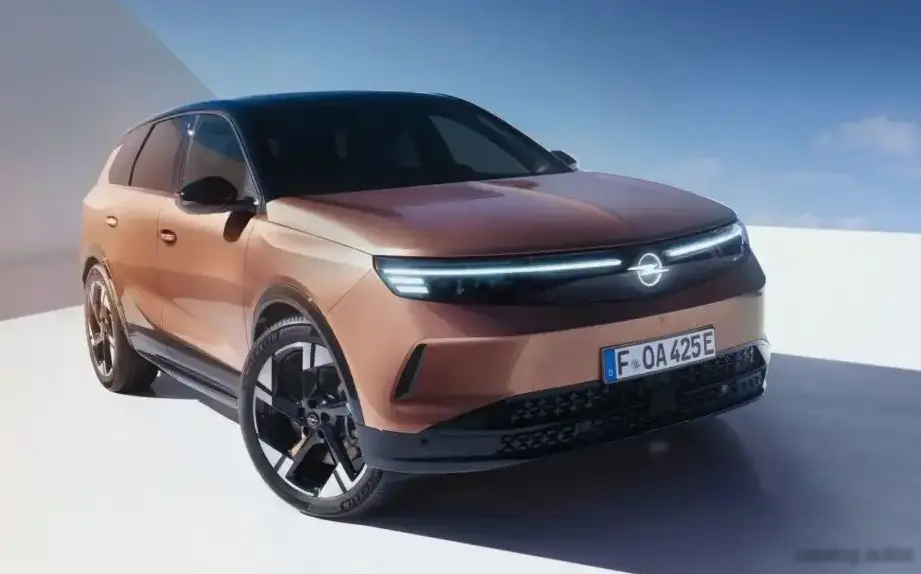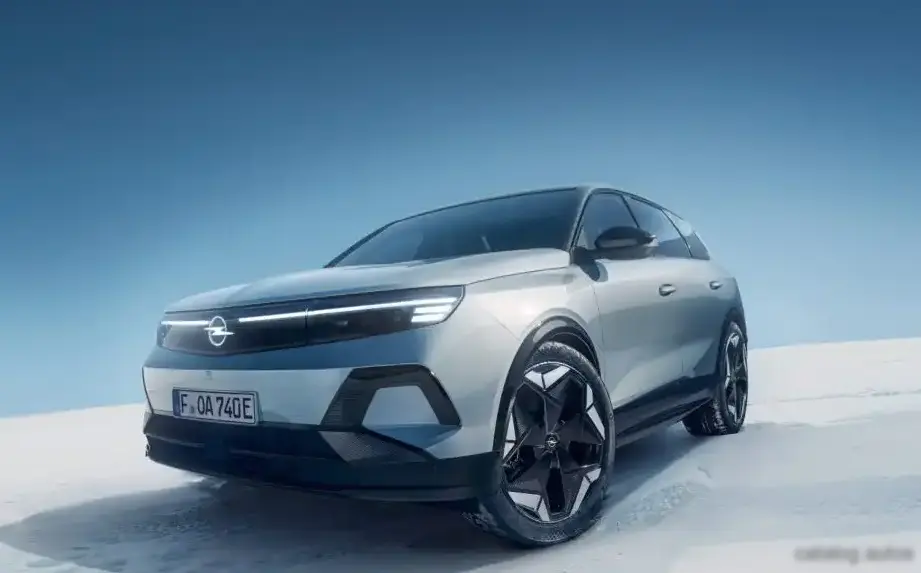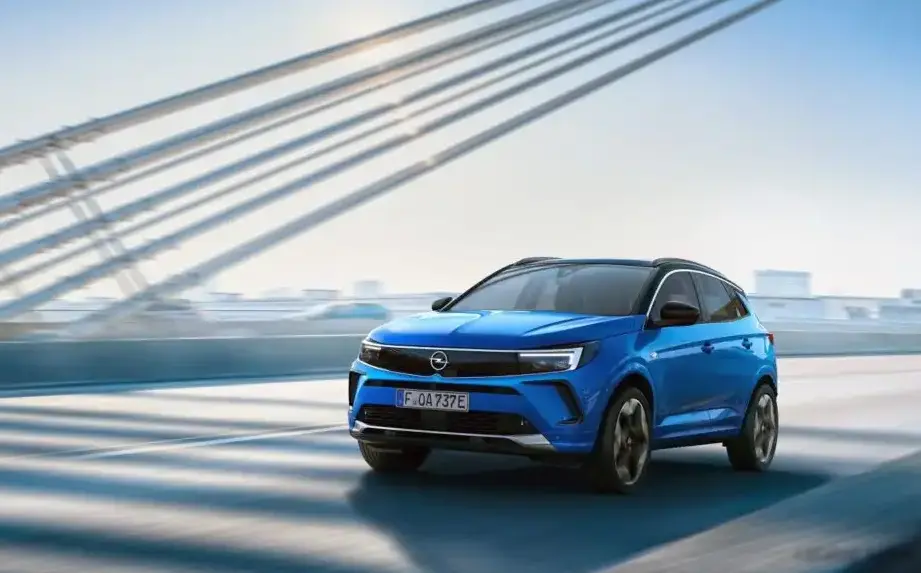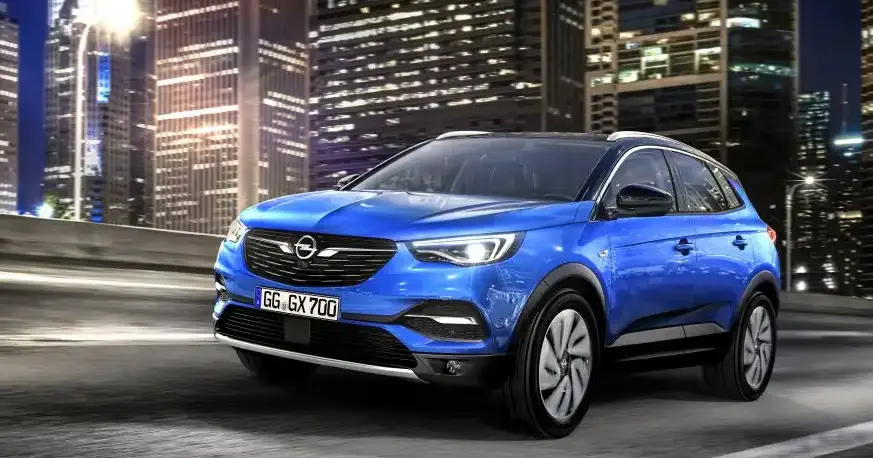
The Opel Grandland X 1.6 Turbo (300 Hp) Plug-in Hybrid4 AWD Automatic represents a significant step in Opel’s electrification strategy, launched in June 2019 and continuing through July 2021. Positioned as a premium offering within the Grandland X range, this variant combined a turbocharged gasoline engine with a dual-motor electric system, providing all-wheel drive and a substantial combined power output. It was designed to appeal to buyers seeking a practical SUV with reduced emissions and the flexibility of both electric and gasoline power. The Grandland X itself is based on the EMP2 platform, shared with other PSA Group (now Stellantis) vehicles like the Peugeot 3008 and Citroën C5 Aircross.
Technical Specifications
| Brand | Opel |
| Model | Grandland |
| Generation | Grandland X |
| Type (Engine) | 1.6 Turbo (300 Hp) Plug-in Hybrid4 AWD Automatic |
| Start of production | June, 2019 |
| End of production | July, 2021 |
| Powertrain Architecture | PHEV (Plug-in Hybrid Electric Vehicle) |
| Body type | SUV |
| Seats | 5 |
| Doors | 5 |
| Combined fuel consumption (WLTP) | 1.3-1.4 l/100 km (180.9 – 168 US mpg, 217.3 – 201.8 UK mpg, 76.9 – 71.4 km/l) |
| CO2 emissions (WLTP) | 29-32 g/km |
| Fuel consumption (economy) – combined (NEDC) | 1.5-1.6 l/100 km (156.8 – 147 US mpg, 188.3 – 176.6 UK mpg, 66.7 – 62.5 km/l) |
| CO2 emissions (NEDC) | 34-36 g/km |
| Fuel Type | Petrol / electricity |
| Acceleration 0 – 100 km/h | 6.1 sec |
| Acceleration 0 – 62 mph | 6.1 sec |
| Acceleration 0 – 60 mph | 5.8 sec |
| Maximum speed | 235 km/h (146.02 mph) |
| Emission standard | Euro 6d |
| Weight-to-power ratio | 6 kg/Hp, 166.7 Hp/tonne |
| Weight-to-torque ratio | 3.5 kg/Nm, 288.9 Nm/tonne |
| Gross battery capacity | 13.2 kWh |
| Net (usable) battery capacity | 11.5 kWh |
| Battery technology | Lithium-ion (Li-Ion) |
| Battery location | Under the rear seats |
| All-electric range (WLTP) | 57-59 km (35.42 – 36.66 mi) |
| All-electric range (NEDC) | 67-69 km (41.63 – 42.87 mi) |
| Average Energy consumption (WLTP) | 15.3-15.9 kWh/100 km (24.62 – 25.59 kWh/100 mi, 137 – 132 MPGe, 6.5 – 6.3 km/kWh, 4.1 – 3.9 mi/kWh) |
| Max speed (electric) | 135 km/h (83.89 mph) |
| Electric motor power (1) | 110 Hp @ 2500 rpm (320 Nm @ 500-2500 rpm / 236.02 lb.-ft. @ 500-2500 rpm) |
| Electric motor power (2) | 113 Hp @ 14000 rpm (166 Nm @ 0-4760 rpm / 122.44 lb.-ft. @ 0-4760 rpm) |
| Electric motor location (1) | Between the combustion engine and the transmission |
| Electric motor location (2) | Rear axle, Transverse |
| System power | 300 Hp |
| System torque | 520 Nm (383.53 lb.-ft.) |
| Power | 200 Hp @ 6000 rpm |
| Power per litre | 125.2 Hp/l |
| Torque | 300 Nm @ 3000 rpm (221.27 lb.-ft. @ 3000 rpm) |
| Engine layout | Front, Transverse |
| Engine Model/Code | D16XHT, F16XHR |
| Engine displacement | 1598 cm3 (97.52 cu. in.) |
| Number of cylinders | 4 |
| Engine configuration | Inline |
| Cylinder Bore | 77 mm (3.03 in.) |
| Piston Stroke | 85.8 mm (3.38 in.) |
| Compression ratio | 10.2:1 |
| Number of valves per cylinder | 4 |
| Fuel injection system | Direct injection |
| Engine aspiration | Turbocharger, Intercooler |
| Valvetrain | DOHC |
| Engine oil capacity | 4.3 l (4.54 US qt | 3.78 UK qt) |
| Kerb Weight | 1800 kg (3968.32 lbs.) |
| Max. weight | 2350 kg (5180.86 lbs.) |
| Max load | 550 kg (1212.54 lbs.) |
| Trunk (boot) space – minimum | 390 l (13.77 cu. ft.) |
| Trunk (boot) space – maximum | 1528 l (53.96 cu. ft.) |
| Fuel tank capacity | 43 l (11.36 US gal | 9.46 UK gal) |
| Max. roof load | 85 kg (187.39 lbs.) |
| Permitted trailer load with brakes (12%) | 1250 kg (2755.78 lbs.) |
| Permitted trailer load without brakes | 600 kg (1322.77 lbs.) |
| Permitted towbar download | 70 kg (154.32 lbs.) |
| Length | 4477 mm (176.26 in.) |
| Width | 1856 mm (73.07 in.) |
| Width including mirrors | 2098 mm (82.6 in.) |
| Height | 1609 mm (63.35 in.) |
| Wheelbase | 2675 mm (105.31 in.) |
| Front track | 1595 mm (62.8 in.) |
| Rear (Back) track | 1610 mm (63.39 in.) |
| Front overhang | 933 mm (36.73 in.) |
| Rear overhang | 869 mm (34.21 in.) |
| Ride height (ground clearance) | 188 mm (7.4 in.) |
| Minimum turning circle (turning diameter) | 11.05 m (36.25 ft.) |
| Drivetrain Architecture | An Internal combustion engine (ICE) drives the front wheels, one electric motor drives the front wheels, one electric motor drives the rear wheels. There is an ability for running in full electric or mixed mode. |
| Drive wheel | All wheel drive (4×4) |
| Number of gears and type of gearbox | 8 gears, automatic transmission |
| Front brakes | Ventilated discs |
| Rear brakes | Disc |
| Front tires size | 225/55 R18 |
| Rear tires size | 205/55 R19 |
Powertrain & Engine Architecture
At the heart of the Grandland X 1.6 Turbo Plug-in Hybrid4 lies a 1.6-liter turbocharged four-cylinder gasoline engine (code D16XHT or F16XHR). This engine produces 200 horsepower at 6000 rpm and 300 Nm (221 lb-ft) of torque at 3000 rpm. It utilizes direct fuel injection and a turbocharger with an intercooler to enhance efficiency and power output. Crucially, this engine is paired with two electric motors – one on the front axle and one on the rear axle – creating an all-wheel-drive system. The front electric motor delivers 110 hp and 320 Nm of torque, while the rear motor provides 113 hp and 166 Nm. The combined system output is a substantial 300 hp and 520 Nm (383 lb-ft) of torque. The 13.2 kWh (11.5 kWh usable) lithium-ion battery pack is located under the rear seats, minimizing impact on passenger space. The eight-speed automatic transmission is specifically tuned to work seamlessly with the hybrid powertrain, optimizing gear selection for both fuel efficiency and performance.
Driving Characteristics
The 1.6 Turbo Plug-in Hybrid4 AWD Automatic offers a distinctly different driving experience compared to other Grandland X variants. In electric mode, it provides near-silent acceleration and a range of 57-59 km (35-37 miles) on the WLTP cycle. Switching to hybrid mode allows the gasoline engine to kick in when more power is needed, or when the battery is depleted. The all-wheel-drive system provides excellent traction in various conditions. While the 6.1-second 0-62 mph acceleration is respectable, the hybrid powertrain’s weight (approximately 1800 kg / 3968 lbs) is noticeable. The eight-speed automatic transmission generally shifts smoothly, but can sometimes feel hesitant during quick downshifts. Compared to the 1.2L petrol versions, this variant offers significantly more power and torque, while the fuel economy is substantially better when utilizing the electric drive.
Equipment & Trim Levels
The Plug-in Hybrid4 variant typically came with a high level of standard equipment. This included features like a touchscreen infotainment system with navigation, Apple CarPlay and Android Auto compatibility, automatic climate control, and a suite of safety systems such as automatic emergency braking, lane departure warning, and adaptive cruise control. Interior upholstery was typically a combination of cloth and leather, with higher trims offering full leather options. Optional extras included a panoramic sunroof, premium sound system, and heated seats. The trim level often dictated the exterior styling elements, such as alloy wheel design and chrome accents.
Chassis & Braking
The Grandland X 1.6 Turbo Plug-in Hybrid4 utilizes a MacPherson strut front suspension and a multi-link rear suspension, tuned to balance comfort and handling. Due to the added weight of the battery pack and electric motors, the suspension components were often reinforced compared to lower-spec models. Braking duties are handled by ventilated discs at the front and solid discs at the rear. The electronic stability control system is integrated with the all-wheel-drive system to provide enhanced stability and control. Steering is electric power-assisted, offering a light and responsive feel.
Market Reception & Comparison
The Opel Grandland X 1.6 Turbo Plug-in Hybrid4 was generally well-received by automotive critics. It was praised for its fuel efficiency, smooth electric driving experience, and all-wheel-drive capability. However, some reviewers noted the relatively high price compared to other Grandland X models and the added weight impacting handling. Compared to the diesel-powered Grandland X variants, the plug-in hybrid offered lower emissions and a more refined driving experience, but at a higher initial cost. Against competitors like the Mitsubishi Outlander PHEV and Volvo XC60 Recharge, the Grandland X offered a competitive combination of price, performance, and features.
Legacy
The Opel Grandland X 1.6 Turbo Plug-in Hybrid4 represents an important step in Opel’s transition towards electrification. While relatively short-lived in production, it demonstrated the brand’s commitment to offering environmentally friendly vehicles. The powertrain, while complex, has proven to be reasonably reliable, with the most common issues relating to the battery management system and charging infrastructure compatibility. On the used car market, these models hold their value relatively well, appealing to buyers seeking a practical and efficient SUV with a reduced environmental impact. The technology pioneered in this variant paved the way for Opel’s subsequent fully electric models.