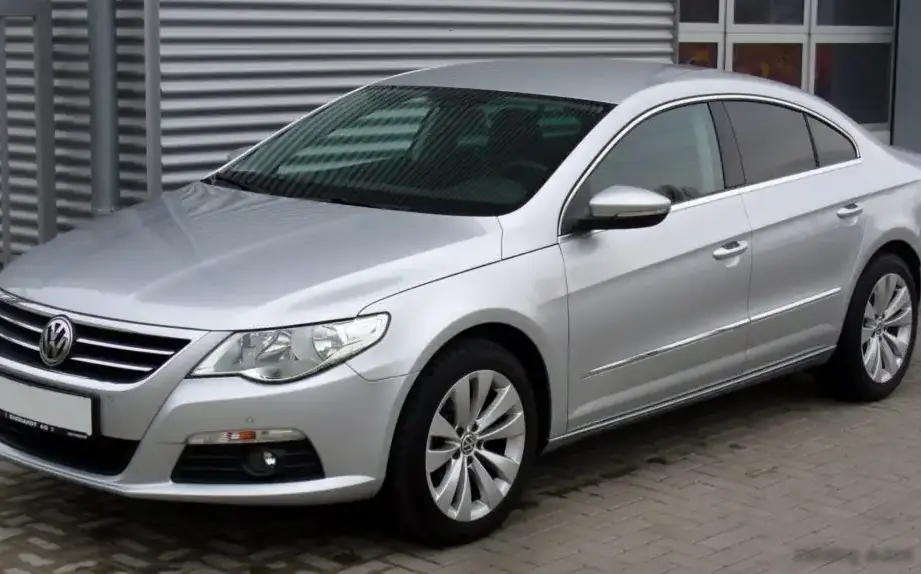
The Volkswagen Passat CC I 2.0 TDI (140 hp) was a coupe-styled variant of the sixth-generation Passat, produced between March 2008 and 2010. Positioned as a more stylish and sporty alternative to the traditional Passat sedan, the CC (Comfort Coupe) aimed to attract buyers seeking a premium feel without the higher price tag of outright luxury brands. This particular 2.0 TDI variant represented a mid-range offering within the CC lineup, balancing fuel efficiency with respectable performance. It was primarily marketed in Europe, where diesel engines held a significant market share, and offered a compelling package for drivers prioritizing economy and comfort on longer journeys.
Technical Specifications
| Brand | Volkswagen |
| Model | Passat CC |
| Generation | Passat CC I |
| Type (Engine) | 2.0 TDI (140 Hp) |
| Start of production | March, 2008 |
| End of production | 2010 |
| Powertrain Architecture | Internal Combustion engine |
| Body type | Coupe |
| Seats | 4 |
| Doors | 4 |
| Fuel consumption (urban) | 7.5 l/100 km (31.4 US mpg) |
| Fuel consumption (extra urban) | 4.8 l/100 km (49 US mpg) |
| Fuel consumption (combined) | 5.8 l/100 km (40.6 US mpg) |
| Fuel Type | Diesel |
| Acceleration 0 – 100 km/h | 9.8 sec |
| Acceleration 0 – 62 mph | 9.8 sec |
| Acceleration 0 – 60 mph | 9.3 sec |
| Maximum speed | 213 km/h (132.35 mph) |
| Emission standard | Euro 4 |
| Weight-to-power ratio | 11 kg/Hp |
| Weight-to-torque ratio | 4.8 kg/Nm |
| Power | 140 Hp @ 4000 rpm |
| Torque | 320 Nm @ 1750 rpm (236.02 lb.-ft. @ 1750 rpm) |
| Engine layout | Front, Transverse |
| Engine Model/Code | CBAB, CFFB |
| Engine displacement | 1968 cm3 (120.09 cu. in.) |
| Number of cylinders | 4 |
| Engine configuration | Inline |
| Cylinder Bore | 81 mm (3.19 in.) |
| Piston Stroke | 95.5 mm (3.76 in.) |
| Compression ratio | 18.5:1 |
| Number of valves per cylinder | 4 |
| Fuel injection system | Diesel Commonrail |
| Engine aspiration | Turbocharger, Intercooler |
| Engine oil capacity | 4 l (4.23 US qt | 3.52 UK qt) |
| Kerb Weight | 1541 kg (3397.32 lbs.) |
| Max. weight | 1960 kg (4321.06 lbs.) |
| Max load | 419 kg (923.74 lbs.) |
| Trunk (boot) space – minimum | 532 l (18.79 cu. ft.) |
| Fuel tank capacity | 70 l (18.49 US gal | 15.4 UK gal) |
| Length | 4799 mm (188.94 in.) |
| Width | 1855 mm (73.03 in.) |
| Height | 1417 mm (55.79 in.) |
| Wheelbase | 2711 mm (106.73 in.) |
| Front track | 1552 mm (61.1 in.) |
| Rear (Back) track | 1559 mm (61.38 in.) |
| Minimum turning circle | 11.4 m (37.4 ft.) |
| Drivetrain Architecture | Front wheel drive |
| Number of gears | 6 gears, manual transmission |
| Front suspension | Independent, type McPherson with coil spring and anti-roll bar |
| Rear suspension | Coil spring |
| Front brakes | Ventilated discs |
| Rear brakes | Disc |
| Assisting systems | ABS (Anti-lock braking system) |
| Steering type | Steering rack and pinion |
| Tires size | 235/45 R17 |
| Wheel rims size | 17 |
Powertrain & Engine Architecture
The heart of the Passat CC I 2.0 TDI (140 hp) was the Volkswagen Group’s 1968cc, four-cylinder diesel engine. Two engine codes were commonly found in this variant: CBAB and CFFB. Both were based on the same fundamental design, featuring a cast iron block and aluminum cylinder head. The engine utilized a common rail direct injection system, delivering fuel at extremely high pressures for optimized combustion. A turbocharger with an intercooler was employed to boost power output and improve torque across a wider rev range. The engine boasted four valves per cylinder, contributing to its efficiency and power delivery. The 140 hp output was achieved at 4000 rpm, while the substantial 320 Nm (236 lb-ft) of torque was available from as low as 1750 rpm. This made the engine particularly well-suited for relaxed cruising and effortless overtaking. The engine was paired with a six-speed manual transmission, providing precise gear changes and contributing to the car’s overall fuel efficiency.
Driving Characteristics
The 2.0 TDI 140 hp version of the Passat CC offered a comfortable and refined driving experience. While not overtly sporty, the engine provided sufficient power for everyday driving and longer journeys. Acceleration from 0-60 mph took around 9.3 seconds, and the car could reach a top speed of 132.35 mph. The readily available torque meant that the engine felt responsive even at lower speeds, making it easy to navigate urban traffic. The six-speed manual transmission allowed drivers to maintain optimal engine speed for efficiency or performance. Compared to the more powerful 2.0 TDI variants (typically 170 hp), this version prioritized fuel economy over outright speed. It also offered a smoother, less aggressive driving experience than the higher-output models. The manual transmission, while engaging, didn’t offer the seamlessness of a dual-clutch gearbox, which was available on some higher-spec CC models.
Equipment & Trim Levels
The Passat CC I 2.0 TDI (140 hp) typically came equipped with a respectable level of standard features. These included air conditioning, alloy wheels, a CD stereo system, and electric windows and mirrors. Safety features such as ABS, traction control, and multiple airbags were also standard. Interior upholstery was generally cloth, although leather options were available as upgrades. Higher trim levels offered features like automatic climate control, a sunroof, and upgraded audio systems. Optional extras included parking sensors, navigation systems, and heated seats. The interior design of the CC was generally considered more upscale than that of the standard Passat, with a focus on comfort and aesthetics.
Chassis & Braking
The Passat CC I featured a McPherson strut front suspension and a coil spring rear suspension. This setup provided a good balance between ride comfort and handling. The front suspension incorporated an anti-roll bar to reduce body roll during cornering. Braking duties were handled by ventilated discs at the front and solid discs at the rear. ABS (Anti-lock Braking System) was standard, enhancing braking performance and stability. The chassis was tuned to prioritize comfort, resulting in a relatively soft ride quality. The steering was precise and well-weighted, providing good feedback to the driver.
Market Reception & Comparison
The Passat CC I 2.0 TDI (140 hp) was generally well-received by automotive critics. It was praised for its stylish design, comfortable ride, and fuel efficiency. However, some critics noted that the 140 hp engine could feel underpowered when the car was fully loaded or traveling uphill. Compared to the more powerful 2.0 TDI variants, this version offered better fuel economy but less performance. It also represented a more affordable entry point into the CC range. Against competitors like the Audi A5 Sportback and BMW 3 Series Coupe, the Passat CC offered a compelling value proposition, providing a similar level of style and comfort at a lower price point.
Legacy
The Volkswagen Passat CC I 2.0 TDI (140 hp) has proven to be a relatively reliable vehicle in the used car market. The 2.0 TDI engine is known for its durability, although regular maintenance is essential to prevent issues with the diesel particulate filter (DPF) and turbocharger. The manual transmission is also generally reliable. Today, these cars can be found at affordable prices, making them an attractive option for buyers seeking a stylish and economical coupe. The Passat CC I helped establish Volkswagen as a maker of desirable, well-equipped vehicles, and paved the way for future coupe-styled models.