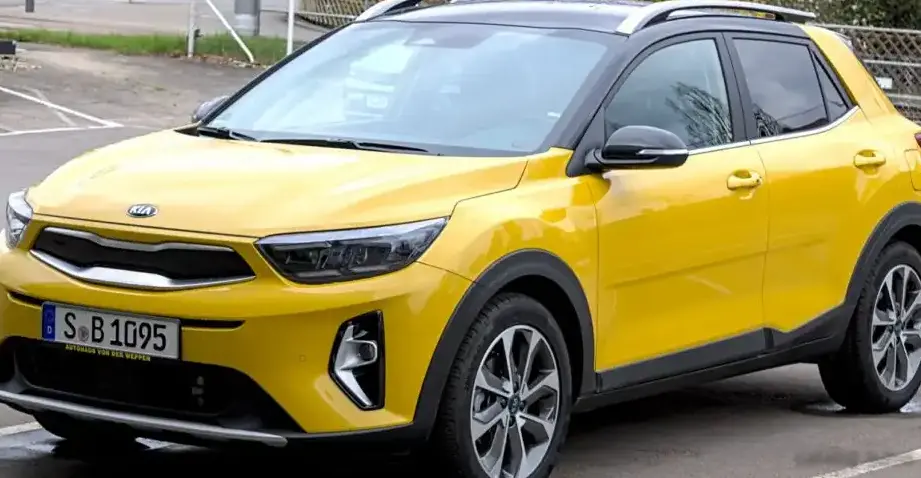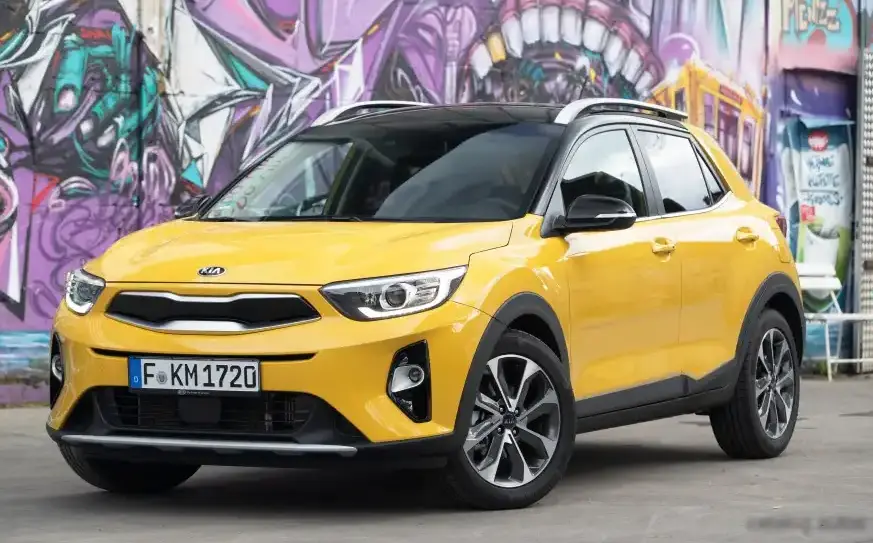
The Kia Stonic 1.6 CRDi (110 hp) was a subcompact crossover vehicle produced by the South Korean manufacturer Kia between 2017 and 2020. Positioned as an entry-level offering within the Stonic range, it aimed to provide a fuel-efficient and practical option for urban drivers. The Stonic, Kia’s smallest crossover, was primarily marketed in Europe, where the demand for smaller, more economical vehicles was high. This particular variant, powered by the 1.6-liter diesel engine, represented a significant portion of the Stonic’s sales due to its balance of performance and fuel economy. It competed directly with vehicles like the Renault Captur, Peugeot 2008, and Nissan Juke.
Technical Specifications
| Brand | Kia |
| Model | Stonic |
| Generation | Stonic |
| Type (Engine) | 1.6 CRDi (110 Hp) |
| Start of production | 2017 |
| End of production | 2020 |
| Powertrain Architecture | Internal Combustion engine |
| Body type | Crossover |
| Seats | 5 |
| Doors | 5 |
| Fuel consumption (urban) | 4.9 l/100 km (48 US mpg, 57.6 UK mpg, 20.4 km/l) |
| Fuel consumption (extra urban) | 3.8 l/100 km (61.9 US mpg, 74.3 UK mpg, 26.3 km/l) |
| Fuel consumption (combined) | 4.2 l/100 km (56 US mpg, 67.3 UK mpg, 23.8 km/l) |
| CO2 emissions | 109 g/km |
| Fuel Type | Diesel |
| Acceleration 0 – 100 km/h | 11.3 sec |
| Acceleration 0 – 62 mph | 11.3 sec |
| Acceleration 0 – 60 mph | 10.7 sec |
| Maximum speed | 175 km/h (108.74 mph) |
| Emission standard | Euro 6 |
| Weight-to-power ratio | 11.4 kg/Hp, 87.6 Hp/tonne |
| Weight-to-torque ratio | 4.8 kg/Nm, 207.2 Nm/tonne |
| Power | 110 Hp @ 4000 rpm |
| Power per litre | 69.5 Hp/l |
| Torque | 260 Nm @ 1500-2750 rpm (191.77 lb.-ft. @ 1500-2750 rpm) |
| Engine layout | Front, Transverse |
| Engine Model/Code | D4FB |
| Engine displacement | 1582 cm3 (96.54 cu. in.) |
| Number of cylinders | 4 |
| Engine configuration | Inline |
| Number of valves per cylinder | 4 |
| Fuel injection system | Diesel Commonrail |
| Engine aspiration | Turbocharger, Intercooler |
| Valvetrain | DOHC |
| Engine oil capacity | 5.3 l (5.6 US qt | 4.66 UK qt) |
| Coolant capacity | 6.2 l (6.55 US qt | 5.46 UK qt) |
| Kerb Weight | 1255 kg (2766.8 lbs.) |
| Max. weight | 1700 kg (3747.86 lbs.) |
| Max load | 445 kg (981.06 lbs.) |
| Trunk (boot) space – minimum | 332 l (11.72 cu. ft.) |
| Trunk (boot) space – maximum | 1135 l (40.08 cu. ft.) |
| Fuel tank capacity | 45 l (11.89 US gal | 9.9 UK gal) |
| Length | 4140 mm (162.99 in.) |
| Width | 1760 mm (69.29 in.) |
| Height | 1520 mm (59.84 in.) |
| Wheelbase | 2580 mm (101.57 in.) |
| Ride height (ground clearance) | 165-183 mm (6.5 – 7.2 in.) |
| Minimum turning circle | 10.4 m (34.12 ft.) |
| Drivetrain Architecture | Front wheel drive |
| Number of gears | 6 |
| Gearbox type | Manual transmission |
| Front brakes | Ventilated discs |
| Rear brakes | Disc |
| Assisting systems | ABS (Anti-lock braking system) |
| Steering type | Steering rack and pinion |
| Power steering | Electric Steering |
| Tires size | 185/65 R15; 205/55 R17 |
| Wheel rims size | 15; 17 |
Powertrain & Engine Architecture
The Kia Stonic 1.6 CRDi utilized the D4FB engine, a 1.6-liter inline-four cylinder diesel engine. This engine was a common choice in many Hyundai-Kia vehicles of the period, known for its relatively simple design and decent fuel efficiency. The D4FB features a cast iron block and an aluminum cylinder head, employing a single overhead camshaft (SOHC) design with four valves per cylinder (DOHC). Fuel is delivered via a common rail direct injection system, allowing for precise fuel metering and improved combustion efficiency. A turbocharger with an intercooler is integrated to boost power output and improve torque across a wider RPM range. The engine produces 110 horsepower at 4,000 rpm and 260 Nm (192 lb-ft) of torque between 1,500 and 2,750 rpm. This engine was paired with a six-speed manual transmission, delivering power to the front wheels. The transmission was chosen for its efficiency and affordability, aligning with the Stonic’s target market.
Driving Characteristics
The 1.6 CRDi engine in the Stonic provided adequate, though not exhilarating, performance. Acceleration from 0 to 60 mph took approximately 10.7 seconds, and the top speed was around 108.74 mph. The engine’s strength lay in its low-end torque, making it suitable for city driving and overtaking maneuvers. The six-speed manual transmission allowed drivers to keep the engine in its optimal power band. Compared to higher-output gasoline versions of the Stonic, the diesel variant offered better fuel economy but lacked the same level of responsiveness. The manual transmission, while efficient, required more driver involvement than the optional automatic transmissions available on other Stonic trims. The suspension was tuned for comfort, providing a reasonably smooth ride, but handling was not particularly sporty.
Equipment & Trim Levels
The 1.6 CRDi variant of the Stonic typically came with a base level of equipment, focusing on practicality and value. Standard features included air conditioning, electric front windows, a basic audio system with USB connectivity, and ABS brakes. Higher trim levels, such as the ‘2’ or ‘3’ trims, added features like alloy wheels, a touchscreen infotainment system with Apple CarPlay and Android Auto compatibility, rear parking sensors, and cruise control. Interior upholstery was typically cloth, with options for different color schemes. Safety features included multiple airbags and electronic stability control. Optional extras included a sunroof, automatic climate control, and a reversing camera.
Chassis & Braking
The Kia Stonic utilized a front-wheel-drive platform with a MacPherson strut front suspension and a torsion beam rear suspension. This setup provided a good balance between ride comfort and handling. The front brakes were ventilated discs, while the rear brakes were solid discs. ABS (Anti-lock Braking System) was standard, enhancing braking performance and safety. The steering was electrically assisted, providing light and easy steering feel. The Stonic’s relatively lightweight construction (around 1255 kg or 2767 lbs) contributed to its fuel efficiency and manageable handling characteristics.
Market Reception & Comparison
The Kia Stonic 1.6 CRDi was generally well-received by automotive critics for its fuel efficiency, practicality, and value for money. However, some reviewers noted that the engine could be somewhat noisy and lacked the refinement of some competitors. Compared to the gasoline-powered Stonic variants, the 1.6 CRDi offered significantly better fuel economy, making it a popular choice for drivers who covered long distances. Against rivals like the Renault Captur and Peugeot 2008, the Stonic offered a competitive price point and a generous warranty. Reliability reports suggested that the D4FB engine was generally reliable, although regular maintenance was essential to prevent issues with the diesel particulate filter (DPF).
Legacy
The Kia Stonic 1.6 CRDi remains a relatively common sight on European roads. The D4FB engine, while not known for being particularly exciting, has proven to be reasonably durable with proper maintenance. In the used car market, these models are often sought after by buyers looking for an affordable and fuel-efficient crossover. The Stonic helped establish Kia as a major player in the European subcompact crossover segment, paving the way for future models like the Seltos and the Niro. While diesel engines are becoming less popular due to emissions regulations, the 1.6 CRDi Stonic continues to offer a practical and economical transportation option for many drivers.