Technical Specifications
| Brand | Volkswagen |
| Model | Passat CC |
| Generation | Passat CC I |
| Type (Engine) | 2.0 TDI (140 Hp) DSG |
| Start of production | March, 2008 |
| End of production | 2010 |
| Powertrain Architecture | Internal Combustion engine |
| Body type | Coupe |
| Seats | 4 |
| Doors | 4 |
| Fuel consumption (urban) | 7.8 l/100 km (30.2 US mpg, 36.2 UK mpg, 12.8 km/l) |
| Fuel consumption (extra urban) | 5 l/100 km (47 US mpg, 56.5 UK mpg, 20 km/l) |
| Fuel consumption (combined) | 6 l/100 km (39.2 US mpg, 47.1 UK mpg, 16.7 km/l) |
| Fuel Type | Diesel |
| Acceleration 0 – 100 km/h | 9.8 sec |
| Acceleration 0 – 62 mph | 9.8 sec |
| Acceleration 0 – 60 mph | 9.3 sec |
| Maximum speed | 210 km/h (130.49 mph) |
| Emission standard | Euro 4 |
| Weight-to-power ratio | 11 kg/Hp, 90.9 Hp/tonne |
| Weight-to-torque ratio | 4.8 kg/Nm, 207.7 Nm/tonne |
| Power | 140 Hp @ 4000 rpm |
| Power per litre | 71.1 Hp/l |
| Torque | 320 Nm @ 1750 rpm (236.02 lb.-ft. @ 1750 rpm) |
| Engine layout | Front, Transverse |
| Engine Model/Code | CBAB, CFFB |
| Engine displacement | 1968 cm3 (120.09 cu. in.) |
| Number of cylinders | 4 |
| Engine configuration | Inline |
| Cylinder Bore | 81 mm (3.19 in.) |
| Piston Stroke | 95.5 mm (3.76 in.) |
| Compression ratio | 18.5:1 |
| Number of valves per cylinder | 4 |
| Fuel injection system | Diesel Commonrail |
| Engine aspiration | Turbocharger, Intercooler |
| Engine oil capacity | 4 l (4.23 US qt | 3.52 UK qt) |
| Kerb Weight | 1541 kg (3397.32 lbs.) |
| Max. weight | 1960 kg (4321.06 lbs.) |
| Max load | 419 kg (923.74 lbs.) |
| Trunk (boot) space – minimum | 532 l (18.79 cu. ft.) |
| Fuel tank capacity | 70 l (18.49 US gal | 15.4 UK gal) |
| Length | 4799 mm (188.94 in.) |
| Width | 1855 mm (73.03 in.) |
| Height | 1417 mm (55.79 in.) |
| Wheelbase | 2711 mm (106.73 in.) |
| Front track | 1552 mm (61.1 in.) |
| Rear (Back) track | 1559 mm (61.38 in.) |
| Minimum turning circle | 11.4 m (37.4 ft.) |
| Drivetrain Architecture | The Internal combustion engine (ICE) drives the front wheels of the vehicle. |
| Drive wheel | Front wheel drive |
| Number of gears and type of gearbox | 6 gears, automatic transmission |
| Front suspension | Independent, type McPherson with coil spring and anti-roll bar |
| Rear suspension | Coil spring |
| Front brakes | Ventilated discs |
| Rear brakes | Disc |
| Assisting systems | ABS (Anti-lock braking system) |
| Steering type | Steering rack and pinion |
| Tires size | 235/45 R17 |
| Wheel rims size | 17 |
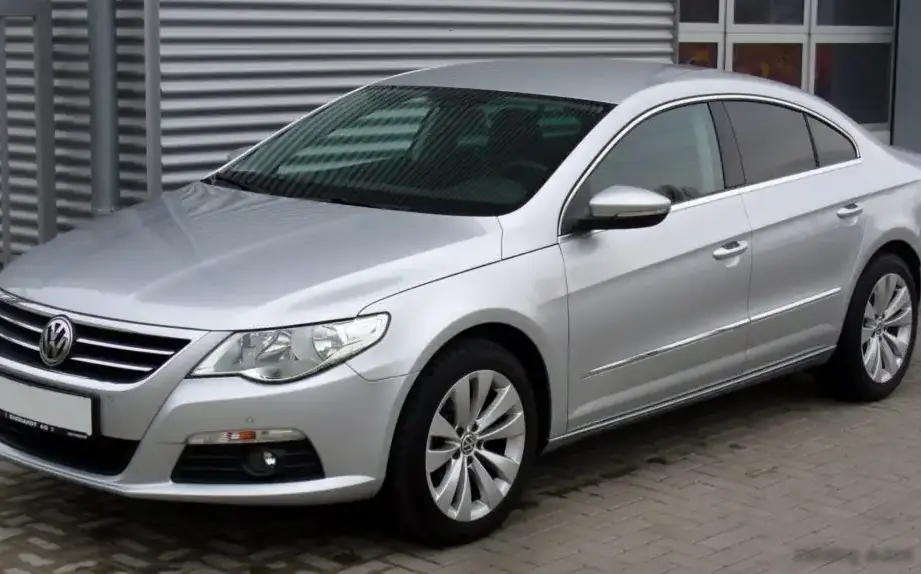
The Volkswagen Passat CC I 2.0 TDI (140 hp) DSG represents a specific configuration within the first generation of the Passat CC, produced between March 2008 and 2010. Positioned as a mid-range offering, this variant aimed to blend fuel efficiency with reasonable performance and the convenience of an automatic transmission. The Passat CC, itself a derivative of the B6 Passat sedan, was marketed as a more stylish, coupe-like alternative to traditional four-door sedans, targeting buyers seeking a more dynamic aesthetic without sacrificing practicality. This particular 2.0 TDI DSG model was primarily sold in the European market, where diesel engines and dual-clutch transmissions were highly favored.
Powertrain & Engine Architecture
The heart of the Passat CC I 2.0 TDI (140 hp) DSG is the Volkswagen Group’s 2.0-liter inline-four cylinder diesel engine, specifically the CBAB or CFFB engine code depending on the exact production date and market. This engine utilizes a common rail direct injection system, delivering fuel at extremely high pressures for optimized combustion. A turbocharger with an intercooler is employed to increase power output and improve torque across a wider RPM range. The engine features four valves per cylinder (DOHC) and a relatively high compression ratio of 18.5:1, typical for diesel engines. The engine’s design prioritized fuel efficiency and low emissions, meeting Euro 4 standards at the time of its release. The ‘DSG’ designation refers to Volkswagen’s Direct-Shift Gearbox, a dual-clutch transmission. This 6-speed automatic transmission offers quicker and smoother gear changes compared to traditional torque-converter automatics, contributing to both performance and fuel economy. The DSG operates similarly to two manual gearboxes in one, with one clutch engaging the current gear while the other pre-selects the next, resulting in near-seamless shifts.
Driving Characteristics
The 140 hp output and 320 Nm (236 lb-ft) of torque provided a balanced driving experience. While not overtly sporty, the 2.0 TDI DSG offered sufficient power for comfortable highway cruising and everyday driving. Acceleration from 0-60 mph took approximately 9.3 seconds, and the top speed was rated at 130.49 mph. The DSG transmission played a crucial role in maximizing the engine’s potential, providing quick downshifts for overtaking and maintaining optimal engine speed during acceleration. Compared to the more powerful 2.0 TDI variants (often producing 170 hp or more), this version felt less urgent, but the DSG helped to mitigate some of the performance deficit. Against manual transmission versions of the same engine, the DSG offered convenience and, in many cases, slightly improved acceleration due to faster shift times. The gear ratios were tuned for a balance between fuel economy and responsiveness, with a relatively long final drive to aid in highway efficiency.
Equipment & Trim Levels
The Passat CC I 2.0 TDI (140 hp) DSG typically came equipped with a respectable level of standard features. These included climate control, power windows and mirrors, a CD stereo system (often upgradable to include MP3 compatibility), and alloy wheels. Interior upholstery was generally cloth, although leather options were available as an upgrade. Safety features such as ABS, traction control, and multiple airbags were standard. Optional extras included a sunroof, navigation system, premium sound system, and parking sensors. Trim levels varied slightly depending on the market, but generally, this 2.0 TDI DSG model occupied a mid-range position, offering a good balance of features and price.
Chassis & Braking
The Passat CC I utilized a McPherson strut front suspension and a coil spring rear suspension. This setup provided a comfortable ride quality while maintaining reasonable handling characteristics. The front brakes were ventilated discs, offering good stopping power, while the rear brakes were solid discs. ABS (Anti-lock Braking System) was standard, enhancing safety during emergency braking situations. Stabilizer bars were fitted to both the front and rear axles to reduce body roll during cornering. The chassis was tuned to prioritize comfort and stability over outright sportiness, reflecting the car’s grand touring aspirations.
Market Reception & Comparison
The Passat CC I 2.0 TDI (140 hp) DSG was generally well-received by automotive critics. It was praised for its stylish design, comfortable ride, and fuel efficiency. However, some reviewers noted that the 140 hp engine could feel underpowered, particularly when fully loaded or tackling steep inclines. Compared to the more powerful TDI variants, this version offered a lower price point and slightly better fuel economy. Against gasoline-powered Passat CC models, the 2.0 TDI DSG provided significantly better fuel economy and a broader torque curve, making it a more practical choice for long-distance driving. Reliability was generally good, although, like all modern diesel engines, it was susceptible to issues with the diesel particulate filter (DPF) if not driven on longer journeys regularly.
Legacy
The Volkswagen Passat CC I 2.0 TDI (140 hp) DSG remains a relatively common sight on the used car market today. The 2.0 TDI engine, in general, has proven to be a durable and reliable unit when properly maintained. However, potential buyers should be aware of the potential for DPF issues and the importance of regular servicing. The DSG transmission, while offering performance benefits, can be more expensive to repair than a traditional automatic. Overall, this variant represents a solid and practical choice for buyers seeking a stylish and fuel-efficient coupe-like sedan. Its blend of comfort, economy, and convenience continues to appeal to a wide range of drivers.