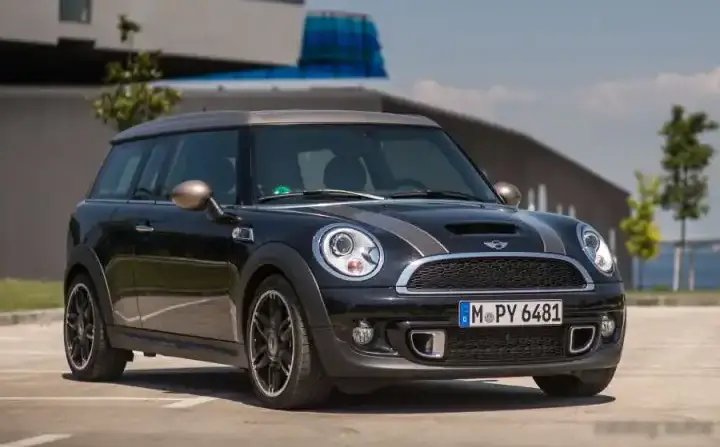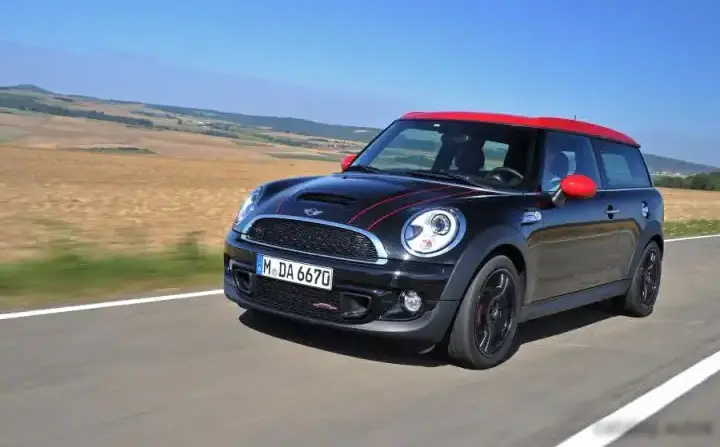
The Mini Clubman JCW 1.6 (211 hp) Automatic, produced between 2010 and 2014, represents the performance-oriented variant of the R55 Clubman generation. Positioned as the flagship trim, it offered a significant power upgrade over the standard Clubman models, appealing to drivers seeking a more engaging and sporty driving experience within the compact, five-door station wagon (estate) body style. This model occupied the top tier of the R55 lineup, offering a blend of practicality and performance that distinguished it from the more economy-focused base trims.
Technical Specifications
| Brand | Mini |
| Model | Clubman |
| Generation | Clubman (R55) |
| Type (Engine) | JCW 1.6 (211 Hp) Automatic |
| Start of production | 2010 |
| End of production | 2014 |
| Powertrain Architecture | Internal Combustion engine |
| Body type | Station wagon (estate) |
| Seats | 5 |
| Doors | 5 |
| Fuel consumption (urban) | 9.5 l/100 km (24.8 US mpg) |
| Fuel consumption (extra urban) | 5.8 l/100 km (40.6 US mpg) |
| Fuel consumption (combined) | 7.2 l/100 km (32.7 US mpg) |
| CO2 emissions | 167 g/km |
| Fuel Type | Petrol (Gasoline) |
| Acceleration 0 – 100 km/h | 6.8 sec |
| Acceleration 0 – 62 mph | 6.8 sec |
| Acceleration 0 – 60 mph | 6.5 sec |
| Maximum speed | 238 km/h (147.89 mph) |
| Emission standard | Euro 5 |
| Weight-to-power ratio | 5.7 kg/Hp |
| Weight-to-torque ratio | 4.3 kg/Nm |
| Power | 211 Hp @ 6000 rpm |
| Torque | 280 Nm @ 2000-5300 rpm (206.52 lb.-ft.) |
| Engine layout | Front, Transverse |
| Engine Model/Code | N18B16C |
| Engine displacement | 1598 cm3 (97.52 cu. in.) |
| Number of cylinders | 4 |
| Engine configuration | Inline |
| Cylinder Bore | 77 mm (3.03 in.) |
| Piston Stroke | 85.8 mm (3.38 in.) |
| Compression ratio | 10:1 |
| Number of valves per cylinder | 4 |
| Fuel injection system | Multi-port manifold injection |
| Engine aspiration | Turbocharger, Intercooler |
| Engine oil capacity | 4.2 l (4.44 US qt | 3.7 UK qt) |
| Coolant | 7.5 l (7.93 US qt | 6.6 UK qt) |
| Kerb Weight | 1205 kg (2656.57 lbs.) |
| Max. weight | 1690 kg (3725.81 lbs.) |
| Max load | 485 kg (1069.24 lbs.) |
| Trunk (boot) space – minimum | 260 l (9.18 cu. ft.) |
| Trunk (boot) space – maximum | 930 l (32.84 cu. ft.) |
| Fuel tank capacity | 50 l (13.21 US gal | 11 UK gal) |
| Length | 3958 mm (155.83 in.) |
| Width | 1683 mm (66.26 in.) |
| Height | 1432 mm (56.38 in.) |
| Wheelbase | 2547 mm (100.28 in.) |
| Front track | 1453 mm (57.2 in.) |
| Rear (Back) track | 1461 mm (57.52 in.) |
| Ride height (ground clearance) | 135 mm (5.31 in.) |
| Minimum turning circle | 11 m (36.09 ft.) |
| Drivetrain Architecture | Front wheel drive |
| Number of gears | 6 |
| Gearbox type | Automatic transmission |
| Front suspension | Independent, McPherson with coil spring and anti-roll bar |
| Rear suspension | Semi-independent, coil spring |
| Front brakes | Ventilated discs |
| Rear brakes | Disc |
| Assisting systems | ABS (Anti-lock braking system) |
| Steering type | Steering rack and pinion |
| Tires size | 205/45 R17 84W RSC |
| Wheel rims size | 7J x 17 LM |
Powertrain & Engine Architecture
At the heart of the Clubman JCW Automatic lies the N18B16C 1.6-liter turbocharged inline-four engine. This engine is a member of the BMW/PSA Prince engine family, known for its compact size and efficiency. The N18 variant, specifically tuned by John Cooper Works, features a twin-scroll turbocharger, direct fuel injection, and variable valve timing (Double-VANOS) to maximize power output and responsiveness. The engine produces 211 horsepower at 6000 rpm and 280 Nm (206.52 lb-ft) of torque between 2000 and 5300 rpm. The automatic transmission is a six-speed unit, providing smooth shifts and contributing to the car’s usability in everyday driving situations. While not as overtly sporty as a manual transmission, the automatic was programmed for relatively quick shifts and offered a Sport mode for more aggressive acceleration.
Driving Characteristics
The JCW 1.6 Automatic delivers a noticeable performance boost compared to the standard Clubman models. Acceleration from 0 to 60 mph takes approximately 6.5 seconds, and the car reaches a top speed of 147.89 mph. The turbocharger provides strong mid-range torque, making the car feel responsive in most driving situations. However, the automatic transmission, while competent, doesn’t offer the same level of driver engagement as a manual gearbox. Gear ratios are tuned for a balance between acceleration and fuel economy. Compared to the manual transmission version of the JCW, the automatic sacrifices a small degree of performance but gains in ease of use, particularly in urban environments. The suspension, while firm enough to provide good handling, is not overly harsh, offering a reasonable compromise between sportiness and comfort.
Equipment & Trim Levels
The Clubman JCW Automatic came standard with a comprehensive list of features, including sport seats, a leather-wrapped steering wheel, automatic climate control, and a premium sound system. Exterior styling cues included unique JCW bumpers, side skirts, and a rear spoiler. Optional extras included a panoramic sunroof, navigation system, and upgraded interior trim materials. The JCW trim level generally represented a well-equipped package, offering a more premium experience than the base Clubman models. Interior upholstery typically featured a combination of cloth and leather, with options for full leather interiors.
Chassis & Braking
The R55 Clubman JCW features a McPherson strut front suspension and a semi-independent rear suspension. The JCW variant typically received stiffer springs and dampers compared to the standard Clubman, improving handling and reducing body roll. Braking duties are handled by ventilated discs at the front and solid discs at the rear, equipped with ABS (Anti-lock Braking System). The braking system provides adequate stopping power for the car’s performance capabilities. The front track measures 1453 mm and the rear track 1461 mm, contributing to the car’s stability.
Market Reception & Comparison
The Clubman JCW Automatic was generally well-received by automotive critics, who praised its performance, handling, and practicality. However, some reviewers noted that the automatic transmission didn’t fully exploit the engine’s potential. Compared to other hot hatchbacks of the time, such as the Volkswagen Golf GTI, the Clubman JCW offered a unique blend of style and performance. Fuel economy was respectable for a performance car, averaging around 32.7 US mpg in combined driving. Reliability was generally good, although some owners reported minor issues with the turbocharger and fuel injection system.
Legacy
The Mini Clubman JCW 1.6 Automatic remains a popular choice among enthusiasts seeking a stylish and engaging compact car. The N18 engine, while known for some potential oil consumption issues, is generally considered reliable with proper maintenance. The car’s unique design and performance characteristics have ensured its continued appeal in the used car market. Today, well-maintained examples command a premium price, reflecting their desirability and the enduring appeal of the Mini brand. The R55 JCW paved the way for future performance-oriented Clubman models, establishing a tradition of sporty and practical compact cars.