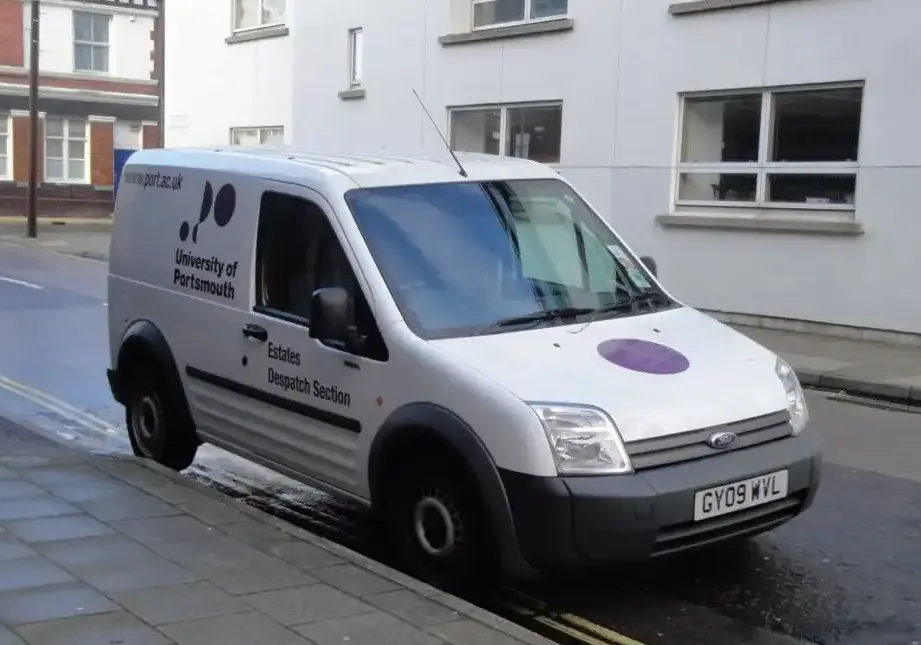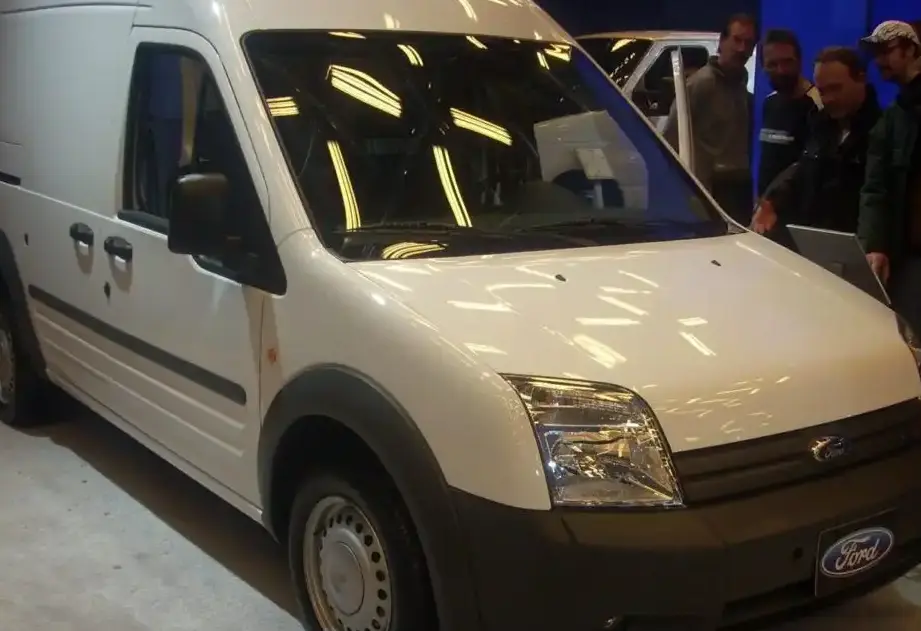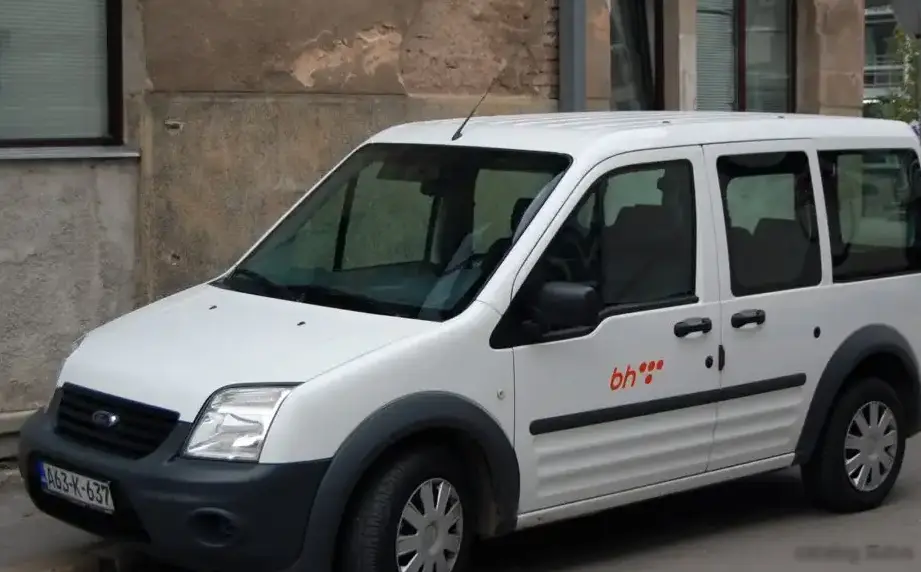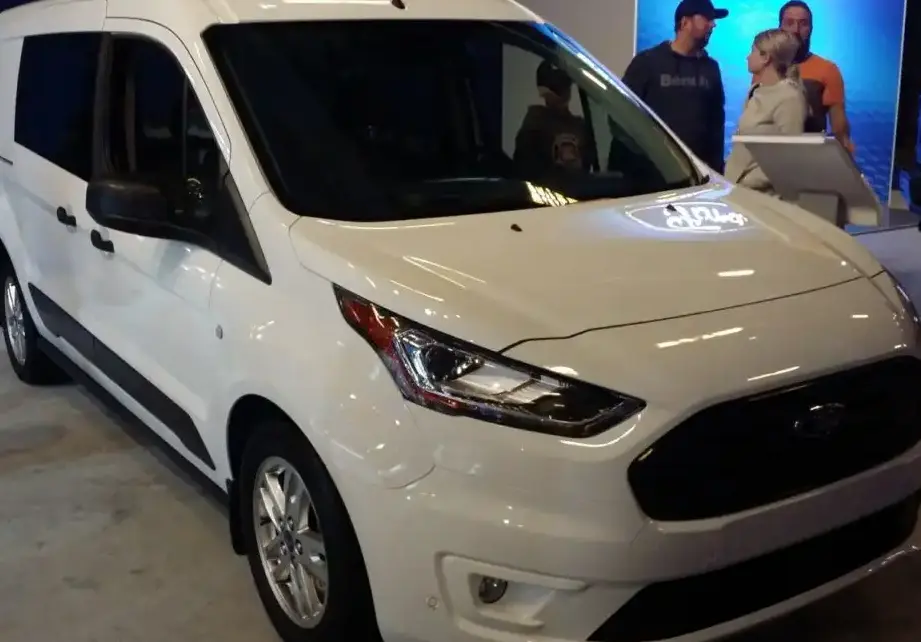
The Ford Transit Connect II, specifically the facelifted version introduced in 2018, represented a significant update to Ford’s compact commercial and passenger vehicle lineup. The Double Cab-in-Van L2 configuration with the 1.5 EcoBlue 120 horsepower automatic powertrain was offered from 2018 through 2023. This variant aimed to balance practicality, fuel efficiency, and ease of use, targeting businesses and families needing a versatile vehicle for both cargo and passenger transport. Positioned as a mid-range offering, it slotted between the base engine options and the more powerful (though not available with automatic transmission in all markets) variants. The Transit Connect II is built on the Ford global C/MC platform, shared with models like the Ford Focus.
Technical Specifications
| Brand | Ford |
| Model | Transit Connect |
| Generation | Transit Connect II (facelift 2018) Double Cab-in-Van L2 |
| Type (Engine) | 1.5 EcoBlue (120 Hp) Automatic |
| Start of production | 2018 |
| End of production | 2023 |
| Powertrain Architecture | Internal Combustion engine |
| Body type | Minivan |
| Seats | 5 |
| Doors | 5 |
| Fuel consumption (urban) | 5.7-6.3 l/100 km (41.3 – 37.3 US mpg) |
| Fuel consumption (extra urban) | 5-5.3 l/100 km (47 – 44.4 US mpg) |
| Fuel consumption (combined) | 5.4-5.5 l/100 km (43.6 – 42.8 US mpg) |
| CO2 emissions | 142-145 g/km |
| Fuel Type | Diesel |
| Emission standard | Euro 6d-TEMP-EVAP-ISC |
| Weight-to-power ratio | 14 kg/Hp, 71.7 Hp/tonne |
| Weight-to-torque ratio | 6.2 kg/Nm, 161.3 Nm/tonne |
| Power | 120 Hp |
| Power per litre | 80.1 Hp/l |
| Torque | 270 Nm (199.14 lb.-ft.) |
| Engine layout | Front, Transverse |
| Engine Model/Code | ZTGA |
| Engine displacement | 1498 cm3 (91.41 cu. in.) |
| Number of cylinders | 4 |
| Engine configuration | Inline |
| Cylinder Bore | 75 mm (2.95 in.) |
| Piston Stroke | 84.8 mm (3.34 in.) |
| Number of valves per cylinder | 4 |
| Fuel injection system | Diesel Commonrail |
| Engine aspiration | Turbocharger, Intercooler |
| Valvetrain | DOHC |
| Engine oil capacity | 6 l (6.34 US qt | 5.28 UK qt) |
| Coolant capacity | 7 l (7.4 US qt | 6.16 UK qt) |
| Kerb Weight | 1674-1675 kg (3690.54 – 3692.74 lbs.) |
| Max. weight | 2385-2445 kg (5258.02 – 5390.3 lbs.) |
| Max load | 711-770 kg (1567.49 – 1697.56 lbs.) |
| Trunk (boot) space (minimum) | 1600 l (56.5 cu. ft.) |
| Fuel tank capacity | 60 l (15.85 US gal | 13.2 UK gal) |
| AdBlue tank capacity | 17 l (4.49 US gal | 3.74 UK gal) |
| Permitted trailer load (braked) | 1495 kg (3295.91 lbs.) |
| Permitted trailer load (unbraked) | 750 kg (1653.47 lbs.) |
| Length | 4825 mm (189.96 in.) |
| Width | 1835 mm (72.24 in.) |
| Width with mirrors folded | 1967 mm (77.44 in.) |
| Width including mirrors | 2137 mm (84.13 in.) |
| Height | 1820 mm (71.65 in.) |
| Wheelbase | 3062 mm (120.55 in.) |
| Front track | 1568 mm (61.73 in.) |
| Rear track | 1582 mm (62.28 in.) |
| Front overhang | 885 mm (34.84 in.) |
| Rear overhang | 878 mm (34.57 in.) |
| Ride height (ground clearance) | 144 mm (5.67 in.) |
| Minimum turning circle | 12.5 m (41.01 ft.) |
| Drivetrain | Front wheel drive |
| Number of gears | 8 |
| Gearbox type | Automatic transmission |
| Front suspension | Independent, McPherson with coil spring and anti-roll bar |
| Rear suspension | Semi-dependent beam with stabilizer |
| Front brakes | Ventilated discs |
| Rear brakes | Disc |
| Assisting systems | ABS (Anti-lock braking system) |
| Steering type | Steering rack and pinion |
| Power steering | Electric |
| Tires size | 205/60 R16; 215/55 R16; 215/55 R17 |
| Wheel rims size | 6.5J x 16; 6.5J x 17 |
INTRODUCTION
The Ford Transit Connect II, launched in 2013 and receiving a significant facelift in 2018, quickly became a popular choice in the compact commercial van segment, particularly in Europe and increasingly in North America. The Double Cab-in-Van L2 variant, denoting the longer wheelbase and the inclusion of a second row of seats, offered a unique blend of cargo capacity and passenger comfort. The 1.5 EcoBlue engine, introduced with the 2018 facelift, replaced the previous 1.6-liter diesel and aimed to improve fuel efficiency and reduce emissions. Coupled with a six or eight-speed automatic transmission (the eight-speed being more common in later models), this powertrain configuration provided a convenient and accessible option for drivers prioritizing ease of use over outright performance.
Powertrain & Engine Architecture
The heart of this Transit Connect variant is the 1.5-liter EcoBlue turbocharged diesel engine, specifically the ZTGA engine code. This engine is part of Ford’s EcoBlue family, designed for improved efficiency and reduced emissions. It features a common-rail direct fuel injection system, delivering fuel at extremely high pressure for optimized combustion. The engine utilizes a single turbocharger with an intercooler to increase air density and boost power output. The valvetrain employs a double overhead camshaft (DOHC) configuration with four valves per cylinder, enhancing breathing and contributing to the engine’s overall efficiency. The eight-speed automatic transmission, sourced from Getrag, provides smooth and efficient gear changes. This transmission is programmed for fuel economy and drivability, with gear ratios optimized for both urban and highway driving. The inclusion of a particulate filter is crucial for meeting stringent Euro 6d-TEMP emission standards.
Driving Characteristics
The 120 horsepower and 270 Nm (199 lb-ft) of torque produced by the 1.5 EcoBlue engine, when paired with the eight-speed automatic transmission, delivers adequate performance for everyday driving. Acceleration is not brisk, but sufficient for merging onto highways and maintaining speed. The automatic transmission contributes to a relaxed driving experience, particularly in urban environments. Compared to the manual transmission versions, the automatic offers smoother operation but slightly reduced fuel economy. Against higher-output versions of the Transit Connect (which were not typically available with the automatic transmission), this variant feels less powerful, especially when fully loaded with passengers and cargo. The gear ratios are tuned for efficiency, meaning the engine may need to work harder when climbing hills or accelerating quickly. However, the torque delivery is relatively flat, providing usable power across a wide range of engine speeds.
Equipment & Trim Levels
The 1.5 EcoBlue 120 hp Automatic Double Cab-in-Van L2 typically came equipped with a reasonable level of standard features. These included air conditioning, power windows, a basic audio system with USB connectivity, and a driver’s airbag. Higher trim levels, such as Limited or Sport, added features like alloy wheels, upgraded interior trim, a touchscreen infotainment system with navigation, and additional safety features like parking sensors and a rearview camera. Optional extras included a panoramic sunroof, heated seats, and advanced driver-assistance systems (ADAS) such as lane departure warning and automatic emergency braking. Interior upholstery was typically cloth, with options for leather or premium cloth on higher trims. The dashboard layout was functional and straightforward, prioritizing usability over aesthetics.
Chassis & Braking
The Transit Connect II utilizes an independent McPherson strut front suspension with a coil spring and anti-roll bar, providing a comfortable ride and predictable handling. The rear suspension employs a semi-dependent beam with a stabilizer, offering a good balance between ride comfort and load-carrying capacity. Braking duties are handled by ventilated discs at the front and solid discs at the rear. Anti-lock Braking System (ABS) is standard, enhancing safety during emergency braking situations. The steering is rack and pinion with electric power assistance, providing light and precise steering feel. The suspension tuning is geared towards comfort and practicality, rather than sporty handling. The vehicle’s relatively low ride height contributes to stability, but ground clearance is limited.
Market Reception & Comparison
The Ford Transit Connect II, and specifically this 1.5 EcoBlue Automatic variant, received generally positive reviews from automotive critics. It was praised for its practicality, fuel efficiency, and comfortable ride. The automatic transmission was well-received for its smoothness and ease of use, making it a popular choice for drivers who frequently commute in congested traffic. Compared to other compact vans in its class, such as the Volkswagen Caddy and the Citroën Berlingo, the Transit Connect offered a competitive combination of features, price, and reliability. Fuel economy was generally considered to be good, although slightly lower than the manual transmission versions. Reliability reports were generally positive, with few major issues reported with the 1.5 EcoBlue engine and automatic transmission.
Legacy
The Ford Transit Connect II, particularly the 1.5 EcoBlue Automatic variants, have proven to be relatively reliable vehicles. The engine, while not known for exceptional performance, is generally durable and capable of high mileage with proper maintenance. The eight-speed automatic transmission has also demonstrated good longevity. In the used car market, these Transit Connects hold their value reasonably well, particularly those with lower mileage and a full service history. They remain a popular choice for small businesses, families, and individuals needing a versatile and economical vehicle. The 1.5 EcoBlue engine, while superseded by newer powertrains in later models, represents a significant step forward in Ford’s efforts to improve fuel efficiency and reduce emissions in its commercial vehicle lineup.