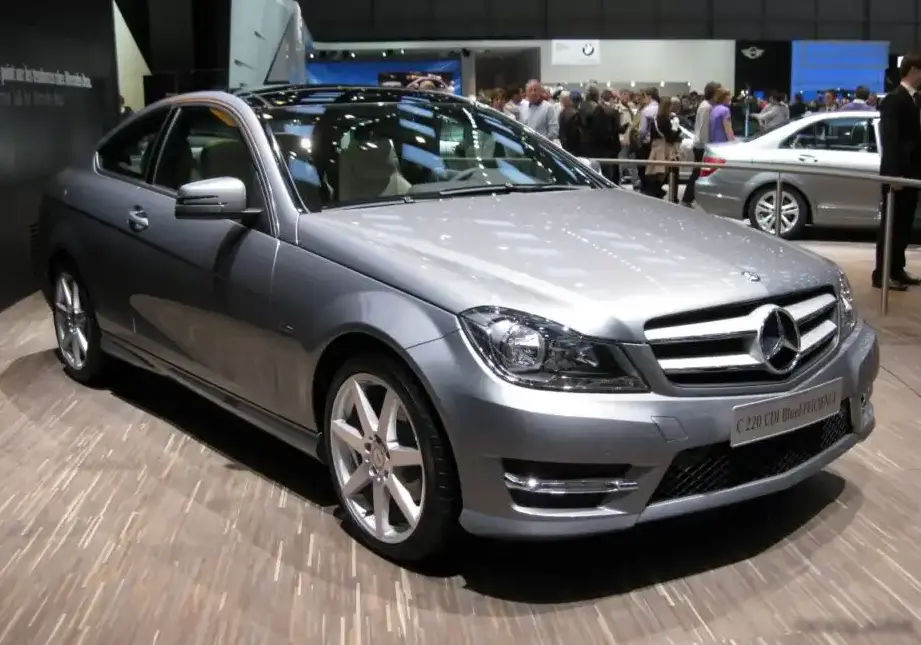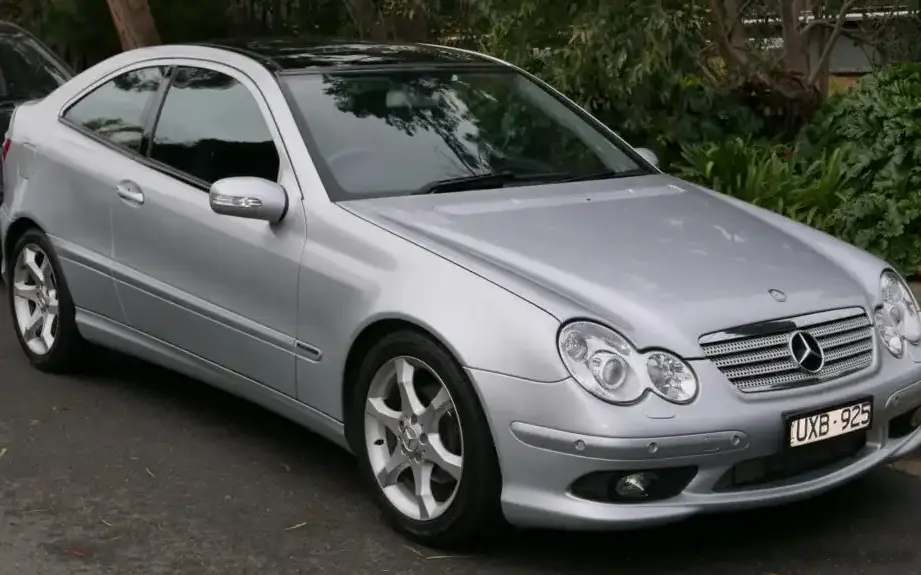
The Mercedes-Benz C-Class Sport Coupe (CL203) facelift, specifically the C 180 Kompressor variant produced from April 2004 to April 2008, represented a compelling entry point into the premium coupe market. Positioned as a more accessible alternative to the higher-performance C 200 Kompressor and C 320 models, the C 180 Kompressor offered a blend of style, comfort, and reasonable running costs. This model was primarily aimed at buyers seeking a sporty aesthetic and the Mercedes-Benz badge without the substantial price tag of its more powerful siblings. It was a key offering in the European market, where compact coupes were particularly popular, and represented a significant update to the original CL203 platform introduced in 2000.
Technical Specifications
| Brand | Mercedes-Benz |
| Model | C-Class |
| Generation | C-Class Sport Coupe (CL203, facelift 2004) |
| Type (Engine) | C 180 Kompressor (143 Hp) |
| Start of production | April, 2004 |
| End of production | April, 2008 |
| Powertrain Architecture | Internal Combustion engine |
| Body type | Coupe |
| Seats | 4 |
| Doors | 3 |
| Fuel consumption (urban) | 11.7 l/100 km (20.1 US mpg, 24.1 UK mpg, 8.5 km/l) |
| Fuel consumption (extra urban) | 6.1 l/100 km (38.6 US mpg, 46.3 UK mpg, 16.4 km/l) |
| Fuel consumption (combined) | 8.2 l/100 km (28.7 US mpg, 34.4 UK mpg, 12.2 km/l) |
| CO2 emissions | 191 g/km |
| Fuel Type | Petrol (Gasoline) |
| Acceleration 0 – 100 km/h | 9.7 sec |
| Acceleration 0 – 62 mph | 9.7 sec |
| Acceleration 0 – 60 mph | 9.2 sec |
| Maximum speed | 223 km/h (138.57 mph) |
| Emission standard | Euro 4 |
| Weight-to-power ratio | 9.7 kg/Hp |
| Weight-to-torque ratio | 6.3 kg/Nm |
| Power | 143 Hp @ 5200 rpm |
| Torque | 220 Nm @ 2500-4200 rpm (162.26 lb.-ft. @ 2500-4200 rpm) |
| Engine layout | Front, Longitudinal |
| Engine Model/Code | M 271.946 |
| Engine displacement | 1796 cm3 (109.6 cu. in.) |
| Number of cylinders | 4 |
| Engine configuration | Inline |
| Cylinder Bore | 82 mm (3.23 in.) |
| Piston Stroke | 85 mm (3.35 in.) |
| Compression ratio | 10.2:1 |
| Number of valves per cylinder | 4 |
| Fuel injection system | Multi-port manifold injection |
| Engine aspiration | Supercharger, Intercooler |
| Valvetrain | DOHC |
| Engine oil capacity | 5.5 l (5.81 US qt | 4.84 UK qt) |
| Coolant capacity | 8 l (8.45 US qt | 7.04 UK qt) |
| Kerb Weight | 1390 kg (3064.43 lbs.) |
| Max. weight | 1935 kg (4265.94 lbs.) |
| Max load | 545 kg (1201.52 lbs.) |
| Trunk (boot) space (min) | 310 l (10.95 cu. ft.) |
| Trunk (boot) space (max) | 1100 l (38.85 cu. ft.) |
| Fuel tank capacity | 62 l (16.38 US gal | 13.64 UK gal) |
| Max. roof load | 100 kg (220.46 lbs.) |
| Permitted trailer load (braked) | 1500 kg (3306.93 lbs.) |
| Permitted trailer load (unbraked) | 730 kg (1609.37 lbs.) |
| Length | 4343 mm (170.98 in.) |
| Width | 1728 mm (68.03 in.) |
| Width (including mirrors) | 1960 mm (77.17 in.) |
| Height | 1406 mm (55.35 in.) |
| Wheelbase | 2715 mm (106.89 in.) |
| Front track | 1493 mm (58.78 in.) |
| Rear track | 1464 mm (57.64 in.) |
| Front overhang | 788 mm (31.02 in.) |
| Rear overhang | 840 mm (33.07 in.) |
| Drag coefficient (Cd) | 0.29 |
| Minimum turning circle | 10.76 m (35.3 ft.) |
| Drivetrain | Rear wheel drive |
| Number of gears | 6 |
| Gearbox type | Manual transmission |
| Front suspension | Independent type McPherson, Transverse stabilizer |
| Rear suspension | Independent multi-link suspension, Transverse stabilizer |
| Front brakes | Ventilated discs |
| Rear brakes | Disc |
| Assisting systems | ABS (Anti-lock braking system) |
| Steering type | Steering rack and pinion |
| Power steering | Hydraulic Steering |
| Tires size | 205/55 R 16 V |
| Wheel rims size | 7 J x 16 H 2 |
Powertrain & Engine Architecture
The C 180 Kompressor was powered by the M271.946 1.8-liter inline-four cylinder engine. This engine was a key component of Mercedes-Benz’s new modular engine family, designed for efficiency and refinement. The “Kompressor” designation indicates the presence of a mechanically driven supercharger, providing increased torque at lower engine speeds. This supercharger, coupled with multi-port fuel injection, allowed the engine to produce 143 horsepower at 5200 rpm and 220 Nm (162 lb-ft) of torque between 2500 and 4200 rpm. The engine featured a double overhead camshaft (DOHC) valvetrain with four valves per cylinder, contributing to its relatively high specific output. The six-speed manual transmission was standard, offering precise gear changes and contributing to the car’s sporty feel.
Driving Characteristics
The C 180 Kompressor offered a comfortable and refined driving experience, prioritizing ease of use over outright performance. While not as quick as the C 200 Kompressor, the supercharged engine provided adequate power for everyday driving and overtaking maneuvers. The six-speed manual transmission allowed drivers to keep the engine in its optimal power band, maximizing acceleration. The rear-wheel-drive configuration contributed to balanced handling, although it wasn’t as sharp as some of its competitors. Compared to the more powerful variants, the C 180 Kompressor felt less stressed at higher speeds, potentially contributing to improved long-term reliability.
Equipment & Trim Levels
The C 180 Kompressor Sport Coupe typically came equipped with features such as alloy wheels, air conditioning, a multi-function steering wheel, and an audio system. Interior upholstery was generally cloth, although leather options were available. Optional extras included a sunroof, upgraded audio systems, and parking sensors. The Sport Coupe trim level itself added a more aggressive styling package, including unique bumpers and side skirts. The interior featured a sporty design with aluminum trim accents.
Chassis & Braking
The CL203 Sport Coupe utilized an independent McPherson strut suspension at the front and an independent multi-link suspension at the rear, providing a comfortable ride and good handling characteristics. Ventilated disc brakes were fitted to the front wheels, while solid discs were used at the rear. Anti-lock Braking System (ABS) was standard. The suspension was tuned to provide a balance between comfort and handling, making it suitable for both city driving and longer journeys.
Market Reception & Comparison
The C 180 Kompressor was generally well-received by automotive critics as a sensible and stylish entry-level option in the C-Class range. It was praised for its comfortable ride, refined engine, and relatively low running costs. However, some critics noted that its performance was not as exhilarating as the more powerful models. Compared to the C 200 Kompressor, the C 180 offered better fuel economy and potentially lower maintenance costs, but at the expense of performance. Against competitors like the BMW 3 Series and Audi A4, the C 180 Kompressor offered a compelling blend of luxury and value.
Legacy
The M271 engine family, including the 1.8-liter Kompressor variant, proved to be relatively reliable, although regular maintenance is crucial. Common issues include oil leaks and occasional problems with the supercharger clutch. Today, the C 180 Kompressor Sport Coupe represents an affordable entry point into Mercedes-Benz ownership. Well-maintained examples are still relatively common on the used car market, offering a stylish and comfortable driving experience for those seeking a premium coupe without a premium price tag. Its blend of practicality, style, and reasonable running costs ensures its continued appeal to enthusiasts and everyday drivers alike.