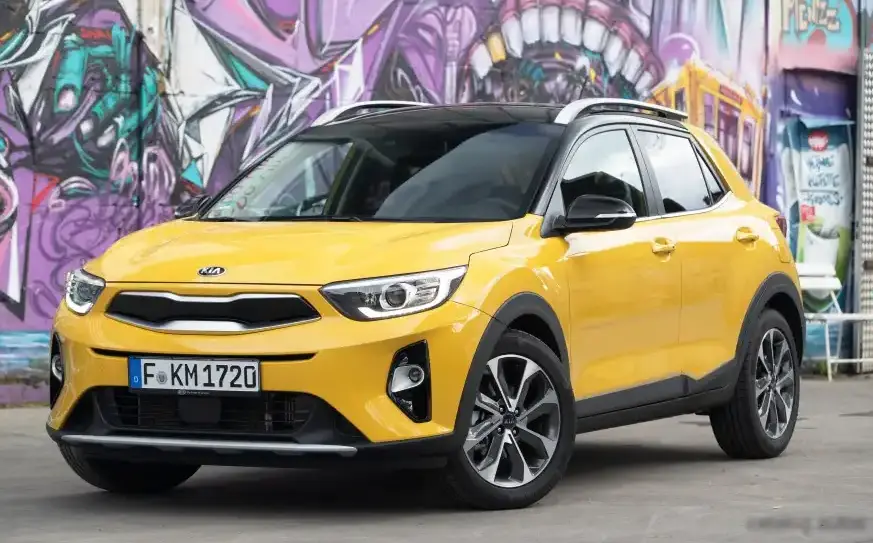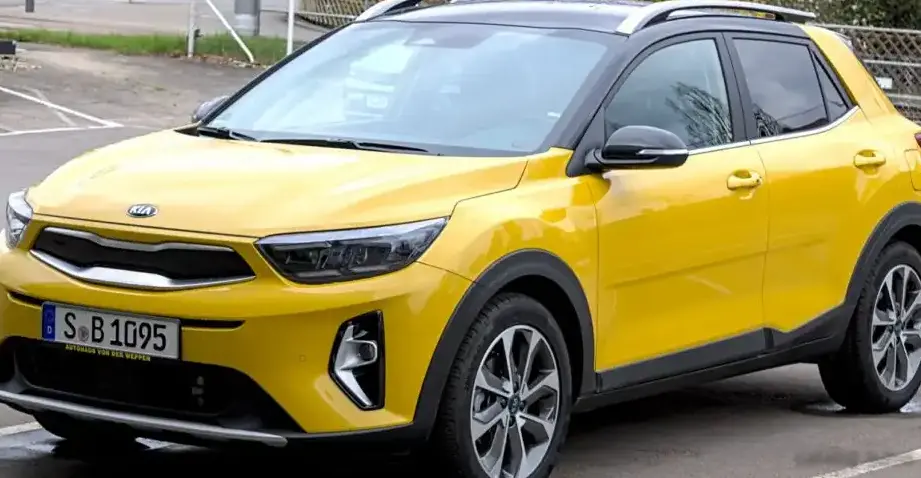
The Kia Stonic, specifically the facelifted version introduced in September 2020 and produced through May 2024, represents Kia’s entry into the highly competitive subcompact crossover segment. The 1.0 T-GDI (100 hp) variant with the Intelligent Manual Transmission (iMT) served as a key offering, positioned as an efficient and accessible option within the Stonic lineup. This model was primarily aimed at the European market, where demand for smaller, fuel-efficient vehicles is strong, though it was also available in select other regions. The Stonic, built on the Kia/Hyundai B-platform, aimed to provide a stylish and practical alternative to established competitors like the Renault Captur and Peugeot 2008.
Technical Specifications
| Brand | Kia |
| Model | Stonic |
| Generation | Stonic (facelift 2020) |
| Type (Engine) | 1.0 T-GDI (100 Hp) iMT |
| Start of production | September, 2020 |
| End of production | May, 2024 |
| Powertrain Architecture | Internal Combustion engine |
| Body type | Crossover |
| Seats | 5 |
| Doors | 5 |
| Combined fuel consumption (WLTP) | 5.8 l/100 km (40.6 US mpg, 48.7 UK mpg, 17.2 km/l) |
| CO2 emissions (WLTP) | 133 g/km |
| Fuel consumption (economy) – urban (NEDC) | 5.9 l/100 km (39.9 US mpg, 47.9 UK mpg, 16.9 km/l) |
| Fuel consumption (economy) – extra urban (NEDC) | 4.2 l/100 km (56 US mpg, 67.3 UK mpg, 23.8 km/l) |
| Fuel consumption (economy) – combined (NEDC) | 4.9 l/100 km (48 US mpg, 57.6 UK mpg, 20.4 km/l) |
| CO2 emissions (NEDC) | 111 g/km |
| Fuel Type | Petrol (Gasoline) |
| Acceleration 0 – 100 km/h | 10.7 sec |
| Acceleration 0 – 62 mph | 10.7 sec |
| Acceleration 0 – 60 mph | 10.2 sec |
| Maximum speed | 185 km/h (114.95 mph) |
| Emission standard | Euro 6d-ISC-FCM |
| Weight-to-power ratio | 11.2 kg/Hp, 89.3 Hp/tonne |
| Weight-to-torque ratio | 6.5 kg/Nm, 153.6 Nm/tonne |
| Power | 100 Hp @ 4500-6000 rpm |
| Power per litre | 100.2 Hp/l |
| Torque | 172 Nm @ 1500-4000 rpm (126.86 lb.-ft. @ 1500-4000 rpm) |
| Engine layout | Front, Transverse |
| Engine Model/Code | G3LE |
| Engine displacement | 998 cm3 (60.9 cu. in.) |
| Number of cylinders | 3 |
| Engine configuration | Inline |
| Cylinder Bore | 71 mm (2.8 in.) |
| Piston Stroke | 84 mm (3.31 in.) |
| Compression ratio | 10.5:1 |
| Number of valves per cylinder | 4 |
| Fuel injection system | Direct injection |
| Engine aspiration | Turbocharger, Intercooler |
| Valvetrain | DOHC |
| Engine oil capacity | 3.6 l (3.8 US qt | 3.17 UK qt) |
| Coolant | 5.9 l (6.23 US qt | 5.19 UK qt) |
| Kerb Weight | 1120-1223 kg (2469.18 – 2696.25 lbs.) |
| Max. weight | 1650 kg (3637.63 lbs.) |
| Max load | 427-530 kg (941.37 – 1168.45 lbs.) |
| Trunk (boot) space – minimum | 352 l (12.43 cu. ft.) |
| Trunk (boot) space – maximum | 1155 l (40.79 cu. ft.) |
| Fuel tank capacity | 45 l (11.89 US gal | 9.9 UK gal) |
| Max. roof load | 70 kg (154.32 lbs.) |
| Permitted trailer load with brakes (12%) | 900 kg (1984.16 lbs.) |
| Permitted trailer load without brakes | 450 kg (992.08 lbs.) |
| Permitted towbar download | 75 kg (165.35 lbs.) |
| Length | 4140 mm (162.99 in.) |
| Width | 1760 mm (69.29 in.) |
| Width including mirrors | 2025 mm (79.72 in.) |
| Height | 1520 mm (59.84 in.) |
| Wheelbase | 2580 mm (101.57 in.) |
| Front track | 1531-1537 mm (60.28 – 60.51 in.) |
| Rear (Back) track | 1539-1544 mm (60.59 – 60.79 in.) |
| Front overhang | 830 mm (32.68 in.) |
| Rear overhang | 730 mm (28.74 in.) |
| Ride height (ground clearance) | 165-183 mm (6.5 – 7.2 in.) |
| Minimum turning circle (turning diameter) | 10.4 m (34.12 ft.) |
| Front suspension | Independent type McPherson, Transverse stabilizer |
| Rear suspension | Coil spring, Elastic beam |
| Front brakes | Ventilated discs, 280 mm |
| Rear brakes | Disc, 262 mm |
| Number of gears and type of gearbox | 6 gears, manual transmission iMT |
| Tires size | 185/65 R15; 195/55 R16; 205/55 R17 |
| Wheel rims size | 6J x 15; 6J x 16; 6.5J x 17 |
INTRODUCTION
The Kia Stonic 1.0 T-GDI iMT, introduced with the 2020 facelift, is a front-wheel-drive subcompact crossover. It’s built on the B-platform shared with the Hyundai Kona and is designed to appeal to buyers seeking a stylish, economical, and practical vehicle. The “iMT” designation refers to Kia’s Intelligent Manual Transmission, a system designed to enhance fuel efficiency and driving comfort by automatically engaging and disengaging the clutch. This variant occupied the lower-mid range of the Stonic lineup, offering a balance between affordability and features. Production ran from September 2020 to May 2024, making it a relatively short-lived but significant iteration of the Stonic model.
Powertrain & Engine Architecture
At the heart of the Stonic 1.0 T-GDI iMT lies the G3LE engine, a 998cc, three-cylinder turbocharged gasoline engine. This engine is part of Kia’s “Kappa” family of engines and utilizes direct fuel injection for improved efficiency and performance. The engine produces 100 horsepower at 4500-6000 rpm and 172 Nm (126.86 lb-ft) of torque between 1500-4000 rpm. The turbocharger and intercooler contribute to increased power output despite the small displacement. The iMT transmission is a six-speed manual gearbox with an electronically controlled clutch. Sensors monitor driving conditions and automatically operate the clutch, eliminating the need for the driver to manually depress the pedal during gear changes. This system aims to provide the convenience of an automatic transmission with the fuel efficiency of a manual. The engine also incorporates a Start & Stop system and a particulate filter to reduce emissions, meeting Euro 6d-ISC-FCM standards.
Driving Characteristics
The Stonic 1.0 T-GDI iMT delivers adequate performance for urban and highway driving, though it’s not designed for outright speed. Acceleration from 0-100 km/h takes approximately 10.7 seconds. The iMT transmission provides smooth gear changes, particularly in normal driving conditions. However, the system can sometimes feel slightly hesitant during more aggressive acceleration. Compared to the standard manual transmission version, the iMT prioritizes fuel economy over sporty driving dynamics. The relatively low weight of the Stonic (1120-1223 kg) helps to offset the modest power output. The gear ratios are tuned for fuel efficiency, meaning the engine can feel slightly strained when climbing hills or overtaking at higher speeds. Overall, the driving experience is comfortable and refined, making it well-suited for daily commutes and city driving.
Equipment & Trim Levels
The Stonic 1.0 T-GDI iMT typically came equipped with a range of standard features, including air conditioning, a 7-inch touchscreen infotainment system with Apple CarPlay and Android Auto compatibility, Bluetooth connectivity, and a suite of safety features such as ABS, ESC, and hill-start assist. Higher trim levels offered additional features like a larger touchscreen display, a reversing camera, parking sensors, automatic climate control, and alloy wheels. Interior upholstery was typically cloth, with options for upgraded materials on higher trims. Optional extras included a sunroof, a premium audio system, and advanced driver-assistance systems like lane departure warning and forward collision avoidance.
Chassis & Braking
The Stonic utilizes a McPherson strut front suspension and a torsion beam rear suspension. This setup provides a good balance between ride comfort and handling. The front suspension incorporates a transverse stabilizer bar to reduce body roll. Braking duties are handled by ventilated discs at the front and solid discs at the rear. The braking system is assisted by ABS (Anti-lock Braking System) and ESC (Electronic Stability Control). The steering is electric power-assisted, providing light and precise steering feel. Tire sizes varied depending on the trim level, ranging from 185/65 R15 to 205/55 R17.
Market Reception & Comparison
The Kia Stonic 1.0 T-GDI iMT was generally well-received by automotive critics for its stylish design, fuel efficiency, and value for money. The iMT transmission was praised for its ease of use and contribution to lower fuel consumption. However, some reviewers noted that the engine could feel underpowered in certain situations. Compared to other Stonic variants, such as those with the 1.4-liter naturally aspirated engine, the 1.0 T-GDI offered better performance and fuel economy. Compared to the diesel options, the 1.0 T-GDI provided a smoother and quieter driving experience, albeit with slightly lower fuel economy. The Stonic competed directly with models like the Renault Captur, Peugeot 2008, and Nissan Juke, offering a compelling alternative with Kia’s renowned warranty.
Legacy
The Kia Stonic 1.0 T-GDI iMT, while a relatively recent model, has already established a reputation for reliability and affordability in the used car market. The G3LE engine has proven to be a durable and efficient unit, and the iMT transmission has generally been trouble-free. However, as with any turbocharged engine, regular maintenance and the use of high-quality oil are crucial for long-term reliability. The Stonic’s attractive styling and practical features continue to make it a popular choice among buyers seeking a small, economical crossover. Its relatively short production run may contribute to increased demand and potentially higher resale values in the future.