Technical Specifications
| Brand | Mini |
| Model | Clubman |
| Generation | Clubman (R55) |
| Type (Engine) | One D 1.6 (90 Hp) |
| Start of production | 2012 |
| End of production | 2014 |
| Powertrain Architecture | Internal Combustion engine |
| Body type | Station wagon (estate) |
| Seats | 5 |
| Doors | 5 |
| Fuel consumption (urban) | 4.4 l/100 km (53.5 US mpg, 64.2 UK mpg, 22.7 km/l) |
| Fuel consumption (extra urban) | 3.6 l/100 km (65.3 US mpg, 78.5 UK mpg, 27.8 km/l) |
| Fuel consumption (combined) | 3.9 l/100 km (60.3 US mpg, 72.4 UK mpg, 25.6 km/l) |
| CO2 emissions | 103 g/km |
| Fuel Type | Diesel |
| Acceleration 0 – 100 km/h | 11.8 sec |
| Acceleration 0 – 62 mph | 11.8 sec |
| Acceleration 0 – 60 mph | 11.2 sec |
| Maximum speed | 182 km/h (113.09 mph) |
| Emission standard | Euro 5 |
| Weight-to-power ratio | 13.2 kg/Hp, 75.9 Hp/tonne |
| Weight-to-torque ratio | 5.5 kg/Nm, 181.4 Nm/tonne |
| Power | 90 Hp @ 4000 rpm |
| Power per litre | 56.3 Hp/l |
| Torque | 215 Nm @ 1750-2500 rpm (158.58 lb.-ft. @ 1750-2500 rpm) |
| Engine layout | Front, Transverse |
| Engine Model/Code | N47C16A |
| Engine displacement | 1598 cm3 (97.52 cu. in.) |
| Number of cylinders | 4 |
| Engine configuration | Inline |
| Cylinder Bore | 78 mm (3.07 in.) |
| Piston Stroke | 83.6 mm (3.29 in.) |
| Compression ratio | 16.5:1 |
| Number of valves per cylinder | 4 |
| Fuel injection system | Diesel Commonrail |
| Engine aspiration | Turbocharger, Intercooler |
| Engine oil capacity | 5.2 l (5.49 US qt | 4.58 UK qt) |
| Coolant | 5.4 l (5.71 US qt | 4.75 UK qt) |
| Kerb Weight | 1185 kg (2612.48 lbs.) |
| Max. weight | 1685 kg (3714.79 lbs.) |
| Max load | 500 kg (1102.31 lbs.) |
| Trunk (boot) space – minimum | 260 l (9.18 cu. ft.) |
| Trunk (boot) space – maximum | 930 l (32.84 cu. ft.) |
| Fuel tank capacity | 40 l (10.57 US gal | 8.8 UK gal) |
| Length | 3961 mm (155.94 in.) |
| Width | 1683 mm (66.26 in.) |
| Height | 1426 mm (56.14 in.) |
| Wheelbase | 2547 mm (100.28 in.) |
| Front track | 1459 mm (57.44 in.) |
| Rear (Back) track | 1467 mm (57.76 in.) |
| Ride height (ground clearance) | 138 mm (5.43 in.) |
| Minimum turning circle | 11 m (36.09 ft.) |
| Drivetrain Architecture | Front wheel drive |
| Number of gears and type of gearbox | 6 gears, manual transmission |
| Front suspension | Independent, type McPherson with coil spring and anti-roll bar |
| Rear suspension | Independent multi-link suspension |
| Front brakes | Ventilated discs |
| Rear brakes | Disc |
| Assisting systems | ABS (Anti-lock braking system) |
| Steering type | Steering rack and pinion |
| Tires size | 175/65 R15 84H |
| Wheel rims size | 5.5J x 15 |
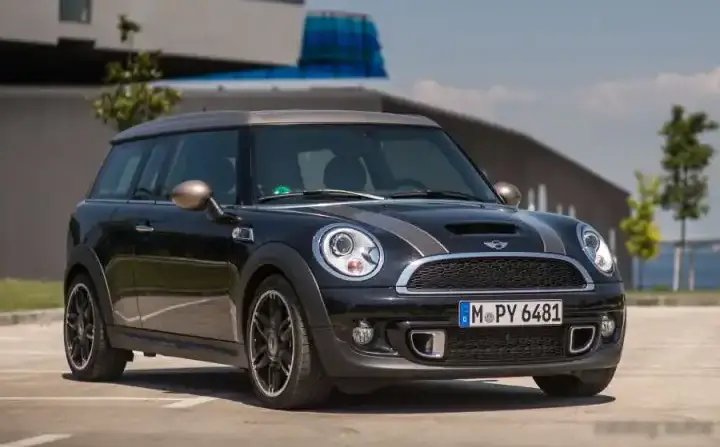
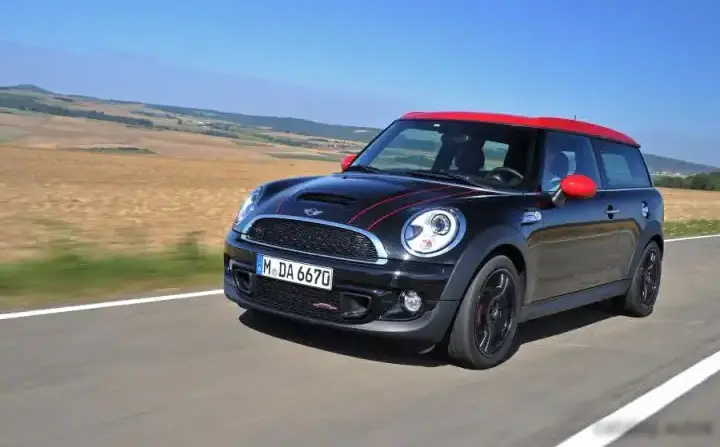
The Mini Clubman (R55) One D 1.6, produced between 2012 and 2014, served as the entry-level diesel variant within the second-generation (R55) Clubman range. Designed for buyers prioritizing fuel economy and lower running costs, it occupied a significant niche in the European market, where diesel engines were highly popular. The R55 Clubman itself was a distinctive vehicle, successfully blending Mini’s iconic styling with the practicality of a five-door station wagon, a departure from the traditional two-door Mini format. It competed with vehicles like the Audi A3 Sportback and Volkswagen Golf Estate.
Powertrain & Engine Architecture
The Clubman One D was powered by the BMW-developed N47C16A 1.6-liter four-cylinder diesel engine. This engine represented a significant step forward in efficient diesel technology. It utilized a common rail direct injection system, injecting fuel at extremely high pressure to optimize combustion efficiency. A turbocharger, coupled with an intercooler, was employed to enhance power output and improve throttle response. The N47 engine family was known for its relatively advanced valvetrain, featuring four valves per cylinder to maximize airflow. The engine produced 90 horsepower at 4000 rpm, and a peak torque of 215 Nm (158.58 lb-ft) was available between 1750 and 2500 rpm. This broad torque curve provided strong low-end power, making it suitable for everyday driving. The standard transmission for the One D 1.6 was a 6-speed manual gearbox; an automatic transmission was not offered with this specific engine configuration.
Driving Characteristics
The Clubman One D 1.6, with its 90 hp output and manual transmission, delivered a driving experience focused on fuel efficiency. Acceleration from 0 to 62 mph took approximately 11.8 seconds. However, the engine’s strong low-end torque made it feel more responsive in typical driving scenarios, such as overtaking or navigating urban environments. The manual gearbox offered short, precise shifts. Compared to the more powerful Clubman Cooper D or Cooper SD models, the One D felt noticeably slower, but it compensated with significantly improved fuel economy. The gear ratios were optimized for efficiency, prioritizing fuel savings over outright performance. The suspension provided a comfortable ride, but wasn’t particularly sporty, offering a more compliant and forgiving feel.
Equipment & Trim Levels
The One D trim level represented the base specification for the Clubman. Standard features typically included air conditioning, power windows, central locking, and a basic audio system. Interior upholstery was generally cloth, and the dashboard featured a minimalist design. Optional extras included alloy wheels, a panoramic sunroof, upgraded audio systems, and parking sensors. The Clubman’s signature split rear tailgate – a defining design element – was standard across all variants. The interior offered reasonable space for passengers and a practical boot capacity ranging from 260 to 930 liters depending on the rear seat configuration.
Chassis & Braking
The Clubman One D featured a McPherson strut front suspension and a multi-link rear suspension, providing a good balance between ride comfort and handling. The front brakes were ventilated discs, while the rear brakes were solid discs. ABS (Anti-lock Braking System) was a standard safety feature. The suspension tuning prioritized comfort over sporty handling, resulting in a relatively soft and forgiving ride quality. The steering was precise and well-weighted, offering a decent level of feedback. The weight distribution was reasonably balanced, contributing to predictable handling characteristics.
Market Reception & Comparison
The Clubman One D 1.6 was generally well-received by automotive critics as a practical and economical choice. Its fuel efficiency was a major selling point, particularly in Europe where diesel fuel was often more affordable than gasoline. Some reviewers, however, criticized its lack of outright performance when compared to the more powerful Clubman models. Compared to the Cooper D, the One D offered a lower purchase price but sacrificed approximately 20 horsepower. The Cooper D provided a more engaging driving experience, while the One D prioritized fuel economy and affordability. Reliability was generally good, although the N47 engine family did experience some reported issues with timing chain wear in later production years.
Legacy
The Clubman One D 1.6 remains a relatively affordable and practical used car option today. The N47 engine, while known for potential timing chain concerns, is generally reliable when properly maintained. Regular oil changes and adherence to the manufacturer’s recommended service intervals are crucial for ensuring long-term durability. The One D’s fuel efficiency and low running costs continue to make it an attractive option for buyers seeking an economical and stylish compact estate car. Its unique combination of Mini design and practicality has helped maintain its appeal in the used car market.