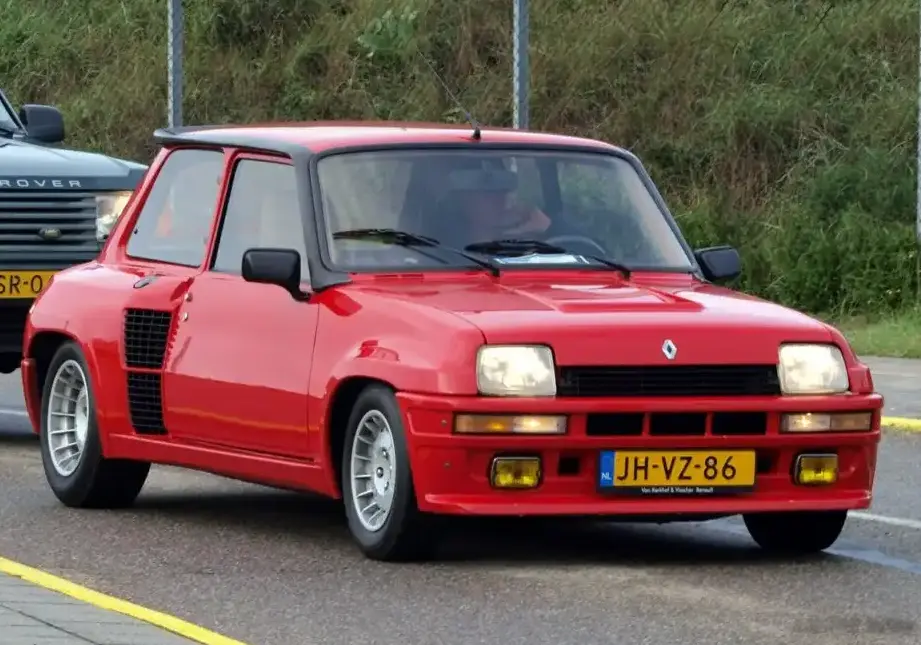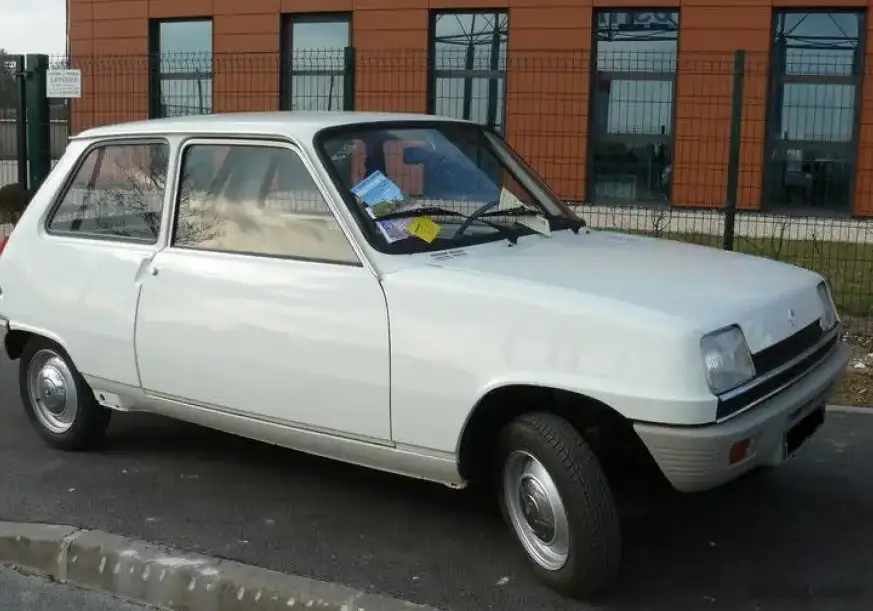
The Renault 5 1.3, producing 45 horsepower, was a mainstay of the Renault 5 range from 1979 to 1984. Positioned as the entry-level model, it represented an affordable and economical option within the broader first-generation Renault 5 (R5) lineup, which spanned from 1972 to 1985. This variant played a crucial role in establishing the R5 as a popular choice in Europe, particularly in France, where it became a cultural icon. The 1.3-liter engine offered a balance between acceptable performance for urban driving and fuel efficiency, appealing to a wide demographic seeking a practical and inexpensive city car.
Technical Specifications
| Brand | Renault |
| Model | 5 |
| Generation | 5 |
| Type (Engine) | 1.3 (45 Hp) |
| Start of production | 1979 |
| End of production | 1984 |
| Powertrain Architecture | Internal Combustion engine |
| Body type | Hatchback |
| Seats | 4 |
| Doors | 3 |
| Fuel consumption (urban) | 7.9 l/100 km (29.8 US mpg) |
| Fuel consumption (extra urban) | 5.7 l/100 km (41.3 US mpg) |
| Fuel Type | Petrol (Gasoline) |
| Maximum speed | 135 km/h (83.89 mph) |
| Power | 45 Hp |
| Engine Model/Code | 810 |
| Engine aspiration | Naturally aspirated |
| Engine oil capacity | 3.3 l (3.49 US qt) |
| Coolant capacity | 6.3 l (6.66 US qt) |
| Fuel tank capacity | 38 l (10.04 US gal) |
| Front suspension | Independent type McPherson |
Powertrain & Engine Architecture
The Renault 5 1.3 was powered by the 810 engine, a 1.289cc inline-four cylinder, naturally aspirated gasoline engine. This engine was a relatively simple design, featuring a single overhead camshaft (SOHC) operating two valves per cylinder. Fuel delivery was managed by a single, down-draft carburetor – typically a Solex or Weber unit – rather than fuel injection, which was less common on vehicles in this price bracket during the late 1970s and early 1980s. The engine’s modest output of 45 horsepower at 6000 rpm and 88 Nm (65 lb-ft) of torque at 3500 rpm was sufficient for basic transportation, but didn’t offer significant performance. The engine was known for its durability and relative ease of maintenance. The transmission paired with the 1.3-liter engine was a four-speed manual gearbox, although a three-speed automatic transmission was offered as an option, albeit less frequently chosen due to its impact on fuel economy and performance. The automatic transmission was a conventional hydraulic unit, lacking the sophistication of modern electronically controlled systems.
Driving Characteristics
The driving experience in the Renault 5 1.3 was characterized by its light weight and nimble handling. The car weighed around 780-830 kg (1720-1830 lbs) depending on the specific trim and options. Acceleration was modest, taking approximately 18-20 seconds to reach 60 mph. The four-speed manual transmission allowed drivers to make the most of the engine’s limited power, while the optional automatic, while providing convenience, noticeably dulled acceleration and increased fuel consumption. The suspension, featuring an independent McPherson strut front suspension and a torsion beam rear axle, provided a comfortable ride on most road surfaces, although it wasn’t particularly sporty. Steering was light and precise, making it easy to maneuver in urban environments. Compared to the more powerful Renault 5 TL or Gordini models, the 1.3 felt significantly slower, but it offered a more relaxed and economical driving experience.
Equipment & Trim Levels
The Renault 5 1.3 was typically offered in a basic trim level, focusing on affordability. Standard equipment included cloth upholstery, vinyl floor covering, and basic instrumentation consisting of a speedometer, fuel gauge, and temperature gauge. The dashboard was constructed from simple plastics, and the overall interior design was functional rather than luxurious. Optional extras included a radio, heated rear window, and upgraded upholstery. Later models might have featured a slightly more refined interior with improved trim materials. The exterior typically featured steel wheels with hubcaps, and basic chrome trim. The Renault 5 1.3 was available in a range of solid colors, with metallic paint options available at an extra cost.
Chassis & Braking
The Renault 5 1.3 utilized a monocoque chassis construction, providing a good balance of strength and weight. The front suspension employed independent McPherson struts, offering a reasonable level of ride comfort and handling. The rear suspension featured a simple torsion beam axle, which was cost-effective and reliable. Braking was initially provided by drum brakes on all four wheels, but later models often featured front disc brakes for improved stopping power. The braking system was hydraulically operated, and while adequate for the car’s performance, it lacked the sophistication of more modern braking systems. Steering was a rack and pinion system, providing light and precise control.
Market Reception & Comparison
The Renault 5 1.3 was well-received in the market as an affordable and practical city car. Critics praised its fuel efficiency, nimble handling, and low running costs. However, its modest performance was often noted as a drawback, particularly when compared to more powerful rivals. Compared to other vehicles in its class, such as the Fiat 127 or the Citroën 2CV, the Renault 5 offered a more modern design and a slightly more refined driving experience. The 1.3-liter engine provided a good balance between economy and usability, making it a popular choice for first-time car buyers and those seeking a low-cost transportation solution. The automatic transmission version, while convenient, suffered from reduced fuel economy and sluggish performance, making the manual transmission the preferred option for most buyers.
Legacy
The Renault 5 1.3, while not the most powerful or luxurious version of the R5, remains a fondly remembered classic. Its simple, robust engine and relatively straightforward mechanical design contribute to its continued reliability, and many examples are still on the road today. In the used car market, the 1.3-liter models are generally the most affordable, making them an attractive option for enthusiasts and those seeking a classic French car experience. The Renault 5 1.3 played a significant role in establishing the R5 as a cultural icon and a benchmark for affordable, practical motoring in Europe. Its enduring popularity is a testament to its simple design, reliability, and enduring charm.