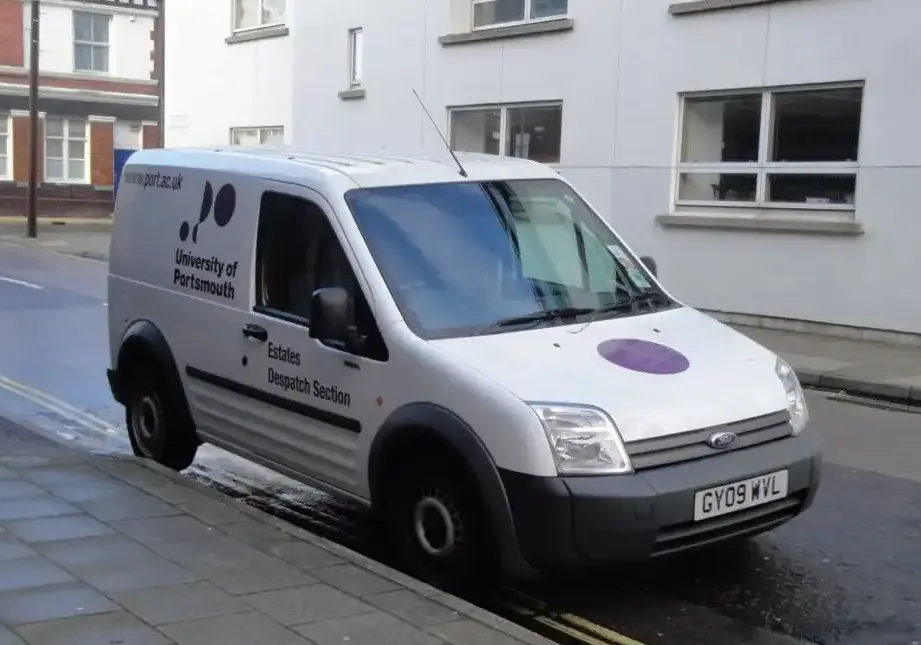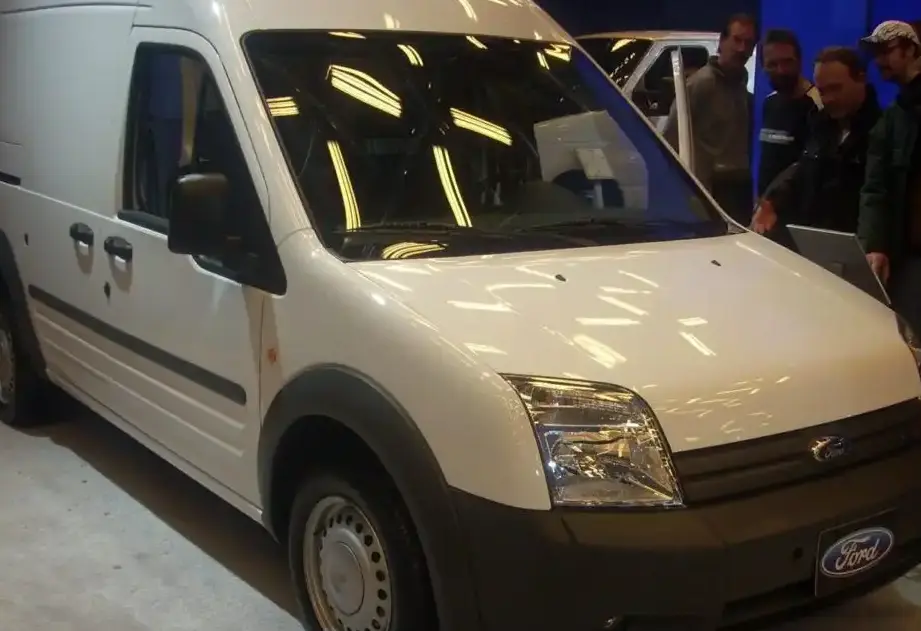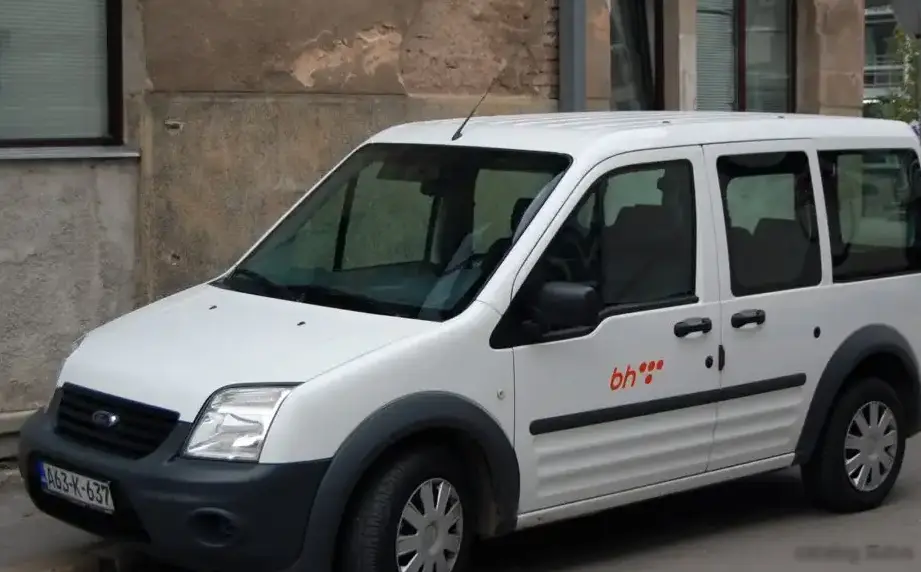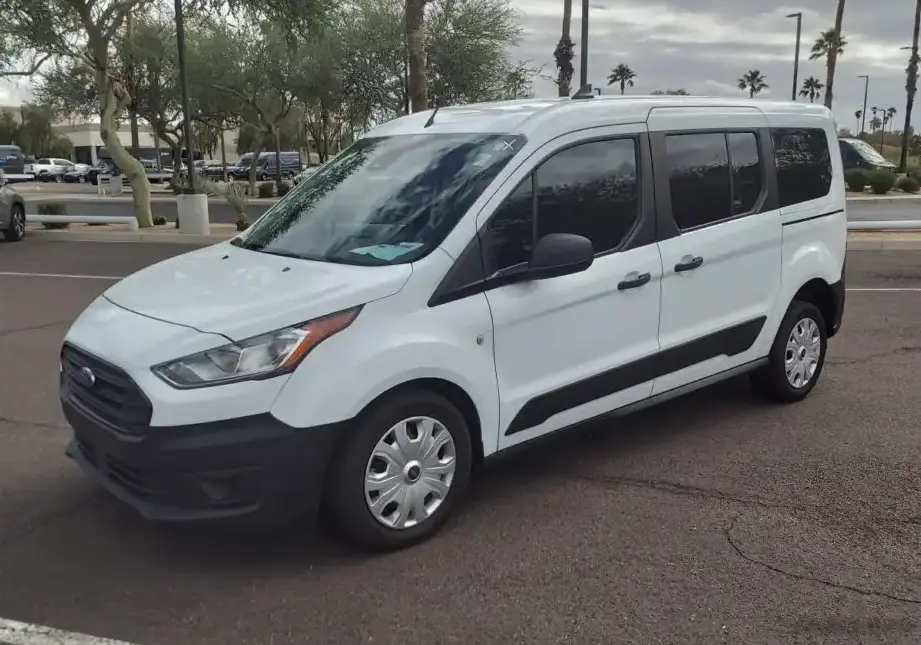
The Ford Transit Connect II, specifically the facelifted version introduced in 2018, represented a significant update to Ford’s compact commercial and passenger vehicle offering in Europe and, to a lesser extent, North America. The Wagon L2 variant, powered by the 1.5 EcoBlue diesel engine producing 100 horsepower, occupied a crucial position in the lineup as an entry-level to mid-range option, balancing affordability with practicality. Production of this configuration ran from 2018 through 2024. This model aimed to provide a fuel-efficient and versatile vehicle for families and small businesses, competing with vehicles like the Volkswagen Caddy and Citroën Berlingo.
Technical Specifications
| Brand | Ford |
| Model | Transit Connect |
| Generation | Transit Connect II (facelift 2018) Wagon L2 |
| Type (Engine) | 1.5 EcoBlue (100 Hp) |
| Start of production | 2018 |
| End of production | 2024 |
| Powertrain Architecture | Internal Combustion engine |
| Body type | Minivan |
| Seats | 5-7 |
| Doors | 5 |
| Combined fuel consumption (WLTP) | 6 l/100 km (39.2 US mpg, 47.1 UK mpg, 16.7 km/l) |
| CO2 emissions (WLTP) | 158 g/km |
| Fuel consumption (economy) – urban (NEDC) | 4.8-5.3 l/100 km (49 – 44.4 US mpg, 58.9 – 53.3 UK mpg, 20.8 – 18.9 km/l) |
| Fuel consumption (economy) – extra urban (NEDC) | 4.2-4.6 l/100 km (56 – 51.1 US mpg, 67.3 – 61.4 UK mpg, 23.8 – 21.7 km/l) |
| Fuel consumption (economy) – combined (NEDC) | 4.4-4.9 l/100 km (53.5 – 48 US mpg, 64.2 – 57.6 UK mpg, 22.7 – 20.4 km/l) |
| CO2 emissions (NEDC) | 116-128 g/km |
| Fuel Type | Diesel |
| Emission standard | Euro 6d-TEMP-EVAP-ISC |
| Weight-to-power ratio | 16.6 kg/Hp, 60.3 Hp/tonne |
| Weight-to-torque ratio | 6.9 kg/Nm, 144.7 Nm/tonne |
| Power | 100 Hp |
| Power per litre | 66.8 Hp/l |
| Torque | 240 Nm (177.01 lb.-ft.) |
| Engine layout | Front, Transverse |
| Engine Model/Code | Z2GA |
| Engine displacement | 1498 cm3 (91.41 cu. in.) |
| Number of cylinders | 4 |
| Engine configuration | Inline |
| Cylinder Bore | 75 mm (2.95 in.) |
| Piston Stroke | 84.8 mm (3.34 in.) |
| Number of valves per cylinder | 4 |
| Fuel injection system | Diesel Commonrail |
| Engine aspiration | Turbocharger, Intercooler |
| Valvetrain | DOHC |
| Engine oil capacity | 6 l (6.34 US qt | 5.28 UK qt) |
| Coolant | 7 l (7.4 US qt | 6.16 UK qt) |
| Kerb Weight | 1659-1830 kg (3657.47 – 4034.46 lbs.) |
| Max. weight | 2290-2420 kg (5048.59 – 5335.19 lbs.) |
| Max load | 590-631 kg (1300.73 – 1391.12 lbs.) |
| Trunk (boot) space – minimum | 300 l (10.59 cu. ft.) |
| Trunk (boot) space – maximum | 2800 l (98.88 cu. ft.) |
| Fuel tank capacity | 60 l (15.85 US gal | 13.2 UK gal) |
| AdBlue tank | 17 l (4.49 US gal | 3.74 UK gal) |
| Permitted trailer load with brakes (12%) | 1350 kg (2976.24 lbs.) |
| Permitted trailer load without brakes | 750 kg (1653.47 lbs.) |
| Length | 4825 mm (189.96 in.) |
| Width | 1835 mm (72.24 in.) |
| Width with mirrors folded | 1967 mm (77.44 in.) |
| Width including mirrors | 2137 mm (84.13 in.) |
| Height | 1820-1847 mm (71.65 – 72.72 in.) |
| Wheelbase | 3062 mm (120.55 in.) |
| Front track | 1568 mm (61.73 in.) |
| Rear (Back) track | 1582 mm (62.28 in.) |
| Front overhang | 885 mm (34.84 in.) |
| Rear overhang | 878 mm (34.57 in.) |
| Ride height (ground clearance) | 144-153 mm (5.67 – 6.02 in.) |
| Minimum turning circle (turning diameter) | 12.5 m (41.01 ft.) |
| Drivetrain Architecture | The Internal combustion engine (ICE) drives the front wheels of the vehicle. |
| Drive wheel | Front wheel drive |
| Number of gears and type of gearbox | 6 gears, manual transmission |
| Front suspension | Independent, type McPherson with coil spring and anti-roll bar |
| Rear suspension | Semi-dependent beam with stabilizer lateral stability |
| Front brakes | Ventilated discs |
| Rear brakes | Disc |
| Assisting systems | ABS (Anti-lock braking system) |
| Steering type | Steering rack and pinion |
| Power steering | Electric Steering |
| Tires size | 205/60 R16; 215/55 R16 |
| Wheel rims size | 6.5J x 16 |
INTRODUCTION
The Ford Transit Connect II, launched in 2002 and facelifted in 2018, is a compact panel van and five- to seven-seat passenger vehicle based on the Ford Focus C-car platform (specifically the 1HX0/A3 architecture). The 2018 facelift brought updated styling, improved safety features, and the introduction of Ford’s EcoBlue diesel engine range. The Wagon L2 1.5 EcoBlue 100 hp variant was positioned as a practical and economical choice for families and businesses needing a versatile vehicle. It offered a balance between fuel efficiency, cargo capacity, and a relatively affordable price point. This version was primarily sold in Europe, with limited availability in North America.
Powertrain & Engine Architecture
The heart of this Transit Connect variant is the 1.5-liter EcoBlue diesel engine, designated with the engine code Z2GA. This engine is a four-cylinder, inline configuration, utilizing a turbocharger with intercooling to enhance power and efficiency. The EcoBlue series represented a significant investment by Ford in diesel technology, focusing on reducing emissions and improving fuel economy. The engine employs a diesel commonrail direct injection system, delivering fuel directly into the combustion chamber at high pressure for optimized combustion. The valvetrain features a Double Overhead Camshaft (DOHC) design, allowing for precise control of valve timing. The 100 hp version produces 240 Nm (177 lb-ft) of torque. The engine is transversely mounted at the front of the vehicle. The transmission is a 6-speed manual gearbox, chosen for its efficiency and cost-effectiveness. While an automatic transmission was offered on other EcoBlue variants, it wasn’t typically paired with the 100 hp engine.
Driving Characteristics
The 1.5 EcoBlue 100 hp engine, coupled with the 6-speed manual transmission, provides adequate performance for everyday driving. Acceleration is not brisk, with a focus on fuel economy rather than outright speed. The engine delivers its peak torque relatively low in the rev range, making it suitable for carrying loads and navigating urban environments. The gear ratios are tuned for efficiency, with a taller final drive contributing to lower fuel consumption on the highway. Compared to higher-output EcoBlue variants (like the 120 hp or 150 hp versions), this engine feels less responsive, particularly when fully loaded. The manual transmission allows for greater driver control, but requires more driver involvement than an automatic. The weight of the vehicle, ranging from 1659 to 1830 kg (3657 to 4034 lbs) depending on specification, does impact overall performance.
Equipment & Trim Levels
The Wagon L2 1.5 EcoBlue 100 hp typically came with a reasonable level of standard equipment. This included features like air conditioning, power windows, central locking, and a basic audio system with Bluetooth connectivity. Safety features such as ABS, Electronic Stability Control (ESC), and multiple airbags were also standard. Interior upholstery was typically cloth, with a durable and practical design. Higher trim levels offered options like alloy wheels, upgraded audio systems, parking sensors, and a touchscreen infotainment system. The dashboard layout was functional and driver-focused, with clear instrumentation. Optional extras included a panoramic sunroof and rear parking camera.
Chassis & Braking
The Transit Connect II utilizes a McPherson strut independent suspension setup at the front, providing a comfortable ride and good handling characteristics. The rear suspension employs a semi-dependent beam axle with a stabilizer bar, offering a compromise between ride comfort and load-carrying capacity. Braking duties are handled by ventilated discs at the front and solid discs at the rear. The ABS (Anti-lock Braking System) is standard, enhancing braking performance and stability. The electric power steering provides light and precise steering feel. Tire sizes typically ranged from 205/60 R16 to 215/55 R16, depending on the trim level.
Market Reception & Comparison
The Ford Transit Connect II 1.5 EcoBlue 100 hp was generally well-received by critics as a practical and economical choice. It was praised for its fuel efficiency, spacious interior, and versatile cargo capacity. However, some reviewers noted that the 100 hp engine could feel underpowered when fully loaded or when driving on steep inclines. Compared to the higher-output EcoBlue variants, this version offered lower running costs but sacrificed some performance. Against competitors like the Volkswagen Caddy and Citroën Berlingo, the Transit Connect offered a competitive package in terms of price, space, and fuel economy. The Caddy was often seen as more refined, while the Berlingo offered a more quirky and distinctive design.
Legacy
The 1.5 EcoBlue engine proved to be a relatively reliable powertrain, although, like all diesel engines, it requires regular maintenance, including oil changes and filter replacements. The EcoBlue engines are known for their particulate filter systems, which can require attention if the vehicle is primarily used for short journeys. In the used car market, the Transit Connect II 1.5 EcoBlue 100 hp represents a good value proposition for buyers seeking a practical and economical vehicle. Its relatively low running costs and spacious interior make it a popular choice for families and small businesses. The availability of spare parts is generally good, and the vehicle’s simple mechanical design makes it relatively easy to maintain.