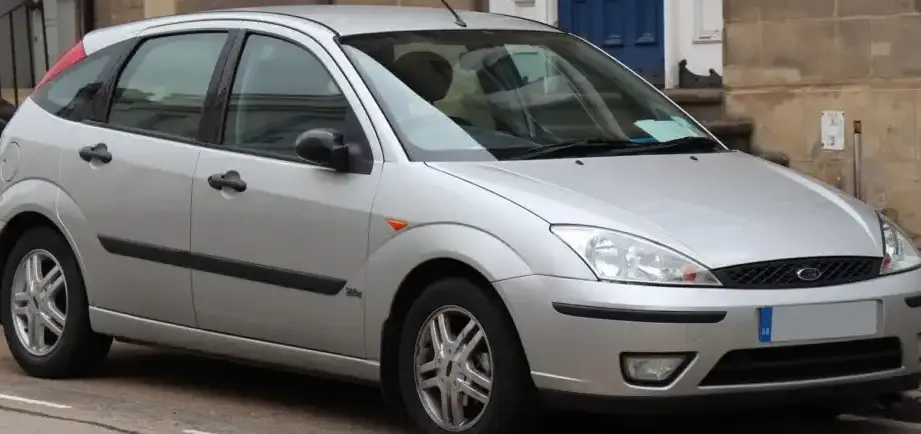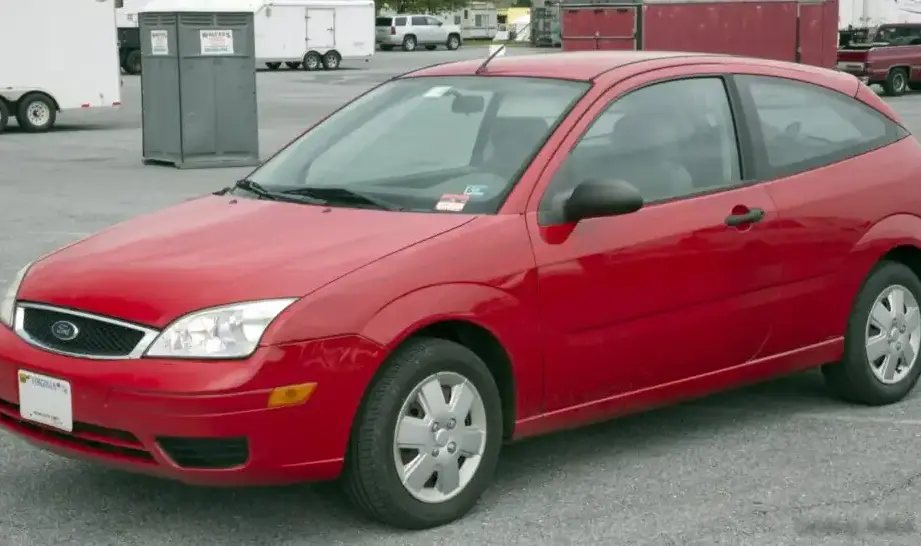
The Ford Focus ZX3, specifically the 2.0-liter 16V variant produced between 1999 and 2004 for the North American market, represented a significant step forward for Ford in the compact car segment. Positioned as a sporty, yet practical, offering, the ZX3 aimed to attract buyers seeking a more engaging driving experience than the base Focus models. It was part of the first generation (Mk1) Focus sold in North America, derived from the global Focus platform but with unique styling and mechanical adaptations to suit American tastes. The ZX3 trim level, with its larger engine, was intended to bridge the gap between the more economical base models and the later, more performance-oriented SVT version.
Technical Specifications
| Brand | Ford |
| Model | Focus |
| Generation | Focus Hatchback (USA) |
| Type (Engine) | 2.0 i 16V ZX3 (131 Hp) |
| Start of production | 1999 |
| End of production | 2004 |
| Powertrain Architecture | Internal Combustion engine |
| Body type | Hatchback |
| Seats | 5 |
| Doors | 3 |
| Fuel consumption (urban) | 9.4 l/100 km (25 US mpg) |
| Fuel consumption (extra urban) | 7.1 l/100 km (33.1 US mpg) |
| Fuel Type | Petrol (Gasoline) |
| Acceleration 0 – 100 km/h | 9 sec |
| Acceleration 0 – 62 mph | 9 sec |
| Acceleration 0 – 60 mph | 8.6 sec |
| Maximum speed | 180 km/h (111.85 mph) |
| Weight-to-power ratio | 9.2 kg/Hp |
| Weight-to-torque ratio | 6.6 kg/Nm |
| Power | 131 Hp @ 5300 rpm |
| Power per litre | 65.9 Hp/l |
| Torque | 183 Nm @ 4500 rpm (134.97 lb.-ft. @ 4500 rpm) |
| Engine layout | Front, Transverse |
| Engine Model/Code | Zetec / C20HDEZ |
| Engine displacement | 1988 cm3 (121.32 cu. in.) |
| Number of cylinders | 4 |
| Engine configuration | Inline |
| Cylinder Bore | 84.8 mm (3.34 in.) |
| Piston Stroke | 88 mm (3.46 in.) |
| Compression ratio | 9.6:1 |
| Number of valves per cylinder | 4 |
| Fuel injection system | Multi-port manifold injection |
| Engine aspiration | Naturally aspirated engine |
| Engine oil capacity | 4.25 l (4.49 US qt | 3.74 UK qt) |
| Coolant | 5.75 l (6.08 US qt | 5.06 UK qt) |
| Kerb Weight | 1200 kg (2645.55 lbs.) |
| Trunk (boot) space – minimum | 527 l (18.61 cu. ft.) |
| Fuel tank capacity | 50 l (13.21 US gal | 11 UK gal) |
| Length | 4270 mm (168.11 in.) |
| Width | 1699 mm (66.89 in.) |
| Height | 1430 mm (56.3 in.) |
| Wheelbase | 2616 mm (102.99 in.) |
| Front track | 1491 mm (58.7 in.) |
| Rear (Back) track | 1486 mm (58.5 in.) |
| Drivetrain Architecture | The Internal combustion engine (ICE) drives the front wheels of the vehicle. |
| Drive wheel | Front wheel drive |
| Number of gears and type of gearbox | 5 gears, manual transmission |
| Front suspension | Coil spring |
| Rear suspension | Transverse stabilizer |
| Front brakes | Ventilated discs |
| Rear brakes | Disc |
| Assisting systems | ABS (Anti-lock braking system) |
| Steering type | Steering rack and pinion |
| Power steering | Hydraulic Steering |
| Tires size | 205/50 R16 |
Introduction
The North American Ford Focus, launched for the 2000 model year, was a crucial vehicle for Ford as it aimed to modernize its compact car offerings. The ZX3, introduced alongside the base LX and SE trims, provided a more spirited driving experience. It featured a larger 2.0-liter Zetec engine, distinct styling cues, and a generally more focused approach to handling. The three-door hatchback body style further emphasized its sporty intentions, appealing to a younger demographic. The ZX3 occupied a middle ground in the Focus lineup, offering more performance than the base models but without the outright track-focused nature of the later SVT variant.
Powertrain & Engine Architecture
The heart of the ZX3 was the Ford Zetec 2.0-liter inline-four cylinder engine, designated as the C20HDEZ engine code. This engine was a significant upgrade over the 1.8-liter engines found in the lower trims. It featured a dual overhead camshaft (DOHC) design with four valves per cylinder, contributing to its respectable power output. Fuel delivery was handled by a multi-port fuel injection system, providing precise fuel metering for optimal combustion. The engine’s 9.6:1 compression ratio was a balance between performance and fuel efficiency. The 5-speed manual transmission was standard, offering precise shifts and a direct connection to the engine. The Zetec engine was known for its relatively smooth operation and willingness to rev, making it a pleasant engine to use in everyday driving.
Driving Characteristics
The ZX3’s driving experience was noticeably more engaging than the base Focus models. The 131 horsepower and 135 lb-ft of torque provided adequate acceleration, with a 0-60 mph time of around 8.6 seconds. While not a sports car by any means, the ZX3 felt nimble and responsive, particularly when compared to other compact cars of the era. The 5-speed manual transmission allowed drivers to fully exploit the engine’s powerband. The gear ratios were well-chosen, providing good acceleration in each gear. The suspension, while not overly sophisticated, offered a good balance between ride comfort and handling. The ZX3 felt planted and stable in corners, inspiring confidence in the driver. Compared to the later SVT Focus, the ZX3 lacked the same level of outright performance, but it offered a more accessible and user-friendly driving experience.
Equipment & Trim Levels
The ZX3 came reasonably well-equipped for its price point. Standard features typically included air conditioning, power windows and locks, a CD player, and a basic instrument cluster. The interior featured sporty cloth upholstery and a relatively simple dashboard layout. Optional extras included a sunroof, upgraded sound system, and alloy wheels. The ZX3’s interior was functional and well-built, although it lacked the premium feel of some of its competitors. The three-door configuration meant slightly less rear passenger access compared to the five-door models, but it also contributed to the car’s sporty aesthetic.
Chassis & Braking
The ZX3 utilized a MacPherson strut front suspension and a twist-beam rear suspension. This setup provided a good balance between ride comfort and handling. The front brakes were ventilated discs, offering good stopping power, while the rear brakes were solid discs. Anti-lock braking system (ABS) was standard, enhancing safety. The ZX3’s chassis was relatively lightweight, contributing to its nimble handling. The steering was hydraulic power-assisted, providing a good feel and responsiveness. The standard tire size was 205/50R16, offering a good compromise between grip and ride comfort.
Market Reception & Comparison
The ZX3 was generally well-received by automotive critics. It was praised for its sporty handling, willing engine, and attractive styling. However, some critics noted that the interior was somewhat basic and that the ride could be a bit firm. Compared to other compact cars of the era, such as the Honda Civic and Toyota Corolla, the ZX3 offered a more engaging driving experience but lacked the same level of refinement. Fuel economy was respectable, averaging around 25 mpg in the city and 33 mpg on the highway. Reliability was generally good, although some owners reported minor issues with the Zetec engine’s cooling system.
Legacy
The Ford Focus ZX3, with its 2.0-liter engine and manual transmission, remains a popular choice among enthusiasts today. The Zetec engine is known for its durability and relatively simple maintenance requirements. Parts availability is generally good, making it an affordable car to own and maintain. While not a collector’s item, the ZX3 is appreciated for its sporty character and its role in establishing the Focus as a competitive player in the North American compact car market. Well-maintained examples continue to provide reliable and enjoyable transportation for those seeking a fun-to-drive and practical hatchback.