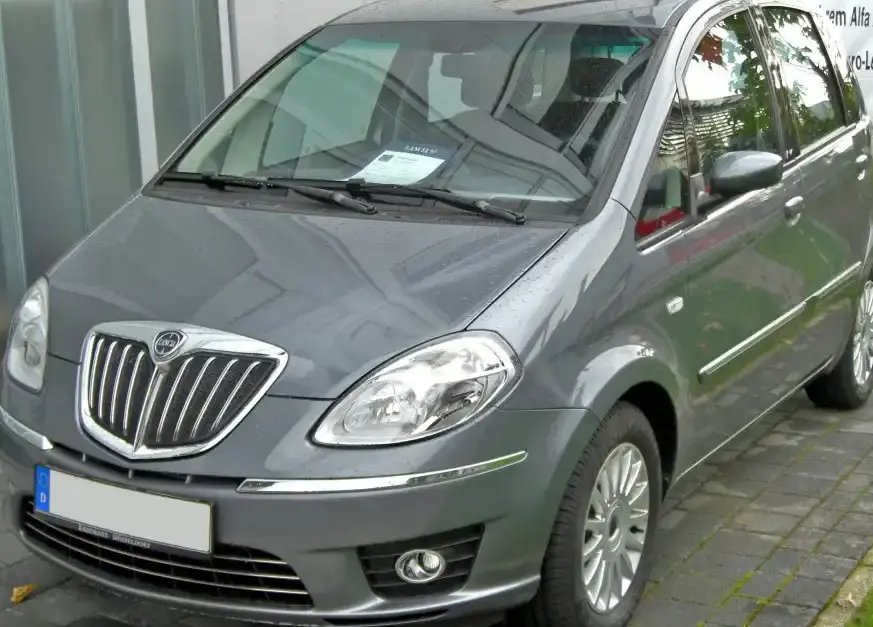
The Lancia Musa, particularly the facelifted version introduced in 2007, represented a unique offering in the compact MPV (Multi-Purpose Vehicle) segment. Positioned as a more premium and stylish alternative to mainstream competitors, the Musa aimed to blend practicality with Italian design flair. The 1.3 Multijet 95 horsepower variant, produced from 2007 to 2012, served as an entry point into the Musa range, prioritizing fuel efficiency and affordability. It was built on the Fiat-derived 1HX0/A3 platform, shared with models like the Fiat Idea and the later Lancia Ypsilon.
Technical Specifications
| Brand | Lancia |
| Model | Musa |
| Generation | Musa (facelift 2007) |
| Type (Engine) | 1.3 Multijet (95 Hp) |
| Start of production | 2007 |
| End of production | 2012 |
| Powertrain Architecture | Internal Combustion engine |
| Body type | MPV |
| Seats | 5 |
| Doors | 5 |
| Fuel consumption (urban) | 5.4 l/100 km (43.6 US mpg, 52.3 UK mpg, 18.5 km/l) |
| Fuel consumption (extra urban) | 3.7 l/100 km (63.6 US mpg, 76.3 UK mpg, 27 km/l) |
| Fuel consumption (combined) | 4.3 l/100 km (54.7 US mpg, 65.7 UK mpg, 23.3 km/l) |
| CO2 emissions | 114 g/km |
| Fuel Type | Diesel |
| Acceleration 0 – 100 km/h | 12.5 sec |
| Acceleration 0 – 62 mph | 12.5 sec |
| Acceleration 0 – 60 mph | 11.9 sec |
| Maximum speed | 173 km/h (107.5 mph) |
| Emission standard | Euro 4 |
| Weight-to-power ratio | 12.6 kg/Hp, 79.2 Hp/tonne |
| Weight-to-torque ratio | 6 kg/Nm, 166.7 Nm/tonne |
| Power | 95 Hp @ 4000 rpm |
| Power per litre | 76.1 Hp/l |
| Torque | 200 Nm @ 1500 rpm (147.51 lb.-ft. @ 1500 rpm) |
| Engine layout | Front, Transverse |
| Engine Model/Code | 199 B1.000 |
| Engine displacement | 1248 cm3 (76.16 cu. in.) |
| Number of cylinders | 4 |
| Engine configuration | Inline |
| Cylinder Bore | 69.6 mm (2.74 in.) |
| Piston Stroke | 82 mm (3.23 in.) |
| Compression ratio | 17.6:1 |
| Number of valves per cylinder | 4 |
| Fuel injection system | Diesel Commonrail |
| Engine aspiration | Turbocharger, Intercooler |
| Valvetrain | DOHC |
| Engine oil capacity | 2.7 l (2.85 US qt | 2.38 UK qt) |
| Coolant | 4.5 l (4.76 US qt | 3.96 UK qt) |
| Kerb Weight | 1200 kg (2645.55 lbs.) |
| Max. weight | 1705 kg (3758.88 lbs.) |
| Max load | 505 kg (1113.33 lbs.) |
| Trunk (boot) space – minimum | 390 l (13.77 cu. ft.) |
| Trunk (boot) space – maximum | 1488 l (52.55 cu. ft.) |
| Fuel tank capacity | 47 l (12.42 US gal | 10.34 UK gal) |
| Permitted trailer load with brakes (12%) | 1000 kg (2204.62 lbs.) |
| Permitted trailer load without brakes | 400 kg (881.85 lbs.) |
| Length | 4035 mm (158.86 in.) |
| Width | 1698 mm (66.85 in.) |
| Height | 1660 mm (65.35 in.) |
| Wheelbase | 2508 mm (98.74 in.) |
| Front track | 1444 mm (56.85 in.) |
| Rear (Back) track | 1431 mm (56.34 in.) |
| Drag coefficient (Cd) | 0.31 |
| Minimum turning circle | 10.4 m (34.12 ft.) |
| Drivetrain Architecture | The Internal combustion engine (ICE) drives the front wheels of the vehicle. |
| Drive wheel | Front wheel drive |
| Number of gears and type of gearbox | 5 gears, manual transmission |
| Front suspension | Independent, type McPherson with coil spring and anti-roll bar |
| Rear suspension | Semi-independent, coil spring |
| Front brakes | Ventilated discs |
| Rear brakes | Drum |
| Tires size | 195/60 R15 |
| Wheel rims size | 15 |
Powertrain & Engine Architecture
The heart of the Musa 1.3 Multijet was the 199 B1.000 engine, a 1.3-liter inline-four cylinder diesel. This engine was a common sight in Fiat and Lancia products of the era, known for its compact size and relatively efficient operation. It featured a turbocharger with an intercooler to boost power output, and employed a second-generation common rail direct injection system. This system allowed for precise fuel delivery, contributing to improved combustion efficiency and reduced emissions. The engine utilized a double overhead camshaft (DOHC) valvetrain with four valves per cylinder, optimizing gas flow for enhanced performance. The 5-speed manual transmission was the standard offering, chosen for its balance of cost and efficiency. The engine’s 17.6:1 compression ratio was typical for a diesel engine, aiding in efficient combustion.
Driving Characteristics
The 95 horsepower output of the 1.3 Multijet, coupled with 200 Nm (147 lb-ft) of torque, provided adequate, though not exhilarating, performance for the Musa. Acceleration from 0-60 mph took around 11.9 seconds, and top speed was approximately 107.5 mph. The engine’s torque peak at 1500 rpm meant that it felt reasonably responsive in everyday driving situations, particularly for overtaking maneuvers. However, compared to higher-powered versions of the Musa, such as those equipped with the 1.9 JTD engine, the 1.3 Multijet felt noticeably slower. The 5-speed gearbox was well-matched to the engine’s characteristics, offering a decent spread of ratios for both urban and highway driving. The gear ratios were optimized for fuel economy rather than outright performance.
Equipment & Trim Levels
The 1.3 Multijet trim typically represented the entry-level offering in the Musa range. Standard equipment generally included air conditioning, power steering, electric front windows, and a basic audio system. Safety features such as ABS brakes and driver/passenger airbags were also standard. Interior upholstery was typically cloth, and the dashboard featured a functional, if somewhat understated, design. Optional extras included alloy wheels, rear parking sensors, a more advanced audio system with CD changer, and climate control. Higher trim levels, such as the Platinum, added features like leather upholstery, automatic headlights, and rain-sensing wipers.
Chassis & Braking
The Musa’s chassis featured an independent McPherson strut suspension at the front, providing a comfortable ride and decent handling characteristics. The rear suspension utilized a semi-independent coil spring setup, which was a cost-effective solution for the rear axle. Front brakes were ventilated discs, offering good stopping power, while the rear brakes were drums, a common feature on entry-level models to reduce costs. The 195/60 R15 tires provided a reasonable balance of grip and ride comfort. The relatively lightweight nature of the 1.3 Multijet variant (approximately 1200 kg or 2645 lbs) helped to mitigate the effects of the modest engine output.
Market Reception & Comparison
The Lancia Musa 1.3 Multijet was generally well-received by critics for its fuel efficiency and practicality. Its compact dimensions made it easy to maneuver in urban environments, and the spacious interior offered ample room for passengers and luggage. However, some reviewers criticized the engine for being underpowered, particularly when the vehicle was fully loaded. Compared to the 1.9 JTD variant, the 1.3 Multijet offered significantly lower running costs but sacrificed performance. The 1.9 JTD was favored by drivers who prioritized driving enjoyment and were willing to accept higher fuel consumption. The Musa also faced competition from other compact MPVs, such as the Renault Scenic and the Citroën C4 Picasso, which offered similar levels of practicality and features.
Legacy
The 1.3 Multijet engine proved to be a relatively reliable unit, although, like any diesel engine, it was susceptible to issues related to the diesel particulate filter (DPF) if not properly maintained. Regular oil changes and the use of high-quality diesel fuel were crucial for ensuring long-term reliability. On the used car market, the Musa 1.3 Multijet remains an affordable and practical option for those seeking a compact MPV. Its fuel efficiency and relatively low maintenance costs make it an attractive proposition for budget-conscious buyers. However, potential buyers should be aware of the potential for DPF issues and ensure that the vehicle has been properly serviced throughout its life.