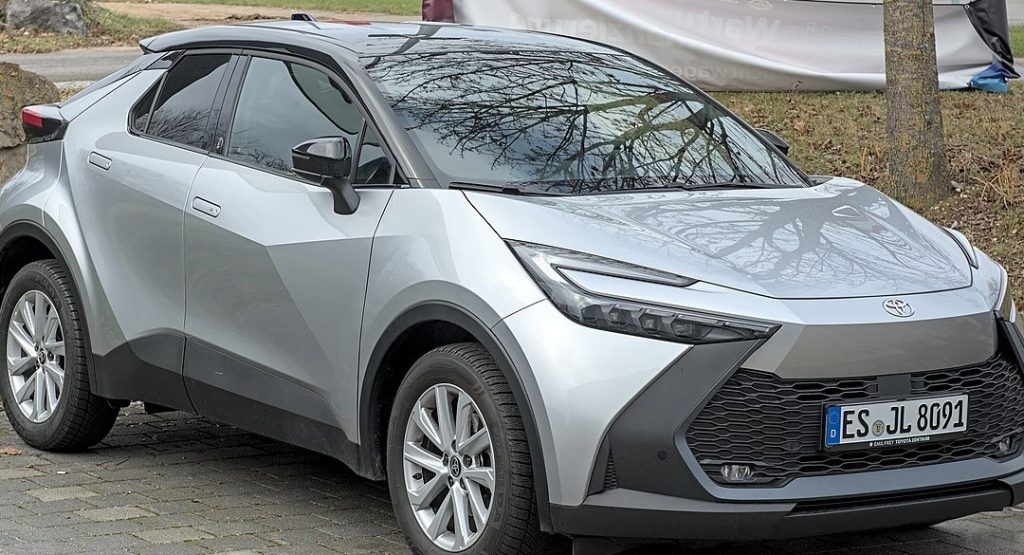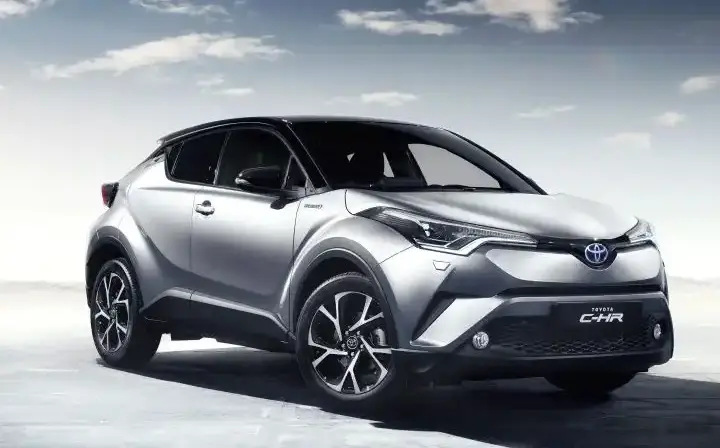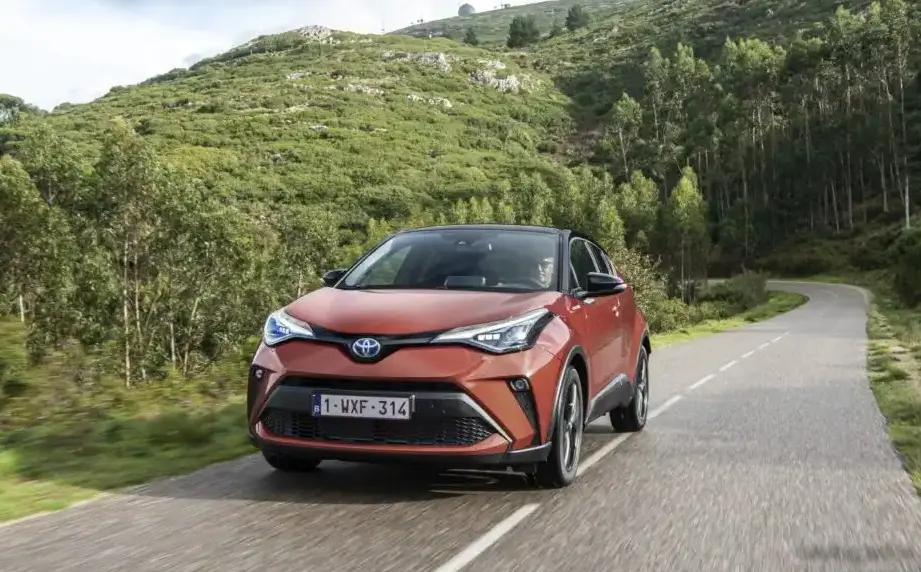
The Toyota C-HR (Compact High Rider) is a subcompact crossover SUV introduced by Toyota in 2016. The first generation, designated the C-HR I, underwent a significant facelift in 2020, bringing updated styling, improved technology, and revised powertrain options. This article focuses specifically on the 2.0-liter (148 horsepower) variant paired with Toyota’s CVT/Multidrive S transmission, produced from 2020 through June 2023. This configuration represented a mid-range offering within the C-HR lineup, positioned between the base 1.8 Hybrid and potentially higher-trim levels depending on regional availability.
Technical Specifications
| Brand | Toyota |
| Model | C-HR |
| Generation | C-HR I (facelift 2020) |
| Type (Engine) | 2.0 (148 Hp) CVT/Multidrive S |
| Start of production | 2020 |
| End of production | June, 2023 |
| Powertrain Architecture | Internal Combustion engine |
| Body type | SUV |
| Seats | 5 |
| Doors | 5 |
| Fuel consumption (urban) | 8.8 l/100 km (26.7 US mpg, 32.1 UK mpg, 11.4 km/l) |
| Fuel consumption (extra urban) | 5.8 l/100 km (40.6 US mpg, 48.7 UK mpg, 17.2 km/l) |
| Fuel consumption (combined) | 6.9 l/100 km (34.1 US mpg, 40.9 UK mpg, 14.5 km/l) |
| Fuel Type | Petrol (Gasoline) |
| Acceleration 0 – 100 km/h | 10.9 sec |
| Acceleration 0 – 62 mph | 10.9 sec |
| Acceleration 0 – 60 mph | 10.4 sec |
| Maximum speed | 195 km/h (121.17 mph) |
| Emission standard | Euro 5 |
| Weight-to-power ratio | 9.6 kg/Hp, 104.2 Hp/tonne |
| Weight-to-torque ratio | 7.5 kg/Nm, 133.1 Nm/tonne |
| Power | 148 Hp @ 6000-6100 rpm |
| Power per litre | 74.5 Hp/l |
| Torque | 189 Nm @ 3800-3900 rpm (139.4 lb.-ft. @ 3800-3900 rpm) |
| Engine layout | Front, Transverse |
| Engine Model/Code | 3ZR-FAE |
| Engine displacement | 1987 cm3 (121.25 cu. in.) |
| Number of cylinders | 4 |
| Engine configuration | Inline |
| Cylinder Bore | 80.5 mm (3.17 in.) |
| Piston Stroke | 97.6 mm (3.84 in.) |
| Compression ratio | 10:1 |
| Number of valves per cylinder | 4 |
| Fuel injection system | Multi-port manifold injection |
| Engine aspiration | Naturally aspirated engine |
| Valvetrain | DOHC VALVEMATIC |
| Engine oil capacity | 4.2 l (4.44 US qt | 3.7 UK qt) |
| Coolant | 5.7 l (6.02 US qt | 5.02 UK qt) |
| Kerb Weight | 1420-1470 kg (3130.56 – 3240.8 lbs.) |
| Max. weight | 1960 kg (4321.06 lbs.) |
| Max load | 490-540 kg (1080.27 – 1190.5 lbs.) |
| Trunk (boot) space – minimum | 297 l (10.49 cu. ft.) |
| Fuel tank capacity | 50 l (13.21 US gal | 11 UK gal) |
| Length | 4390 mm (172.83 in.) |
| Width | 1795 mm (70.67 in.) |
| Height | 1565 mm (61.61 in.) |
| Wheelbase | 2640 mm (103.94 in.) |
| Front track | 1550 mm (61.02 in.) |
| Rear (Back) track | 1560 mm (61.42 in.) |
| Front overhang | 935 mm (36.81 in.) |
| Rear overhang | 815 mm (32.09 in.) |
| Drag coefficient (Cd) | 0.33 |
| Minimum turning circle | 11 m (36.09 ft.) |
| Drivetrain Architecture | Front wheel drive |
| Number of gears and type of gearbox | automatic transmission CVT/Multidrive S |
| Front suspension | Independent type McPherson |
| Rear suspension | Double wishbone |
| Front brakes | Ventilated discs, 298 mm |
| Rear brakes | Disc, 281 mm |
| Tires size | 215/60 R17 96H; 225/50 R18 95H |
| Wheel rims size | 17; 18 |
INTRODUCTION
The 2020 facelift of the Toyota C-HR brought a refreshed look and updated mechanicals to Toyota’s distinctive subcompact crossover. The 2.0-liter engine, paired with the Multidrive S continuously variable transmission (CVT), offered a step up in performance from the base 1.8-liter hybrid model. Positioned as a mainstream option, this variant aimed to appeal to buyers seeking a balance of fuel efficiency, reasonable power, and Toyota’s reputation for reliability. The C-HR, even in its facelifted form, maintained its focus on style and urban practicality, rather than outright performance or off-road capability.
Powertrain & Engine Architecture
The heart of this C-HR variant is the 3ZR-FAE 2.0-liter inline-four cylinder engine. This naturally aspirated engine utilizes multi-port fuel injection and Toyota’s DOHC VALVEMATIC system. VALVEMATIC is a variable valve lift and timing system that continuously adjusts valve lift and timing based on driving conditions, aiming to improve both fuel efficiency and engine responsiveness. The engine produces 148 horsepower at 6000-6100 rpm and 189 Nm (139.4 lb.-ft.) of torque at 3800-3900 rpm. The Multidrive S transmission is Toyota’s branded CVT, offering seamless, stepless gear changes. Unlike traditional CVTs, Multidrive S incorporates a physical first gear for improved acceleration from a standstill and a more natural driving feel. It simulates stepped gear changes under hard acceleration.
Driving Characteristics
The 2.0-liter C-HR with the Multidrive S transmission delivers adequate, though not exhilarating, performance. Acceleration from 0-60 mph takes around 10.4 seconds, making it competitive within the subcompact crossover segment. The CVT effectively keeps the engine in its optimal power band, providing smooth and linear acceleration. However, the lack of traditional gear changes can feel somewhat disconnected to drivers accustomed to conventional automatic transmissions. Compared to a manual transmission equipped C-HR (if offered in certain markets), the CVT prioritizes fuel efficiency over driver engagement. The engine is generally quiet and refined during normal driving, but can become somewhat noisy under hard acceleration. The CVT’s “simulated” gear changes are noticeable, but generally well-executed.
Equipment & Trim Levels
The 2.0-liter C-HR typically came standard with features such as Toyota Safety Sense (including pre-collision system, lane departure alert, and automatic high beams), a touchscreen infotainment system with Apple CarPlay and Android Auto compatibility, automatic climate control, and power windows and locks. Higher trim levels added features like heated front seats, a power driver’s seat, a premium audio system, and blind spot monitoring. Interior upholstery was typically cloth on base models, with leather options available on higher trims. Exterior features included alloy wheels, LED headlights, and rear privacy glass.
Chassis & Braking
The C-HR utilizes a front-wheel-drive platform with an independent McPherson strut suspension in the front and a double wishbone suspension in the rear. This suspension setup provides a comfortable ride quality, well-suited for urban driving. Front brakes are ventilated discs measuring 298mm, while rear brakes are solid discs measuring 281mm. Anti-lock braking system (ABS) is standard. The C-HR’s chassis is tuned for stability and handling, rather than sporty performance. Stabilizer bars are fitted to both the front and rear axles to reduce body roll during cornering.
Market Reception & Comparison
The 2.0-liter C-HR received generally positive reviews for its stylish design, comfortable ride, and fuel efficiency. Critics noted that the engine, while adequate, wasn’t particularly powerful, and the CVT transmission could feel somewhat uninspiring. Compared to the 1.8-liter hybrid version, the 2.0-liter offered slightly better acceleration but lower fuel economy. Compared to competitors like the Mazda CX-3 or Honda HR-V, the C-HR stood out with its distinctive styling but sometimes lagged in terms of interior space and overall performance.
Legacy
The Toyota C-HR, including the 2.0-liter variant, has proven to be a reliable vehicle with few major mechanical issues reported. The 3ZR-FAE engine is known for its durability, and the Multidrive S transmission, while complex, has generally held up well over time. On the used car market, the C-HR maintains reasonable resale values, reflecting Toyota’s strong reputation for reliability. The first-generation C-HR, while discontinued in 2023, remains a popular choice for buyers seeking a stylish and fuel-efficient subcompact crossover.