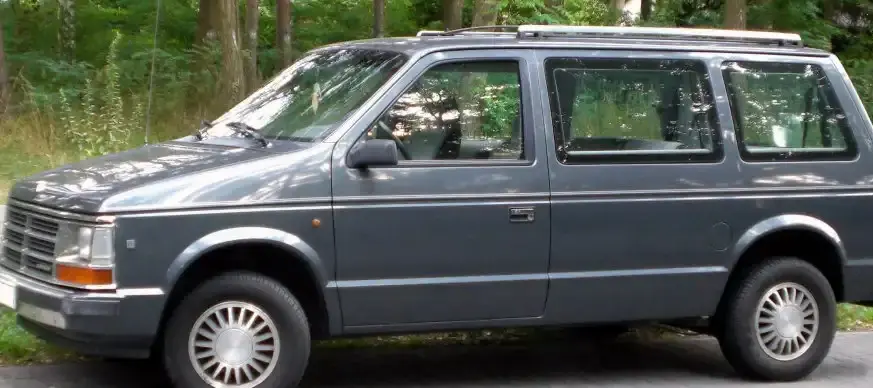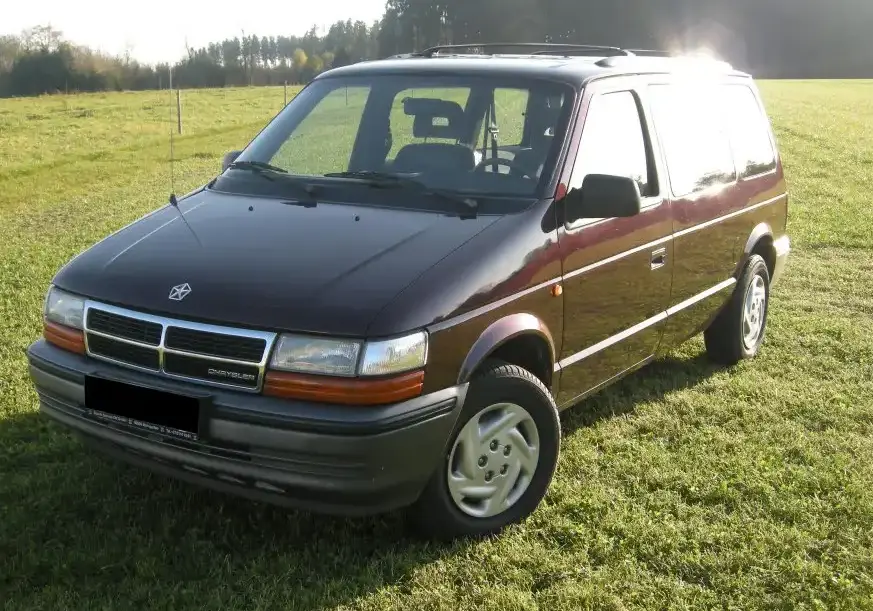
The Chrysler Voyager II 2.5 TD, producing 118 horsepower, was a significant variant of the second-generation Chrysler Voyager minivan produced between 1992 and 1995. Positioned as a fuel-efficient alternative within the Voyager lineup, it catered to buyers prioritizing practicality and lower running costs over outright performance. This model was primarily sold in European markets, where diesel engines were – and continue to be – favored for their economy, particularly on long distances. The Voyager II, built under the Chrysler/Renault joint venture, represented a key step in the evolution of the modern minivan, offering a spacious and versatile family vehicle.
Technical Specifications
| Brand | Chrysler |
| Model | Voyager |
| Generation | Voyager II |
| Type (Engine) | 2.5 TD (118 Hp) |
| Start of production | 1992 |
| End of production | 1995 |
| Powertrain Architecture | Internal Combustion engine |
| Body type | Minivan |
| Seats | 7 |
| Doors | 3 |
| Fuel consumption (urban) | 8.3 l/100 km (28.3 US mpg, 34 UK mpg, 12 km/l) |
| Fuel consumption (combined) | 6.7 l/100 km (35.1 US mpg, 42.2 UK mpg, 14.9 km/l) |
| Fuel Type | Diesel |
| Acceleration 0 – 100 km/h | 12.3 sec |
| Acceleration 0 – 62 mph | 12.3 sec |
| Acceleration 0 – 60 mph | 11.7 sec |
| Maximum speed | 180 km/h (111.85 mph) |
| Weight-to-power ratio | 14.4 kg/Hp (69.2 Hp/tonne) |
| Weight-to-torque ratio | 6.6 kg/Nm (150.7 Nm/tonne) |
| Power | 118 Hp @ 4200 rpm |
| Power per litre | 47.2 Hp/l |
| Torque | 257 Nm @ 2200 rpm (189.55 lb.-ft. @ 2200 rpm) |
| Engine layout | Front, Transverse |
| Engine displacement | 2499 cm3 (152.5 cu. in.) |
| Number of cylinders | 4 |
| Engine configuration | Inline |
| Cylinder Bore | 92 mm (3.62 in.) |
| Piston Stroke | 94 mm (3.7 in.) |
| Compression ratio | 21:1 |
| Number of valves per cylinder | 2 |
| Fuel injection system | Precombustion chamber injection |
| Engine aspiration | Turbocharger |
| Engine oil capacity | 6 l (6.34 US qt | 5.28 UK qt) |
| Coolant | 9.5 l (10.04 US qt | 8.36 UK qt) |
| Kerb Weight | 1705 kg (3758.88 lbs.) |
| Max. weight | 2400 kg (5291.09 lbs.) |
| Max load | 695 kg (1532.21 lbs.) |
| Trunk (boot) space – minimum | 671 l (23.7 cu. ft.) |
| Trunk (boot) space – maximum | 3250 l (114.77 cu. ft.) |
| Fuel tank capacity | 76 l (20.08 US gal | 16.72 UK gal) |
| Length | 4525 mm (178.15 in.) |
| Width | 1830 mm (72.05 in.) |
| Height | 1707 mm (67.2 in.) |
| Wheelbase | 2853 mm (112.32 in.) |
| Front track | 1522 mm (59.92 in.) |
| Rear (Back) track | 1578 mm (62.13 in.) |
| Drivetrain Architecture | The Internal combustion engine (ICE) drives the front wheels of the vehicle. |
| Drive wheel | Front wheel drive |
| Number of gears and type of gearbox | 5 gears, manual transmission |
| Front suspension | Wishbone |
| Rear suspension | Leaf spring |
| Front brakes | Ventilated discs |
| Rear brakes | Drum |
| Assisting systems | ABS (Anti-lock braking system) |
| Steering type | Steering rack and pinion |
| Power steering | Hydraulic Steering |
| Tires size | 205/70 R15 |
INTRODUCTION
The Chrysler Voyager II 2.5 TD, manufactured from 1992 to 1995, represented a key offering in Chrysler’s European minivan strategy. Built in collaboration with Renault (and often badged as a Renault Espace in some markets), the Voyager II aimed to provide a spacious, practical, and relatively affordable family vehicle. The 2.5-liter turbocharged diesel engine was a crucial component of this strategy, offering a balance of performance and fuel economy that appealed to European buyers. This variant sat within the broader Voyager II range, which also included gasoline-powered options, and was generally positioned as the entry-level or mid-range offering, depending on optional equipment.
Powertrain & Engine Architecture
The heart of the Voyager II 2.5 TD is the 2499cc inline-four cylinder diesel engine. This engine, often identified by codes like 4HE, utilized a precombustion chamber injection system. This system, common in European diesels of the era, involved injecting fuel into a small pre-chamber where it partially combusted, then igniting the main combustion chamber. This design aided in smoother combustion and reduced engine noise compared to direct injection systems. The engine featured a turbocharger, boosting power output to 118 horsepower at 4200 rpm and 257 Nm (189.55 lb-ft) of torque at 2200 rpm. The five-speed manual transmission was the standard gearbox for this variant, providing a reasonable spread of gears for both urban driving and highway cruising. The transmission was a front-wheel drive configuration, typical for European minivans of the time.
Driving Characteristics
The Voyager II 2.5 TD, with its 118 hp and 257 Nm of torque, offered a driving experience focused on usability rather than outright speed. Acceleration to 60 mph took around 11.7 seconds, and top speed was limited to 180 km/h (111.85 mph). The turbocharger provided a noticeable boost in power once spooled up, but the engine lacked the responsiveness of its gasoline counterparts. The five-speed manual transmission allowed drivers to keep the engine in its optimal torque band, making it well-suited for carrying passengers and luggage. Compared to the gasoline-powered Voyagers, the diesel offered significantly better fuel economy, but at the expense of refinement and acceleration. The gear ratios were tuned for economy, meaning the engine could feel strained when pushed hard, especially when fully loaded.
Equipment & Trim Levels
The Voyager II 2.5 TD typically came equipped with a reasonable level of standard features. These included power steering, central locking, and basic instrumentation. Interior upholstery was generally cloth, with a durable and practical design. Optional extras included air conditioning, power windows, and upgraded audio systems. Trim levels varied depending on the market, but generally, the 2.5 TD was offered in a base or mid-range specification. Higher trim levels added features like alloy wheels, upgraded interior trim, and additional convenience items. The dashboard layout was functional and straightforward, prioritizing ease of use over aesthetic flair.
Chassis & Braking
The Voyager II utilized a front-wheel drive chassis with an independent wishbone suspension at the front and a leaf spring suspension at the rear. The leaf spring setup was a cost-saving measure, and while it provided adequate load-carrying capacity, it resulted in a less refined ride compared to fully independent suspension systems. Braking was handled by ventilated discs at the front and drum brakes at the rear. An Anti-lock Braking System (ABS) was often included as standard equipment, enhancing safety. The tires were typically 205/70 R15, providing a good balance of grip and ride comfort.
Market Reception & Comparison
The Chrysler Voyager II 2.5 TD was generally well-received in European markets as a practical and economical family vehicle. Critics praised its spacious interior, versatility, and fuel efficiency. However, the engine was often criticized for being noisy and lacking the refinement of its gasoline counterparts. Compared to the gasoline-powered Voyagers, the 2.5 TD offered significantly better fuel economy, making it a popular choice for long-distance drivers. Compared to other diesel minivans of the era, such as the Renault Espace, the Voyager II offered a competitive package in terms of space, features, and price.
Legacy
The Chrysler Voyager II 2.5 TD, while not a performance icon, proved to be a reliable and durable vehicle. The 2.5-liter diesel engine, while somewhat basic by modern standards, was known for its longevity. Today, these Voyagers are relatively rare, but well-maintained examples can still be found. They are often sought after by enthusiasts looking for a classic European minivan with a unique character. The powertrain, while aging, remains relatively simple to maintain, and parts availability is generally good. The Voyager II 2.5 TD represents a significant chapter in the history of the minivan, demonstrating Chrysler’s commitment to providing practical and affordable transportation to families.