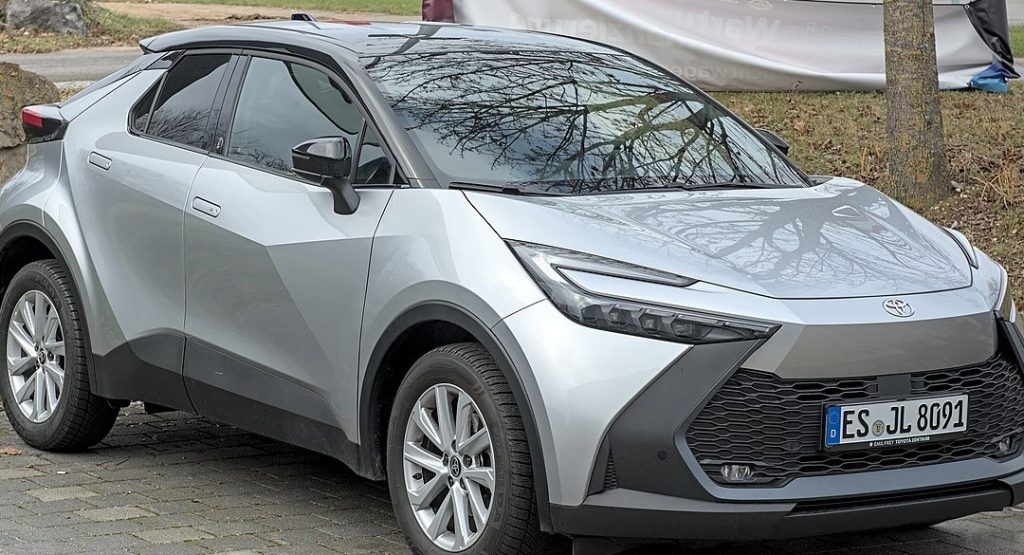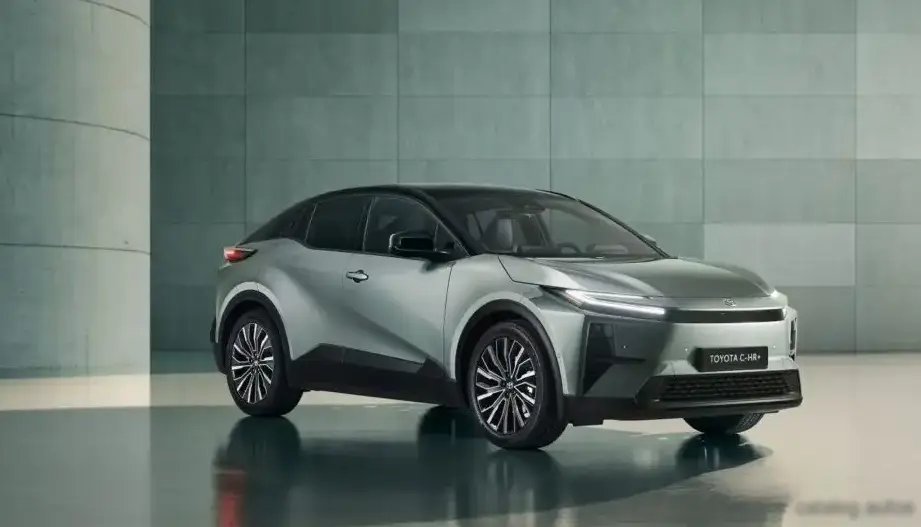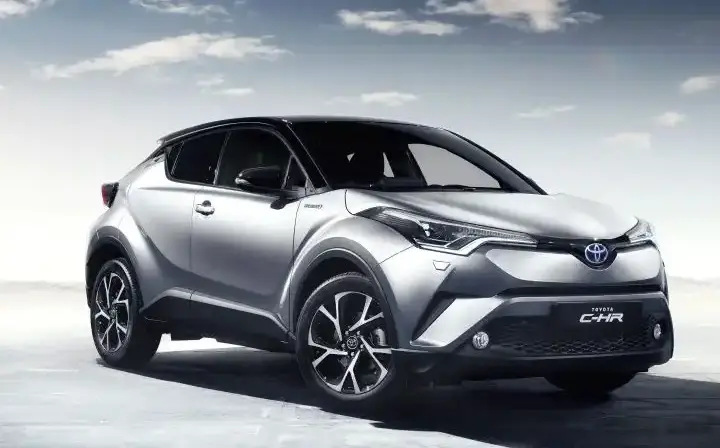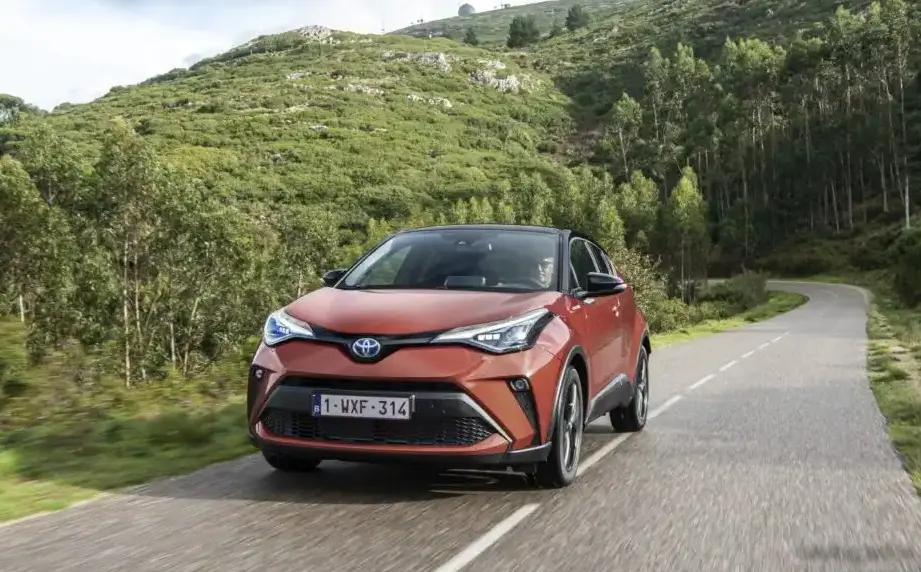
The Toyota C-HR (Compact High Rider) is a subcompact crossover SUV produced by Toyota since 2016. The first generation, designated C-HR I, underwent a significant facelift in 2020, introducing updated styling, improved technology, and revised powertrain options. This article focuses specifically on the 2.0-liter (184 hp) Hybrid variant with the e-CVT transmission, produced from 2020 through June 2023. This model represented a key offering in Toyota’s hybrid lineup, aimed at buyers seeking fuel efficiency and modern styling in a compact package. It primarily targeted the European and Asian markets, with limited availability in North America.
Technical Specifications
| Brand | Toyota |
| Model | C-HR |
| Generation | C-HR I (facelift 2020) |
| Type (Engine) | 2.0 (184 Hp) Hybrid e-CVT |
| Start of production | 2020 |
| End of production | June, 2023 |
| Powertrain Architecture | FHEV (Full Hybrid Electric Vehicle) |
| Body type | SUV |
| Seats | 5 |
| Doors | 5 |
| Combined fuel consumption (WLTP) | 5.3 l/100 km (44.4 US mpg, 53.3 UK mpg, 18.9 km/l) |
| CO2 emissions (WLTP) | 120 g/km |
| Fuel consumption (urban) | 3.7-3.9 l/100 km (63.6 – 60.3 US mpg, 76.3 – 72.4 UK mpg, 27 – 25.6 km/l) |
| Fuel consumption (extra urban) | 4.2-4.4 l/100 km (56 – 53.5 US mpg, 67.3 – 64.2 UK mpg, 23.8 – 22.7 km/l) |
| Fuel consumption (combined) | 4-4.3 l/100 km (58.8 – 54.7 US mpg, 70.6 – 65.7 UK mpg, 25 – 23.3 km/l) |
| CO2 emissions | 92 g/km |
| Fuel Type | Petrol (Gasoline) |
| Acceleration 0 – 100 km/h | 8.2 sec |
| Acceleration 0 – 62 mph | 8.2 sec |
| Acceleration 0 – 60 mph | 7.8 sec |
| Maximum speed | 180 km/h (111.85 mph) |
| Emission standard | Euro 6d-ISC-FCM |
| Weight-to-power ratio | 8.1 kg/Hp, 123.9 Hp/tonne |
| Weight-to-torque ratio | 7.8 kg/Nm, 127.9 Nm/tonne |
| Battery voltage | 216 V |
| Battery technology | Nickel-metal hydride (NiMH) |
| Battery location | Under the rear seats |
| Electric motor power | 109 Hp |
| Electric motor Torque | 202 Nm (148.99 lb.-ft.) |
| Electric motor location | Integrated into the transmission |
| Electric motor type | Synchronous |
| System power | 184 Hp @ 6000 rpm |
| Internal combustion engine power | 152 Hp @ 6000 rpm |
| Power per litre | 76.5 Hp/l |
| Torque | 190 Nm @ 4400-5200 rpm (140.14 lb.-ft. @ 4400-5200 rpm) |
| Engine layout | Front, Transverse |
| Engine Model/Code | M20A-FXS |
| Engine displacement | 1987 cm3 (121.25 cu. in.) |
| Number of cylinders | 4 |
| Engine configuration | Inline |
| Cylinder Bore | 80.5 mm (3.17 in.) |
| Piston Stroke | 97.6 mm (3.84 in.) |
| Compression ratio | 14:1 |
| Number of valves per cylinder | 4 |
| Fuel injection system | Direct injection and Multi-port manifold injection |
| Engine aspiration | Naturally aspirated engine |
| Valvetrain | DOHC, VVT-i |
| Engine oil capacity | 4.3 l (4.54 US qt | 3.78 UK qt) |
| Coolant | 5.9 l (6.23 US qt | 5.19 UK qt) |
| Kerb Weight | 1485-1525 kg (3273.86 – 3362.05 lbs.) |
| Max. weight | 1930 kg (4254.92 lbs.) |
| Max load | 405-445 kg (892.87 – 981.06 lbs.) |
| Trunk (boot) space – minimum | 358 l (12.64 cu. ft.) |
| Fuel tank capacity | 43 l (11.36 US gal | 9.46 UK gal) |
| Permitted trailer load with brakes (12%) | 725 kg (1598.35 lbs.) |
| Permitted trailer load without brakes | 725 kg (1598.35 lbs.) |
| Length | 4390 mm (172.83 in.) |
| Width | 1795 mm (70.67 in.) |
| Height | 1565 mm (61.61 in.) |
| Wheelbase | 2640 mm (103.94 in.) |
| Front track | 1540-1550 mm (60.63 – 61.02 in.) |
| Rear (Back) track | 1550-1560 mm (61.02 – 61.42 in.) |
| Front overhang | 935 mm (36.81 in.) |
| Rear overhang | 815 mm (32.09 in.) |
| Drag coefficient (Cd) | 0.32 |
| Minimum turning circle (turning diameter) | 11.0 m (36.09 ft.) |
| Front suspension | Independent type McPherson |
| Rear suspension | Double wishbone |
| Front brakes | Ventilated discs, 298 mm |
| Rear brakes | Disc, 281 mm |
| Steering type | Steering rack and pinion |
| Power steering | Electric Steering |
| Tires size | 215/60 R17 96H; 225/50 R18 95H |
| Wheel rims size | 6.5J x 17; 7J x 18 |
INTRODUCTION
The 2020 facelift of the Toyota C-HR brought significant updates to the model, including a more powerful 2.0-liter hybrid powertrain. This variant, producing 184 horsepower, was positioned as a mid-range offering within the C-HR lineup, slotting above the 1.8-liter hybrid and below any potential performance-oriented trims. Built on the Toyota New Global Architecture (TNGA) platform – specifically a modified version of the GA-C platform – the C-HR aimed to deliver a stylish and efficient crossover experience. The e-CVT transmission was central to the hybrid system, prioritizing fuel economy and smooth acceleration over outright performance.
Powertrain & Engine Architecture
The heart of this C-HR variant is the 20A-FXS 2.0-liter inline-four cylinder engine. This engine utilizes Toyota’s D-4S direct injection system combined with port fuel injection for optimized combustion efficiency. It features a high compression ratio of 14:1 and a dual overhead camshaft (DOHC) valvetrain with Variable Valve Timing-intelligence (VVT-i) on both intake and exhaust valves. The engine produces 152 hp and 190 Nm of torque. The electric motor, a synchronous type, contributes an additional 109 hp and 202 Nm of torque. The combined system output is 184 hp. The e-CVT (Electronic Continuously Variable Transmission) isn’t a traditional CVT with belts and pulleys. Instead, it’s a power-split device that seamlessly blends power from the engine and electric motor, acting as a continuously variable transmission without fixed gear ratios. This system allows the engine to operate at its most efficient point while providing smooth, linear acceleration.
Driving Characteristics
The 2.0-liter Hybrid C-HR offers a comfortable and refined driving experience, prioritizing fuel efficiency over sporty handling. The e-CVT provides smooth, stepless acceleration, although it can sometimes feel less responsive than a traditional automatic transmission, particularly during quick overtaking maneuvers. The combined output of 184 hp provides adequate performance for everyday driving, with a 0-60 mph time of around 7.8 seconds. The hybrid system allows for short periods of electric-only driving at low speeds, further enhancing fuel economy. The steering is light and precise, making it easy to maneuver in urban environments. However, the suspension is tuned for comfort rather than agility, resulting in some body roll during cornering.
Equipment & Trim Levels
The 2.0-liter Hybrid C-HR typically came well-equipped, even in base trim levels. Standard features often included Toyota Safety Sense, which encompasses a suite of active safety technologies such as pre-collision system with pedestrian detection, lane departure alert with steering assist, automatic high beams, and dynamic radar cruise control. Interior features generally included a touchscreen infotainment system with Apple CarPlay and Android Auto compatibility, automatic climate control, and fabric upholstery. Higher trim levels added features such as leather seats, a premium audio system, blind spot monitoring, and rear cross-traffic alert. Optional extras included a panoramic sunroof and metallic paint finishes.
Chassis & Braking
The C-HR utilizes a front-wheel-drive layout. The front suspension consists of independent MacPherson struts, while the rear features a double wishbone setup. This configuration provides a good balance between ride comfort and handling. Braking duties are handled by ventilated discs at the front and solid discs at the rear. The C-HR is equipped with an Anti-lock Braking System (ABS) and Electronic Brakeforce Distribution (EBD) as standard. The relatively low weight of the vehicle, ranging from 1485 to 1525 kg, contributes to its braking performance and overall efficiency.
Market Reception & Comparison
The 2.0-liter Hybrid C-HR was generally well-received by critics for its fuel efficiency, stylish design, and comfortable ride. However, some reviewers noted its relatively high price compared to competitors and its somewhat uninspiring driving dynamics. Compared to the 1.8-liter hybrid version, the 2.0-liter offered noticeably more power and a more responsive driving experience. It also provided a slightly quicker 0-60 mph time. Compared to other compact crossovers in the market, the C-HR stood out with its distinctive styling and hybrid powertrain, but it often lacked the practicality and spaciousness of some rivals.
Legacy
The Toyota C-HR, particularly the 2.0-liter Hybrid variant, has proven to be a reliable and fuel-efficient vehicle. The hybrid powertrain is known for its longevity, and the e-CVT transmission generally requires minimal maintenance. On the used car market, these models hold their value reasonably well, thanks to Toyota’s reputation for reliability and the increasing demand for fuel-efficient vehicles. While not a performance car, the 2.0-liter Hybrid C-HR remains a popular choice for buyers seeking a stylish, practical, and economical crossover.