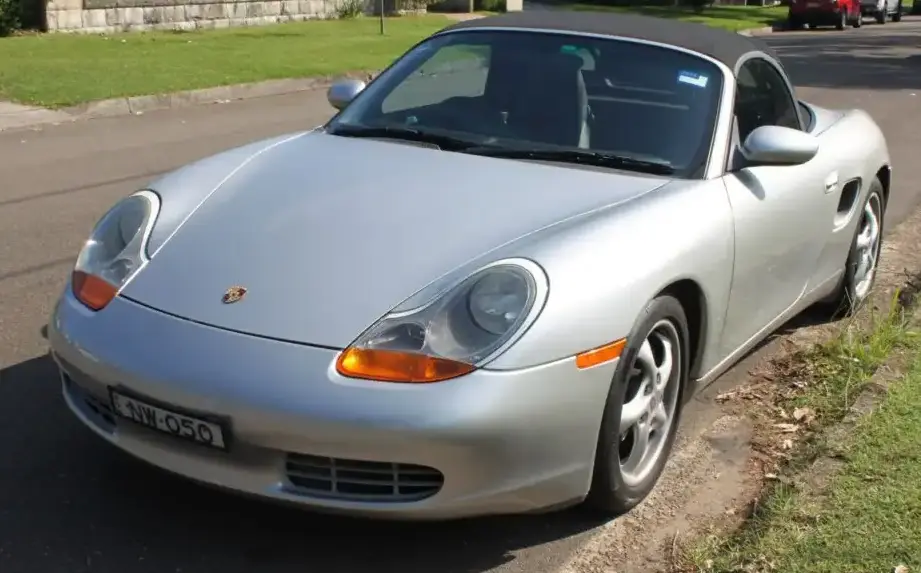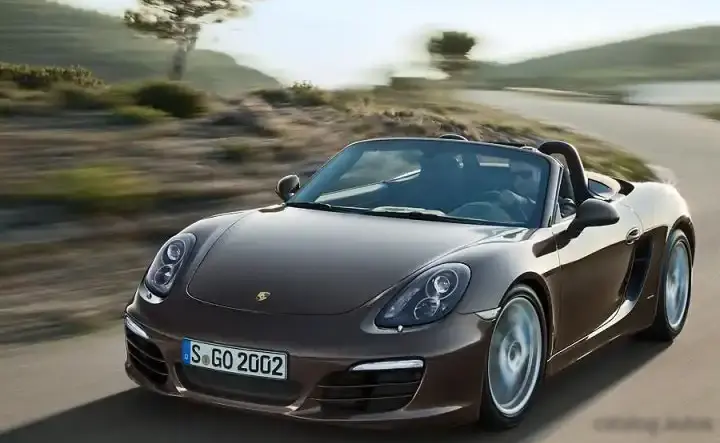
The Porsche Boxster (981) S 3.4, produced from 2012 to 2016, represents a significant evolution in Porsche’s mid-engine roadster lineage. Positioned as the performance-oriented variant within the 981 generation, it slotted above the base Boxster and below the even more focused Boxster Spyder. This model year marked a complete redesign of the Boxster, moving to a new platform and offering a more refined driving experience. The “S” designation indicated a substantial upgrade in engine output and performance features compared to the standard model, while the “PDK” denoted Porsche’s dual-clutch transmission, a key component of its sporting character. The 981 generation, and specifically the S 3.4, aimed to bridge the gap between accessible sports car ownership and the uncompromising performance of the 911.
Technical Specifications
| Brand | Porsche |
| Model | Boxster |
| Generation | Boxster (981) |
| Type (Engine) | S 3.4 (315 Hp) PDK |
| Start of production | 2012 |
| End of production | 2016 |
| Powertrain Architecture | Internal Combustion engine |
| Body type | Roadster |
| Seats | 2 |
| Doors | 2 |
| Fuel consumption (economy) – urban | 11.4 l/100 km (20.6 US mpg) |
| Fuel consumption (economy) – extra urban | 6.3 l/100 km (37.3 US mpg) |
| Fuel consumption (economy) – combined | 8.2 l/100 km (28.7 US mpg) |
| CO2 emissions | 190 g/km |
| Fuel Type | Petrol (Gasoline) |
| Acceleration 0 – 100 km/h | 5 sec |
| Acceleration 0 – 62 mph | 5 sec |
| Acceleration 0 – 60 mph | 4.8 sec |
| Maximum speed | 277 km/h (172.12 mph) |
| Weight-to-power ratio | 4.3 kg/Hp |
| Weight-to-torque ratio | 3.8 kg/Nm |
| Power | 315 Hp @ 6700 rpm |
| Torque | 360 Nm @ 4500-5800 rpm (265.52 lb.-ft. @ 4500-5800 rpm) |
| Engine layout | Middle, Longitudinal |
| Engine Model/Code | MA1.23 |
| Engine displacement | 3436 cm3 (209.68 cu. in.) |
| Number of cylinders | 6 |
| Engine configuration | Boxer |
| Compression ratio | 12.5:1 |
| Number of valves per cylinder | 4 |
| Engine oil capacity | 7.5 l (7.93 US qt | 6.6 UK qt) |
| Coolant | 23 l (24.3 US qt | 20.24 UK qt) |
| Kerb Weight | 1370 kg (3020.33 lbs.) |
| Max. weight | 1685 kg (3714.79 lbs.) |
| Max load | 315 kg (694.46 lbs.) |
| Trunk (boot) space – minimum | 280 l (9.89 cu. ft.) |
| Fuel tank capacity | 64 l (16.91 US gal | 14.08 UK gal) |
| Length | 4374 mm (172.2 in.) |
| Width | 1801 mm (70.91 in.) |
| Height | 1281 mm (50.43 in.) |
| Wheelbase | 2475 mm (97.44 in.) |
| Drag coefficient (Cd) | 0.31 |
| Drivetrain Architecture | Rear wheel drive |
| Number of gears and type of gearbox | 7 gears, automatic transmission PDK |
| Front suspension | Independent, type McPherson with coil spring and anti-roll bar |
| Rear suspension | Double wishbone |
| Front brakes | Ventilated discs |
| Rear brakes | Ventilated discs |
Powertrain & Engine Architecture
At the heart of the Boxster S 3.4 lies the MA1.23 engine, a 3.4-liter naturally aspirated flat-six (boxer) engine. This engine is a direct descendant of Porsche’s long-standing tradition of using horizontally opposed engines, known for their low center of gravity and smooth operation. The engine features direct fuel injection (DFI), maximizing combustion efficiency and contributing to its impressive power output. The valvetrain utilizes four valves per cylinder, further enhancing breathing and performance. The 315 horsepower peak is achieved at 6700 rpm, while the 360 Nm (265 lb-ft) of torque is available between 4500 and 5800 rpm. The PDK transmission, a seven-speed dual-clutch unit, is integral to the driving experience. It offers incredibly fast and smooth gear changes, both in automatic and manual modes, contributing to the car’s acceleration and responsiveness. Unlike traditional automatics, the PDK doesn’t have a torque converter, resulting in a more direct connection between the engine and the wheels.
Driving Characteristics
The Boxster S 3.4 with the PDK transmission delivers a distinctly engaging driving experience. The combination of the mid-engine layout, the powerful flat-six, and the quick-shifting PDK results in a car that feels balanced, agile, and responsive. While the manual transmission offered a more raw and connected feel, the PDK provided a level of convenience and speed that appealed to a broader range of drivers. The gear ratios are optimized for both acceleration and cruising, allowing the car to feel comfortable in a variety of driving situations. Compared to the base Boxster, the S 3.4 offers a noticeable increase in performance, with quicker acceleration and a more eager response to throttle inputs. Compared to the higher-performance Spyder, the S 3.4 offered a slightly more compliant ride and a more luxurious interior.
Equipment & Trim Levels
The Boxster S 3.4 came standard with a generous array of features, including leather upholstery, bi-xenon headlights, a partially electric driver’s seat, and a high-quality audio system. Optional extras were plentiful, allowing buyers to personalize their cars to their liking. Popular options included the Sport Chrono Package (which added launch control and a sportier driving mode), adaptive suspension (Porsche Active Suspension Management or PASM), and various interior trim upgrades. The interior design was driver-focused, with a well-laid-out dashboard and intuitive controls. The central console featured Porsche’s Communication Management (PCM) system, providing navigation, entertainment, and vehicle information.
Chassis & Braking
The 981 Boxster benefited from a redesigned chassis that was lighter and more rigid than its predecessor. The suspension system featured independent McPherson struts at the front and a multi-link setup at the rear, providing excellent handling and ride comfort. The S 3.4 model received larger brakes compared to the base Boxster, with ventilated discs at all four corners. ABS (Anti-lock Braking System) was standard, ensuring safe and controlled stopping power. The steering system utilized a precise rack-and-pinion setup, providing excellent feedback and responsiveness.
Market Reception & Comparison
The Porsche Boxster (981) S 3.4 was widely praised by automotive critics for its exceptional handling, powerful engine, and refined driving experience. It was often lauded as one of the best sports cars in its class. Compared to the base Boxster, the S 3.4 offered a significant performance upgrade, justifying its higher price tag for enthusiasts seeking a more thrilling driving experience. Fuel economy was respectable for a sports car of its caliber, averaging around 28.7 US mpg in combined driving. Reliability was generally good, although some owners reported minor issues with the PDK transmission.
Legacy
The Porsche Boxster (981) S 3.4 has proven to be a durable and desirable sports car in the used car market. The MA1.23 engine is known for its reliability, provided it is properly maintained. The PDK transmission, while occasionally requiring servicing, has also proven to be a robust unit. The 981 generation Boxster S 3.4 remains a popular choice for drivers seeking a well-balanced, engaging, and relatively affordable Porsche sports car. Its combination of performance, handling, and everyday usability has cemented its place as a modern classic.