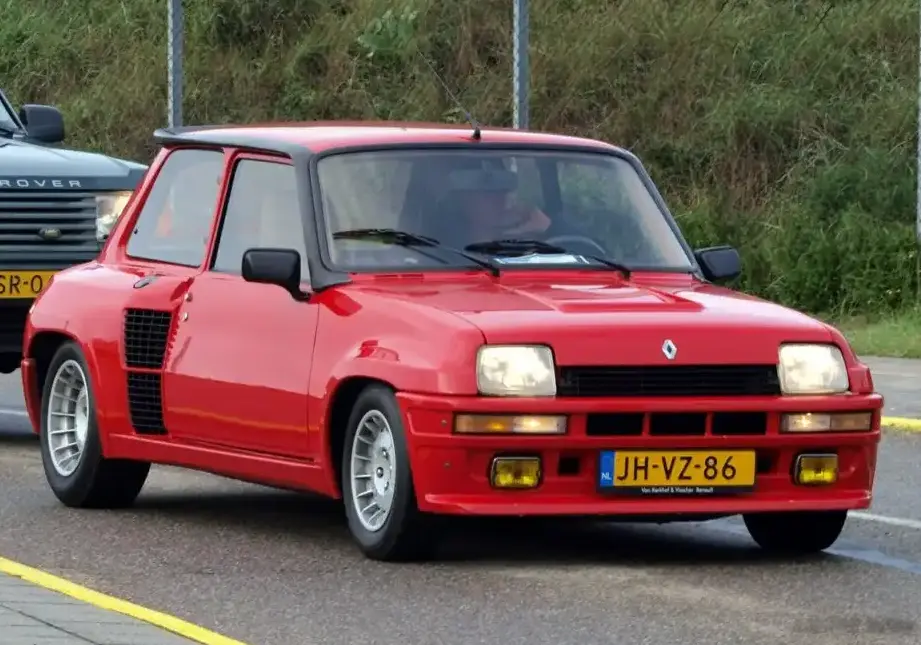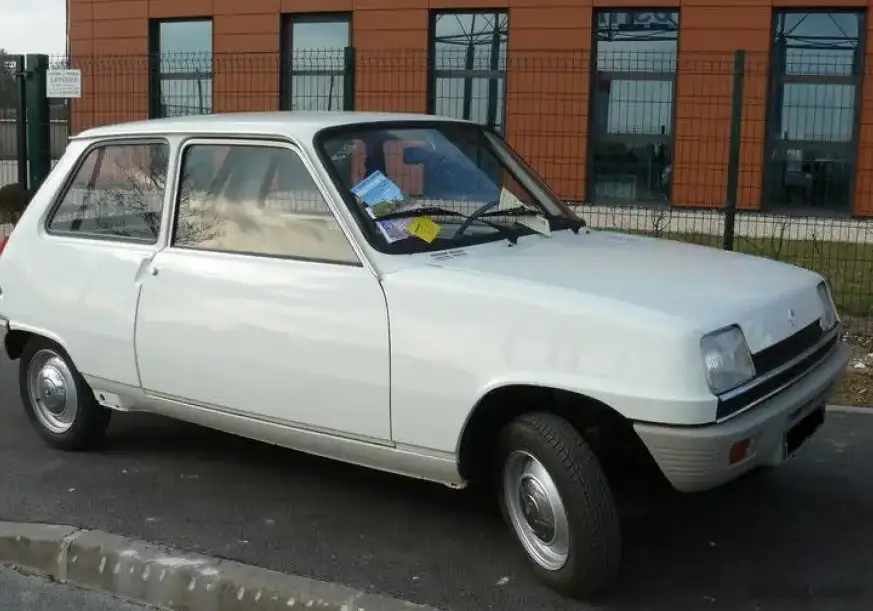
The Renault 5 1.4 i, producing 60 horsepower, was a mainstay of the Renault 5 range from 1981 to 1985. Positioned as an entry-level offering within the broader second-generation Renault 5 (introduced in 1984, though the 1.4 engine carried over from earlier models), it provided affordable transportation for a wide demographic. This variant played a significant role in Renault’s success in the European small car market, offering a balance of economy, practicality, and ease of use. It was a common sight on European roads during the early to mid-1980s, and remains a popular classic car today.
Technical Specifications
| Brand | Renault |
| Model | 5 |
| Generation | 5 |
| Type (Engine) | 1.4 i (60 Hp) |
| Start of production | 1981 year |
| End of production | 1985 year |
| Powertrain Architecture | Internal Combustion engine |
| Body type | Hatchback |
| Seats | 4 |
| Doors | 3 |
| Fuel consumption (economy) – urban | 8.3 l/100 km (28.3 US mpg, 34 UK mpg, 12 km/l) |
| Fuel consumption (economy) – extra urban | 5.2 l/100 km (45.2 US mpg, 54.3 UK mpg, 19.2 km/l) |
| Fuel consumption (economy) – combined | 6.8 l/100 km (34.6 US mpg, 41.5 UK mpg, 14.7 km/l) |
| Fuel Type | Petrol (Gasoline) |
| Acceleration 0 – 100 km/h | 14 sec |
| Acceleration 0 – 62 mph | 14 sec |
| Acceleration 0 – 60 mph | 13.3 sec |
| Maximum speed | 158 km/h (98.18 mph) |
| Weight-to-power ratio | 12.7 kg/Hp, 78.9 Hp/tonne |
| Weight-to-torque ratio | 7.5 kg/Nm, 134.2 Nm/tonne |
| Power | 60 Hp @ 4750 rpm |
| Power per litre | 43.2 Hp/l |
| Torque | 102 Nm @ 3000 rpm (75.23 lb.-ft. @ 3000 rpm) |
| Engine layout | Front, Transverse |
| Engine Model/Code | C1J |
| Engine displacement | 1390 cm3 (84.82 cu. in.) |
| Number of cylinders | 4 |
| Engine configuration | Inline |
| Cylinder Bore | 75.8 mm (2.98 in.) |
| Piston Stroke | 77 mm (3.03 in.) |
| Compression ratio | 9:1 |
| Number of valves per cylinder | 2 |
| Fuel injection system | Single-point injection |
| Engine aspiration | Naturally aspirated engine |
| Engine oil capacity | 3.3 l (3.49 US qt | 2.9 UK qt) |
| Coolant | 6.3 l (6.66 US qt | 5.54 UK qt) |
| Kerb Weight | 760 kg (1675.51 lbs.) |
| Max. weight | 1195 kg (2634.52 lbs.) |
| Max load | 435 kg (959.01 lbs.) |
| Trunk (boot) space – minimum | 235 l (8.3 cu. ft.) |
| Trunk (boot) space – maximum | 915 l (32.31 cu. ft.) |
| Fuel tank capacity | 38 l (10.04 US gal | 8.36 UK gal) |
| Length | 3590 mm (141.34 in.) |
| Width | 1565 mm (61.61 in.) |
| Height | 1385 mm (54.53 in.) |
| Wheelbase | 2415 mm (95.08 in.) |
| Front track | 1330 mm (52.36 in.) |
| Rear (Back) track | 1290 mm (50.79 in.) |
| Drivetrain Architecture | The Internal combustion engine (ICE) drives the front wheels of the vehicle. |
| Drive wheel | Front wheel drive |
| Number of gears and type of gearbox | 5 gears, manual transmission |
| Front suspension | Coil spring |
| Rear suspension | Torsion |
| Front brakes | Disc |
| Rear brakes | Drum |
| Steering type | Steering rack and pinion |
| Tires size | 145/70 R13 |
| Wheel rims size | 13 |
Introduction
The Renault 5 1.4 i (60 hp) represented a practical and economical choice for buyers in the early 1980s. It was part of the second generation of the Renault 5, which debuted in 1984, though the 1.4-liter engine had been available in earlier iterations. Built on the Renault 5 platform, it offered a compact and efficient package, ideal for navigating crowded city streets and providing affordable personal transportation. This model was particularly popular in Europe, where small, fuel-efficient cars were in high demand. The 1.4i served as the base engine option, offering a more affordable entry point into the Renault 5 range compared to the more powerful and expensive variants.
Powertrain & Engine Architecture
The heart of the Renault 5 1.4 i was the C1J engine, a 1390cc inline-four cylinder petrol engine. This engine featured a single overhead camshaft (SOHC) and two valves per cylinder. Fuel delivery was handled by a single-point fuel injection system, a relatively simple and cost-effective technology for the time. The engine produced 60 horsepower at 4750 rpm and 102 Nm (75.23 lb-ft) of torque at 3000 rpm. The engine’s relatively low compression ratio of 9:1 allowed it to run on lower octane fuel, further contributing to its affordability. The engine was transversely mounted at the front of the vehicle, driving the front wheels. The standard transmission was a five-speed manual gearbox, although a three-speed automatic transmission was available as an option, albeit less common.
Driving Characteristics
The Renault 5 1.4 i, with its 60 horsepower and relatively lightweight chassis, offered adequate, though not exhilarating, performance. Acceleration from 0 to 60 mph took around 13.3 seconds, and the top speed was approximately 98 mph. The five-speed manual transmission allowed drivers to keep the engine in its optimal power band, while the optional automatic transmission prioritized ease of use over performance. The car’s handling was generally considered nimble and responsive, thanks to its small size and front-wheel-drive layout. However, the suspension was tuned for comfort rather than sporty handling, resulting in a somewhat soft and forgiving ride. Compared to the higher-output Renault 5 models, such as the Gordini or Turbo, the 1.4 i lacked the punch and responsiveness that those performance-oriented variants offered.
Equipment & Trim Levels
The Renault 5 1.4 i was typically equipped with basic, but functional, features. Standard equipment included cloth upholstery, a basic instrument cluster, and manually operated windows and door locks. Optional extras included a sunroof, upgraded stereo system, and more comfortable seats. The interior was designed with practicality in mind, offering a reasonable amount of space for passengers and cargo given the car’s small footprint. Trim levels were relatively simple, with the 1.4 i generally representing the base model. Higher trim levels offered additional features and cosmetic enhancements, such as upgraded interior trim and exterior styling details.
Chassis & Braking
The Renault 5 1.4 i featured a relatively simple chassis design. The front suspension utilized coil springs and independent wishbones, while the rear suspension employed a torsion beam. This setup provided a comfortable ride, but wasn’t particularly sophisticated. The braking system consisted of disc brakes at the front and drum brakes at the rear. The steering was rack and pinion, providing reasonably precise and responsive steering feel. The car’s relatively light weight helped to compensate for the limitations of the braking system. Tire size was typically 145/70 R13.
Market Reception & Comparison
The Renault 5 1.4 i was generally well-received by critics as an affordable and practical small car. It was praised for its fuel efficiency, ease of driving, and compact size. However, it was also criticized for its lack of power and relatively basic interior. Compared to other small cars of the era, such as the Fiat Panda and the Citroën 2CV, the Renault 5 offered a more modern and refined driving experience. The 1.4 i was significantly less expensive than the higher-output Renault 5 models, making it an attractive option for budget-conscious buyers. Fuel economy was a strong point, with combined fuel consumption averaging around 34.6 US mpg.
Legacy
The Renault 5 1.4 i remains a popular classic car today, appreciated for its simplicity, affordability, and nostalgic appeal. The C1J engine is generally considered to be reliable and relatively easy to maintain, although parts availability can be a challenge. Well-maintained examples of the 1.4 i are increasingly sought after by collectors and enthusiasts. The Renault 5, in general, is remembered as a groundbreaking car that helped to popularize the small hatchback segment in Europe. The 1.4i variant, while not the most powerful or luxurious, played a crucial role in making the Renault 5 accessible to a wider range of buyers.