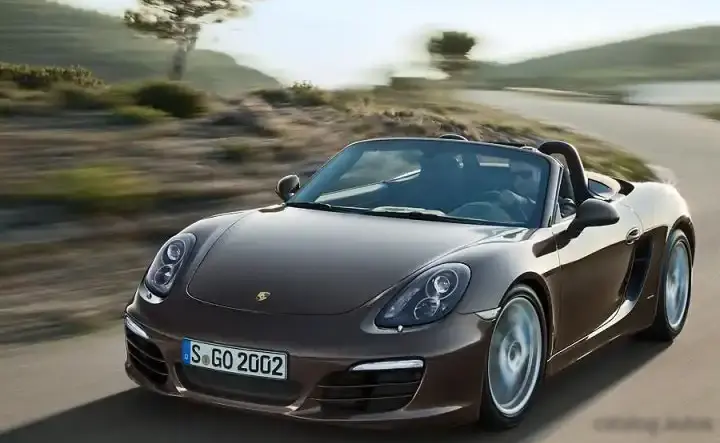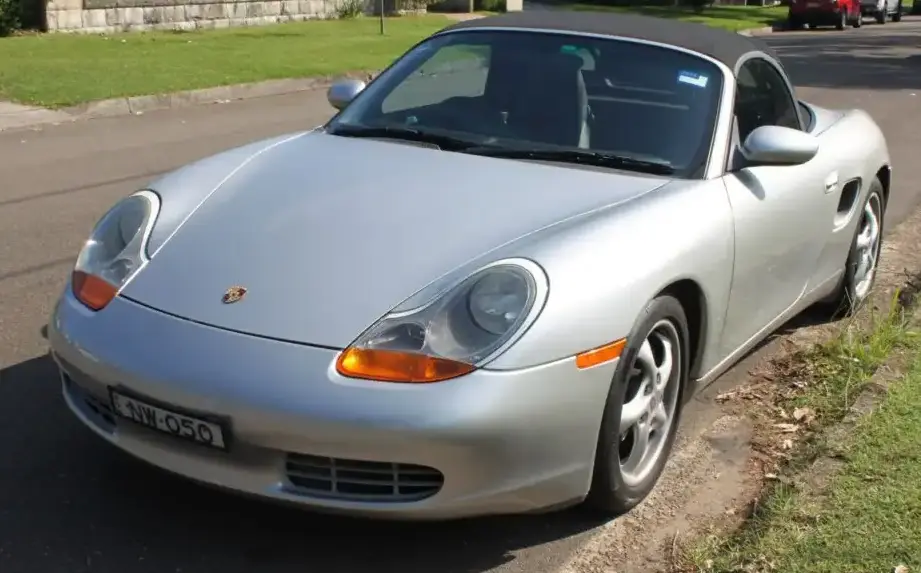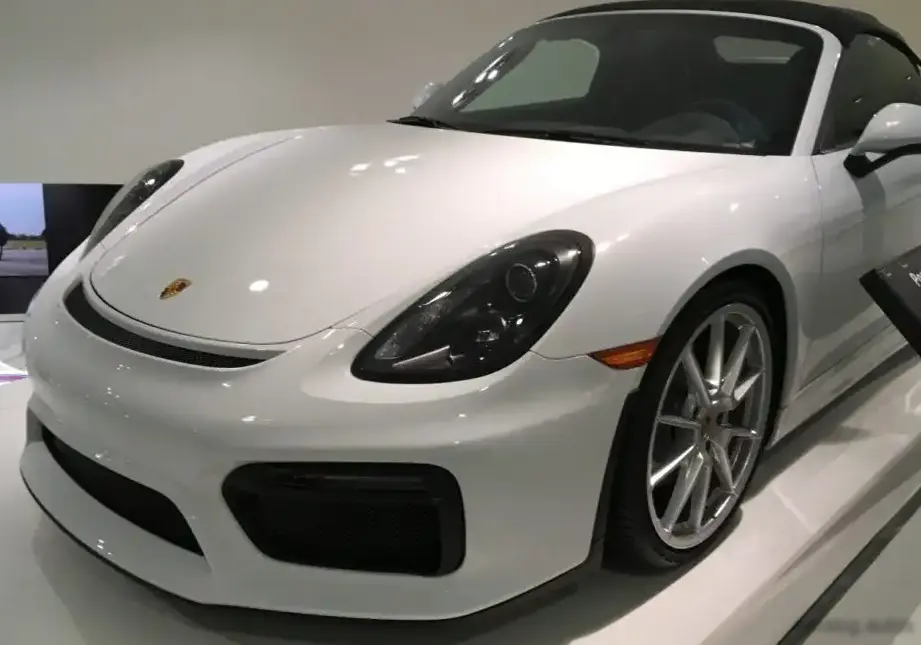
The Porsche Boxster (981) Spyder 3.8, produced from 2015 to 2016, represents the highest-performance variant of the 981-generation Boxster. Positioned above the standard Boxster and the Boxster S in Porsche’s lineup, the Spyder was designed as a focused, driver-centric roadster, emphasizing lightweight construction and exhilarating performance. It shared the 981 platform with the Cayman, but distinguished itself through unique styling cues, a more powerful engine, and a more aggressive suspension setup. The Spyder aimed to deliver a visceral driving experience reminiscent of classic Porsche roadsters, appealing to enthusiasts seeking a pure connection to the road.
Technical Specifications
| Brand | Porsche |
| Model | Boxster |
| Generation | Boxster (981) |
| Type (Engine) | Spyder 3.8 (375 Hp) |
| Start of production | 2015 |
| End of production | 2016 |
| Powertrain Architecture | Internal Combustion engine |
| Body type | Roadster |
| Seats | 2 |
| Doors | 2 |
| Fuel consumption (economy) – urban (NEDC) | 14.2 l/100 km (16.6 US mpg, 19.9 UK mpg, 7 km/l) |
| Fuel consumption (economy) – extra urban (NEDC) | 7.5 l/100 km (31.4 US mpg, 37.7 UK mpg, 13.3 km/l) |
| Fuel consumption (economy) – combined (NEDC) | 9.9 l/100 km (23.8 US mpg, 28.5 UK mpg, 10.1 km/l) |
| CO2 emissions (NEDC) | 230 g/km |
| Fuel Type | Petrol (Gasoline) |
| Acceleration 0 – 100 km/h | 4.5 sec |
| Acceleration 0 – 62 mph | 4.5 sec |
| Acceleration 0 – 60 mph | 4.3 sec |
| Maximum speed | 290 km/h (180.2 mph) |
| Emission standard | Euro 6 |
| Weight-to-power ratio | 3.5 kg/Hp, 285.2 Hp/tonne |
| Weight-to-torque ratio | 3.1 kg/Nm, 319.4 Nm/tonne |
| Power | 375 Hp @ 6700 rpm |
| Power per litre | 98.7 Hp/l |
| Torque | 420 Nm @ 4750-6000 rpm (309.78 lb.-ft. @ 4750-6000 rpm) |
| Engine layout | Middle, Longitudinal |
| Engine Model/Code | MDB.XA |
| Engine displacement | 3800 cm3 (231.89 cu. in.) |
| Number of cylinders | 6 |
| Engine configuration | Boxer |
| Cylinder Bore | 102 mm (4.02 in.) |
| Piston Stroke | 77.5 mm (3.05 in.) |
| Compression ratio | 12.5:1 |
| Number of valves per cylinder | 4 |
| Fuel injection system | Direct injection |
| Engine aspiration | Naturally aspirated engine |
| Valvetrain | DOHC |
| Engine oil capacity | 7.5 l (7.93 US qt | 6.6 UK qt) |
| Coolant | 25 l (26.42 US qt | 22 UK qt) |
| Kerb Weight | 1315 kg (2899.08 lbs.) |
| Max. weight | 1650 kg (3637.63 lbs.) |
| Max load | 335 kg (738.55 lbs.) |
| Trunk (boot) space – minimum | 280 l (9.89 cu. ft.) |
| Fuel tank capacity | 54 l (14.27 US gal | 11.88 UK gal) |
| Length | 4414 mm (173.78 in.) |
| Width | 1801 mm (70.91 in.) |
| Width including mirrors | 1978 mm (77.87 in.) |
| Height | 1262 mm (49.69 in.) |
| Wheelbase | 2475 mm (97.44 in.) |
| Front track | 1526 mm (60.08 in.) |
| Rear (Back) track | 1540 mm (60.63 in.) |
| Ride height (ground clearance) | 106 mm (4.17 in.) |
| Drag coefficient (Cd) | 0.33 |
| Minimum turning circle (turning diameter) | 10.98 m (36.02 ft.) |
| Drivetrain Architecture | Rear wheel drive |
| Number of gears and type of gearbox | 6 gears, manual transmission |
| Front suspension | Independent, type McPherson with coil spring and anti-roll bar |
| Rear suspension | McPherson, Transverse stabilizer |
| Front brakes | Ventilated discs, 340×34 mm |
| Rear brakes | Ventilated discs, 330×28 mm |
| Assisting systems | ABS (Anti-lock braking system) |
| Steering type | Steering rack and pinion |
| Power steering | Electric Steering |
| Tires size | Front wheel tires: 235/35 ZR 20 Rear wheel tires: 265/35 ZR 20 |
| Wheel rims size | Front wheel rims: 8.5 J x 20 ET 57 Rear wheel rims: 10.5 J x 20 ET 47 |
INTRODUCTION
The Porsche Boxster (981) Spyder 3.8, launched in 2015, was a limited-production variant of the 981 Boxster. It represented a return to the high-performance Spyder tradition within the Boxster lineage, harking back to earlier iterations like the 987 Spyder. Built on the mid-engine platform of the 981 generation, the Spyder aimed to provide a more focused and engaging driving experience than the standard Boxster and Boxster S. Key features included a more powerful 3.8-liter flat-six engine, a six-speed manual transmission (a PDK dual-clutch transmission was optional), a lightweight fabric roof, and a revised suspension setup. The Spyder was produced for only two model years, making it a relatively rare and sought-after Porsche.
Powertrain & Engine Architecture
At the heart of the Spyder lies Porsche’s naturally aspirated 3.8-liter flat-six engine, designated as the MDB.XA. This engine, derived from the 911 Carrera S, produces 375 horsepower at 6,700 rpm and 420 Nm (309.78 lb-ft) of torque between 4,750 and 6,000 rpm. The engine utilizes direct fuel injection, a dual-mass flywheel, and a dry-sump lubrication system, contributing to its responsiveness and high-revving nature. The valvetrain employs dual overhead camshafts (DOHC) with four valves per cylinder. The standard transmission is a precise six-speed manual, although Porsche offered a seven-speed PDK dual-clutch transmission as an option. The engine’s longitudinal mid-engine layout contributes to excellent weight distribution and balanced handling.
Driving Characteristics
The Spyder’s driving experience is defined by its responsiveness and agility. The 3.8-liter engine delivers strong acceleration, propelling the car from 0 to 60 mph in approximately 4.3 seconds. The manual transmission offers precise shifts and a direct connection to the engine, enhancing driver engagement. The Spyder’s suspension, featuring stiffer springs and dampers compared to the standard Boxster, provides a firm yet controlled ride. The lightweight fabric roof, which replaces the retractable hardtop of the standard Boxster, reduces weight and lowers the center of gravity, further improving handling. The steering is precise and communicative, providing ample feedback to the driver. While not as overtly powerful as some contemporary sports cars, the Spyder’s balanced chassis and responsive engine make it a rewarding and engaging car to drive on both the road and the track.
Equipment & Trim Levels
The Spyder was relatively sparsely equipped compared to other Boxster variants, reflecting its focus on driving performance. Standard features included sport seats, a sport steering wheel, air conditioning, and a basic audio system. The fabric roof was manually operated, emphasizing weight savings. Optional extras included Porsche’s Communication Management (PCM) system with navigation, upgraded audio systems, leather upholstery, and various carbon fiber trim pieces. The interior design was minimalist and functional, with an emphasis on driver ergonomics. The Spyder’s interior was available in a range of colors and materials, allowing for some degree of personalization.
Chassis & Braking
The Spyder utilizes the 981 Boxster’s chassis, but with several key modifications. The suspension features stiffer springs and dampers, along with a lower ride height, to improve handling and reduce body roll. The brakes consist of ventilated discs at all four corners, providing ample stopping power. The Spyder also features Porsche’s Porsche Active Suspension Management (PASM) system as standard, which allows the driver to adjust the suspension damping to suit their driving preferences. The steering system is a rack-and-pinion setup with electric power assistance, providing precise and responsive steering feel. The Spyder rides on 20-inch alloy wheels, fitted with high-performance tires.
Market Reception & Comparison
The Porsche Boxster (981) Spyder 3.8 was well-received by automotive critics, who praised its engaging driving dynamics, powerful engine, and focused character. It was often compared to the Boxster S, with the Spyder being lauded for its more visceral and rewarding driving experience. Compared to the Boxster S, the Spyder offered more power, a stiffer suspension, and a lighter weight. However, it also came with a higher price tag and a less refined interior. The Spyder’s fuel economy was comparable to that of the Boxster S, with combined fuel consumption of around 23.8 US mpg. Reliability was generally good, although the Spyder’s more stressed engine and suspension components required careful maintenance.
Legacy
The Porsche Boxster (981) Spyder 3.8 has become a highly sought-after model in the used car market. Its limited production run and focused driving experience have made it a favorite among Porsche enthusiasts. The 3.8-liter engine is known for its reliability, provided it is properly maintained. The Spyder’s combination of performance, handling, and exclusivity has ensured its place as a modern classic. As Porsche continues to move towards electrification, the naturally aspirated Spyder represents a last hurrah for a traditional sports car formula, making it a particularly desirable vehicle for collectors and driving enthusiasts alike.