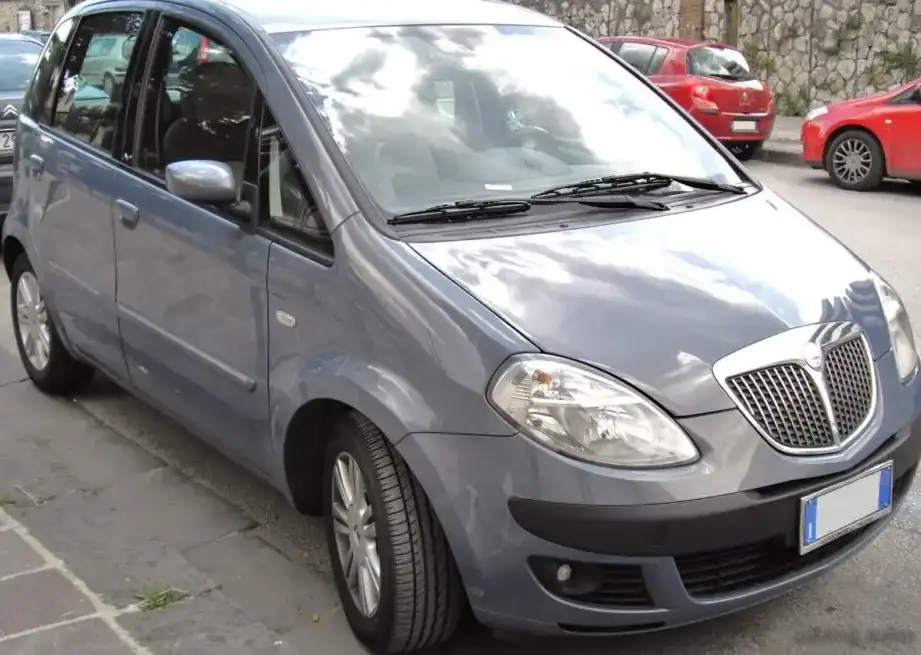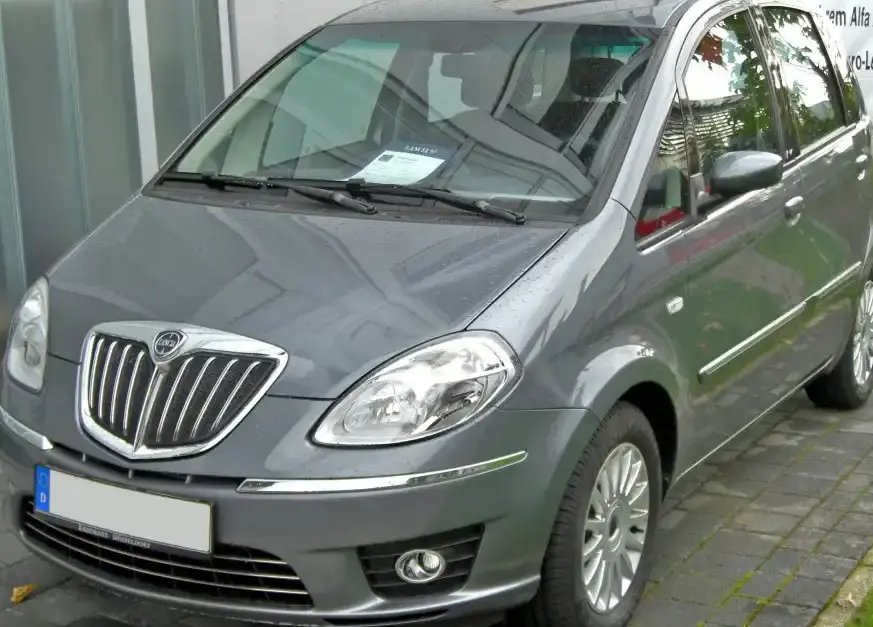
The Lancia Musa, particularly the facelifted version introduced in 2007, represented a unique offering in the compact MPV (Multi-Purpose Vehicle) segment. This iteration, available with a 1.4-liter engine producing 77 horsepower and the option for LPG conversion, aimed to provide an economical and practical vehicle for families. Produced from 2007 through 2012, the Musa was based on the Fiat/Lancia ‘B’ platform, shared with models like the Fiat Idea and the later Lancia Ypsilon. The 1.4 LPG variant occupied the entry-level position in the Musa lineup, offering a more affordable purchase price and lower running costs compared to the more powerful 1.9 JTD diesel and 1.4 T-Jet petrol options.
Technical Specifications
| Brand | Lancia |
| Model | Musa |
| Generation | Musa (facelift 2007) |
| Type (Engine) | 1.4 (77 Hp) LPG |
| Start of production | 2007 |
| End of production | 2012 |
| Powertrain Architecture | Internal Combustion engine |
| Body type | MPV |
| Seats | 5 |
| Doors | 5 |
| Fuel consumption (urban) | 9.4 l/100 km (25 US mpg, 30.1 UK mpg, 10.6 km/l) |
| Fuel consumption (extra urban) | 6.2 l/100 km (37.9 US mpg, 45.6 UK mpg, 16.1 km/l) |
| Fuel consumption (combined) | 7.4 l/100 km (31.8 US mpg, 38.2 UK mpg, 13.5 km/l) |
| CO2 emissions | 119 g/km |
| Fuel Type | Petrol / LPG |
| Acceleration 0 – 100 km/h | 13.5 sec |
| Acceleration 0 – 62 mph | 13.5 sec |
| Acceleration 0 – 60 mph | 12.8 sec |
| Maximum speed | 163 km/h (101.28 mph) |
| Emission standard | Euro 4 |
| Weight-to-power ratio | 15 kg/Hp, 66.7 Hp/tonne |
| Weight-to-torque ratio | 10 kg/Nm, 99.6 Nm/tonne |
| Power | 77 Hp @ 6000 rpm |
| Power per litre | 56.3 Hp/l |
| Torque | 115 Nm @ 3000 rpm (84.82 lb.-ft. @ 3000 rpm) |
| Engine layout | Front, Transverse |
| Engine Model/Code | 350 A1.000 |
| Engine displacement | 1368 cm3 (83.48 cu. in.) |
| Number of cylinders | 4 |
| Engine configuration | Inline |
| Cylinder Bore | 72 mm (2.83 in.) |
| Piston Stroke | 84 mm (3.31 in.) |
| Compression ratio | 11.1:1 |
| Number of valves per cylinder | 2 |
| Fuel injection system | Multi-port manifold injection |
| Engine aspiration | Naturally aspirated engine |
| Engine oil capacity | 2.6 l (2.75 US qt | 2.29 UK qt) |
| Coolant | 4.5 l (4.76 US qt | 3.96 UK qt) |
| Kerb Weight | 1155 kg (2546.34 lbs.) |
| Max. weight | 1655 kg (3648.65 lbs.) |
| Max load | 500 kg (1102.31 lbs.) |
| Trunk (boot) space – minimum | 375 l (13.24 cu. ft.) |
| Trunk (boot) space – maximum | 1473 l (52.02 cu. ft.) |
| Fuel tank capacity | 31 l (8.19 US gal | 6.82 UK gal) |
| Permitted trailer load with brakes (12%) | 1000 kg (2204.62 lbs.) |
| Permitted trailer load without brakes | 400 kg (881.85 lbs.) |
| Length | 4035 mm (158.86 in.) |
| Width | 1698 mm (66.85 in.) |
| Height | 1660 mm (65.35 in.) |
| Wheelbase | 2508 mm (98.74 in.) |
| Front track | 1444 mm (56.85 in.) |
| Rear (Back) track | 1431 mm (56.34 in.) |
| Drag coefficient (Cd) | 0.31 |
| Minimum turning circle (turning diameter) | 10.4 m (34.12 ft.) |
| Drivetrain Architecture | The Internal combustion engine (ICE) drives the front wheels of the vehicle. |
| Drive wheel | Front wheel drive |
| Number of gears and type of gearbox | 5 gears, manual transmission |
| Front suspension | Independent, type McPherson with coil spring and anti-roll bar |
| Rear suspension | Semi-independent, coil spring |
| Front brakes | Ventilated discs |
| Rear brakes | Drum |
| Tires size | 195/60 R15 |
| Wheel rims size | 15 |
INTRODUCTION
The Lancia Musa 1.4 (77 Hp) LPG, introduced with the 2007 facelift, was a compact MPV designed to appeal to budget-conscious families. Positioned as the entry point to the Musa range, it offered a practical and relatively affordable alternative to larger, more expensive MPVs. The facelift brought subtle styling changes, including revised front and rear fascias, and interior updates. The engine, part of Fiat’s Fire family, was known for its simplicity and reliability, and the availability of an LPG conversion further enhanced its appeal in markets where LPG was readily available and incentivized. The Musa, and this variant specifically, aimed to blend Italian styling with functional practicality.
Powertrain & Engine Architecture
The heart of the Musa 1.4 LPG is the 350 A1.000 engine, a 1368cc inline-four cylinder unit. This engine utilizes a naturally aspirated configuration with two valves per cylinder and a compression ratio of 11.1:1. Fuel delivery is managed by a multi-point manifold injection system. The engine’s design prioritizes fuel efficiency and ease of maintenance over outright performance. The LPG conversion typically involves the installation of a dedicated LPG tank, regulator, and injector system, allowing the engine to run on either petrol or LPG, often with a switch to select the fuel source. The five-speed manual transmission was standard, chosen for its simplicity and contribution to fuel economy. The transmission’s gear ratios are geared towards maximizing fuel efficiency rather than providing sporty acceleration.
Driving Characteristics
The 1.4-liter, 77 horsepower engine in the Musa delivers modest performance. Acceleration from 0-60 mph takes around 12.8 seconds, and top speed is limited to 101.28 mph. The engine feels strained when fully loaded or climbing hills, requiring frequent downshifts to maintain momentum. Compared to the 1.9 JTD diesel, the 1.4 LPG lacks the low-end torque and overall responsiveness. However, it offers a smoother and quieter driving experience than the diesel, particularly when running on LPG. The five-speed manual transmission is light and easy to use, but the long gearing contributes to the leisurely pace. The suspension setup prioritizes comfort over handling, resulting in a soft ride that absorbs bumps well, but also exhibits noticeable body roll in corners.
Equipment & Trim Levels
The 1.4 LPG variant of the Musa typically came with a basic level of equipment. Standard features generally included power steering, central locking, electric front windows, and a basic audio system. Air conditioning was often an optional extra. Interior upholstery was typically cloth, and the dashboard featured a functional, if somewhat dated, design. Higher trim levels, available with the more powerful engines, offered features like alloy wheels, upgraded audio systems, and more luxurious interior trim. The focus with the 1.4 LPG was on providing essential features at an affordable price point.
Chassis & Braking
The Musa’s chassis features an independent McPherson strut suspension at the front and a semi-independent coil spring suspension at the rear. This setup provides a comfortable ride, but doesn’t offer particularly engaging handling. The front brakes are ventilated discs, providing adequate stopping power, while the rear brakes are drums, a cost-saving measure common in this class of vehicle. The 195/60 R15 tires offer a good balance of comfort and grip. The relatively lightweight construction of the Musa helps to offset the modest engine power, contributing to reasonable fuel economy.
Market Reception & Comparison
The Lancia Musa 1.4 LPG was generally well-received as an economical and practical MPV. Critics praised its spacious interior, comfortable ride, and low running costs, particularly when utilizing LPG. However, the engine’s lack of power was a common criticism. Compared to the 1.9 JTD diesel, the 1.4 LPG offered significantly lower performance but also a lower purchase price and potentially lower fuel costs, depending on LPG prices. The 1.4 T-Jet petrol offered a compromise between performance and economy, but at a higher price point. The LPG variant appealed to buyers prioritizing affordability and practicality over driving excitement.
Legacy
The Lancia Musa 1.4 LPG has developed a reputation for reliability, particularly the engine itself. The Fire engine family is known for its durability and ease of maintenance. While LPG conversions can introduce potential issues if not properly installed and maintained, the Musa’s LPG systems have generally proven to be reliable. In the used car market, the 1.4 LPG variant represents a particularly affordable entry point to Musa ownership. Its low running costs and practical interior continue to appeal to budget-conscious buyers seeking a small, versatile MPV. However, potential buyers should ensure the LPG system has been regularly inspected and maintained.