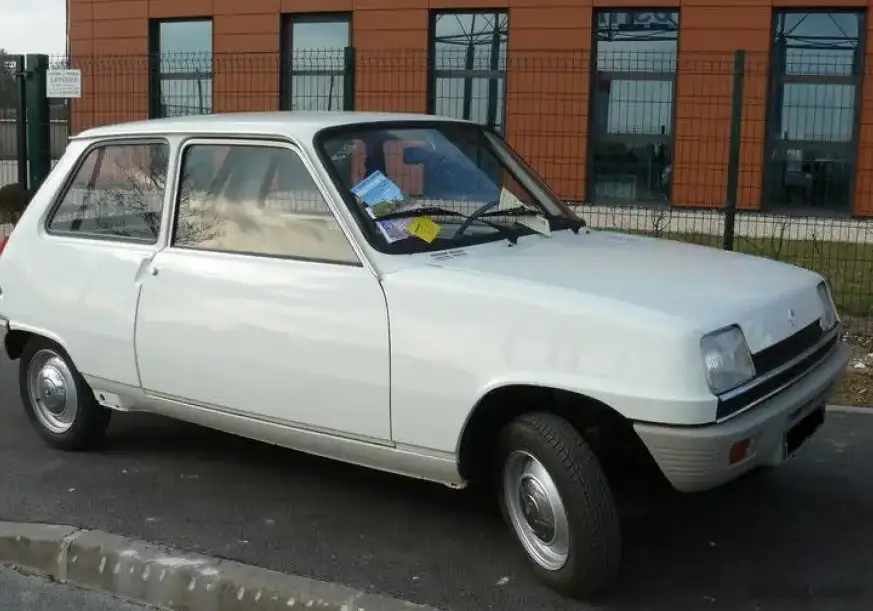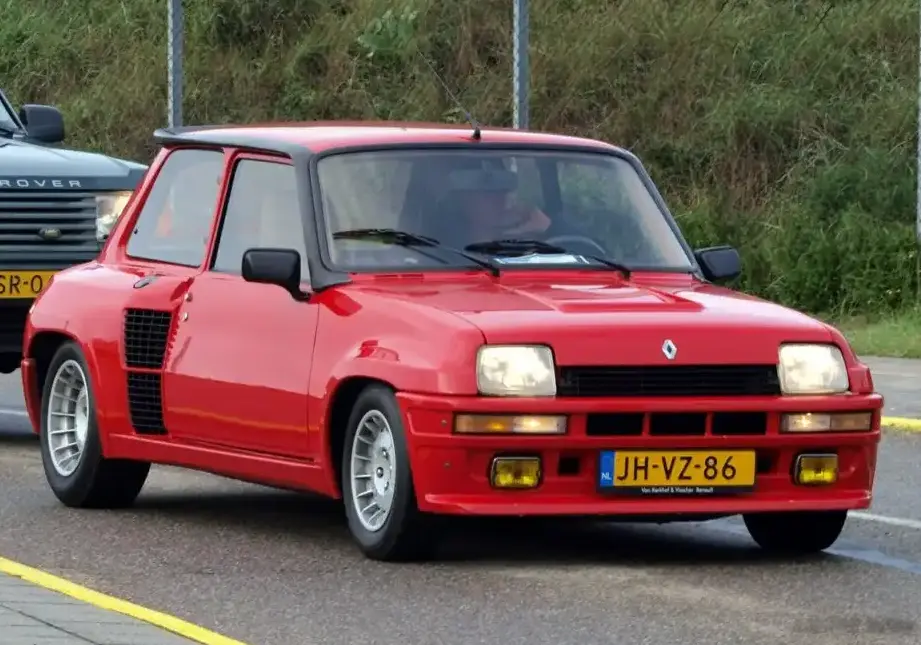
The Renault 5 1.4 Turbo, produced between November 1980 and December 1982, represents a high-performance variant within the second generation (1980-1985) of the iconic Renault 5 hatchback. This model, distinguished by its 160 horsepower turbocharged engine, was a relatively short-lived but significant offering, aimed at enthusiasts seeking a spirited driving experience in a compact package. It occupied the top performance tier of the Renault 5 lineup during its production run, positioned above the naturally aspirated models and offering a more focused driving experience than the more economy-oriented trims. The 1.4 Turbo was a key player in establishing the Renault 5’s reputation for being a fun-to-drive, accessible sports hatchback, particularly in European markets.
Technical Specifications
| Brand | Renault |
| Model | 5 |
| Generation | 5 |
| Type (Engine) | 1.4 Turbo (160 Hp) |
| Start of production | November, 1980 |
| End of production | December, 1982 |
| Powertrain Architecture | Internal Combustion engine |
| Body type | Hatchback |
| Seats | 4 |
| Doors | 3 |
| Fuel consumption (urban) | 11.2 l/100 km (21 US mpg, 25.2 UK mpg, 8.9 km/l) |
| Fuel consumption (extra urban) | 7.1 l/100 km (33.1 US mpg, 39.8 UK mpg, 14.1 km/l) |
| Fuel Type | Petrol (Gasoline) |
| Acceleration 0 – 100 km/h | 6.9 sec |
| Acceleration 0 – 62 mph | 6.9 sec |
| Acceleration 0 – 60 mph | 6.6 sec |
| Maximum speed | 200 km/h (124.27 mph) |
| Weight-to-power ratio | 6.1 kg/Hp, 164.9 Hp/tonne |
| Weight-to-torque ratio | 4.6 kg/Nm, 216.5 Nm/tonne |
| Power | 160 Hp @ 6000 rpm |
| Power per litre | 114.5 Hp/l |
| Torque | 210 Nm @ 3250 rpm (154.89 lb.-ft. @ 3250 rpm) |
| Engine layout | Middle, Transverse |
| Engine Model/Code | 840 730 |
| Engine displacement | 1397 cm3 (85.25 cu. in.) |
| Number of cylinders | 4 |
| Engine configuration | Inline |
| Cylinder Bore | 76 mm (2.99 in.) |
| Piston Stroke | 77 mm (3.03 in.) |
| Compression ratio | 7:1 |
| Number of valves per cylinder | 2 |
| Fuel injection system | Multi-port manifold injection |
| Engine aspiration | Turbocharger, Intercooler |
| Valvetrain | OHV |
| Engine oil capacity | 3.7 l (3.91 US qt | 3.26 UK qt) |
| Coolant | 10.5 l (11.1 US qt | 9.24 UK qt) |
| Kerb Weight | 970 kg (2138.48 lbs.) |
| Max. weight | 1240 kg (2733.73 lbs.) |
| Max load | 270 kg (595.25 lbs.) |
| Fuel tank capacity | 93 l (24.57 US gal | 20.46 UK gal) |
| Length | 3530 mm (138.98 in.) |
| Width | 1520 mm (59.84 in.) |
| Height | 1410 mm (55.51 in.) |
| Wheelbase | 2400 mm (94.49 in.) |
| Front track | 1280 mm (50.39 in.) |
| Rear track | 1200 mm (47.24 in.) |
| Front overhang | 510 mm (20.08 in.) |
| Rear overhang | 580 mm (22.83 in.) |
| Ride height (ground clearance) | 130 mm (5.12 in.) |
| Minimum turning circle | 10.9 m (35.76 ft.) |
| Drivetrain Architecture | Rear wheel drive |
| Drive wheel | Rear wheel drive |
| Number of gears and type of gearbox | 5 gears, manual transmission |
| Front suspension | Double wishbone, Transverse stabilizer |
| Rear suspension | Wishbone, Transverse stabilizer |
| Front brakes | Ventilated discs |
| Rear brakes | Ventilated discs |
| Steering type | Worm-reduction unit |
| Power steering | Hydraulic Steering |
| Tires size | Front wheel tires: 220/55 R14Rear wheel tires: 190/55 R14 |
Powertrain & Engine Architecture
The heart of the Renault 5 1.4 Turbo is the 840 730 engine, a 1397cc inline-four cylinder unit. This engine featured a relatively low 7:1 compression ratio, necessary to accommodate the turbocharger. The engine utilized a multi-port fuel injection system, providing precise fuel delivery for optimal performance and efficiency. The valvetrain employed an Overhead Valve (OHV) configuration, a simpler design compared to Overhead Camshaft (OHC) systems, but adequate for the engine’s power output. A key component was the turbocharger with an intercooler, which significantly boosted power output. The turbocharger forced more air into the engine, allowing it to burn more fuel and produce considerably more power than a naturally aspirated engine of the same size. The five-speed manual transmission was the only gearbox option, chosen to handle the increased torque and provide a more engaging driving experience.
Driving Characteristics
The Renault 5 1.4 Turbo offered a markedly different driving experience compared to the standard Renault 5 models. The 160 horsepower output and 210 Nm (155 lb-ft) of torque delivered brisk acceleration – 0 to 60 mph in approximately 6.6 seconds and a top speed of 200 km/h (124 mph) – figures that were impressive for a car of this size and price point in the early 1980s. The turbocharger did introduce a degree of turbo lag, meaning there was a slight delay between pressing the accelerator and feeling the full power surge. However, once the turbo spooled up, the acceleration was strong and linear. The rear-wheel drive configuration contributed to a lively and engaging handling characteristic, although it also demanded more driver skill, especially in wet conditions. Compared to the lower-powered Renault 5 variants, the 1.4 Turbo demanded more attentive driving and offered a significantly more rewarding experience for enthusiasts.
Equipment & Trim Levels
The Renault 5 1.4 Turbo was generally well-equipped for its time, though it wasn’t positioned as a luxury vehicle. Standard features typically included upgraded cloth upholstery, a more comprehensive instrument cluster with a boost gauge, and often, alloy wheels. Optional extras could include a sunroof, upgraded sound system, and more premium interior trim options. The interior design was functional and driver-focused, reflecting the car’s sporty intentions. While not lavish, the interior offered a comfortable and practical environment for both driver and passengers.
Chassis & Braking
The Renault 5 1.4 Turbo utilized a double wishbone front suspension with a transverse stabilizer, and a wishbone rear suspension, also with a transverse stabilizer. This suspension setup provided a good balance between ride comfort and handling precision. Braking was handled by ventilated discs on all four wheels, providing adequate stopping power for the car’s performance capabilities. The steering was a worm-reduction unit with hydraulic power assistance, offering a reasonable level of feel and responsiveness.
Market Reception & Comparison
The Renault 5 1.4 Turbo was generally well-received by automotive critics, who praised its performance and handling. It was often compared favorably to other hot hatchbacks of the era, such as the Volkswagen Golf GTI and the Peugeot 205 GTI. While the Renault 5 Turbo offered a more raw and visceral driving experience, the 1.4 Turbo provided a more accessible and affordable entry point into the world of performance hatchbacks. Fuel economy was reasonable for a turbocharged engine of the time, but not as good as the naturally aspirated Renault 5 models. Reliability was generally good, although the turbocharger did add a potential point of failure.
Legacy
The Renault 5 1.4 Turbo, despite its short production run, remains a fondly remembered and sought-after classic car. Its combination of performance, affordability, and distinctive styling has made it a popular choice among enthusiasts. Today, well-maintained examples command a premium in the used car market. The powertrain, while not without its quirks, proved to be relatively durable, and many examples are still on the road today. The Renault 5 1.4 Turbo played a significant role in establishing the Renault 5 as a benchmark for fun-to-drive, accessible hatchbacks, and its legacy continues to influence the design and engineering of modern Renault vehicles.