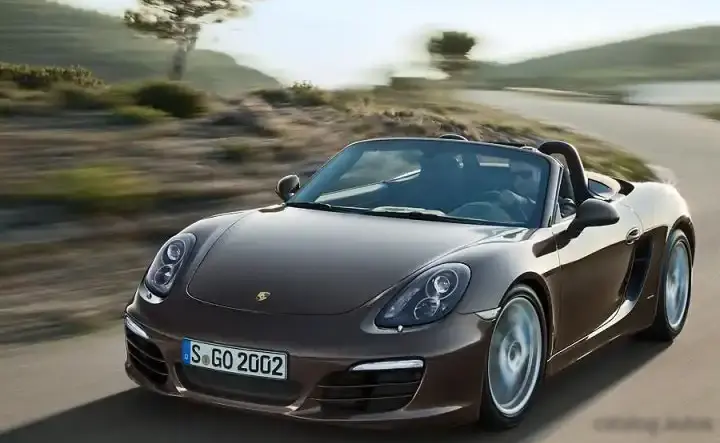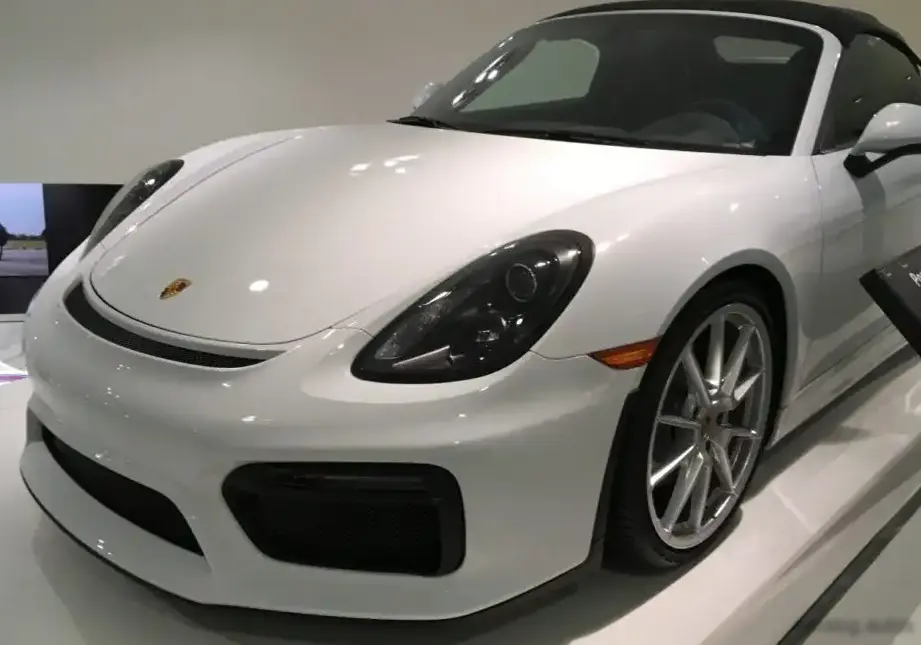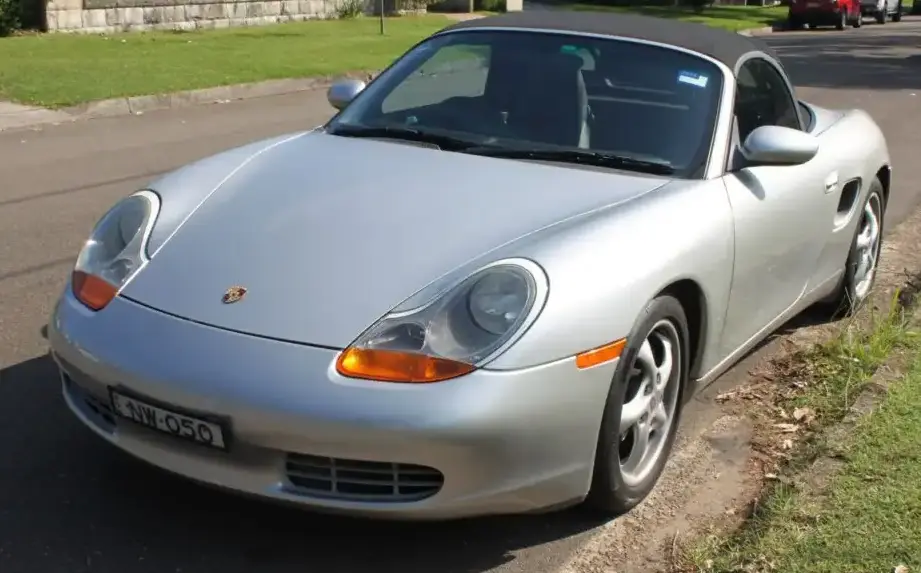
The Porsche Boxster (986) 2.5, produced from 1996 to 1999, represented Porsche’s entry into the affordable roadster market. Positioned as the base model within the 986 generation, it aimed to deliver the core Porsche driving experience – mid-engine balance and responsive handling – at a more accessible price point than the 911. The 2.5-liter variant served as the foundation for the Boxster line, offering a compelling alternative to established competitors like the BMW Z3 and Mercedes-Benz SLK. It was built on the Porsche 986 platform, a completely new design for the brand at the time, and marked a significant departure from Porsche’s traditional rear-engine layout.
Technical Specifications
| Brand | Porsche |
| Model | Boxster |
| Generation | Boxster (986) |
| Type (Engine) | 2.5 (204 Hp) |
| Start of production | 1996 |
| End of production | 1999 |
| Powertrain Architecture | Internal Combustion engine |
| Body type | Roadster |
| Seats | 2 |
| Doors | 2 |
| Fuel consumption (economy) – urban (NEDC) | 14.3 l/100 km (16.4 US mpg, 19.8 UK mpg, 7 km/l) |
| Fuel consumption (economy) – extra urban (NEDC) | 7.1 l/100 km (33.1 US mpg, 39.8 UK mpg, 14.1 km/l) |
| Fuel consumption (economy) – combined (NEDC) | 9.7 l/100 km (24.2 US mpg, 29.1 UK mpg, 10.3 km/l) |
| CO2 emissions (NEDC) | 239 g/km |
| Fuel Type | Petrol (Gasoline) |
| Acceleration 0 – 100 km/h | 6.9 sec |
| Acceleration 0 – 62 mph | 6.9 sec |
| Acceleration 0 – 60 mph | 6.7 sec |
| Maximum speed | 240 km/h (149.13 mph) |
| Emission standard | Euro 2 |
| Weight-to-power ratio | 6.1 kg/Hp, 163.2 Hp/tonne |
| Weight-to-torque ratio | 5.1 kg/Nm, 196 Nm/tonne |
| Power | 204 Hp @ 6000 rpm |
| Power per litre | 82.3 Hp/l |
| Torque | 245 Nm @ 4500 rpm (180.7 lb.-ft. @ 4500 rpm) |
| Engine layout | Middle, Longitudinal |
| Engine Model/Code | M96.20 |
| Engine displacement | 2480 cm3 (151.34 cu. in.) |
| Number of cylinders | 6 |
| Engine configuration | Boxer |
| Cylinder Bore | 85.5 mm (3.37 in.) |
| Piston Stroke | 72 mm (2.83 in.) |
| Compression ratio | 11:1 |
| Number of valves per cylinder | 4 |
| Fuel injection system | Multi-port manifold injection |
| Engine aspiration | Naturally aspirated engine |
| Valvetrain | DOHC |
| Engine oil capacity | 8.3 l (8.77 US qt | 7.3 UK qt) |
| Coolant | 17 l (17.96 US qt | 14.96 UK qt) |
| Kerb Weight | 1250 kg (2755.78 lbs.) |
| Max. weight | 1560 kg (3439.21 lbs.) |
| Max load | 310 kg (683.43 lbs.) |
| Trunk (boot) space – minimum | 260 l (9.18 cu. ft.) |
| Fuel tank capacity | 57 l (15.06 US gal | 12.54 UK gal) |
| Max. roof load | 75 kg (165.35 lbs.) |
| Length | 4315 mm (169.88 in.) |
| Width | 1780 mm (70.08 in.) |
| Height | 1290 mm (50.79 in.) |
| Wheelbase | 2415 mm (95.08 in.) |
| Front track | 1465 mm (57.68 in.) |
| Rear (Back) track | 1525 mm (60.04 in.) |
| Ride height (ground clearance) | 121 mm (4.76 in.) |
| Drag coefficient (Cd) | 0.31 |
| Minimum turning circle (turning diameter) | 11.1 m (36.42 ft.) |
| Drivetrain Architecture | The Internal combustion engine (ICE) drives the rear wheels of the vehicle. |
| Drive wheel | Rear wheel drive |
| Number of gears and type of gearbox | 5 gears, manual transmission |
| Front suspension | Independent type McPherson |
| Rear suspension | McPherson |
| Front brakes | Ventilated discs |
| Rear brakes | Ventilated discs |
| Assisting systems | ABS (Anti-lock braking system) |
| Steering type | Steering rack and pinion |
| Power steering | Hydraulic Steering |
| Tires size | 205/55 R 16 |
| Wheel rims size | 6 J x 16 |
Powertrain & Engine Architecture
The heart of the 986 Boxster 2.5 is the M96.20 engine, a 2.5-liter naturally aspirated flat-six (boxer) engine. This engine was a significant departure for Porsche, being their first mass-produced mid-engine layout. The M96.20 featured a 11:1 compression ratio and utilized multi-port fuel injection. The boxer configuration, with six cylinders horizontally opposed, contributed to a low center of gravity, enhancing handling characteristics. The engine produced 204 horsepower at 6000 rpm and 245 Nm (180.7 lb-ft) of torque at 4500 rpm. The engine’s design prioritized smoothness and reliability, although early versions were later found to be susceptible to intermediate shaft (IMS) bearing failure – a concern that would become prominent in the used market. The standard transmission for this variant was a 5-speed manual, although a 4-speed Tiptronic automatic transmission was also available.
Driving Characteristics
The 2.5-liter Boxster offered a balanced driving experience. While not as brutally fast as the later 2.7 or 3.2-liter variants, it provided ample power for spirited driving. Acceleration from 0 to 60 mph took around 6.7 seconds, and the top speed was 149 mph. The mid-engine layout resulted in neutral handling, with excellent balance and predictable cornering behavior. The 5-speed manual transmission offered precise shifts, while the optional Tiptronic automatic, while convenient, felt less engaging and slightly dulled the driving experience. The gear ratios were tuned for a blend of acceleration and fuel efficiency, making it suitable for both daily commuting and weekend drives. Compared to the more powerful Boxster S, the 2.5 felt less urgent, but its lighter weight and more forgiving power delivery made it a more approachable sports car for less experienced drivers.
Equipment & Trim Levels
The base 986 Boxster 2.5 came reasonably well-equipped, though many features considered standard on higher-end vehicles were optional. Standard features included power windows, power locks, and a basic audio system. The interior featured cloth upholstery and a relatively simple dashboard layout. Optional extras included leather upholstery, upgraded audio systems, air conditioning (often a must-have), and a wind deflector to reduce turbulence in the cabin. Alloy wheels were also an optional upgrade, with the base model typically equipped with steel wheels and wheel covers. The overall interior design was functional and driver-focused, prioritizing a clean and uncluttered aesthetic.
Chassis & Braking
The Boxster 986 featured a fully independent suspension, with McPherson struts at both the front and rear. This suspension setup provided a comfortable ride while maintaining excellent handling characteristics. The chassis was designed to be lightweight and rigid, contributing to the car’s agility. Braking duties were handled by ventilated disc brakes at all four corners, providing ample stopping power. Anti-lock braking system (ABS) was standard. The base model typically had a smaller diameter stabilizer bar compared to the Boxster S, resulting in slightly more body roll during aggressive cornering. The steering was a hydraulic rack-and-pinion system, offering precise and responsive steering feel.
Market Reception & Comparison
The Porsche Boxster 2.5 was generally well-received by automotive critics. It was praised for its handling, balance, and overall driving experience. However, some critics noted that the 2.5-liter engine lacked the outright performance of its larger-displacement siblings. Fuel economy was respectable, averaging around 24 mpg in combined driving. Compared to the Boxster S, the 2.5 was significantly more affordable, making it a more accessible entry point into the Porsche brand. The 2.5 also offered better fuel economy than the Boxster S. Reliability was generally good, although the potential for IMS bearing failure became a concern as the cars aged.
Legacy
The 986 Boxster 2.5 played a crucial role in revitalizing Porsche’s lineup and expanding its customer base. It proved that Porsche could produce a relatively affordable sports car without compromising the brand’s core values. Today, the 986 Boxster 2.5 remains a popular choice in the used car market, offering a compelling combination of performance, handling, and affordability. However, potential buyers should be aware of the IMS bearing issue and factor in the cost of inspection or preventative replacement. Despite this potential issue, the 986 Boxster 2.5 is considered a well-engineered and enjoyable sports car that continues to provide a rewarding driving experience.