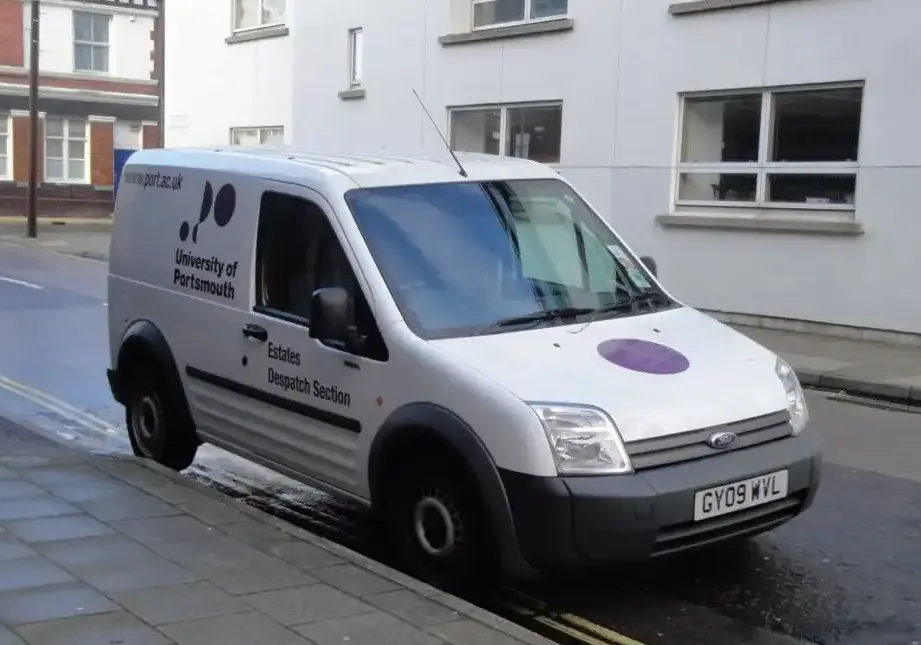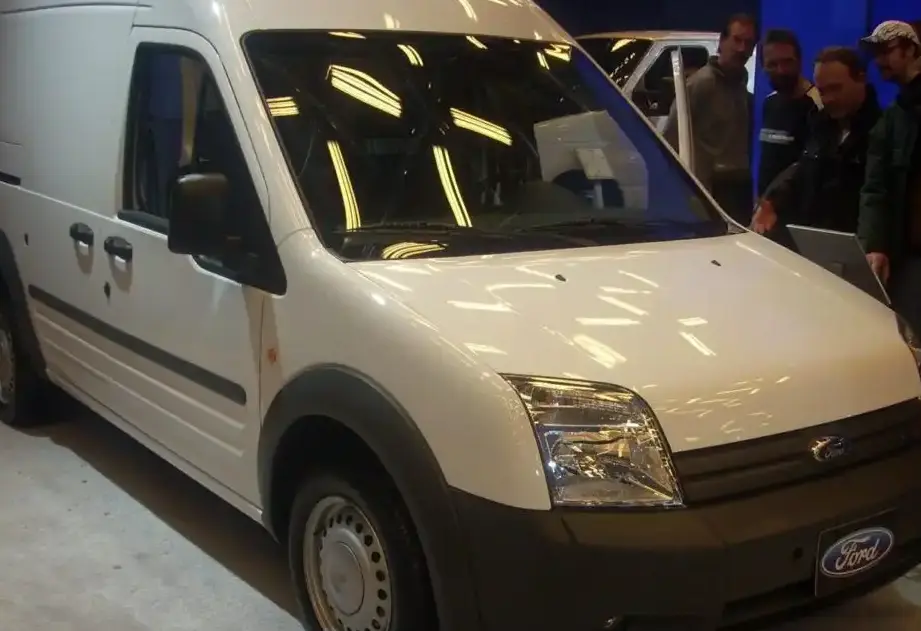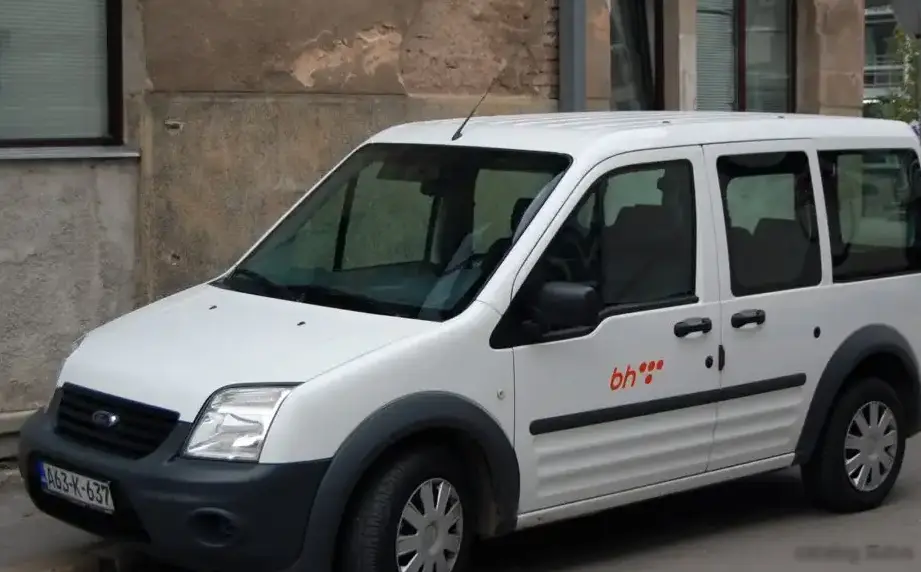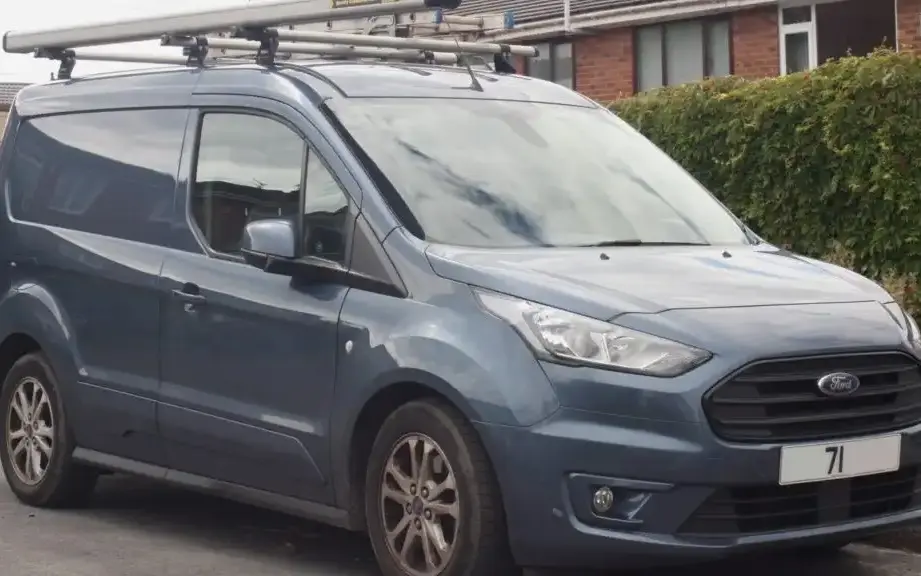
The Ford Transit Connect II, specifically the facelifted version introduced in 2018, represented a significant update to Ford’s compact commercial and passenger van offering in the European and North American markets. This generation, built on the Ford C2 platform (shared with the Focus), aimed to provide a versatile and efficient vehicle for both businesses and families. The 1.0 EcoBoost 100 hp variant, available as a Panel Van (L1 short wheelbase) and a passenger-carrying Wagon, occupied the entry-level position in the powertrain lineup, offering a balance between affordability and fuel economy. Production of this specific configuration ran from 2018 through 2024.
Technical Specifications
| Brand | Ford |
| Model | Transit Connect |
| Generation | Transit Connect II (facelift 2018) Panel Van L1 |
| Type (Engine) | 1.0 EcoBoost (100 Hp) |
| Start of production | 2018 |
| End of production | 2024 |
| Powertrain Architecture | Internal Combustion engine |
| Body type | Minivan |
| Seats | 2-3 |
| Doors | 4-5 |
| Fuel consumption at Low speed (WLTP) | 7.2-7.5 l/100 km (32.7 – 31.4 US mpg, 39.2 – 37.7 UK mpg, 13.9 – 13.3 km/l) |
| Fuel consumption at high speed (WLTP) | 6.2-6.4 l/100 km (37.9 – 36.8 US mpg, 45.6 – 44.1 UK mpg, 16.1 – 15.6 km/l) |
| Combined fuel consumption (WLTP) | 7-7.3 l/100 km (33.6 – 32.2 US mpg, 40.4 – 38.7 UK mpg, 14.3 – 13.7 km/l) |
| CO2 emissions (WLTP) | 159-165 g/km |
| Fuel consumption (economy) – urban (NEDC) | 6.2-7.1 l/100 km (37.9 – 33.1 US mpg, 45.6 – 39.8 UK mpg, 16.1 – 14.1 km/l) |
| Fuel consumption (economy) – extra urban (NEDC) | 5.1-5.9 l/100 km (46.1 – 39.9 US mpg, 55.4 – 47.9 UK mpg, 19.6 – 16.9 km/l) |
| Fuel consumption (economy) – combined (NEDC) | 5.8-6.4 l/100 km (40.6 – 36.8 US mpg, 48.7 – 44.1 UK mpg, 17.2 – 15.6 km/l) |
| CO2 emissions (NEDC) | 131-146 g/km |
| Fuel Type | Petrol (Gasoline) |
| Emission standard | Euro 6d-TEMP-EVAP-ISC |
| Weight-to-power ratio | 14 kg/Hp, 71.6 Hp/tonne |
| Weight-to-torque ratio | 8.2 kg/Nm, 121.8 Nm/tonne |
| Power | 100 Hp @ 4500 rpm |
| Power per litre | 100.1 Hp/l |
| Torque | 170 Nm @ 1400-4000 rpm (125.39 lb.-ft. @ 1400-4000 rpm) |
| Engine layout | Front, Transverse |
| Engine Model/Code | EcoBoost / B3GA |
| Engine displacement | 999 cm3 (60.96 cu. in.) |
| Number of cylinders | 3 |
| Engine configuration | Inline |
| Cylinder Bore | 71.9 mm (2.83 in.) |
| Piston Stroke | 82 mm (3.23 in.) |
| Number of valves per cylinder | 4 |
| Fuel injection system | Direct injection |
| Engine aspiration | Turbocharger, Intercooler |
| Valvetrain | DOHC |
| Engine oil capacity | 4.97 l (5.25 US qt | 4.37 UK qt) |
| Coolant | 5.5 l (5.81 US qt | 4.84 UK qt) |
| Kerb Weight | 1396-1445 kg (3077.65 – 3185.68 lbs.) |
| Max. weight | 2075-2325 kg (4574.59 – 5125.75 lbs.) |
| Max load | 679-880 kg (1496.94 – 1940.07 lbs.) |
| Trunk (boot) space – minimum | 2600 l (91.82 cu. ft.) |
| Trunk (boot) space – maximum | 3700 l (130.66 cu. ft.) |
| Fuel tank capacity | 60 l (15.85 US gal | 13.2 UK gal) |
| Permitted trailer load with brakes (12%) | 1210 kg (2667.59 lbs.) |
| Permitted trailer load without brakes | 750 kg (1653.47 lbs.) |
| Length | 4425 mm (174.21 in.) |
| Width | 1835 mm (72.24 in.) |
| Width with mirrors folded | 1967 mm (77.44 in.) |
| Width including mirrors | 2137 mm (84.13 in.) |
| Height | 1830-1859 mm (72.05 – 73.19 in.) |
| Wheelbase | 2662 mm (104.8 in.) |
| Front track | 1568 mm (61.73 in.) |
| Rear (Back) track | 1582 mm (62.28 in.) |
| Front overhang | 885 mm (34.84 in.) |
| Rear overhang | 878 mm (34.57 in.) |
| Ride height (ground clearance) | 148-153 mm (5.83 – 6.02 in.) |
| Minimum turning circle (turning diameter) | 11.7 m (38.39 ft.) |
| Drivetrain Architecture | The Internal combustion engine (ICE) drives the front wheels of the vehicle. |
| Drive wheel | Front wheel drive |
| Number of gears and type of gearbox | 6 gears, manual transmission |
| Front suspension | Independent, type McPherson with coil spring and anti-roll bar |
| Rear suspension | Semi-dependent beam with stabilizer lateral stability |
| Front brakes | Ventilated discs |
| Rear brakes | Disc |
| Assisting systems | ABS (Anti-lock braking system) |
| Steering type | Steering rack and pinion |
| Power steering | Electric Steering |
| Tires size | 205/60 R16; 215/55 R16 |
| Wheel rims size | 6.5J x 16 |
INTRODUCTION
The Ford Transit Connect II, launched in 2013 and facelifted in 2018, was a crucial model for Ford in Europe and increasingly in North America, filling the gap between larger vans like the Transit and smaller car-derived vans. The 1.0 EcoBoost 100 hp variant, introduced with the facelift, was designed to appeal to buyers prioritizing fuel efficiency and lower running costs. Positioned as the entry-level engine option, it catered to urban delivery drivers, small businesses, and families seeking a practical and economical vehicle. This L1 (short wheelbase) version, available as both a panel van and a passenger wagon, offered a compact footprint ideal for navigating congested city streets.
Powertrain & Engine Architecture
The heart of this Transit Connect variant is Ford’s 1.0 EcoBoost three-cylinder engine, internally designated as the B3GA. This engine is a marvel of downsizing technology, utilizing a single-scroll turbocharger, direct fuel injection, and variable valve timing to deliver a surprising amount of power from its small displacement. The 999cc engine produces 100 horsepower at 4500 rpm and 170 Nm (125 lb-ft) of torque between 1400 and 4000 rpm. The engine features a cast iron block and aluminum cylinder head. The fuel system employs high-pressure direct injection, optimizing combustion efficiency. The 6-speed manual transmission was standard, providing a good balance between fuel economy and drivability. While an automatic transmission was offered on other EcoBoost variants, it wasn’t typically paired with the 100 hp version in the US market.
Driving Characteristics
The 1.0 EcoBoost engine in the Transit Connect L1 provides adequate, though not exhilarating, performance. Acceleration is best described as steady, and the van feels most comfortable during city driving and on relatively flat roads. The relatively low torque output means that climbing hills or carrying a full load can require downshifting. The 6-speed manual transmission helps to keep the engine in its optimal power band. Compared to the more powerful 1.5L EcoBoost or diesel options, the 1.0L feels noticeably slower, particularly when fully loaded. However, the lighter engine weight contributes to improved handling and a more nimble feel in urban environments. The gear ratios are tuned for fuel efficiency, prioritizing economy over outright speed.
Equipment & Trim Levels
The 1.0 EcoBoost Transit Connect L1 typically came with a fairly basic level of equipment, reflecting its entry-level positioning. Standard features generally included air conditioning, power windows, a basic audio system with USB connectivity, and steel wheels with wheel covers. Safety features included ABS, electronic stability control, and multiple airbags. Optional extras included alloy wheels, a more advanced infotainment system with touchscreen display, rear parking sensors, and cruise control. Interior upholstery was typically cloth, and the dashboard featured a functional, if somewhat utilitarian, design. The panel van configuration offered minimal interior trim, focusing on maximizing cargo space, while the Wagon version featured more comfortable seating and interior appointments.
Chassis & Braking
The Transit Connect II utilizes a McPherson strut front suspension and a semi-independent rear suspension with a twist beam. This setup provides a reasonable balance between ride comfort and handling. The front suspension incorporates a stabilizer bar to reduce body roll. Braking duties are handled by ventilated discs at the front and solid discs at the rear. ABS (Anti-lock Braking System) is standard. The relatively light weight of the 1.0 EcoBoost variant contributes to its manageable braking performance. Steering is rack and pinion with electric power assistance, providing a light and responsive feel.
Market Reception & Comparison
The 1.0 EcoBoost Transit Connect L1 was generally well-received by critics as a practical and economical choice, particularly for urban delivery drivers. Its fuel efficiency was a major selling point, and its compact size made it easy to maneuver in tight spaces. However, some reviewers noted that the engine could feel underpowered when fully loaded or when driving on hilly terrain. Compared to the 1.5L EcoBoost, the 1.0L offered significantly lower performance but also a lower purchase price and slightly better fuel economy. The diesel options, while offering more torque, were often more expensive and subject to stricter emissions regulations. Reliability reports have generally been positive, with the 1.0 EcoBoost engine proving to be a durable and dependable unit.
Legacy
The Ford Transit Connect II, and specifically the 1.0 EcoBoost variant, has established itself as a reliable and cost-effective workhorse in the used car market. The 1.0 EcoBoost engine, while not known for blistering performance, has proven to be relatively trouble-free, and parts availability is generally good. These vans continue to be popular choices for small businesses, delivery services, and individuals seeking a versatile and economical vehicle. The combination of fuel efficiency, practicality, and affordability ensures that the 1.0 EcoBoost Transit Connect L1 remains a relevant and desirable option in the used van market today.