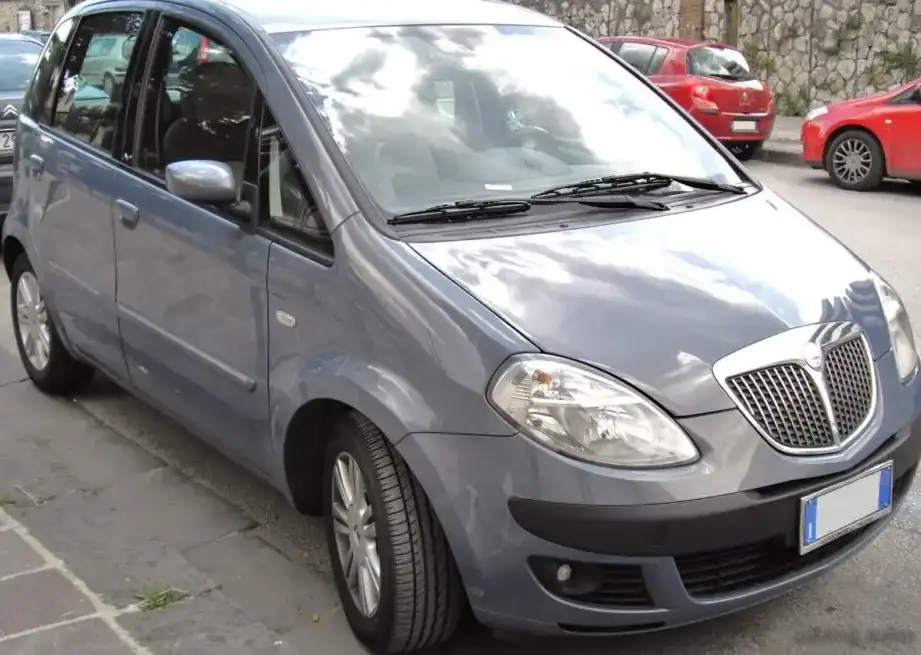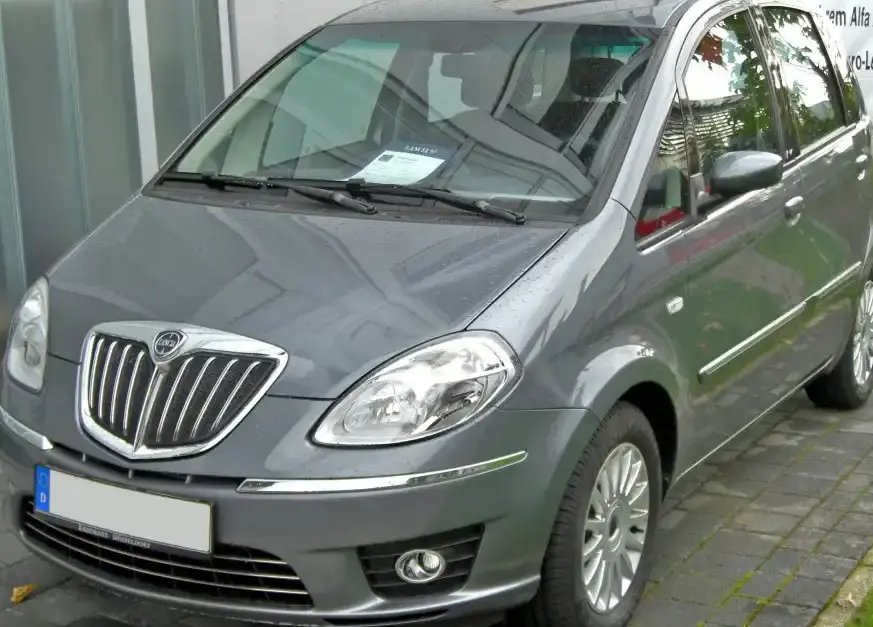
The Lancia Musa, particularly the facelifted version introduced in 2007, represented a unique offering in the compact MPV (Multi-Purpose Vehicle) segment. Produced from 2007 through 2012, the Musa aimed to blend Italian styling with practicality, targeting families and individuals seeking a small, versatile vehicle. The 1.4-liter (95 horsepower) variant paired with an automatic transmission was a key part of the Musa lineup, positioned as an accessible entry point into the model range. It was built upon the Fiat/Lancia ‘B’ platform, shared with the Fiat Idea and later the Lancia Ypsilon, offering a relatively compact footprint for urban environments.
Technical Specifications
| Brand | Lancia |
| Model | Musa |
| Generation | Musa (facelift 2007) |
| Type (Engine) | 1.4 (95 Hp) Automatic |
| Start of production | 2007 |
| End of production | 2012 |
| Powertrain Architecture | Internal Combustion engine |
| Body type | MPV |
| Seats | 5 |
| Doors | 5 |
| Fuel consumption (urban) | 8.3 l/100 km (28.3 US mpg, 34 UK mpg, 12 km/l) |
| Fuel consumption (extra urban) | 5.4 l/100 km (43.6 US mpg, 52.3 UK mpg, 18.5 km/l) |
| Fuel consumption (combined) | 6.4 l/100 km (36.8 US mpg, 44.1 UK mpg, 15.6 km/l) |
| Fuel Type | Petrol (Gasoline) |
| Acceleration 0 – 100 km/h | 11.5 sec |
| Acceleration 0 – 62 mph | 11.5 sec |
| Acceleration 0 – 60 mph | 10.9 sec |
| Maximum speed | 175 km/h (108.74 mph) |
| Emission standard | Euro 4 |
| Weight-to-power ratio | 12.2 kg/Hp, 82.3 Hp/tonne |
| Weight-to-torque ratio | 9 kg/Nm, 110.8 Nm/tonne |
| Power | 95 Hp @ 5800 rpm |
| Power per litre | 69.4 Hp/l |
| Torque | 128 Nm @ 4500 rpm (94.41 lb.-ft. @ 4500 rpm) |
| Engine layout | Front, Transverse |
| Engine Model/Code | 843 A1.000 |
| Engine displacement | 1368 cm3 (83.48 cu. in.) |
| Number of cylinders | 4 |
| Engine configuration | Inline |
| Cylinder Bore | 72 mm (2.83 in.) |
| Piston Stroke | 84 mm (3.31 in.) |
| Compression ratio | 11:1 |
| Number of valves per cylinder | 4 |
| Fuel injection system | Multi-port manifold injection |
| Engine aspiration | Naturally aspirated engine |
| Valvetrain | DOHC |
| Engine oil capacity | 2.7 l (2.85 US qt | 2.38 UK qt) |
| Coolant | 4.5 l (4.76 US qt | 3.96 UK qt) |
| Kerb Weight | 1155 kg (2546.34 lbs.) |
| Max. weight | 1655 kg (3648.65 lbs.) |
| Max load | 500 kg (1102.31 lbs.) |
| Trunk (boot) space – minimum | 390 l (13.77 cu. ft.) |
| Trunk (boot) space – maximum | 1488 l (52.55 cu. ft.) |
| Fuel tank capacity | 47 l (12.42 US gal | 10.34 UK gal) |
| Permitted trailer load with brakes (12%) | 1000 kg (2204.62 lbs.) |
| Permitted trailer load without brakes | 400 kg (881.85 lbs.) |
| Length | 4035 mm (158.86 in.) |
| Width | 1698 mm (66.85 in.) |
| Height | 1660 mm (65.35 in.) |
| Wheelbase | 2508 mm (98.74 in.) |
| Front track | 1444 mm (56.85 in.) |
| Rear (Back) track | 1431 mm (56.34 in.) |
| Drag coefficient (Cd) | 0.31 |
| Minimum turning circle (turning diameter) | 10.4 m (34.12 ft.) |
| Drivetrain Architecture | The Internal combustion engine (ICE) drives the front wheels of the vehicle. |
| Drive wheel | Front wheel drive |
| Number of gears and type of gearbox | 5 gears, automatic transmission Dualogic |
| Front suspension | Independent, type McPherson with coil spring and anti-roll bar |
| Rear suspension | Semi-independent, coil spring |
| Front brakes | Ventilated discs |
| Rear brakes | Drum |
| Tires size | 195/60 R15 |
| Wheel rims size | 15 |
Powertrain & Engine Architecture
The 1.4-liter engine, designated as the 843 A1.000, is a naturally aspirated, inline-four cylinder gasoline engine. It features a double overhead camshaft (DOHC) valvetrain with four valves per cylinder, contributing to reasonable performance for its displacement. Fuel delivery is managed by a multi-port fuel injection system. This engine was a common choice in various Fiat and Lancia models of the era, known for its relative simplicity and affordability. The 95 horsepower output is achieved at 5800 rpm, while peak torque of 128 Nm (94.41 lb-ft) arrives at 4500 rpm. The engine’s compression ratio is 11:1. Paired with this engine is a five-speed automatic transmission, marketed as ‘Dualogic’. This transmission is a conventional automatic, offering a degree of convenience for drivers, but lacking the efficiency and responsiveness of more modern automatic gearboxes or manual transmissions.
Driving Characteristics
The 1.4-liter automatic Musa delivers modest performance. Acceleration from 0 to 100 km/h (0-62 mph) takes approximately 11.5 seconds, and top speed is rated at 175 km/h (108.74 mph). The automatic transmission, while convenient, contributes to a less engaging driving experience compared to the manual versions. Gear changes are not particularly quick, and the engine can feel strained when accelerating hard. The gear ratios are tuned for fuel economy rather than outright performance. Compared to the more powerful 1.9 JTD diesel or even the 1.6-liter gasoline variants, the 1.4 automatic Musa feels noticeably slower and less refined. However, it provides adequate power for everyday driving in urban and suburban environments.
Equipment & Trim Levels
The 1.4 Automatic Musa typically came with a reasonable level of standard equipment. This included air conditioning, power windows, central locking, and an audio system with CD player. Safety features such as ABS brakes and airbags were also standard. Interior upholstery was typically cloth, with a relatively simple dashboard layout. Optional extras included alloy wheels, a sunroof, and upgraded audio systems. Trim levels varied depending on the market, but the 1.4 Automatic generally represented the entry-level or mid-range offering within the Musa lineup.
Chassis & Braking
The Musa utilizes a McPherson strut independent suspension setup at the front, providing a comfortable ride quality. The rear suspension is a semi-independent coil spring arrangement. Front brakes are ventilated discs, offering adequate stopping power, while the rear brakes are drums. This combination was typical for vehicles in this price segment at the time. The 1.4 Automatic Musa’s relatively light weight (1155 kg / 2546.34 lbs) helps to mitigate the limitations of the braking system. The vehicle’s tires are typically 195/60 R15, providing a balance between comfort and handling.
Market Reception & Comparison
The Lancia Musa 1.4 Automatic received mixed reviews. Critics generally praised its stylish design and practical interior, but noted the engine’s lack of power and the automatic transmission’s sluggishness. Fuel economy was considered reasonable, with combined figures around 6.4 l/100 km (36.8 US mpg). Compared to the diesel variants, the 1.4 Automatic offered lower running costs in terms of fuel, but higher maintenance costs due to the more complex gasoline engine. The 1.9 JTD diesel provided significantly better performance and fuel economy, but at a higher purchase price. The 1.6-liter gasoline version offered a compromise between the two, with slightly more power than the 1.4 but less than the diesel.
Legacy
The Lancia Musa, particularly the 1.4 Automatic variant, has become a relatively affordable used car option. The 843 A1.000 engine is generally considered reliable, although regular maintenance is crucial. Common issues include oil leaks and occasional problems with the Dualogic automatic transmission. The availability of spare parts is generally good, as the engine and many other components were shared with other Fiat and Lancia models. Today, the Musa 1.4 Automatic appeals to buyers seeking a small, practical, and stylish MPV at a budget price point. While it may not offer the performance or refinement of more modern vehicles, it remains a viable option for those prioritizing affordability and versatility.