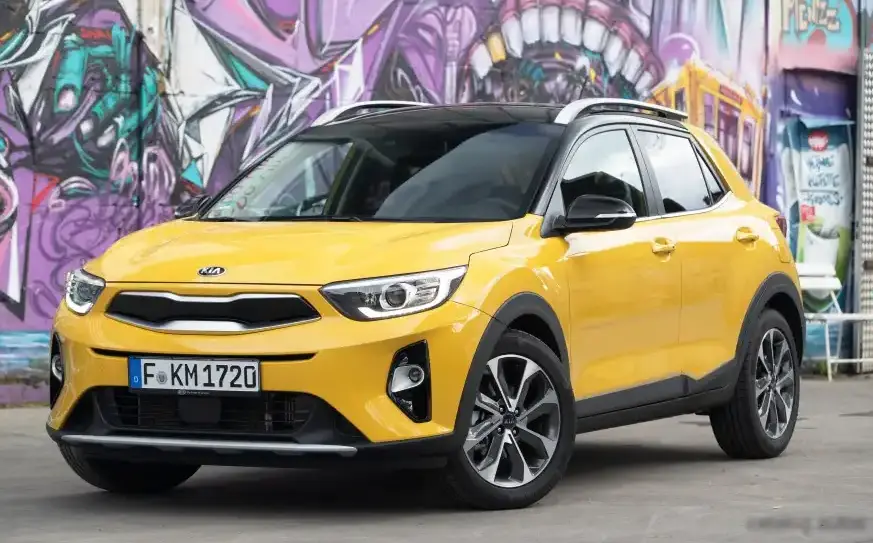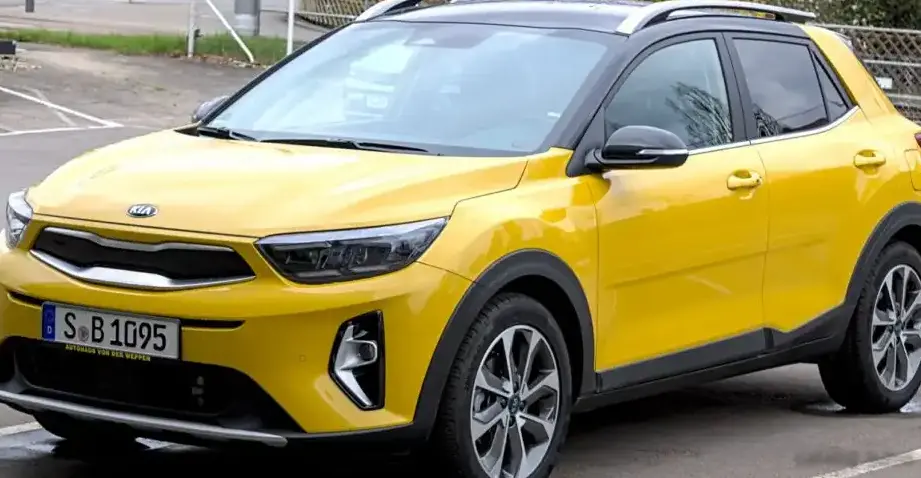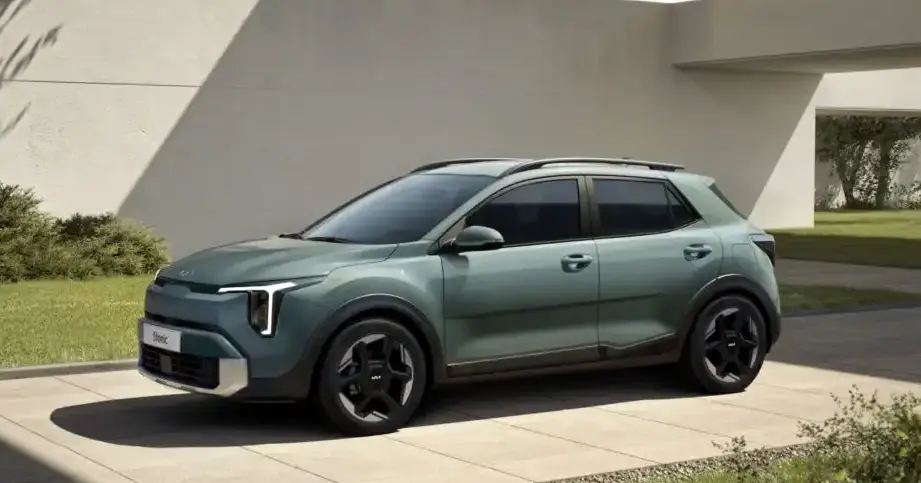
The Kia Stonic, particularly the facelifted 2025 model equipped with the 1.0 T-GDI (115 hp) mild hybrid powertrain and a 7-speed dual-clutch transmission (DCT), represents Kia’s entry into the competitive subcompact crossover segment. Introduced in September 2025, this variant is positioned as a fuel-efficient and technologically modern option within the Stonic lineup. It builds upon the original Stonic launched in 2017, offering updated styling, enhanced safety features, and a more refined driving experience. The Stonic primarily targets the European market, where demand for smaller, versatile vehicles remains strong, but is also available in select global markets. This specific configuration aims to balance affordability with acceptable performance and modern features.
Technical Specifications
| Brand | Kia |
| Model | Stonic |
| Generation | Stonic (facelift 2025) |
| Type (Engine) | 1.0 T-GDI (115 Hp) Mild Hybrid DCT |
| Start of production | September, 2025 |
| Powertrain Architecture | MHEV (Mild Hybrid Electric Vehicle) |
| Body type | Crossover |
| Seats | 5 |
| Doors | 5 |
| Fuel consumption at Low speed (WLTP) | 7.0 l/100 km (33.6 US mpg, 40.4 UK mpg, 14.3 km/l) |
| Fuel consumption at Medium speed (WLTP) | 5.2 l/100 km (45.2 US mpg, 54.3 UK mpg, 19.2 km/l) |
| Fuel consumption at high speed (WLTP) | 4.8 l/100 km (49 US mpg, 58.9 UK mpg, 20.8 km/l) |
| Fuel consumption at very high speed (WLTP) | 6.1 l/100 km (38.6 US mpg, 46.3 UK mpg, 16.4 km/l) |
| Combined fuel consumption (WLTP) | 5.6 l/100 km (42 US mpg, 50.4 UK mpg, 17.9 km/l) |
| CO2 emissions (WLTP) | 127 g/km |
| Fuel Type | Petrol (Gasoline) |
| Acceleration 0 – 100 km/h | 10.8 sec |
| Acceleration 0 – 62 mph | 10.8 sec |
| Acceleration 0 – 60 mph | 10.3 sec |
| Maximum speed | 182 km/h (113.09 mph) |
| Emission standard | Euro 6e bis |
| Weight-to-power ratio | 10.4 kg/Hp, 96.2 Hp/tonne |
| Weight-to-torque ratio | 6 kg/Nm, 167.4 Nm/tonne |
| Battery voltage | 48 V |
| Power | 115 Hp @ 6000 rpm |
| Power per litre | 115.2 Hp/l |
| Torque | 200 Nm @ 2000-3000 rpm (147.51 lb.-ft. @ 2000-3000 rpm) |
| Engine layout | Front, Transverse |
| Engine Model/Code | G3LF |
| Engine displacement | 998 cm3 (60.9 cu. in.) |
| Number of cylinders | 3 |
| Engine configuration | Inline |
| Cylinder Bore | 71 mm (2.8 in.) |
| Piston Stroke | 84 mm (3.31 in.) |
| Compression ratio | 11.5:1 |
| Number of valves per cylinder | 4 |
| Fuel injection system | Direct injection |
| Engine aspiration | Turbocharger, Intercooler |
| Valvetrain | CVVD |
| Engine oil capacity | 3.6 l (3.8 US qt | 3.17 UK qt) |
| Coolant | 5.9 l (6.23 US qt | 5.19 UK qt) |
| Kerb Weight | 1195-1288 kg (2634.52 – 2839.55 lbs.) |
| Max. weight | 1710 kg (3769.9 lbs.) |
| Max load | 422-515 kg (930.35 – 1135.38 lbs.) |
| Trunk (boot) space – minimum | 352 l (12.43 cu. ft.) |
| Trunk (boot) space – maximum | 1155 l (40.79 cu. ft.) |
| Fuel tank capacity | 45 l (11.89 US gal | 9.9 UK gal) |
| Max. roof load | 70 kg (154.32 lbs.) |
| Permitted trailer load with brakes (12%) | 900 kg (1984.16 lbs.) |
| Permitted trailer load without brakes | 450 kg (992.08 lbs.) |
| Permitted towbar download | 75 kg (165.35 lbs.) |
| Length | 4165 mm (163.98 in.) |
| Width | 1760 mm (69.29 in.) |
| Width including mirrors | 2025 mm (79.72 in.) |
| Height | 1520 mm (59.84 in.) |
| Wheelbase | 2580 mm (101.57 in.) |
| Front track | 1531 mm (60.28 in.) |
| Rear (Back) track | 1539 mm (60.59 in.) |
| Front overhang | 855 mm (33.66 in.) |
| Rear overhang | 730 mm (28.74 in.) |
| Ride height (ground clearance) | 183 mm (7.2 in.) |
| Minimum turning circle (turning diameter) | 10.4 m (34.12 ft.) |
| Approach angle | 17.2° |
| Departure angle | 28.6° |
| Drivetrain Architecture | ICE and electric motor drive the front wheels in mixed mode. |
| Drive wheel | Front wheel drive |
| Number of gears and type of gearbox | 7 gears, automatic transmission DCT |
| Front suspension | Independent type McPherson, Transverse stabilizer |
| Rear suspension | Coil spring, Elastic beam |
| Front brakes | Ventilated discs, 280 mm |
| Rear brakes | Disc, 262 mm |
| Assisting systems | ABS (Anti-lock braking system) |
| Steering type | Steering rack and pinion |
| Power steering | Electric Steering |
| Tires size | 205/55 R17 91V |
| Wheel rims size | 6.5J x 17 ET49 |
Powertrain & Engine Architecture
The heart of this Stonic variant is the Kia/Hyundai G3LF 1.0-liter turbocharged three-cylinder engine. This engine utilizes direct fuel injection and a sophisticated Continuously Variable Valve Duration (CVVD) system, allowing for precise control of valve timing and lift for improved efficiency and performance. The turbocharger, coupled with an intercooler, helps to mitigate turbo lag and deliver a broader torque curve. The engine is paired with a 48V mild hybrid system, which includes a small electric motor and battery pack. This system provides a power assist during acceleration and allows for regenerative braking, capturing energy during deceleration to recharge the battery. The power is then transferred to the front wheels via a 7-speed dual-clutch transmission (DCT). The DCT offers quicker and smoother gear changes compared to a traditional automatic transmission, contributing to a more engaging driving experience.
Driving Characteristics
The 115 hp and 200 Nm (147.51 lb-ft) of torque produced by this powertrain configuration provide adequate, though not exhilarating, performance. Acceleration from 0 to 60 mph takes approximately 10.3 seconds, and the top speed is 113.09 mph. The DCT transmission is well-tuned, offering responsive shifts and contributing to decent fuel economy. Compared to higher-output Stonic variants, this version prioritizes fuel efficiency over outright speed. The mild hybrid system provides a noticeable boost during initial acceleration, smoothing out the power delivery. The gear ratios are optimized for everyday driving, providing sufficient power for merging onto highways and navigating city streets. While not a sporty vehicle, the Stonic 1.0 T-GDI offers a comfortable and predictable driving experience.
Equipment & Trim Levels
The 2025 Stonic 1.0 T-GDI Mild Hybrid DCT typically comes standard with features such as air conditioning, a touchscreen infotainment system with Apple CarPlay and Android Auto compatibility, Bluetooth connectivity, and a suite of safety features including lane keeping assist, forward collision avoidance assist, and automatic emergency braking. Higher trim levels add features like a larger touchscreen display, a rearview camera, automatic climate control, and upgraded interior materials. Interior upholstery is typically cloth, with options for leatherette or full leather available on higher trims. Exterior styling elements, such as alloy wheels and chrome accents, also vary depending on the trim level.
Chassis & Braking
The Stonic utilizes a front-wheel-drive platform with an independent McPherson strut suspension in the front and a torsion beam suspension in the rear. This setup provides a comfortable ride quality, although it’s not particularly sporty. The front brakes are ventilated discs measuring 280 mm, while the rear brakes are solid discs measuring 262 mm. Anti-lock Braking System (ABS) is standard. The suspension is tuned for comfort and stability, prioritizing ride quality over handling precision. Stabilizer bars are included to reduce body roll during cornering.
Market Reception & Comparison
The Kia Stonic 1.0 T-GDI Mild Hybrid DCT has been generally well-received by automotive critics for its fuel efficiency, modern features, and competitive pricing. Compared to other trims in the Stonic lineup, this variant offers a good balance between performance and economy. The mild hybrid system contributes to lower CO2 emissions and improved fuel consumption, making it an attractive option for environmentally conscious buyers. However, some critics have noted that the engine can feel strained under heavy acceleration, and the interior materials are not as premium as those found in some competitors. Compared to rivals like the Volkswagen Polo or Renault Clio, the Stonic offers a compelling value proposition with its generous standard equipment and long warranty.
Legacy
The G3LF engine, in general, has proven to be a relatively reliable unit, although long-term durability of the mild hybrid components remains to be fully assessed. The DCT transmission, while offering smooth shifts, requires regular maintenance to ensure optimal performance. In the used car market, the Stonic 1.0 T-GDI Mild Hybrid DCT is expected to hold its value reasonably well due to its fuel efficiency and modern technology. Its compact size and practicality make it a popular choice for urban drivers, and its affordability makes it accessible to a wide range of buyers.