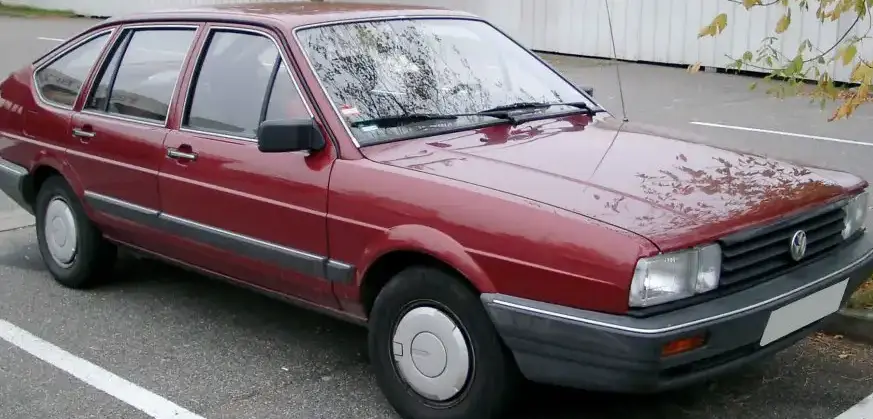
The Volkswagen Passat B2, produced from 1980 to 1988, represented a significant evolution for Volkswagen’s mid-size offering. The 1985 facelift brought updated styling and refinements to the already popular model. Among the engine options available, the 1.8-liter, 90 horsepower variant with an automatic transmission occupied a crucial position in the lineup, appealing to buyers seeking a comfortable and economical family car. This version was sold primarily in Europe, where it offered a balance between affordability and practicality, though limited numbers were also exported to other markets. Production of this specific configuration ran from 1985 to 1988, coinciding with the later years of the B2’s lifecycle.
Technical Specifications
| Brand | Volkswagen |
| Model | Passat |
| Generation | Passat Hatchback (B2; facelift 1985) |
| Type (Engine) | 1.8 (90 Hp) |
| Start of production | 1985 |
| End of production | 1988 |
| Powertrain Architecture | Internal Combustion engine |
| Body type | Hatchback |
| Seats | 5 |
| Doors | 5 |
| Fuel Type | Petrol (Gasoline) |
| Acceleration 0 – 100 km/h | 7.4 sec |
| Acceleration 0 – 62 mph | 7.4 sec |
| Acceleration 0 – 60 mph | 7 sec |
| Maximum speed | 173 km/h (107.5 mph) |
| Weight-to-power ratio | 10.9 kg/Hp, 92.1 Hp/tonne |
| Weight-to-torque ratio | 6.7 kg/Nm, 148.4 Nm/tonne |
| Power | 90 Hp @ 5200 rpm |
| Power per litre | 50.5 Hp/l |
| Torque | 145 Nm @ 3300 rpm (106.95 lb.-ft. @ 3300 rpm) |
| Engine layout | Front, Longitudinal |
| Engine Model/Code | DS |
| Engine displacement | 1781 cm3 (108.68 cu. in.) |
| Number of cylinders | 4 |
| Engine configuration | Inline |
| Cylinder Bore | 81 mm (3.19 in.) |
| Piston Stroke | 86.4 mm (3.4 in.) |
| Compression ratio | 10:1 |
| Number of valves per cylinder | 2 |
| Fuel injection system | Carburettor |
| Engine aspiration | Naturally aspirated engine |
| Valvetrain | OHC |
| Engine oil capacity | 3 l (3.17 US qt | 2.64 UK qt) |
| Coolant | 6 l (6.34 US qt | 5.28 UK qt) |
| Kerb Weight | 977 kg (2153.92 lbs.) |
| Max. weight | 1460 kg (3218.75 lbs.) |
| Max load | 483 kg (1064.83 lbs.) |
| Trunk (boot) space – minimum | 480 l (16.95 cu. ft.) |
| Trunk (boot) space – maximum | 1542 l (54.46 cu. ft.) |
| Fuel tank capacity | 60 l (15.85 US gal | 13.2 UK gal) |
| Length | 4425 mm (174.21 in.) |
| Width | 1710 mm (67.32 in.) |
| Height | 1385 mm (54.53 in.) |
| Wheelbase | 2550 mm (100.39 in.) |
| Front track | 1414 mm (55.67 in.) |
| Rear (Back) track | 1422 mm (55.98 in.) |
| Drivetrain Architecture | The Internal combustion engine (ICE) drives the front wheels of the vehicle. |
| Drive wheel | Front wheel drive |
| Number of gears and type of gearbox | 3-speed automatic |
| Front suspension | Independent type McPherson |
| Rear suspension | Spring Strut |
| Front brakes | Disc |
| Rear brakes | Drum |
| Steering type | Cone worm with recirculation balls |
| Tires size | 175/70 R13 |
| Wheel rims size | 13 |
Powertrain & Engine Architecture
The heart of this Passat variant was the Volkswagen DS engine, an 1.8-liter inline-four cylinder gasoline engine. This engine utilized a single overhead camshaft (OHC) valvetrain with two valves per cylinder. Fuel delivery was managed by a carburetor, a common setup for the time, though increasingly replaced by fuel injection in later models. The DS engine produced 90 horsepower at 5200 rpm and 145 Nm (107 lb-ft) of torque at 3300 rpm. The engine’s longitudinal mounting within the engine bay was a characteristic of many front-wheel-drive Volkswagen designs of the era. Paired with the 1.8L engine was a 3-speed automatic transmission. This transmission, while providing convenience, was not known for its sporty performance or fuel efficiency compared to the available 5-speed manual.
Driving Characteristics
The 1.8-liter automatic Passat offered a comfortable, if not particularly exhilarating, driving experience. Acceleration to 60 mph took around 7.4 seconds, which was respectable for the time but noticeably slower than the manual transmission versions or those equipped with larger engines. The automatic transmission’s gear ratios were geared towards fuel economy and smooth cruising rather than rapid acceleration. The engine felt somewhat strained when pushed hard, and the automatic transmission could sometimes hunt for the right gear, especially during uphill climbs. However, for everyday driving and commuting, the combination proved perfectly adequate, offering a relaxed and easy-to-drive experience.
Equipment & Trim Levels
The 1.8-liter automatic Passat typically fell into the mid-range of the B2 Passat lineup. Standard equipment included cloth upholstery, basic instrumentation, and manual windows and door locks. Power steering was often an optional extra, as was air conditioning. Higher trim levels offered features like upgraded upholstery, central locking, and a more comprehensive instrument cluster. The interior design was functional and straightforward, reflecting the car’s focus on practicality. The hatchback body style provided excellent cargo versatility, with a generous 480 liters of space with the rear seats up, expanding to 1542 liters with them folded down.
Chassis & Braking
The Passat B2 featured an independent McPherson strut front suspension and a spring strut rear suspension. This setup provided a reasonable balance between ride comfort and handling. Front brakes were discs, offering good stopping power, while the rear brakes were drums, a cost-saving measure common in this class of vehicle. The steering was a cone worm with recirculation balls, providing a relatively direct feel, though it lacked the precision of more modern steering systems. Stabilizer bars were often included, improving body roll control during cornering.
Market Reception & Comparison
The 1.8-liter automatic Passat was generally well-received as a practical and affordable family car. Critics praised its spacious interior, comfortable ride, and reasonable fuel economy. However, the automatic transmission was often criticized for its lack of responsiveness and its impact on fuel consumption. Compared to the more powerful 1.8 or 2.0-liter versions, the 90 hp engine felt underpowered, especially when fully loaded. The 1.6-liter diesel models offered superior fuel economy but lacked the performance of the 1.8-liter gasoline engine. The manual transmission 1.8-liter offered a better driving experience for those prioritizing performance and fuel efficiency.
Legacy
The Volkswagen Passat B2 1.8-liter automatic, while not the most sought-after variant, remains a relatively common sight in the used car market today. The DS engine is generally considered reliable, though regular maintenance is essential to prevent issues. Carburetor-related problems can occasionally arise, requiring adjustment or rebuilding. The automatic transmission, while durable, can be prone to wear and tear over time. Overall, this Passat variant represents a solid and dependable classic car, offering a taste of 1980s German engineering at an affordable price. Its enduring popularity is a testament to its practicality, comfort, and relatively simple mechanical design.