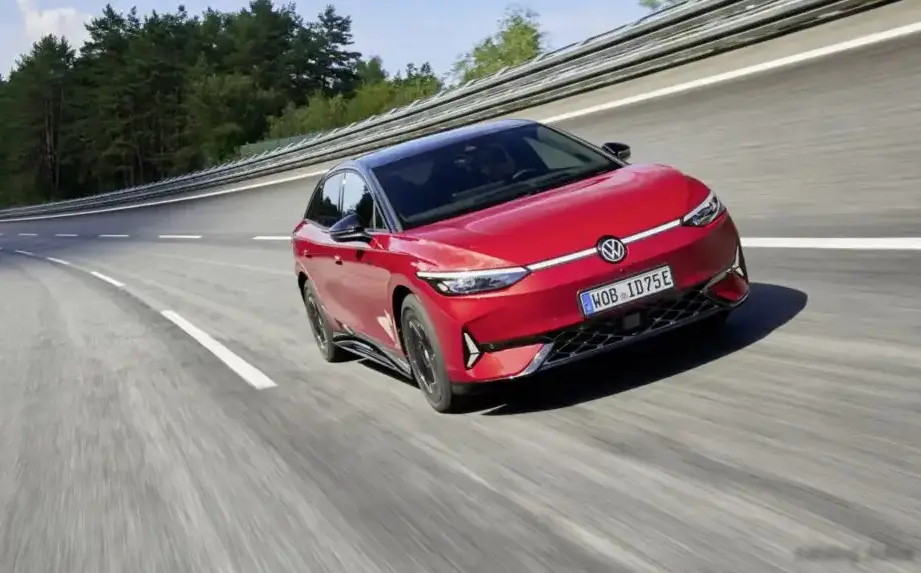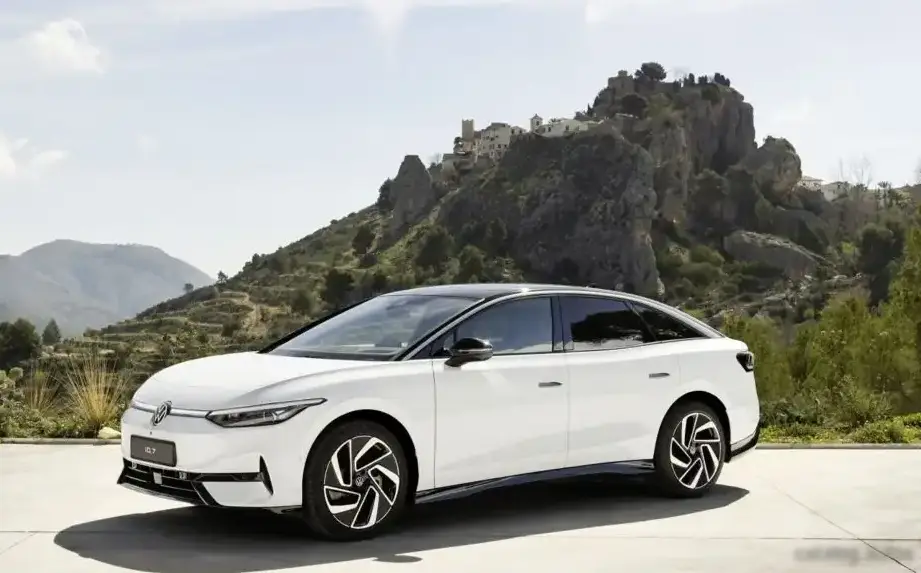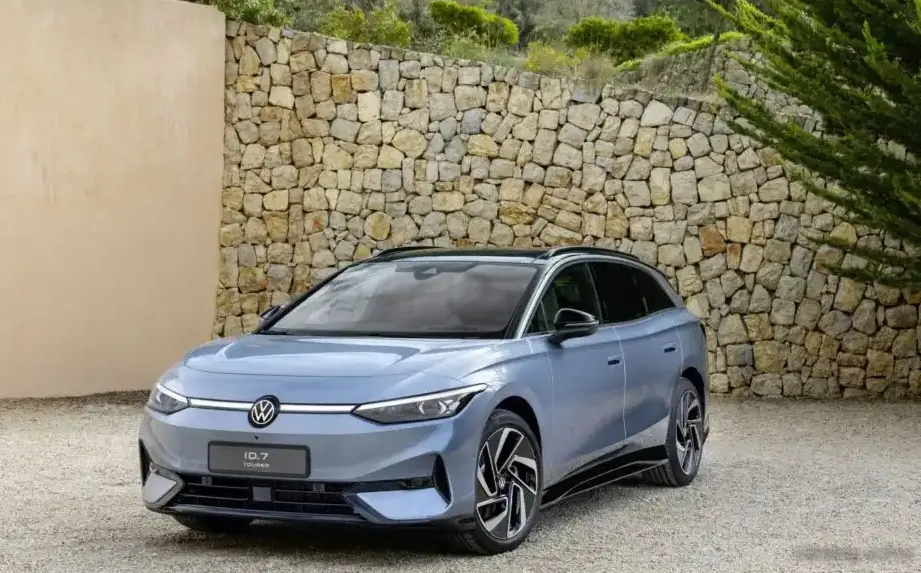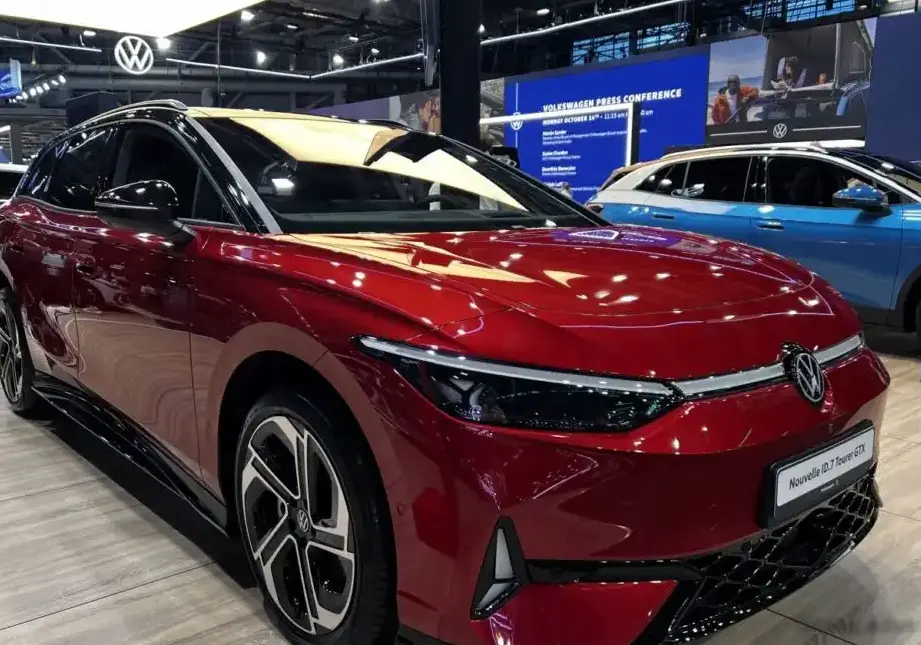
The Volkswagen ID.7 Tourer GTX 91 kWh is an all-electric, all-wheel-drive station wagon introduced in June 2024. Representing the performance-oriented GTX variant of the ID.7 Tourer, it builds upon Volkswagen’s dedicated electric vehicle platform (MEB) and offers a blend of practicality, range, and performance. Positioned as a premium offering within the ID.7 lineup, the Tourer GTX caters to buyers seeking a spacious, efficient, and technologically advanced electric vehicle with enhanced driving dynamics. It is Volkswagen’s direct competitor to other premium electric wagons like the Polestar 5 and upcoming electric offerings from BMW and Mercedes-Benz.
Technical Specifications
| Brand | Volkswagen |
| Model | ID.7 |
| Generation | ID.7 Tourer |
| Type (Engine) | GTX 91 kWh (340 Hp) 4MOTION |
| Start of production | June, 2024 |
| Powertrain Architecture | BEV (Electric Vehicle) |
| Body type | Station wagon (estate) |
| Seats | 5 |
| Doors | 5 |
| Fuel Type | Electricity |
| Acceleration 0 – 100 km/h | 5.5 sec |
| Acceleration 0 – 62 mph | 5.5 sec |
| Acceleration 0 – 60 mph | 5.2 sec |
| Maximum speed | 180 km/h (111.85 mph) – Electronically limited |
| Weight-to-power ratio | 6.7 kg/Hp, 150.2 Hp/tonne |
| Weight-to-torque ratio | 4 kg/Nm, 247.3 Nm/tonne |
| Gross battery capacity | 91 kWh |
| Net (usable) battery capacity | 86 kWh |
| Battery voltage | 383 V |
| Battery technology | Lithium nickel manganese cobalt oxides (Li-NMC) |
| Battery location | Below the floor |
| All-electric range (WLTP) | 584 km (362.88 mi) |
| Average Energy consumption (WLTP) | 16.6 kWh/100 km (26.72 kWh/100 mi) |
| MPGe | 126 |
| km/kWh | 6 |
| mi/kWh | 3.7 |
| Electric motor 1 location | Rear axle, Transverse |
| Electric motor 1 type | Synchronous |
| Electric motor 2 location | Front axle, Transverse |
| Electric motor 2 type | Asynchronous |
| System power | 340 Hp |
| System torque | 560 Nm (413.03 lb.-ft.) |
| Kerb Weight | 2264 kg (4991.27 lbs.) |
| Max. weight | 2800 kg (6172.94 lbs.) |
| Max load | 536 kg (1181.68 lbs.) |
| Trunk (boot) space – minimum | 605 l (21.37 cu. ft.) |
| Trunk (boot) space – maximum | 1714 l (60.53 cu. ft.) |
| Max. roof load | 75 kg (165.35 lbs.) |
| Permitted trailer load with brakes (8%) | 1400 kg (3086.47 lbs.) |
| Permitted trailer load with brakes (12%) | 1200 kg (2645.55 lbs.) |
| Permitted trailer load without brakes | 750 kg (1653.47 lbs.) |
| Permitted towbar download | 75 kg (165.35 lbs.) |
| Length | 4961 mm (195.31 in.) |
| Width | 1862 mm (73.31 in.) |
| Width including mirrors | 2141 mm (84.29 in.) |
| Height | 1549 mm (60.98 in.) |
| Wheelbase | 2970 mm (116.93 in.) |
| Front track | 1588-1598 mm (62.52 – 62.91 in.) |
| Rear (Back) track | 1557-1569 mm (61.3 – 61.77 in.) |
| Minimum turning circle | 12.3 m (40.35 ft.) |
| Front brakes | Ventilated discs |
| Front tires | 235/50 R19; 235/45 R20; 235/40 R21 |
| Rear tires | 255/45 R19; 255/40 R20; 265/35 R21 |
| Front wheel rims | 8J x 19; 8.5J x 20; 8.5J x 21 |
| Rear wheel rims | 8.5J x 19; 9.5J x 20; 9J x 21 |
| Gearbox | 1 gears, automatic transmission |
Powertrain & Engine Architecture
The ID.7 Tourer GTX utilizes a dual-motor all-wheel-drive (4MOTION) powertrain. The rear motor is a permanent magnet synchronous motor, while the front motor is an asynchronous motor. This combination optimizes efficiency and performance. The 91 kWh (gross) / 86 kWh (net) lithium-ion battery pack, composed of lithium nickel manganese cobalt oxide (Li-NMC) cells, is mounted low in the vehicle floor to lower the center of gravity and improve handling. The battery operates at 383 volts. The GTX variant features a combined system output of 340 horsepower and 560 Nm (413 lb-ft) of torque. The single-speed automatic transmission is a direct-drive unit, typical of electric vehicles, providing seamless acceleration. The car supports DC fast charging, allowing for a significant range boost in a relatively short time.
Driving Characteristics
The dual-motor setup of the ID.7 Tourer GTX delivers brisk acceleration, achieving 0-60 mph in approximately 5.2 seconds. The all-wheel-drive system provides excellent traction in various weather conditions. Compared to the rear-wheel-drive ID.7 variants, the GTX offers a more confident and planted feel, particularly during cornering. The instant torque characteristic of electric motors provides responsive acceleration, while the single-speed transmission ensures smooth and linear power delivery. The GTX’s suspension is tuned for a balance between comfort and handling, offering a more engaging driving experience than the standard ID.7 models. Regenerative braking is adjustable, allowing drivers to customize the level of deceleration when lifting off the accelerator.
Equipment & Trim Levels
The ID.7 Tourer GTX comes standard with a comprehensive suite of features, including a large touchscreen infotainment system, digital instrument cluster, premium upholstery, and advanced driver-assistance systems (ADAS). Standard features typically include adaptive cruise control, lane-keeping assist, automatic emergency braking, and a 360-degree camera system. Optional extras may include a panoramic sunroof, premium sound system, and upgraded interior trim materials. The GTX trim also features unique exterior styling elements, such as distinctive bumpers, badging, and alloy wheel designs. Interior accents and lighting are also specific to the GTX variant, creating a more sporty and premium ambiance.
Chassis & Braking
The ID.7 Tourer GTX utilizes an independent suspension system, with a McPherson strut setup at the front and a multi-link suspension at the rear. Stabilizer bars are included on both axles to reduce body roll during cornering. The braking system consists of ventilated disc brakes on all four wheels, providing ample stopping power. ABS (Anti-lock Braking System) and electronic stability control are standard safety features. The steering system is an electric power-assisted rack and pinion setup, offering precise and responsive steering feel.
Market Reception & Comparison
The ID.7 Tourer GTX has been generally well-received by automotive critics, who praise its spacious interior, long range, and strong performance. The GTX variant is often highlighted for its improved driving dynamics compared to the standard ID.7 models. Fuel economy, expressed as energy consumption, is competitive within the electric wagon segment, achieving approximately 16.6 kWh/100 km (26.72 kWh/100 mi) on the WLTP cycle. Reliability is still being established, as the model is relatively new, but Volkswagen has made strides in improving the quality and reliability of its electric vehicles. Compared to other trims in the ID.7 lineup, the GTX represents the performance flagship, offering a more engaging driving experience and a higher level of standard equipment.
Legacy
As a relatively new model, the long-term reliability of the ID.7 Tourer GTX powertrain remains to be fully assessed. However, Volkswagen’s ongoing investment in electric vehicle technology and battery development suggests a commitment to durability and longevity. The MEB platform, upon which the ID.7 is based, is expected to underpin a range of future Volkswagen Group electric vehicles. The GTX variant, with its dual-motor all-wheel-drive system and performance-oriented tuning, is likely to become a desirable option in the used car market, appealing to buyers seeking a practical and efficient electric wagon with a sporty edge.