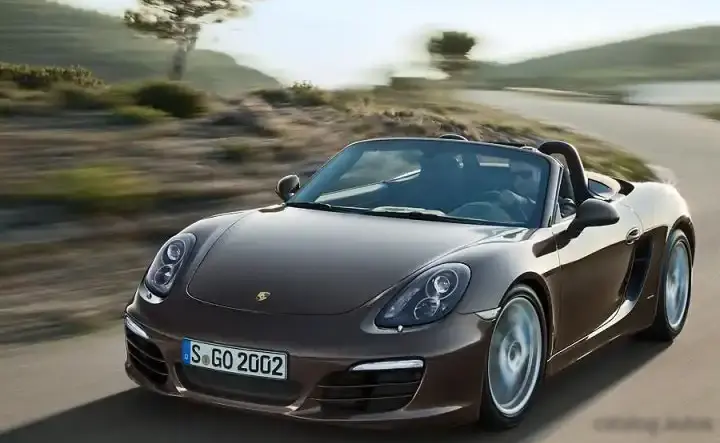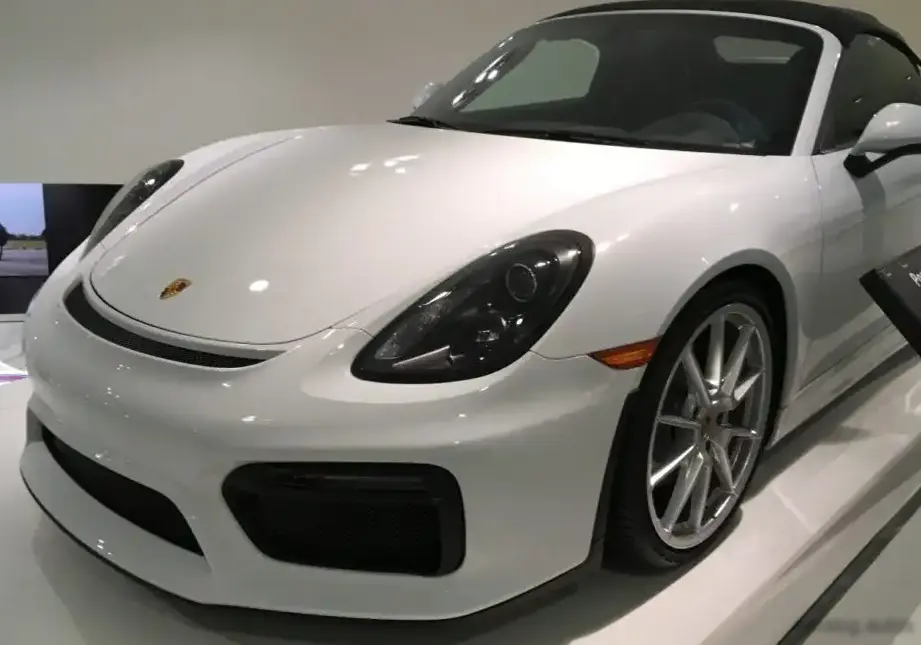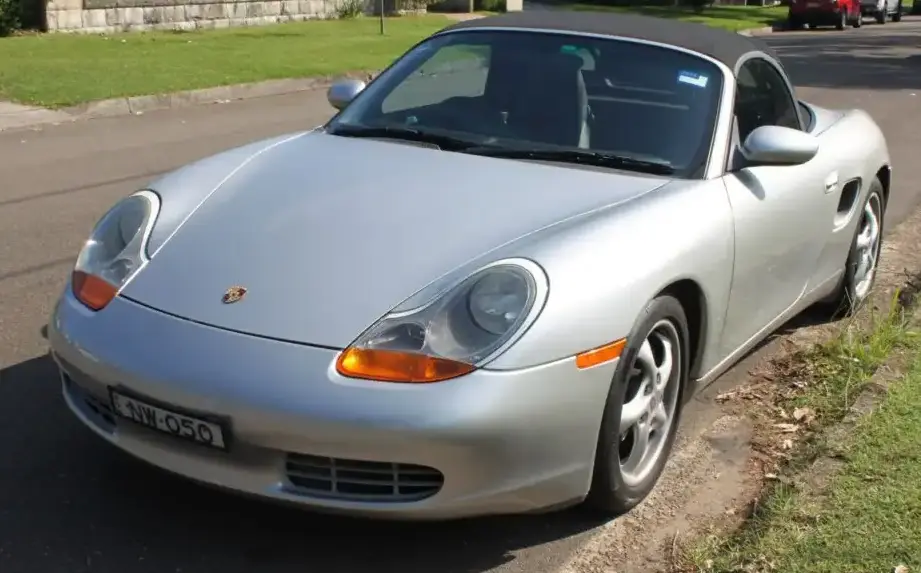
The Porsche Boxster (986) 2.7 Tiptronic S, produced between 1999 and 2002, represented a significant evolution within the first generation of the Boxster roadster. Positioned as a mid-range offering, it bridged the gap between the base 2.5-liter model and the more potent 3.2-liter S variant. This variant aimed to deliver a balance of performance and usability, appealing to drivers seeking a more engaging experience than the base model, but without the higher price tag and sharper focus of the top-tier S. It was a key component of Porsche’s strategy to offer a more accessible entry point into the Porsche ownership experience, while still maintaining the brand’s reputation for driving dynamics and engineering excellence.
Technical Specifications
| Brand | Porsche |
| Model | Boxster |
| Generation | Boxster (986) |
| Type (Engine) | 2.7 (220 Hp) Tiptronic S |
| Start of production | 1999 year |
| End of production | 2002 year |
| Powertrain Architecture | Internal Combustion engine |
| Body type | Roadster |
| Seats | 2 |
| Doors | 2 |
| Fuel consumption (economy) – urban (NEDC) | 15.9 l/100 km (14.8 US mpg, 17.8 UK mpg, 6.3 km/l) |
| Fuel consumption (economy) – extra urban (NEDC) | 8 l/100 km (29.4 US mpg, 35.3 UK mpg, 12.5 km/l) |
| Fuel consumption (economy) – combined (NEDC) | 10.9 l/100 km (21.6 US mpg, 25.9 UK mpg, 9.2 km/l) |
| CO2 emissions (NEDC) | 264 g/km |
| Fuel Type | Petrol (Gasoline) |
| Acceleration 0 – 100 km/h | 7.4 sec |
| Acceleration 0 – 62 mph | 7.4 sec |
| Acceleration 0 – 60 mph | 7 sec |
| Maximum speed | 245 km/h (152.24 mph) |
| Emission standard | Euro 3 |
| Weight-to-power ratio | 6 kg/Hp, 167.9 Hp/tonne |
| Weight-to-torque ratio | 5 kg/Nm, 198.5 Nm/tonne |
| Power | 220 Hp @ 6400 rpm |
| Power per litre | 81.9 Hp/l |
| Torque | 260 Nm @ 4750 rpm (191.77 lb.-ft. @ 4750 rpm) |
| Engine layout | Middle, Longitudinal |
| Engine Model/Code | M96.22 |
| Engine displacement | 2687 cm3 (163.97 cu. in.) |
| Number of cylinders | 6 |
| Engine configuration | Boxer |
| Cylinder Bore | 85.5 mm (3.37 in.) |
| Piston Stroke | 78 mm (3.07 in.) |
| Compression ratio | 11:1 |
| Number of valves per cylinder | 4 |
| Fuel injection system | Multi-port manifold injection |
| Engine aspiration | Naturally aspirated engine |
| Valvetrain | DOHC |
| Engine oil capacity | 8.5 l (8.98 US qt | 7.48 UK qt) |
| Coolant | 17 l (17.96 US qt | 14.96 UK qt) |
| Kerb Weight | 1310 kg (2888.06 lbs.) |
| Max. weight | 1620 kg (3571.49 lbs.) |
| Max load | 310 kg (683.43 lbs.) |
| Trunk (boot) space – minimum | 260 l (9.18 cu. ft.) |
| Fuel tank capacity | 64 l (16.91 US gal | 14.08 UK gal) |
| Max. roof load | 75 kg (165.35 lbs.) |
| Length | 4315 mm (169.88 in.) |
| Width | 1780 mm (70.08 in.) |
| Height | 1290 mm (50.79 in.) |
| Wheelbase | 2415 mm (95.08 in.) |
| Front track | 1465 mm (57.68 in.) |
| Rear (Back) track | 1528 mm (60.16 in.) |
| Ride height (ground clearance) | 121 mm (4.76 in.) |
| Drag coefficient (Cd) | 0.31 |
| Minimum turning circle (turning diameter) | 11.1 m (36.42 ft.) |
| Drivetrain Architecture | The Internal combustion engine (ICE) drives the rear wheels of the vehicle. |
| Drive wheel | Rear wheel drive |
| Number of gears and type of gearbox | 5 gears, automatic transmission Tiptronic S |
| Front suspension | Independent type McPherson |
| Rear suspension | McPherson |
| Front brakes | Ventilated discs |
| Rear brakes | Ventilated discs |
| Assisting systems | ABS (Anti-lock braking system) |
| Steering type | Steering rack and pinion |
| Power steering | Hydraulic Steering |
| Tires size | 205/55 R 16 |
| Wheel rims size | 6 J x 16 |
Powertrain & Engine Architecture
At the heart of the 2.7 Tiptronic S lies the M96.22 engine, a 2.7-liter naturally aspirated flat-six (boxer) engine. This engine benefited from Porsche’s extensive experience with boxer engines, known for their low center of gravity and smooth operation. The M96.22 featured a multi-port fuel injection system, delivering fuel directly into the intake ports, and a dual overhead camshaft (DOHC) valvetrain. This configuration allowed for precise control of valve timing, optimizing engine performance across the rev range. The engine produced 220 horsepower at 6400 rpm and 260 Nm (191.77 lb-ft) of torque at 4750 rpm. The ‘Tiptronic S’ transmission was a five-speed automatic with a manual shift mode, allowing drivers to have more control over gear selection. It featured adaptive shift programming, adjusting shift points based on driving style.
Driving Characteristics
The 2.7 Tiptronic S offered a distinct driving experience compared to both the base 2.5-liter and the 3.2 S models. While not as brutally quick as the 3.2 S, it provided ample power for spirited driving. The Tiptronic S transmission, while convenient, did introduce some efficiency loss compared to the standard six-speed manual. The automatic transmission’s gear ratios were tuned for a balance of acceleration and fuel economy. The 0-60 mph sprint took approximately 7 seconds, and the car could reach a top speed of 152.24 mph. The mid-engine layout contributed to excellent balance and handling, making the Boxster a joy to drive on winding roads. However, some drivers found the automatic transmission less engaging than the manual option, and the shift quality wasn’t as crisp as some contemporary automatics.
Equipment & Trim Levels
The 2.7 Tiptronic S came standard with a respectable level of equipment. Interior features included leather upholstery, power windows, power locks, and a basic audio system. Optional extras were plentiful, allowing buyers to customize their Boxsters. Popular options included upgraded audio systems, heated seats, sport seats, and a wind deflector. The dashboard layout was typical of Porsche at the time, with a clear and functional design. The instrument cluster featured a central tachometer, flanked by gauges for speed, coolant temperature, and fuel level.
Chassis & Braking
The Boxster 986 utilized a lightweight chassis construction, contributing to its agile handling. The suspension consisted of independent McPherson struts at both the front and rear. The 2.7 Tiptronic S was equipped with ventilated disc brakes on all four wheels, providing ample stopping power. An Anti-lock Braking System (ABS) was standard. The steering was a hydraulic rack and pinion system, offering precise and responsive steering feel. The standard tire size was 205/55 R16, mounted on 6J x 16 inch wheels.
Market Reception & Comparison
The 2.7 Tiptronic S was generally well-received by automotive critics. It was praised for its balanced performance, engaging handling, and comfortable ride. However, some reviewers noted that the Tiptronic S transmission wasn’t as responsive as the manual gearbox. Compared to the base 2.5-liter model, the 2.7 offered a noticeable performance upgrade. Fuel economy was comparable between the two, but the 2.7 provided more power and torque. Compared to the 3.2 S, the 2.7 was more affordable and slightly more fuel-efficient, but it lacked the ultimate performance of the flagship model.
Legacy
The Porsche Boxster (986) 2.7 Tiptronic S has proven to be a relatively reliable sports car. The M96.22 engine, while not immune to issues, is generally considered more robust than the later M96.2 engines found in some other Porsche models. The most common issues relate to the intermediate shaft (IMS) bearing, which can fail and cause engine damage. However, many owners proactively address this issue with an upgraded bearing. Today, the 986 Boxster 2.7 Tiptronic S represents an affordable entry point into Porsche ownership. Well-maintained examples are sought after by enthusiasts who appreciate the car’s classic Porsche driving dynamics and timeless design. Its relative simplicity and readily available parts make it a viable option for those seeking a fun and engaging sports car without the high maintenance costs of more complex modern vehicles.