
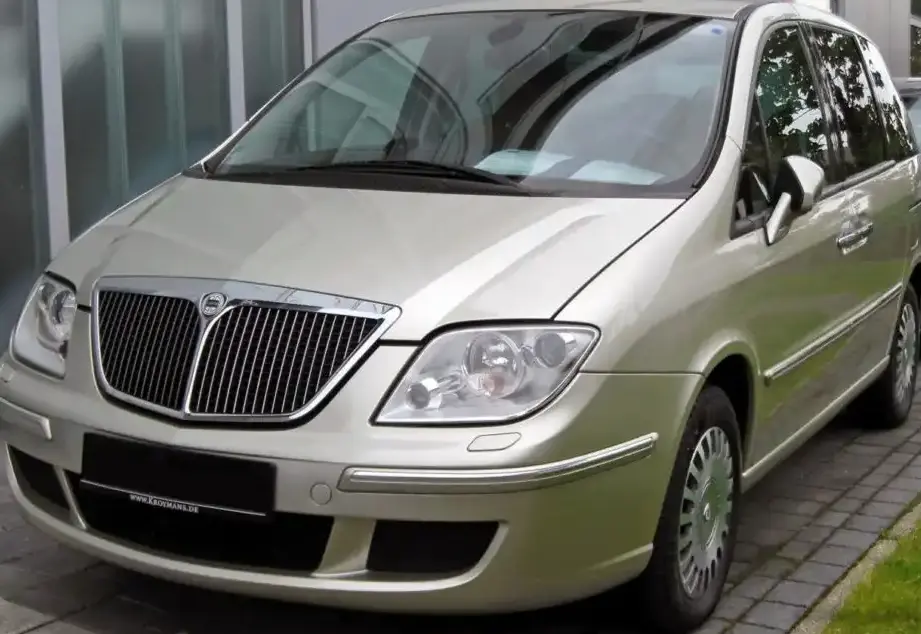
The Lancia Phedra 2.0 16V, produced between 2002 and 2008, represents a significant offering in the European minivan segment. Developed in collaboration with Peugeot and Citroën – sharing its platform (the PSA X7 architecture) with the Peugeot 807 and Citroën C8 – the Phedra aimed to provide a luxurious and spacious multi-purpose vehicle. This particular 2.0-liter, 16-valve variant, producing 136 horsepower, occupied a middle ground in the Phedra lineup, offering a balance between performance and fuel economy. It was positioned as a more accessible option compared to the higher-powered engines, while still providing a comfortable and well-equipped experience.
Technical Specifications
| Brand | Lancia |
| Model | Phedra |
| Generation | Phedra |
| Type (Engine) | 2.0 16V (136 Hp) |
| Start of production | 2002 |
| End of production | 2008 |
| Powertrain Architecture | Internal Combustion engine |
| Body type | Minivan |
| Seats | 8 |
| Doors | 5 |
| Fuel consumption (urban) | 12.3 l/100 km (19.1 US mpg) |
| Fuel consumption (extra urban) | 7.3 l/100 km (32.2 US mpg) |
| Fuel consumption (combined) | 9.1 l/100 km (25.8 US mpg) |
| Fuel Type | Petrol (Gasoline) |
| Acceleration 0 – 100 km/h | 11.2 sec |
| Acceleration 0 – 62 mph | 11.2 sec |
| Acceleration 0 – 60 mph | 10.6 sec |
| Maximum speed | 185 km/h (114.95 mph) |
| Weight-to-power ratio | 11.6 kg/Hp |
| Weight-to-torque ratio | 8.3 kg/Nm |
| Power | 136 Hp @ 6000 rpm |
| Torque | 190 Nm @ 4100 rpm (140.14 lb.-ft. @ 4100 rpm) |
| Engine layout | Front, Transverse |
| Engine Model/Code | RFN EW10J4 |
| Engine displacement | 1997 cm3 (121.86 cu. in.) |
| Number of cylinders | 4 |
| Engine configuration | Inline |
| Cylinder Bore | 85 mm (3.35 in.) |
| Piston Stroke | 88 mm (3.46 in.) |
| Compression ratio | 10.8:1 |
| Number of valves per cylinder | 4 |
| Fuel injection system | Multi-port manifold injection |
| Engine aspiration | Naturally aspirated engine |
| Valvetrain | DOHC |
| Engine oil capacity | 4.3 l (4.54 US qt | 3.78 UK qt) |
| Kerb Weight | 1575 kg (3472.28 lbs.) |
| Max. weight | 2380 kg (5247 lbs.) |
| Max load | 805 kg (1774.72 lbs.) |
| Trunk (boot) space – minimum | 325 l (11.48 cu. ft.) |
| Trunk (boot) space – maximum | 2950 l (104.18 cu. ft.) |
| Fuel tank capacity | 80 l (21.13 US gal | 17.6 UK gal) |
| Length | 4750 mm (187.01 in.) |
| Width | 1863 mm (73.35 in.) |
| Height | 1760 mm (69.29 in.) |
| Wheelbase | 2825 mm (111.22 in.) |
| Front track | 1570 mm (61.81 in.) |
| Rear (Back) track | 1548 mm (60.94 in.) |
| Drivetrain Architecture | The Internal combustion engine (ICE) drives the front wheels of the vehicle. |
| Drive wheel | Front wheel drive |
| Number of gears and type of gearbox | 5 gears, manual transmission |
| Front suspension | Spring Strut |
| Rear suspension | Coil spring |
| Front brakes | Ventilated discs |
| Rear brakes | Disc |
| Assisting systems | ABS (Anti-lock braking system) |
| Steering type | Steering rack and pinion |
| Power steering | Hydraulic Steering |
| Tires size | 205/65 R15 |
| Wheel rims size | 15 |
Powertrain & Engine Architecture
The Phedra 2.0 16V utilizes the PSA EW10J4 engine, a 1.997-liter inline-four cylinder gasoline engine. This engine, also found in various Peugeot and Citroën models, features a double overhead camshaft (DOHC) valvetrain with four valves per cylinder. It employs multi-point fuel injection, delivering fuel directly into the intake ports. The engine’s 16 valves contribute to improved breathing and higher-end power delivery. The engine code ‘RFN’ specifically denotes this configuration. The 5-speed manual transmission was the standard offering for this variant, providing a relatively direct connection between the engine and the front wheels. The transmission’s gear ratios were tuned for a balance of fuel efficiency and acceptable acceleration, though it wasn’t designed for particularly sporty driving.
Driving Characteristics
The 136 horsepower output of the 2.0 16V engine in the Phedra translates to adequate, but not exhilarating, performance. Acceleration from 0 to 60 mph takes around 10.6 seconds, and top speed is approximately 115 mph. The engine feels most comfortable in the mid-range, providing sufficient power for highway cruising and overtaking maneuvers. However, when fully loaded with passengers and luggage, the Phedra 2.0 can feel somewhat strained, particularly on inclines. Compared to the more powerful 2.2-liter engine option, the 2.0 lacks the same level of responsiveness. The 5-speed manual transmission offers a reasonable level of control, but the shift quality isn’t particularly sporty. The gear ratios are spaced to prioritize fuel economy, which can sometimes result in the engine feeling slightly overworked at higher speeds.
Equipment & Trim Levels
The Phedra 2.0 16V typically came equipped with a respectable level of standard features. These included air conditioning, power windows, central locking, and an audio system. Higher trim levels offered options such as leather upholstery, sunroof, rear parking sensors, and upgraded audio systems. Interior appointments generally focused on comfort and practicality, with durable materials and a spacious cabin layout. The Phedra’s modular seating arrangement allowed for flexible configuration, accommodating up to eight passengers or maximizing cargo space. The dashboard design was functional and straightforward, prioritizing ease of use over stylistic flair.
Chassis & Braking
The Phedra’s chassis utilizes a conventional front-wheel-drive layout with a MacPherson strut suspension in the front and a coil spring suspension in the rear. This setup provides a comfortable ride quality, absorbing bumps and imperfections in the road surface effectively. The front brakes are ventilated discs, offering good stopping power, while the rear brakes are solid discs. Anti-lock Braking System (ABS) was standard, enhancing safety and control during emergency braking situations. The steering is rack and pinion, providing reasonably precise steering feel, although it lacks the feedback of more performance-oriented systems.
Market Reception & Comparison
The Lancia Phedra, and its Peugeot/Citroën siblings, received mixed reviews upon launch. Critics praised the spacious interior, comfortable ride, and practical features. However, the styling was often considered bland and uninspired. The 2.0 16V engine was generally seen as a good compromise between performance and fuel economy, but it wasn’t considered a standout performer. Compared to other minivans on the market, such as the Renault Espace or Volkswagen Sharan, the Phedra offered a competitive package, but lacked the brand recognition and perceived quality of some of its rivals. Fuel economy for the 2.0L engine averaged around 25.8 US mpg combined, which was reasonable for its class.
Legacy
The Lancia Phedra, while not a commercial blockbuster, remains a relatively reliable and practical minivan in the used car market. The PSA EW10J4 engine is known for its durability, provided it has been properly maintained. Common issues include occasional problems with the electronic throttle control and the cooling system. The Phedra’s spacious interior and flexible seating arrangement continue to appeal to families seeking a versatile vehicle. However, finding parts can sometimes be challenging, as Lancia has a limited presence in some markets. Today, the Phedra represents a unique and often overlooked option for those seeking a comfortable and practical European minivan.
