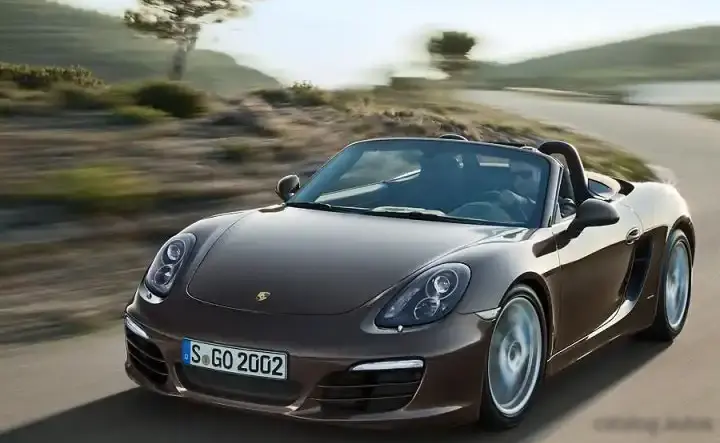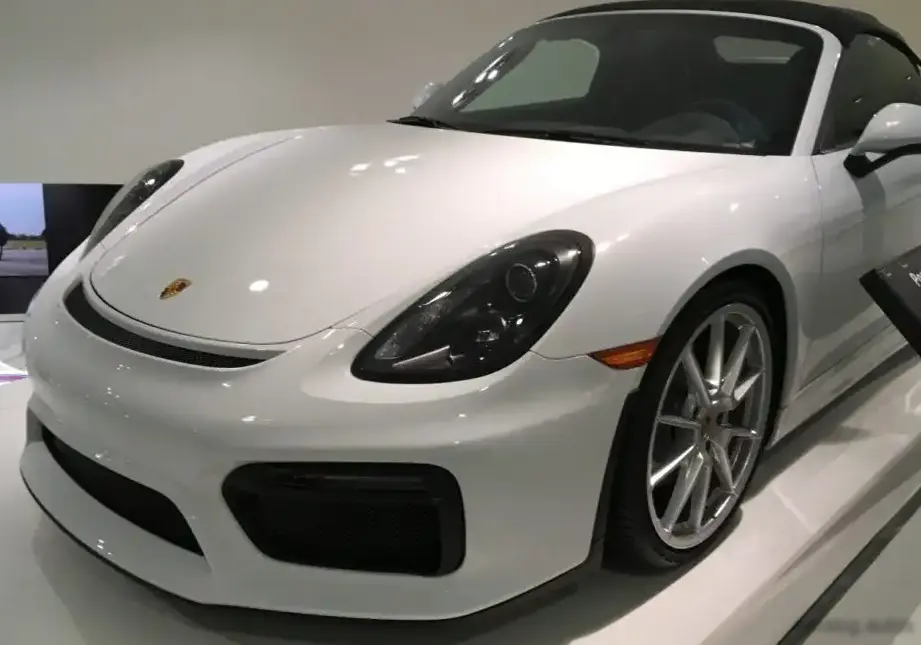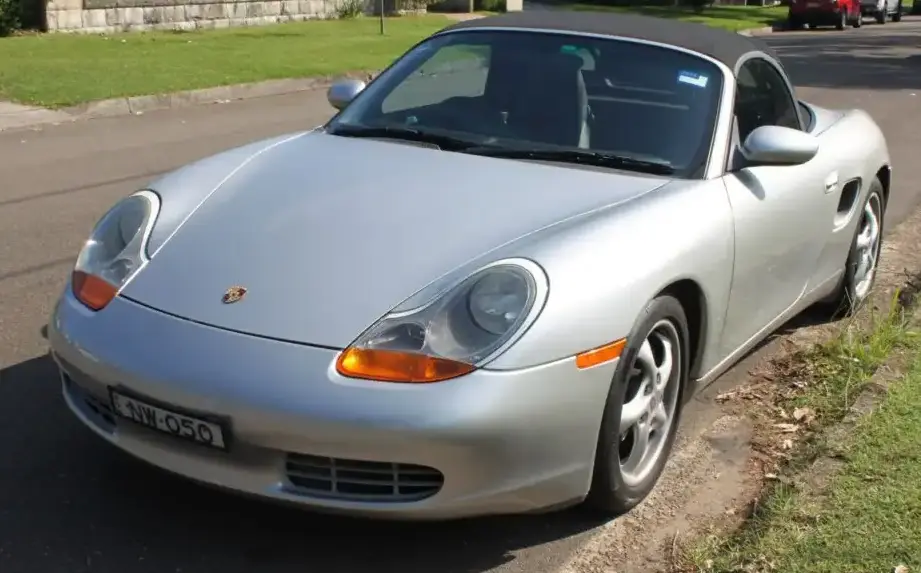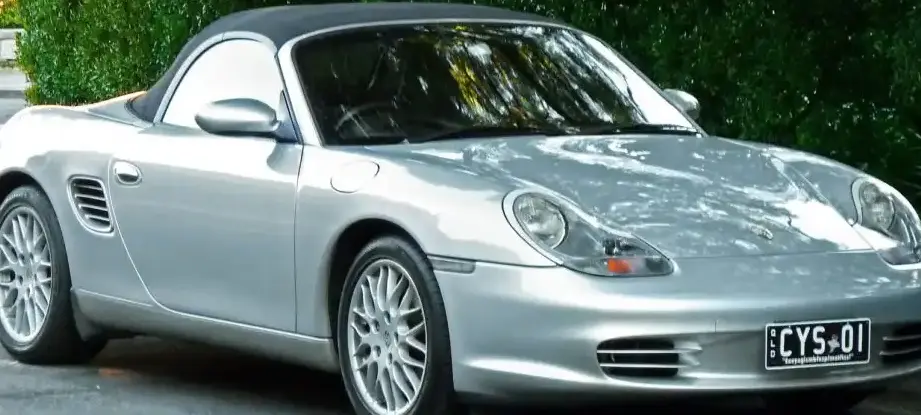
The Porsche Boxster (986) 2.7 Tiptronic S, produced from 2002 to 2004, represented a significant step forward in the first-generation Boxster lineup. Positioned as a mid-range offering, it bridged the gap between the base 2.5-liter model and the more potent 3.2-liter S variant. This variant aimed to deliver a balance of performance and usability, appealing to drivers seeking a genuine Porsche roadster experience with the convenience of an automatic transmission. It was built on the 986 platform, Porsche’s first mass-produced mid-engine roadster, intended to bring the Porsche experience to a wider audience.
Technical Specifications
| Brand | Porsche |
| Model | Boxster |
| Generation | Boxster (986) |
| Type (Engine) | 2.7 (228 Hp) Tiptronic S |
| Start of production | 2002 |
| End of production | 2004 |
| Powertrain Architecture | Internal Combustion engine |
| Body type | Roadster |
| Seats | 2 |
| Doors | 2 |
| Fuel consumption (economy) – urban (NEDC) | 15.3 l/100 km (15.4 US mpg, 18.5 UK mpg, 6.5 km/l) |
| Fuel consumption (economy) – extra urban (NEDC) | 7.9 l/100 km (29.8 US mpg, 35.8 UK mpg, 12.7 km/l) |
| Fuel consumption (economy) – combined (NEDC) | 10.7 l/100 km (22 US mpg, 26.4 UK mpg, 9.3 km/l) |
| CO2 emissions (NEDC) | 259 g/km |
| Fuel Type | Petrol (Gasoline) |
| Acceleration 0 – 100 km/h | 7.3 sec |
| Acceleration 0 – 62 mph | 7.3 sec |
| Acceleration 0 – 60 mph | 6.9 sec |
| Maximum speed | 248 km/h (154.1 mph) |
| Emission standard | Euro 3 |
| Weight-to-power ratio | 5.8 kg/Hp, 171.4 Hp/tonne |
| Weight-to-torque ratio | 5.1 kg/Nm, 195.5 Nm/tonne |
| Power | 228 Hp @ 6300 rpm |
| Power per litre | 84.9 Hp/l |
| Torque | 260 Nm @ 4700 rpm (191.77 lb.-ft. @ 4700 rpm) |
| Engine layout | Middle, Longitudinal |
| Engine Model/Code | M96.23 |
| Engine displacement | 2687 cm3 (163.97 cu. in.) |
| Number of cylinders | 6 |
| Engine configuration | Boxer |
| Cylinder Bore | 85.5 mm (3.37 in.) |
| Piston Stroke | 78 mm (3.07 in.) |
| Compression ratio | 11:1 |
| Number of valves per cylinder | 4 |
| Fuel injection system | Multi-port manifold injection |
| Engine aspiration | Naturally aspirated engine |
| Valvetrain | DOHC |
| Engine oil capacity | 7.8 l (8.24 US qt, 6.86 UK qt) |
| Coolant | 17 l (17.96 US qt, 14.96 UK qt) |
| Kerb Weight | 1330 kg (2932.15 lbs.) |
| Max. weight | 1655 kg (3648.65 lbs.) |
| Max load | 325 kg (716.5 lbs.) |
| Trunk (boot) space – minimum | 260 l (9.18 cu. ft.) |
| Fuel tank capacity | 64 l (16.91 US gal, 14.08 UK gal) |
| Max. roof load | 75 kg (165.35 lbs.) |
| Length | 4320 mm (170.08 in.) |
| Width | 1780 mm (70.08 in.) |
| Height | 1290 mm (50.79 in.) |
| Wheelbase | 2415 mm (95.08 in.) |
| Front track | 1465 mm (57.68 in.) |
| Rear (Back) track | 1528 mm (60.16 in.) |
| Ride height (ground clearance) | 121 mm (4.76 in.) |
| Drag coefficient (Cd) | 0.31 |
| Minimum turning circle (turning diameter) | 11.1 m (36.42 ft.) |
| Drivetrain Architecture | Rear wheel drive |
| Drive wheel | Rear wheel drive |
| Number of gears and type of gearbox | 5 gears, automatic transmission Tiptronic S |
| Front suspension | Independent type McPherson |
| Rear suspension | McPherson |
| Front brakes | Ventilated discs |
| Rear brakes | Ventilated discs |
| Assisting systems | ABS (Anti-lock braking system) |
| Steering type | Steering rack and pinion |
| Power steering | Hydraulic Steering |
| Tires size | 205/55 ZR 16 |
| Wheel rims size | 6 J x 16 ET 50 |
Powertrain & Engine Architecture
At the heart of the 2.7 Tiptronic S lies the M96.23 engine, a 2.7-liter naturally aspirated flat-six (boxer) engine. This engine benefited from an increased displacement compared to the base 2.5-liter Boxster, resulting in a noticeable power increase. The M96.23 featured multi-port fuel injection and a dual overhead camshaft (DOHC) valvetrain, contributing to its responsive nature. The engine produced 228 horsepower at 6300 rpm and 260 Nm (192 lb-ft) of torque at 4700 rpm. The ‘Tiptronic S’ transmission was a five-speed automatic with a manual shift mode, allowing drivers some control over gear selection. It featured adaptive shift programming, adjusting shift points based on driving style. This transmission was designed to offer a balance between convenience and driver engagement.
Driving Characteristics
The 2.7 Tiptronic S offered a different driving experience compared to the standard 2.5-liter or the more aggressive 3.2 S models. While not as brutally quick as the 3.2 S, the 2.7 provided ample power for spirited driving. The Tiptronic S transmission, while smooth, did introduce a slight efficiency loss compared to the six-speed manual. Gear ratios were tuned for a blend of acceleration and fuel economy. The automatic transmission could sometimes feel hesitant during quick downshifts, a common characteristic of early Tiptronic systems. However, the manual shift mode allowed drivers to maintain more control, improving responsiveness. The mid-engine layout provided excellent balance and handling, making the Boxster a joy to drive on winding roads.
Equipment & Trim Levels
The 2.7 Tiptronic S typically came well-equipped, though options were plentiful. Standard features included leather upholstery, air conditioning, power windows and locks, and an upgraded audio system. Optional extras included heated seats, a Bose sound system, self-leveling suspension, and various interior trim options. The interior design was driver-focused, with a clear instrument cluster and ergonomically placed controls. The 2.7 Tiptronic S often featured sport seats as standard, providing enhanced support during cornering.
Chassis & Braking
The Boxster 986 utilized a lightweight chassis construction, contributing to its agile handling. The suspension consisted of independent McPherson struts at both the front and rear. The 2.7 Tiptronic S models were equipped with ventilated disc brakes on all four wheels, providing ample stopping power. Anti-lock braking system (ABS) was standard. The suspension was tuned to provide a comfortable ride while maintaining excellent body control. Stabilizer bars were fitted front and rear to reduce body roll during cornering.
Market Reception & Comparison
The 2.7 Tiptronic S was generally well-received by automotive critics. It was praised for its balanced performance, comfortable ride, and engaging handling. However, some reviewers noted that the Tiptronic S transmission wasn’t as responsive as the manual gearbox. Compared to the base 2.5-liter Boxster, the 2.7 offered a significant power boost and a more refined driving experience. Against the 3.2 S, it provided a more accessible price point and a slightly more forgiving driving character. Fuel economy was respectable for a sports car, averaging around 22 mpg in combined driving. Reliability was generally good, though the M96 engine is known for potential IMS bearing issues, a concern for all 986 and 996 Porsches.
Legacy
The Porsche Boxster 2.7 Tiptronic S remains a popular choice among enthusiasts today. Its combination of performance, usability, and classic Porsche styling has ensured its enduring appeal. While the IMS bearing issue requires attention (often addressed with a preventative upgrade), these cars are generally reliable and offer a rewarding driving experience. On the used car market, prices vary depending on condition, mileage, and maintenance history. The 2.7 Tiptronic S represents a sweet spot in the 986 lineup, offering a genuine Porsche roadster experience without the higher price tag of the 3.2 S.