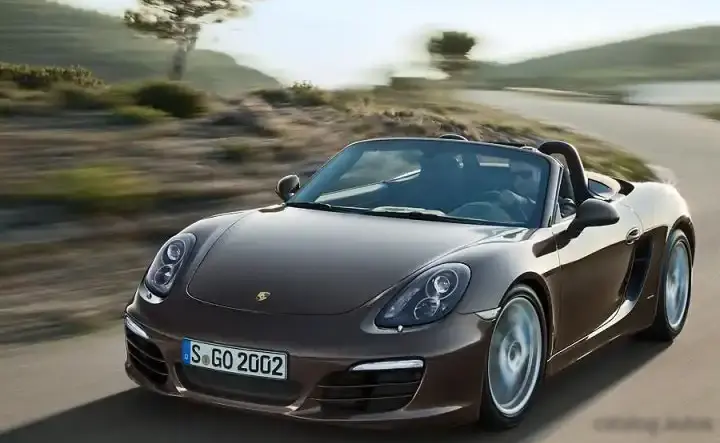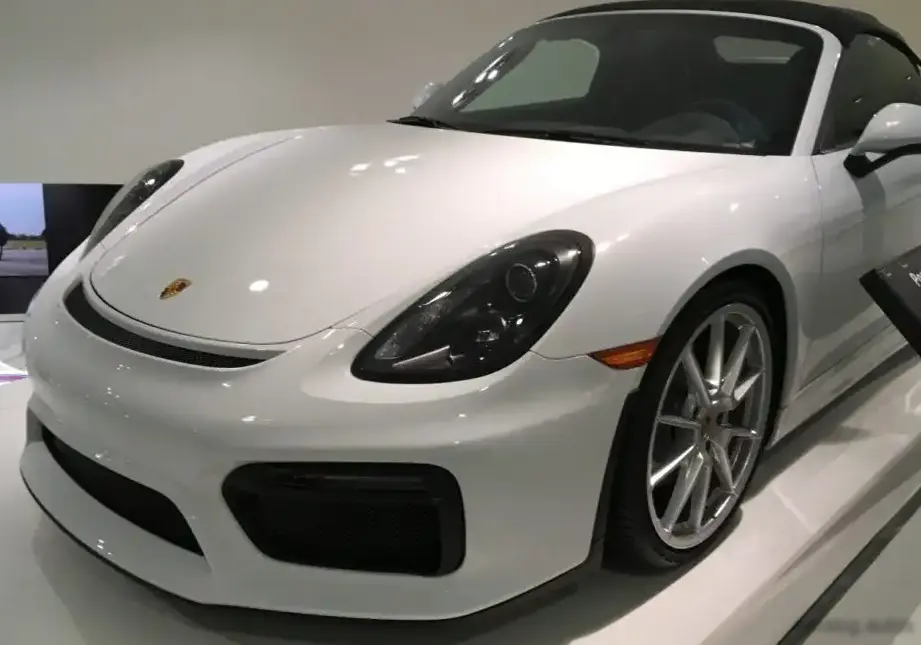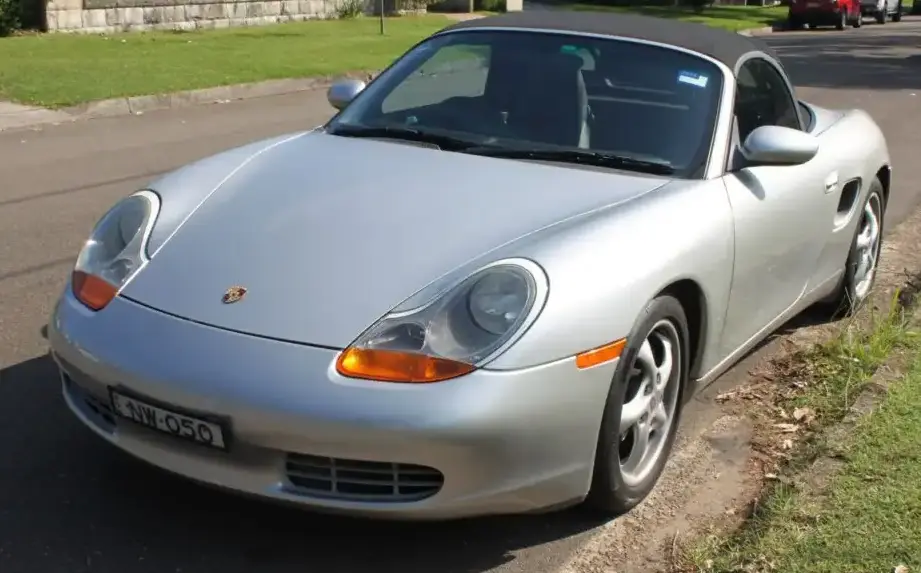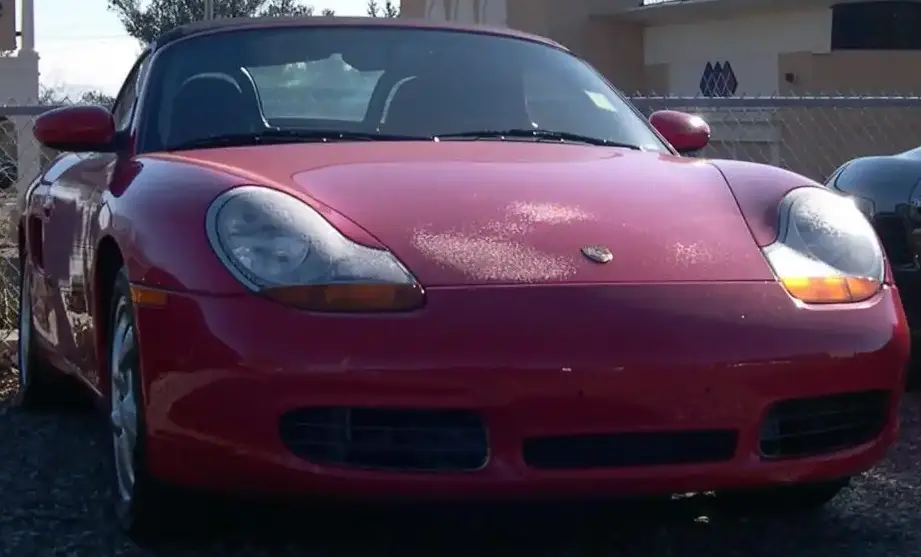
The Porsche Boxster (986) S 3.2, produced from 1999 to 2002, represented a significant step up in performance and refinement for Porsche’s entry-level roadster. Positioned as the higher-performance variant within the 986 generation, the S 3.2 offered a more potent engine and enhanced driving experience compared to the base Boxster. It was a key model in Porsche’s strategy to broaden its appeal and attract a wider customer base, offering a relatively accessible pathway into Porsche ownership. The 986 generation, as a whole, was Porsche’s first truly modern, mass-produced roadster, utilizing a mid-engine layout and a focus on balanced handling.
Technical Specifications
| Brand | Porsche |
| Model | Boxster |
| Generation | Boxster (986) |
| Type (Engine) | S 3.2 (252 Hp) |
| Start of production | 1999 year |
| End of production | 2002 year |
| Powertrain Architecture | Internal Combustion engine |
| Body type | Roadster |
| Seats | 2 |
| Doors | 2 |
| Fuel consumption (economy) – urban (NEDC) | 15.6 l/100 km (15.1 US mpg, 18.1 UK mpg, 6.4 km/l) |
| Fuel consumption (economy) – extra urban (NEDC) | 8 l/100 km (29.4 US mpg, 35.3 UK mpg, 12.5 km/l) |
| Fuel consumption (economy) – combined (NEDC) | 10.7 l/100 km (22 US mpg, 26.4 UK mpg, 9.3 km/l) |
| CO2 emissions (NEDC) | 265 g/km |
| Fuel Type | Petrol (Gasoline) |
| Acceleration 0 – 100 km/h | 5.9 sec |
| Acceleration 0 – 62 mph | 5.9 sec |
| Acceleration 0 – 60 mph | 5.6 sec |
| Maximum speed | 260 km/h (161.56 mph) |
| Emission standard | Euro 3 |
| Weight-to-power ratio | 5.1 kg/Hp, 194.6 Hp/tonne |
| Weight-to-torque ratio | 4.2 kg/Nm, 235.5 Nm/tonne |
| Power | 252 Hp @ 6250 rpm |
| Power per litre | 79.3 Hp/l |
| Torque | 305 Nm @ 4500 rpm (224.96 lb.-ft. @ 4500 rpm) |
| Engine layout | Middle, Longitudinal |
| Engine Model/Code | M96.21 |
| Engine displacement | 3179 cm3 (193.99 cu. in.) |
| Number of cylinders | 6 |
| Engine configuration | Boxer |
| Cylinder Bore | 93 mm (3.66 in.) |
| Piston Stroke | 78 mm (3.07 in.) |
| Compression ratio | 11:1 |
| Number of valves per cylinder | 4 |
| Fuel injection system | Multi-port manifold injection |
| Engine aspiration | Naturally aspirated engine |
| Valvetrain | DOHC |
| Engine oil capacity | 8.5 l (8.98 US qt | 7.48 UK qt) |
| Coolant | 17 l (17.96 US qt | 14.96 UK qt) |
| Kerb Weight | 1295 kg (2854.99 lbs.) |
| Max. weight | 1615 kg (3560.47 lbs.) |
| Max load | 320 kg (705.48 lbs.) |
| Trunk (boot) space – minimum | 260 l (9.18 cu. ft.) |
| Fuel tank capacity | 64 l (16.91 US gal | 14.08 UK gal) |
| Max. roof load | 75 kg (165.35 lbs.) |
| Length | 4315 mm (169.88 in.) |
| Width | 1780 mm (70.08 in.) |
| Height | 1290 mm (50.79 in.) |
| Wheelbase | 2415 mm (95.08 in.) |
| Front track | 1455 mm (57.28 in.) |
| Rear (Back) track | 1508 mm (59.37 in.) |
| Ride height (ground clearance) | 121 mm (4.76 in.) |
| Drag coefficient (Cd) | 0.32 |
| Minimum turning circle (turning diameter) | 11.1 m (36.42 ft.) |
| Drivetrain Architecture | The Internal combustion engine (ICE) drives the rear wheels of the vehicle. |
| Drive wheel | Rear wheel drive |
| Number of gears and type of gearbox | 6 gears, manual transmission |
| Front suspension | Independent type McPherson |
| Rear suspension | McPherson |
| Front brakes | Ventilated discs |
| Rear brakes | Ventilated discs |
| Assisting systems | ABS (Anti-lock braking system) |
| Steering type | Steering rack and pinion |
| Power steering | Hydraulic Steering |
| Tires size | Front wheel tires: 205/50 ZR 17Rear wheel tires: 255/40 ZR 17 |
| Wheel rims size | Front wheel rims: 7 J x 17Rear wheel rims: 8.5 J x 17 |
INTRODUCTION
The Porsche Boxster S 3.2, launched in 1999 as a mid-cycle refresh of the original 986 Boxster, addressed criticisms leveled at the initial model regarding engine performance. The increase in displacement from 2.5 to 3.2 liters, along with revised engine management, resulted in a substantial power boost to 252 horsepower. This positioned the S 3.2 as a direct competitor to other premium roadsters like the BMW Z3 and Mercedes-Benz SLK, offering a more focused driving experience. The 986 platform, shared with the contemporary Porsche 911 (996), benefited from a mid-engine layout that provided excellent balance and handling characteristics.
Powertrain & Engine Architecture
At the heart of the Boxster S 3.2 lies the M96.21 engine, a naturally aspirated 3.2-liter flat-six (boxer) engine. This engine is notable for its water-cooled design, a departure from the air-cooled tradition of earlier Porsche engines. The M96.21 utilizes multi-port fuel injection and a dual overhead camshaft (DOHC) valvetrain with four valves per cylinder. The increased displacement was achieved through a larger bore and longer stroke compared to the 2.5-liter engine. The engine’s architecture was designed for relatively compact packaging, contributing to the car’s balanced weight distribution. The standard transmission for the S 3.2 was a six-speed manual, although a five-speed Tiptronic S automatic transmission was also available. The automatic transmission featured adaptive shift programming, adjusting shift points based on driving style.
Driving Characteristics
The Boxster S 3.2 delivered a noticeably more engaging driving experience than the base Boxster. The increased power and torque allowed for quicker acceleration and more confident passing maneuvers. The 0-60 mph sprint took approximately 5.6 seconds, a significant improvement over the standard model. The mid-engine layout contributed to neutral handling and excellent cornering ability. The six-speed manual transmission offered precise shifts and allowed the driver to fully exploit the engine’s powerband. While the automatic transmission provided convenience, it did slightly diminish the sense of connection to the car. The suspension was tuned for a balance between comfort and performance, providing a relatively compliant ride without sacrificing handling precision.
Equipment & Trim Levels
The Boxster S 3.2 came standard with a well-equipped interior, including leather upholstery, power windows and locks, and a basic audio system. Optional extras were plentiful, allowing buyers to customize their cars to their preferences. Popular options included upgraded audio systems, heated seats, sport seats, and a wind deflector. The interior design was functional and driver-focused, with a clear instrument cluster and ergonomically positioned controls. The S 3.2 also featured a more aggressive exterior styling package compared to the base Boxster, including a unique front fascia, rear spoiler, and larger wheels.
Chassis & Braking
The Boxster S 3.2 utilized a galvanized steel chassis, providing a strong and rigid foundation for the car. The suspension consisted of independent McPherson struts at all four corners, with stabilizer bars to reduce body roll. The braking system featured ventilated disc brakes on all four wheels, providing ample stopping power. Anti-lock braking system (ABS) was standard. The S 3.2 benefited from a slightly stiffer suspension setup compared to the base Boxster, further enhancing its handling capabilities. The car’s relatively low weight contributed to its agility and responsiveness.
Market Reception & Comparison
The Boxster S 3.2 was generally well-received by automotive critics, who praised its improved performance and handling. It was seen as a more compelling alternative to its competitors, offering a unique combination of performance, handling, and practicality. Compared to the base Boxster, the S 3.2 offered a significant performance upgrade, but at a higher price point. The automatic transmission was often criticized for being less engaging than the manual. Fuel economy was reasonable for a sports car of its class, but not exceptional. Reliability was generally good, although some owners reported issues with the intermediate shaft (IMS) bearing, a common concern for early 996 and 986 models.
Legacy
The Porsche Boxster S 3.2 remains a popular choice among enthusiasts today. Its combination of performance, handling, and relatively affordable price makes it an attractive option in the used car market. The M96.21 engine, while generally reliable, requires regular maintenance, particularly regarding the IMS bearing. Well-maintained examples of the S 3.2 can provide years of enjoyable driving. The model played a crucial role in establishing the Boxster as a successful and respected member of the Porsche lineup, paving the way for future generations of the roadster.