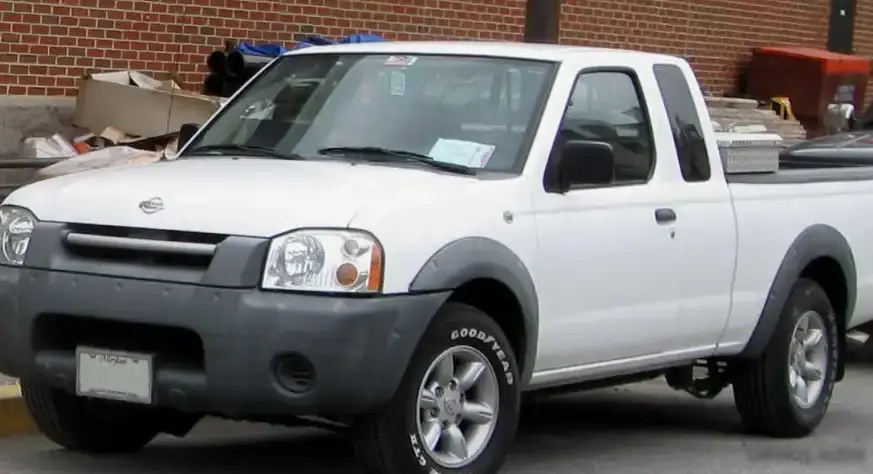
The Nissan Frontier I King Cab Long (D22) Desert Runner, specifically the 3.3 V6 4×4 Automatic variant produced from 2002 to 2004, represented a performance-oriented trim level within the broader D22 Frontier lineup. This model, a facelift of the original D22 series introduced in 1997, aimed to bridge the gap between work-truck functionality and recreational off-road capability, primarily targeting the North American market. The Desert Runner package distinguished itself with unique styling cues and a more powerful engine option compared to the base Frontier models. It sat as a mid-to-upper trim level, offering more features and performance than the base King Cab but falling short of the fully-equipped Crew Cab models.
Technical Specifications
| Brand | Nissan |
| Model | Frontier |
| Generation | Frontier I King Cab Long (D22, facelift 2000) |
| Type | Desert Runner 3.3 V6 (210 Hp) 4×4 Automatic |
| Start of production | 2002 |
| End of production | 2004 |
| Powertrain Architecture | Internal Combustion engine |
| Body type | Pick-up |
| Seats | 4 |
| Doors | 2 |
| Fuel Type | Petrol (Gasoline) |
| Power | 210 Hp @ 4800 rpm |
| Power per litre | 64.1 Hp/l |
| Torque | 313 Nm / 230.86 lb.-ft. |
| Engine Model/Code | VG33ER |
| Engine displacement | 3275 cm3 / 199.85 cu. in. |
| Number of cylinders | 6 |
| Engine configuration | V-engine |
| Cylinder Bore | 91.5 mm / 3.6 in. |
| Piston Stroke | 83 mm / 3.27 in. |
| Number of valves per cylinder | 4 |
| Engine aspiration | Supercharger, Intercooler |
| Valvetrain | SOHC |
| Engine oil capacity | 3.3 l / 3.49 US qt | 2.9 UK qt |
| Coolant | 11 l / 11.62 US qt | 9.68 UK qt |
| Fuel tank capacity | 73.4 l / 19.39 US gal | 16.15 UK gal |
| Length | 5153 mm / 202.87 in. |
| Width | 1808 mm / 71.18 in. |
| Height | 1687 mm / 66.42 in. |
| Wheelbase | 2950 mm / 116.14 in. |
| Front track | 1525 mm / 60.04 in. |
| Rear track | 1507 mm / 59.33 in. |
| Drive wheel | All wheel drive (4×4) |
| Number of gears | 4 |
| Gearbox type | Automatic transmission |
| Front suspension | Double wishbone |
| Rear suspension | Leaf spring |
| Front brakes | Ventilated discs |
| Rear brakes | Drum |
| Tires size | 265/70 R15; 265/70 R16; 265/55 R17 |
| Wheel rims size | 7.0J x 15; 7.0J x 16; 7.0J x 17 |
Powertrain & Engine Architecture
The heart of the Desert Runner was the VG33ER 3.3-liter V6 engine. This engine, a member of Nissan’s VG series, was notable for its supercharged induction. The addition of a supercharger, along with an intercooler, significantly boosted power output compared to the naturally aspirated 3.3L engine found in lower Frontier trims. The VG33ER utilized a single overhead camshaft (SOHC) valvetrain, operating 24 valves (four per cylinder). Fuel delivery was managed by a multi-port fuel injection system. The four-speed automatic transmission, a common unit in Nissan trucks of the era, was chosen for its balance of durability and ease of use. While not the most technologically advanced transmission, it was well-suited to the engine’s torque characteristics and the truck’s intended use.
Driving Characteristics
The 210 horsepower and 230 lb-ft of torque provided by the VG33ER engine gave the Desert Runner a noticeable performance advantage over base Frontier models. Acceleration was brisk for a mid-size pickup, and the supercharger provided a strong mid-range punch. The four-speed automatic transmission, while smooth, wasn’t particularly quick-shifting. Gear ratios were optimized for towing and hauling, rather than outright acceleration. Compared to a manual transmission-equipped Frontier, the automatic version felt slightly less responsive, but offered greater convenience, especially in off-road situations. The 4×4 system, selectable via a rotary dial, provided confident traction in a variety of conditions. The leaf spring rear suspension, while contributing to a firm ride, was well-suited for carrying loads.
Equipment & Trim Levels
The Desert Runner trim included several features designed to enhance both comfort and off-road capability. Standard equipment typically included air conditioning, power windows and locks, a basic audio system, and cloth upholstery. The Desert Runner package also added unique exterior styling elements, such as flared fender flares, off-road tires, and distinctive badging. Optional extras included a sunroof, upgraded audio systems, and a towing package. Interior appointments were functional and durable, prioritizing practicality over luxury. The dashboard layout was straightforward and easy to use, with large, clearly marked controls.
Chassis & Braking
The D22 Frontier utilized a body-on-frame construction, providing a robust and durable platform. The front suspension consisted of double wishbones, while the rear employed leaf springs. This configuration offered a good balance of ride comfort and load-carrying capacity. Braking duties were handled by ventilated discs at the front and drum brakes at the rear. While adequate for most driving situations, the rear drum brakes were a point of criticism compared to the all-disc setups found on some competitors. Stabilizer bars were included at both the front and rear to reduce body roll during cornering.
Market Reception & Comparison
The Nissan Frontier Desert Runner was generally well-received by automotive critics. It was praised for its strong engine, capable 4×4 system, and rugged styling. However, some reviewers noted the relatively basic interior and the lack of advanced features compared to newer pickup trucks. Fuel economy was average for a V6-powered pickup of its size, typically ranging from 14-16 mpg in city driving and 17-19 mpg on the highway. Compared to the base Frontier models, the Desert Runner offered a significant performance upgrade, but at a higher price point. Against competitors like the Ford Ranger and Chevrolet S-10, the Frontier offered a compelling combination of value, capability, and reliability.
Legacy
The VG33ER engine, while not without its quirks, proved to be a relatively durable and reliable powerplant. Common issues included oil leaks and occasional supercharger failures, but these were generally not widespread. Today, the D22 Frontier Desert Runner has gained a following among enthusiasts who appreciate its rugged simplicity and off-road capability. Well-maintained examples are becoming increasingly collectible. The 4×4 automatic variant remains a popular choice in the used truck market, offering a good balance of performance, practicality, and affordability. Its enduring appeal is a testament to Nissan’s successful formula of blending work-truck toughness with recreational versatility.