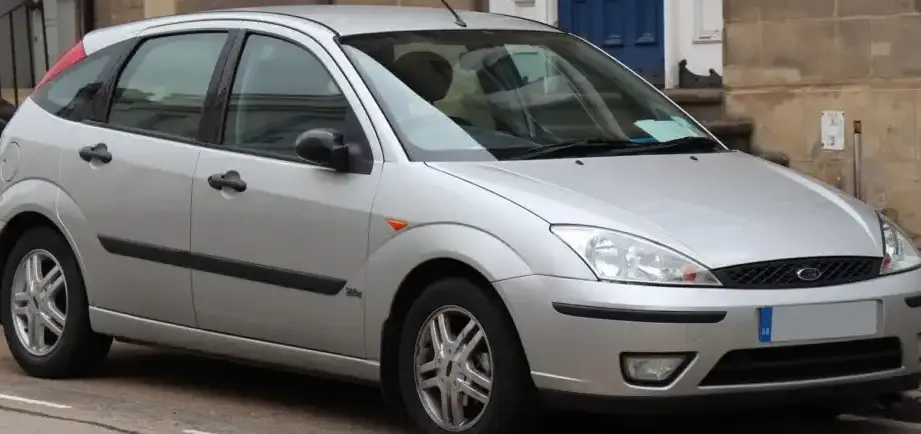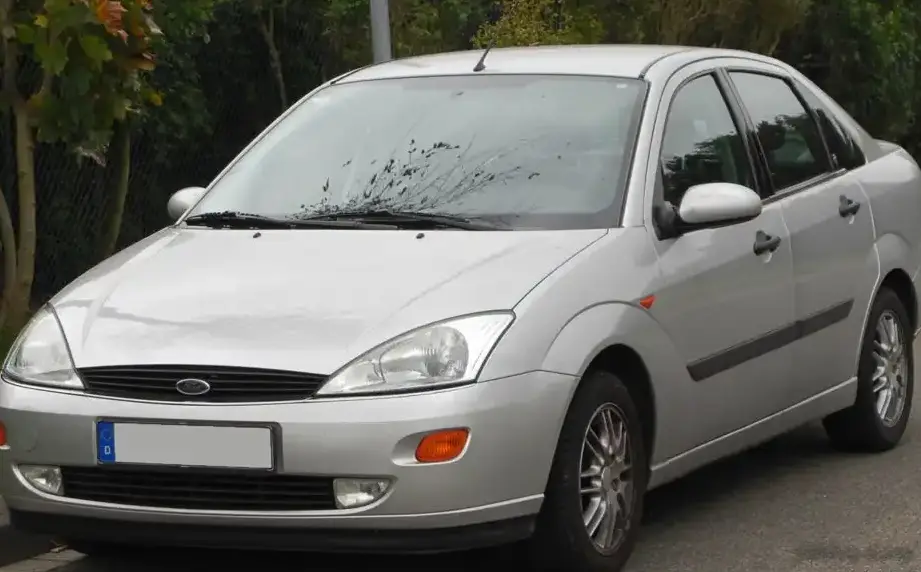
The Ford Focus I Sedan 2.0 16V Automatic, produced between 1998 and 2005, represented a significant step forward for Ford in the compact car segment. Part of the first generation Focus (internally designated the 1HX0/A3 platform), this variant offered a blend of practicality, comfort, and reasonable performance aimed at buyers seeking a more refined experience than the base models. Positioned as a mid-range offering, it bridged the gap between the entry-level 1.4 and 1.6 liter engines and the more performance-oriented, though less commonly available in the US, higher-output versions. The sedan body style was particularly popular in North America, where it competed with established rivals like the Honda Civic and Toyota Corolla.
Technical Specifications
| Brand | Ford |
| Model | Focus |
| Generation | Focus I Sedan |
| Type (Engine) | 2.0 16V (131 Hp) Automatic |
| Start of production | 1998 |
| End of production | 2005 |
| Powertrain Architecture | Internal Combustion engine |
| Body type | Sedan |
| Seats | 5 |
| Doors | 4 |
| Fuel consumption (urban) | 13.1 l/100 km (18 US mpg, 21.6 UK mpg, 7.6 km/l) |
| Fuel consumption (extra urban) | 7.3 l/100 km (32.2 US mpg, 38.7 UK mpg, 13.7 km/l) |
| Fuel consumption (combined) | 9.4 l/100 km (25 US mpg, 30.1 UK mpg, 10.6 km/l) |
| Fuel Type | Petrol (Gasoline) |
| Acceleration 0 – 100 km/h | 11.8 sec |
| Acceleration 0 – 62 mph | 11.8 sec |
| Acceleration 0 – 60 mph | 11.2 sec |
| Maximum speed | 197 km/h (122.41 mph) |
| Weight-to-power ratio | 9.1 kg/Hp, 109.4 Hp/tonne |
| Weight-to-torque ratio | 6.9 kg/Nm, 144.5 Nm/tonne |
| Power | 131 Hp @ 5500 rpm |
| Power per litre | 65.9 Hp/l |
| Torque | 173 Nm @ 4250 rpm (127.6 lb.-ft. @ 4250 rpm) |
| Engine layout | Front, Transverse |
| Engine Model/Code | EDDC, EDDB, EDDD, EDDF |
| Engine displacement | 1988 cm3 (121.32 cu. in.) |
| Number of cylinders | 4 |
| Engine configuration | Inline |
| Cylinder Bore | 84.8 mm (3.34 in.) |
| Piston Stroke | 88 mm (3.46 in.) |
| Compression ratio | 10:1 |
| Number of valves per cylinder | 4 |
| Fuel injection system | Multi-port manifold injection |
| Engine aspiration | Naturally aspirated engine |
| Valvetrain | DOHC |
| Engine oil capacity | 4.25 l (4.49 US qt | 3.74 UK qt) |
| Coolant | 5.75 l (6.08 US qt | 5.06 UK qt) |
| Kerb Weight | 1197 kg (2638.93 lbs.) |
| Max. weight | 1715 kg (3780.93 lbs.) |
| Max load | 518 kg (1141.99 lbs.) |
| Trunk (boot) space – minimum | 490 l (17.3 cu. ft.) |
| Fuel tank capacity | 55 l (14.53 US gal | 12.1 UK gal) |
| Length | 4362 mm (171.73 in.) |
| Width | 1698 mm (66.85 in.) |
| Height | 1430 mm (56.3 in.) |
| Wheelbase | 2615 mm (102.95 in.) |
| Front track | 1484 mm (58.43 in.) |
| Rear (Back) track | 1477 mm (58.15 in.) |
| Drivetrain Architecture | The Internal combustion engine (ICE) drives the front wheels of the vehicle. |
| Drive wheel | Front wheel drive |
| Number of gears and type of gearbox | 4 gears, automatic transmission |
| Front suspension | Wishbone |
| Rear suspension | Coil spring |
| Front brakes | Ventilated discs |
| Rear brakes | Disc |
| Assisting systems | ABS (Anti-lock braking system) |
| Steering type | Steering rack and pinion |
| Power steering | Hydraulic Steering |
| Tires size | 195/60 R15 |
| Wheel rims size | 15 |
Powertrain & Engine Architecture
The heart of the Focus I Sedan 2.0 16V Automatic is the Ford EDDC (and related EDDB, EDDD, EDDF) engine. This 1.998-liter inline-four cylinder engine utilizes a dual overhead camshaft (DOHC) valvetrain with four valves per cylinder, contributing to its relatively high output for its displacement. Fuel delivery is managed by a multi-port fuel injection system, providing precise fuel metering for improved efficiency and emissions control. The engine’s 10:1 compression ratio strikes a balance between performance and fuel economy. Paired with this engine is a four-speed automatic transmission, designed for smooth and convenient operation. This transmission, while not offering the sportiness of a manual gearbox, provided a comfortable driving experience, particularly in urban environments. The automatic transmission’s gear ratios were tuned for everyday drivability rather than outright acceleration.
Driving Characteristics
The 2.0-liter engine with the four-speed automatic transmission delivered adequate, though not exhilarating, performance. Acceleration from 0-60 mph took around 11.2 seconds, and top speed was approximately 122 mph. Compared to the five-speed manual version of the same engine, the automatic suffered a slight performance penalty due to the inherent efficiency losses in the torque converter and the transmission’s shift programming. However, the automatic offered a more relaxed driving experience, particularly in stop-and-go traffic. The automatic transmission’s shift points were generally well-chosen for everyday driving, but lacked the responsiveness of a manual gearbox. The car felt stable and predictable, but wasn’t particularly engaging for driving enthusiasts.
Equipment & Trim Levels
The 2.0 16V Automatic trim typically included features such as air conditioning, power windows and locks, and an AM/FM radio with a CD player. Higher trim levels offered options like alloy wheels, a sunroof, and upgraded interior upholstery. Interior materials were generally durable and functional, though not particularly luxurious. The dashboard layout was straightforward and easy to use, with clearly labeled controls. Safety features included dual front airbags and ABS (Anti-lock Braking System) as standard equipment.
Chassis & Braking
The Focus I Sedan utilized a front-wheel-drive layout with independent front suspension (wishbone) and a coil spring rear suspension. This setup provided a comfortable ride and decent handling characteristics. The front brakes were ventilated discs, offering good stopping power, while the rear brakes were solid discs. The hydraulic power steering provided light and easy steering effort. The car’s relatively light weight (approximately 2639 lbs) contributed to its nimble handling.
Market Reception & Comparison
The Ford Focus I Sedan 2.0 16V Automatic was generally well-received by critics as a practical and reliable family car. It offered a good balance of features, comfort, and fuel economy. However, some reviewers noted that the automatic transmission detracted from the engine’s performance. Compared to the manual transmission version, the automatic offered slightly worse fuel economy (around 25 mpg combined). The 2.0-liter engine was considered a good compromise between performance and fuel efficiency, but it wasn’t as sporty as some of its rivals. The 1.4 and 1.6 liter models were more affordable, but offered significantly less power, while higher-output variants were less common and more expensive.
Legacy
The Ford Focus I Sedan 2.0 16V Automatic has proven to be a relatively reliable vehicle, with many examples still on the road today. The EDDC engine is known for its durability, although regular maintenance is essential to prevent issues such as oil leaks and timing belt failure. The four-speed automatic transmission is generally reliable, but can experience wear and tear over time. In the used car market, these Focus sedans are often sought after as affordable and practical transportation. Their simple mechanical design makes them relatively easy to maintain and repair, and parts are readily available. While not a collector’s item, the Focus I Sedan 2.0 16V Automatic remains a popular choice for budget-conscious buyers.