
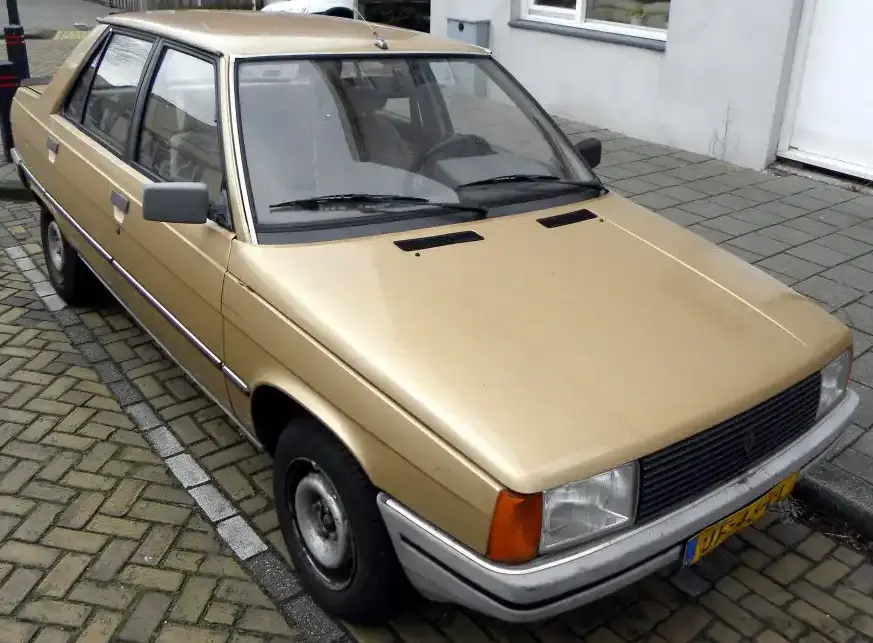
The Renault 9 (L42) 1.2 (L42S), producing 54 horsepower, was a mainstay of the Renault lineup from 1985 to 1988. Positioned as the entry-level model within the L42 series, it represented an affordable and economical option for buyers in Europe, particularly France and other Western European markets. The 9 was Renault’s replacement for the aging Renault 8 and 11, and it was built on a new platform designed to offer improved space, comfort, and fuel efficiency. This variant, with its smaller engine and automatic transmission (where equipped – manual was far more common), catered to drivers prioritizing practicality and low running costs over outright performance.
Technical Specifications
| Brand | Renault |
| Model | 9 |
| Generation | 9 (L42) |
| Type (Engine) | 1.2 (L42S) (54 Hp) |
| Start of Production | 1985 |
| End of Production | 1988 |
| Powertrain Architecture | Internal Combustion Engine |
| Body Type | Sedan |
| Seats | 5 |
| Doors | 4 |
| Fuel Consumption (Urban) | 7.2 l/100 km (32.7 US mpg) |
| Fuel Consumption (Extra Urban) | 5.0 l/100 km (47 US mpg) |
| Fuel Type | Petrol (Gasoline) |
| Maximum Speed | 146 km/h (90.72 mph) |
| Power | 54 Hp |
| Engine Model/Code | C1G 700, C1G 710 |
| Engine Aspiration | Naturally Aspirated |
| Engine Oil Capacity | 3.5 l (3.7 US qt) |
| Coolant Capacity | 5.8 l (6.13 US qt) |
| Fuel Tank Capacity | 47 l (12.42 US gal) |
Powertrain & Engine Architecture
The heart of the Renault 9 1.2 (L42S) was the C1G engine, specifically the 700 or 710 variant. This was a 1147cc inline-four cylinder engine, utilizing a cast iron block and an aluminum cylinder head. It featured a single overhead camshaft (SOHC) operating two valves per cylinder. Fuel delivery was managed by a single, two-barrel Solex carburetor – a relatively simple system for the time, prioritizing reliability and cost-effectiveness over sophisticated fuel injection. The engine’s modest output of 54 horsepower at 6000 rpm and 68 lb-ft of torque at 3500 rpm was a direct result of this design. While a three-speed automatic transmission was offered, the vast majority of 1.2L Renault 9s were equipped with a four-speed manual gearbox. The automatic, when specified, was a conventional hydraulic automatic, known for its smooth but somewhat sluggish shifts. The engine was designed for regular unleaded gasoline.
Driving Characteristics
The 1.2L engine in the Renault 9 provided adequate, but not exhilarating, performance. Acceleration was leisurely, taking approximately 16 seconds to reach 60 mph. The automatic transmission further dulled performance, with noticeable delays in downshifting and a tendency to hunt for gears on inclines. The gear ratios were optimized for fuel economy rather than spirited driving. Compared to the more powerful 1.4L and 1.7L versions of the Renault 9, the 1.2L felt significantly underpowered, particularly when fully loaded with passengers or luggage. However, its light weight and relatively soft suspension provided a comfortable ride, making it well-suited for urban commuting and shorter journeys. The steering was light and easy, though lacking in feedback. The automatic transmission, while convenient, diminished the overall driving experience compared to the more engaging manual transmission.
Equipment & Trim Levels
The 1.2L Renault 9 typically represented the base trim level. Standard equipment included cloth upholstery, a basic dashboard with analog gauges, and manual windows and door locks. A simple two-speaker AM/FM radio was often included, though it could be optional depending on the market. The interior was functional and durable, prioritizing practicality over luxury. Optional extras included a sunroof, upgraded upholstery, and a more sophisticated radio. The exterior trim was minimal, with black plastic bumpers and steel wheels with hubcaps being standard. Higher trim levels, available with the larger engines, offered features such as alloy wheels, power windows, and central locking.
Chassis & Braking
The Renault 9 utilized a relatively simple chassis design. It featured independent front suspension with MacPherson struts and a torsion beam rear suspension. The front brakes were disc brakes, while the rear brakes were typically drum brakes – a cost-saving measure for the base model. Stabilizer bars were often omitted on the 1.2L variant to further reduce cost. The steering was a rack-and-pinion system, providing reasonable precision. The suspension was tuned for comfort, resulting in a soft ride but also noticeable body roll during cornering. The braking performance was adequate for normal driving conditions, but lacked the stopping power of the higher-spec models with larger brakes.
Market Reception & Comparison
The Renault 9 1.2L was generally well-received as an affordable and reliable family car. Critics praised its fuel efficiency and comfortable ride, but noted its lack of performance. Compared to rivals such as the Peugeot 205 and Citroën AX, the Renault 9 offered a more spacious interior and a more comfortable ride, but lacked the sporty handling of the Peugeot. The 1.4L and 1.7L versions of the Renault 9 offered significantly better performance, but at a higher price point. The 1.2L was often seen as a sensible choice for buyers prioritizing economy and practicality over driving excitement. Fuel economy was a key selling point, with the 1.2L achieving around 47 mpg on the extra-urban cycle.
Legacy
The Renault 9 1.2L, while not a performance icon, proved to be a durable and reliable vehicle. The C1G engine, though simple in design, was known for its longevity. Today, surviving examples are relatively rare, and well-maintained cars are sought after by enthusiasts and collectors. The automatic transmission, while not particularly sophisticated, generally proved reliable with regular servicing. The Renault 9 played a significant role in establishing Renault as a major player in the European small family car market, and its successor, the Clio, continued to build on its success. The 1.2L variant remains a testament to the principles of affordable, practical, and reliable motoring.
