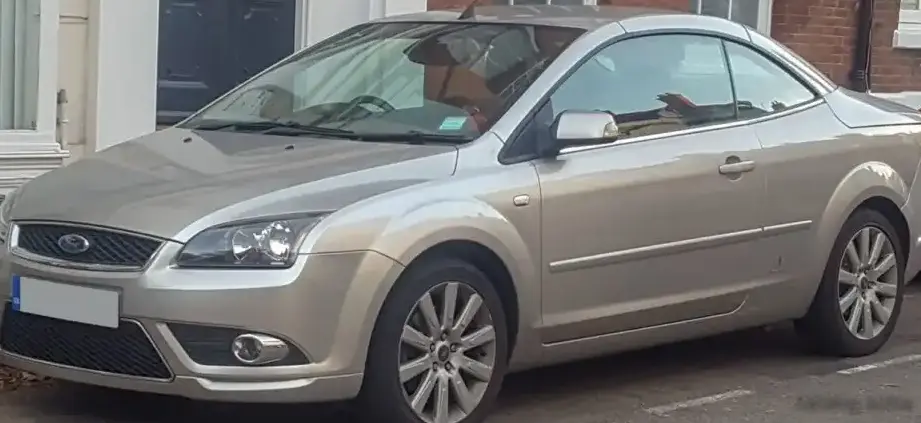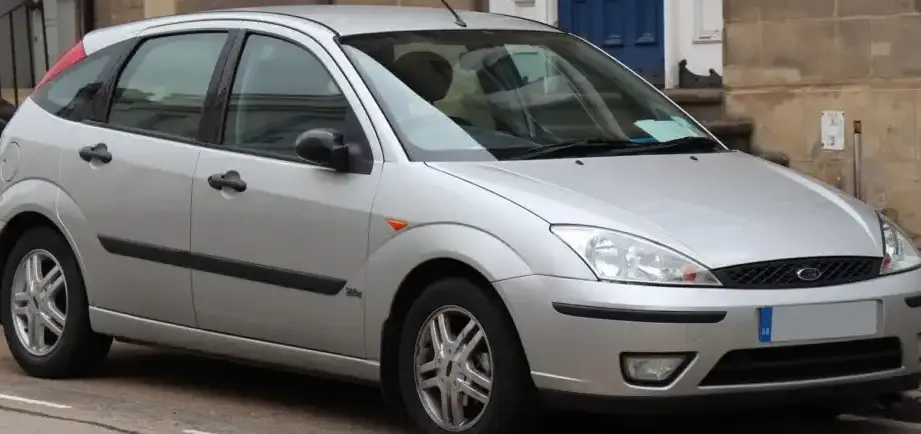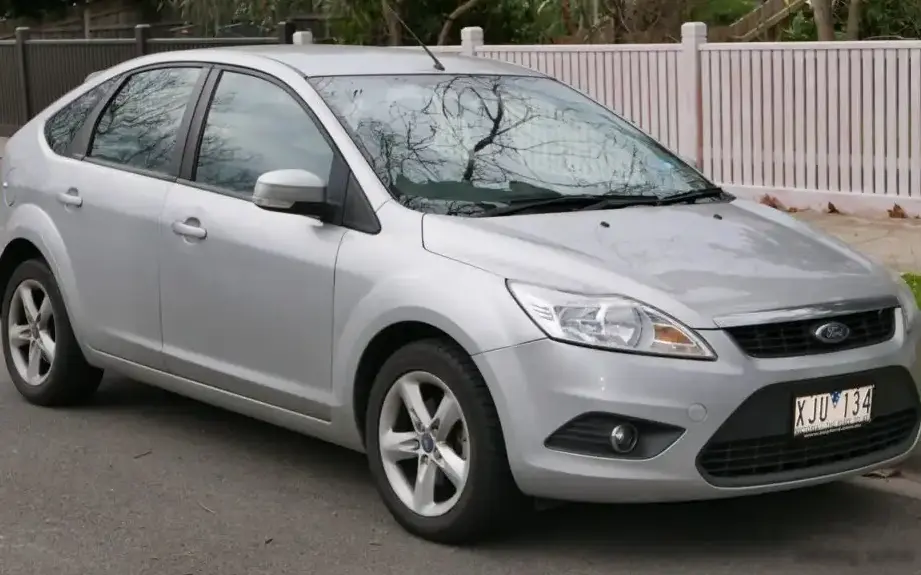
The Ford Focus II Hatchback, produced from 2005 to 2010, represented a significant step forward for Ford’s compact offerings in the European market and, to a lesser extent, North America. Within the second generation Focus (internally designated the 1HX0/A3 platform), the 1.4 Duratec 16V 80 horsepower variant occupied the entry-level position in the hatchback range. This model aimed to provide affordable and economical transportation, prioritizing fuel efficiency over outright performance. It was primarily targeted at first-time buyers, city commuters, and those seeking a practical and reliable vehicle.
Technical Specifications
| Brand | Ford |
| Model | Focus |
| Generation | Focus II Hatchback |
| Type (Engine) | 1.4 Duratec 16V (80 Hp) |
| Start of production | 2005 |
| End of production | 2010 |
| Powertrain Architecture | Internal Combustion engine |
| Body type | Hatchback |
| Seats | 5 |
| Doors | 3/5 |
| Fuel consumption (urban) | 8.7 l/100 km (27 US mpg, 32.5 UK mpg, 11.5 km/l) |
| Fuel consumption (extra urban) | 5.4 l/100 km (43.6 US mpg, 52.3 UK mpg, 18.5 km/l) |
| Fuel consumption (combined) | 6.6 l/100 km (35.6 US mpg, 42.8 UK mpg, 15.2 km/l) |
| Fuel Type | Petrol (Gasoline) |
| Acceleration 0 – 100 km/h | 14.1 sec |
| Acceleration 0 – 62 mph | 14.1 sec |
| Acceleration 0 – 60 mph | 13.4 sec |
| Maximum speed | 164 km/h (101.9 mph) |
| Weight-to-power ratio | 15.6 kg/Hp, 64.3 Hp/tonne |
| Weight-to-torque ratio | 9.8 kg/Nm, 102 Nm/tonne |
| Power | 80 Hp @ 5000 rpm |
| Power per litre | 57.6 Hp/l |
| Torque | 127 Nm @ 3500 rpm (93.67 lb.-ft. @ 3500 rpm) |
| Engine layout | Front, Transverse |
| Engine Model/Code | ASDA, ASDB |
| Engine displacement | 1388 cm3 (84.7 cu. in.) |
| Number of cylinders | 4 |
| Engine configuration | Inline |
| Cylinder Bore | 76 mm (2.99 in.) |
| Piston Stroke | 76.5 mm (3.01 in.) |
| Compression ratio | 11:1 |
| Number of valves per cylinder | 4 |
| Fuel injection system | Multi-port manifold injection |
| Engine aspiration | Naturally aspirated engine |
| Valvetrain | DOHC |
| Engine oil capacity | 3.8 l (4.02 US qt | 3.34 UK qt) |
| Coolant capacity | 5.2 l (5.49 US qt | 4.58 UK qt) |
| Kerb Weight | 1245 kg (2744.76 lbs.) |
| Max. weight | 1690 kg (3725.81 lbs.) |
| Max load | 445 kg (981.06 lbs.) |
| Trunk (boot) space – minimum | 385 l (13.6 cu. ft.) |
| Trunk (boot) space – maximum | 1247 l (44.04 cu. ft.) |
| Fuel tank capacity | 55 l (14.53 US gal | 12.1 UK gal) |
| Length | 4342 mm (170.94 in.) |
| Width | 1840 mm (72.44 in.) |
| Height | 1497 mm (58.94 in.) |
| Wheelbase | 2640 mm (103.94 in.) |
| Front track | 1535 mm (60.43 in.) |
| Rear track | 1531 mm (60.28 in.) |
| Drivetrain Architecture | Front wheel drive |
| Number of gears | 5 |
| Gearbox type | Manual transmission |
| Front suspension | Spring Strut |
| Rear suspension | Transverse stabilizer |
| Front brakes | Ventilated discs |
| Rear brakes | Drum |
| Steering type | Steering rack and pinion |
| Tires size | 195/65 R15 |
| Wheel rims size | 6J x 15 |
Powertrain & Engine Architecture
The heart of this Focus variant was the 1.4-liter Duratec 16V engine, specifically the ASDA or ASDB engine codes depending on the market and emissions regulations. This engine was a naturally aspirated, inline-four cylinder unit featuring a double overhead camshaft (DOHC) valvetrain and multi-port fuel injection. The 11:1 compression ratio was relatively high for the time, contributing to reasonable efficiency. The Duratec engine family was known for its relatively simple design and robust construction, prioritizing reliability over ultimate performance. The engine was transversely mounted in the front of the vehicle, driving the front wheels. The five-speed manual transmission was the standard offering, chosen for its affordability and fuel efficiency. While an automatic transmission was available as an option, it was typically a four-speed unit, and significantly impacted performance.
Driving Characteristics
The 1.4L 80 hp Focus was not designed for spirited driving. Acceleration was modest, taking approximately 14.1 seconds to reach 62 mph (100 km/h). The engine felt strained at higher RPMs, and overtaking maneuvers required careful planning. The five-speed manual transmission helped to keep the engine in its optimal power band, but the automatic version, with its wider gear ratios, further diminished performance. The focus was on providing adequate power for everyday commuting and urban driving. Steering was light and precise, making it easy to maneuver in tight spaces. The suspension, while not particularly sporty, provided a comfortable ride on most road surfaces.
Equipment & Trim Levels
The 1.4 Duratec typically represented the base trim level, often referred to as “Style” or “Zetec” depending on the market. Standard equipment generally included power steering, central locking, electric front windows, and an AM/FM radio. Air conditioning was often an optional extra. Interior upholstery was typically cloth, and the dashboard featured a simple, functional design. Higher trim levels, such as the Ghia, offered additional features like alloy wheels, upgraded audio systems, and climate control, but were paired with more powerful engines.
Chassis & Braking
The Focus II utilized a MacPherson strut front suspension and a twist-beam rear suspension. The front brakes were ventilated discs, providing adequate stopping power for the vehicle’s weight and performance. However, the rear brakes were typically drum brakes on the base models, which were less effective than disc brakes. Stabilizer bars were fitted to both the front and rear axles to reduce body roll during cornering. The chassis was designed to provide a balance between comfort and handling, prioritizing stability and predictability over outright sportiness.
Market Reception & Comparison
The 1.4L Focus was generally well-received as an affordable and practical hatchback. Critics praised its fuel efficiency and comfortable ride, but noted its lack of performance. Compared to the higher-output 1.6L and 2.0L variants, the 1.4L engine felt underpowered, especially when fully loaded. The 1.6L offered a noticeable improvement in performance without a significant increase in fuel consumption, making it a popular alternative. The diesel variants, such as the 1.6 TDCi, provided even better fuel economy but came with a higher purchase price. The 1.4L model was often seen as a sensible choice for budget-conscious buyers.
Legacy
The 1.4 Duratec engine, while not known for its performance, proved to be a reliable and durable unit. Many examples are still on the road today, testament to its robust construction. The Focus II, in general, established a reputation for being a well-built and practical car. On the used car market, the 1.4L variants are typically the most affordable, making them an attractive option for first-time car buyers or those seeking a cheap and reliable runabout. However, potential buyers should be aware of the engine’s limited power and the possibility of age-related wear and tear.